

Niles Boys Hoops Able to Lay Low - for Now - but Climbing Toward Contention
By
Scott Hassinger
Special for MHSAA.com
February 27, 2024
NILES – Niles isn’t a school you will hear mentioned in conversations about the best boys basketball teams in Michigan.
 But Niles head coach Myles Busby, his coaching staff and players prefer living in obscurity on the hardwood. Being an unknown could prove beneficial for Niles at this week's Division 2 District Tournament at Edwardsburg.
Niles is in arguably one of the state's toughest Districts with top-seeded and statewide No. 2-ranked Benton Harbor (20-1) sitting on the other side of the bracket. The Tigers and Vikings are on a collision course to meet in Friday's Final.
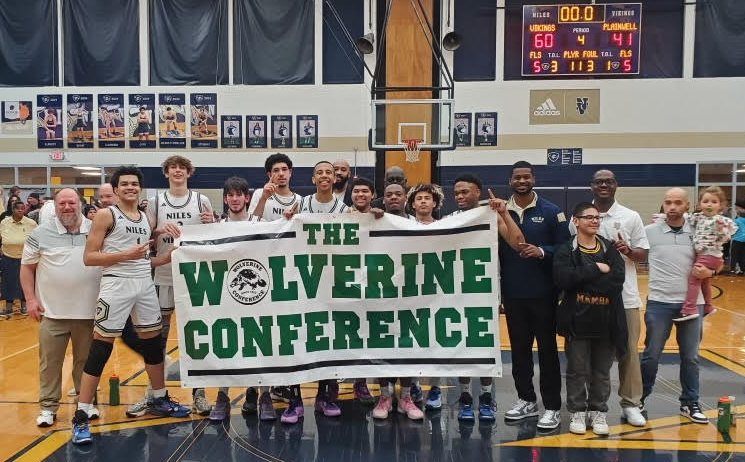
The Vikings are fresh off of winning their first Wolverine Conference title since joining the league with the 2021-22 school year. Busby was a sophomore in 2010 the last time Niles (13-1 Wolverine Conference, 17-5 overall) won a league title in the sport, as part of the Southwestern Michigan Athletic Conference.
Two of the Vikings' five losses this winter came to Lakeland Conference co-champs Benton Harbor (47-45) and Niles Brandywine (56-43). Niles' other three losses came to South Bend Clay, Ind. (64-57) and Lansing Everett (53-40). The Everett game was part of the Love and Basketball Showcase hosted by Kalamazoo Loy Norrix on Feb. 3.
Second-place Otsego (60-49) handed Niles its only conference defeat Feb. 2, avenging an earlier-season loss on the Vikings' home floor (62-52).
Busby said his team's 49-41 win over Chicago North Lawndale Charter (Ill.) – on Dec. 16 in the Tri-State Holiday Classic at Southwestern Michigan College in Dowagiac – helped serve as a momentum builder for the remainder of the season.
Following a nine-game winning streak, Niles suffered back-to-back losses to Otsego and Everett before winning four out of its last five contests.
"In between these walls (our school gym) and when we're on the floor, we know how good we can be. We have the best coaching staff in the area. We know our guys put in a lot of work,” Busby said. “For us, it's just challenging our team to work incredibly hard every single day because that's not common and we don't want to be common. You must do the things other teams aren't doing.
 "We have several new pieces this year with a lot of young guys. Now we have to focus on hitting our stride at the right time. Those two straight losses helped us get refocused. We don't care about what everyone else thinks about us. No one talks about Niles in the preseason rankings, and that's fine. We try to use that as fuel and strive for more."
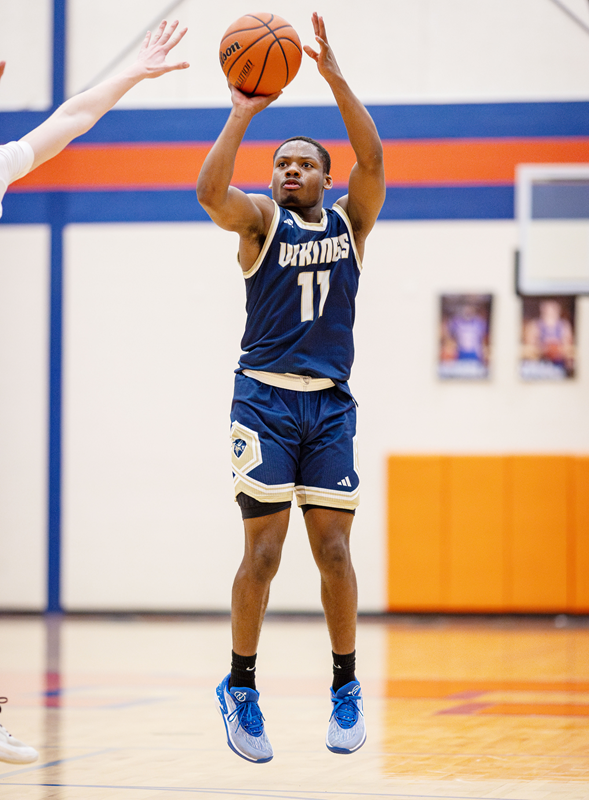
Niles is led by senior point guard and three-year varsity letter winner Mike Phillips Jr. Phillips averages 20 points, three assists and four rebounds per game.
"We just try and take things one step at a time. Our goals after winning conference are to win Districts and make a long run in the postseason," Phillips said. "Our seniors strive to lift everyone up. We just need to pick one another up every day when someone gets down on themself. This team is viewed as the underdog by a lot of people. We use that as our motivation. It's important to focus on the mental part of the game each day."
Phillips, who has received interest from college programs at various levels, is shooting 50 percent from the floor, including 43 percent from behind the 3-point arc.
"Every one of our seniors and other players on the team have really bought into fulfilling their individual roles. It helps when you have one of the best players in the area like Mike," Busby said.
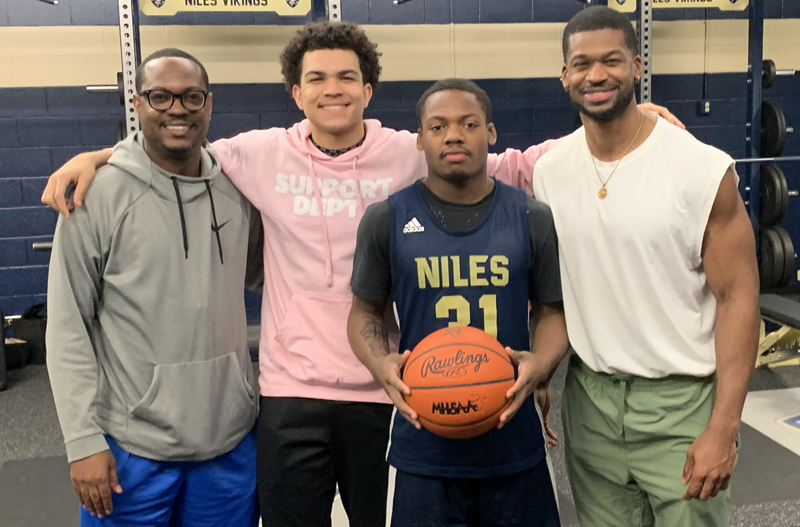
Sophomore Brayden Favors, son of varsity assistant head coach Desmond Favors, handles the other guard spot.
"Brayden has a ton of potential. He's not even close to growing into the player he'll be two years from now as a senior,” Busby said. “He really worked hard on his shooting last summer. This summer we will work on building up his strength. He's a well-rounded player who likes to defend.”
Brayden Favors, who lettered on the varsity as a freshman, averages 12.5 points, three assists and four rebounds per game and is shooting 52 percent from the field.
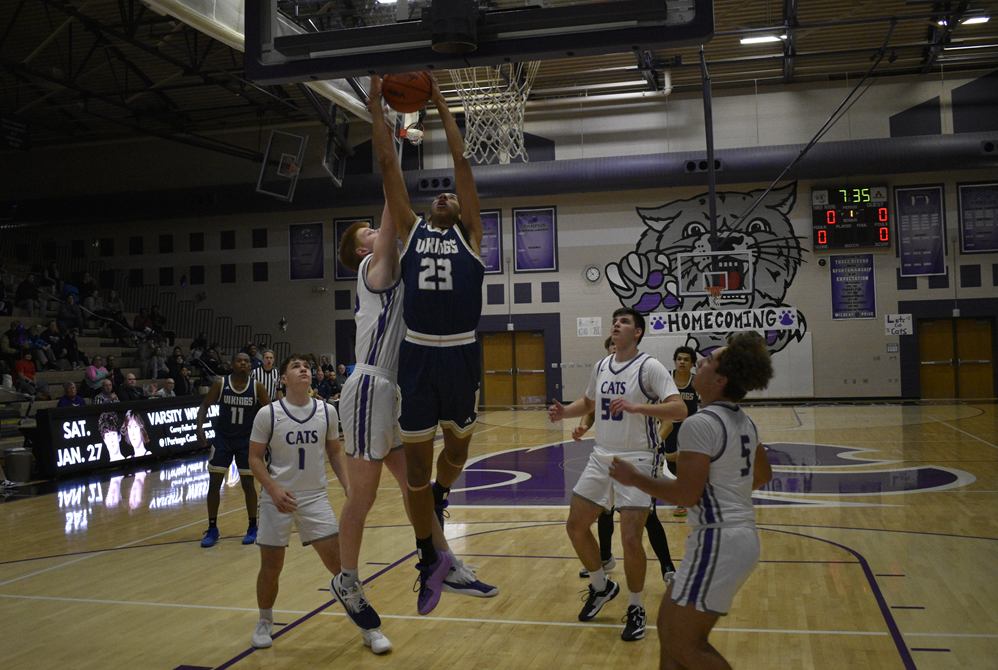
Senior forward Ethan Chambliss is averaging a double-double with 10 points and 10 rebounds, along with two blocked shots. He is shooting 64 percent from the floor for the Vikings.
"Ethan is a great kid who does well academically. On the court, he has a big heart and takes a beating every night. He's not the biggest guy on the floor, but does all the dirty stuff inside for us," Busby noted.
 Sophomore wing Brenden Olsen is another key player. He averages nine points and five boards and is shooting 54 percent from the floor. Busby noted that sophomore Acie Kirtdoll is the future point guard and leader, and senior forward Darris Johnson, III, along with 6-foot-7 freshman post player Donovyn Williams also play vital roles. The final senior on Niles' roster is wing Logan Olsen, who Busby noted for his hustle plays.
"The best kind of teams are led by their players and not the coaches. This is a player-led team, but you have to demand excellence,” Busby said. “This group has done a great job of rallying around one another when someone isn't playing very well and has instilled confidence in each other."
Busby and Desmond Favors both come from families with strong basketball traditions.
Myles' father Mike Busby, also one of the Vikings' current assistant coaches, and his uncle Gerald Busby played on Buchanan's Class C championship team in 1976. Gerald Busby would lead the Bucks to another title two years later as a senior in 1978. James Busby, another uncle, played on Buchanan's 1985 District title squad.
After Niles won its District in Myles Busby's senior season, 2011-12, the Vikings experienced an 11-year drought before capturing the 2023 District crown. That run included an upset of Benton Harbor in the District Semifinal, 65-61.
Grand Rapids South Christian, the eventual Division 2 runner-up, then defeated Niles 72-33 in a Regional Semifinal at Vicksburg.
"When I was in school, we always had to beat Kalamazoo Central to get out of Districts. They always beat us and were usually ranked No. 1 in the state coming into the tournament. It took us four years to finally win a District beating Kalamazoo Central, Mattawan and Kalamazoo Loy Norrix," Myles Busby recalled.
After graduating from Niles, Myles played two years at Mott Community College under Hall of Fame coach Steve Schmidt before transferring to Urbana University, a Division II school in Ohio. He finished his college career at Chadron State College in Nebraska.
 Busby returned to his roots serving as a varsity assistant for Niles during the 2019-20 season. He became interim head coach late in the 2020-21 campaign before being awarded the position permanently before the following winter.
"Taking over the program was a tough decision. I had never intended on coming back to Niles, but I wanted to help revive the program and keep the improvement trend going upward," Busby said. "There's no secret recipe after you put your coaching staff together. Once you get kids in your program who are good leaders with great character, you just have to keep working hard each day. It's those traits that we feel are a big key so far to our success. It's not always about how much talent you have."
Busby believes things started heading in a positive direction after his 2022-23 ballclub began the season 2-4. The Vikings were then 6-9 into the beginning of February but finished 15-11.
"At that point, I think we won nine out of our last 10 games and managed to find our rhythm in time to win our District," Myles Busby said.
Niles has enjoyed past success, including reaching the 2000 Class B Semifinals before losing to Orchard Lake St. Mary's. Current Niles athletic director Matt Brawley was a standout senior post player on that Vikings' squad.
Desmond Favors came to Niles from Detroit his sophomore year of high school and began playing for the Vikings his junior year, 2000-01.
"We won Districts my junior year and lost to Grand Rapids South Christian in the state Quarterfinals my senior season," said Favors, who also played collegiately for Lake Michigan College, Northwood University and Indiana University-South Bend – at IUSB for current Notre Dame head coach Micah Schrewsberry.
Favors was an assistant for the Vikings during Busby’s senior season. "I've known Myles for over 20 years, and we're just very familiar with one another. We're always bouncing ideas around and talking basketball," Favors said.
He enjoys being a part of the coaching staff especially with his son Brayden moving through the program now.
"Initially Brayden was a baseball player. He started working on his game the summer between his eighth and ninth grade year. As a freshman he got put up on varsity and did pretty well,” Desmond Favors said. “He spent a lot of time this past offseason working on ballhandling and making plays. For me, it’s fun watching him.”
 Scott Hassinger is a contributing sportswriter for Leader Publications and previously served as the sports editor for the Three Rivers Commercial-News from 1994-2022. He can be reached at [email protected] with story ideas for Berrien, Cass, St. Joseph and Branch counties.
PHOTOS (Top) Niles senior forward Ethan Chambliss (23) scores inside against Three Rivers. (2) Niles players and coaches hold up the 2024 Wolverine Conference championship banner after defeating Plainwell last week. (3) From left: Niles assistant boys basketball coach Desmond Favors, Brayden Favors, Mike Phillips Jr., and head coach Myles Busby. (4) Phillips Jr. attempts a 3-pointer this season. (Top photo coach/player photo by Scott Hassinger; banner photo courtesy of the Niles athletic department. Phillips action shot by Jeff Douglas/Leader Publications.)
Breslin Bound: 2025-26 Boys District Preview
By
Geoff Kimmerly
MHSAA.com senior editor
February 23, 2026
The march to Breslin Center ramps up significantly this week as more than 700 boys basketball teams across Michigan begin a journey they hope will end in East Lansing.

We always switch up our “Breslin Bound” format once the MHSAA Tournament starts, as last week’s most intriguing results below are followed this time by glances at three District brackets of note in each division. Host sites are bolded, and teams playing in those brackets are listed by seed as determined by Michigan Power Ratings (MPR).
Everything you could want to know this week about tickets, brackets and more can be found on the Boys Basketball page. To watch any of several games online, visit the NFHS Network.
“Breslin Bound” is powered by MI Student Aid and based on results and schedules posted for each school at MHSAA.com.
Week in Review
The countdown of last week’s five most intriguing results:
1. Saginaw Heritage 73, Grand Blanc 60 The Hawks (18-4) avenged a 28-point loss to Grand Blanc (17-4) from December in this matchup of Saginaw Valley League division champions.
2. Detroit Catholic Central 64, Detroit Martin Luther King 54 The Shamrocks (15-6) won the annual Operation Friendship championship game matching the winners from the Catholic High School League and Detroit Public School League, and adding to a 54-46 overtime win over King (17-5) from December.
3. Gladwin 49, Beaverton 46 Gladwin (21-1) claimed the overall Jack Pine Conference championship with its second win this month over Beaverton (17-5).
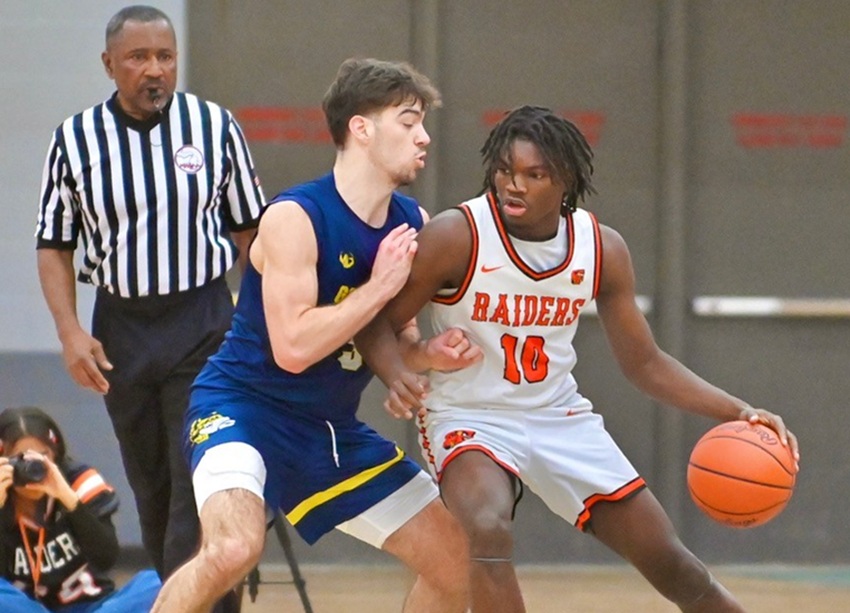
4. Flushing 52, Goodrich 51 Flushing (18-4) held on for a second close win over Goodrich, this time in the Flint Metro League championship game, after winning their Jan. 27 meeting by four.
5. Wayne Memorial 61, Hartland 48 The Zebras (19-3) capped off their regular season by defeating the Eagles (18-4) in the Kensington Lakes Activities Association title game.
Districts at a Glance
These could be among our most competitive brackets. Host sites are in bold, and teams are listed by seed:
DIVISION 1
Detroit Cass Tech
1. Detroit Martin Luther King (17-5), 2. Detroit Cass Tech (16-6), 3. Detroit Western (19-2), 4. Grosse Pointe South (11-11), 5. Grosse Pointe North (10-12).
King and Cass Tech have met twice this season – King won the Jan. 21 matchup 60-53 that helped decide the PSL Blue title, and then 68-63 in the PSL Tournament city championship game Feb. 15. King also defeated Western, 56-36, in a league tournament semifinal, while Cass Tech and Western didn’t face each other during this regular season. Grosse Pointe North has won seven of its last nine games and defeated Cass Tech by a point in their District matchup last season, and South owns a big early win over North.
Flushing
1. Saginaw Heritage (18-4), 2. Flushing (18-4), 3. Saginaw United (13-8), 4. Flint Carman-Ainsworth (8-14), 5. Swartz Creek (11-11).
As noted by the results above, Heritage and Flushing emerged at the end of last week as the top teams from the Saginaw Valley League and Flint Metro League, respectively. Saginaw United finished second in the SVL South and split with SVL North runner-up Mount Pleasant this season, and despite losing to Heritage early should also be considered a contender. Flushing has only one loss this calendar year, to Pontiac Notre Dame Prep in overtime, and Heritage has lost only twice since Jan. 1 and defeated Mount Pleasant twice by 20 or more points to win the SVL North.
Muskegon
1. Rockford (18-3), 2. Muskegon (19-2), 3. Greenville (20-2), 4. Muskegon Mona Shores (10-10), 5. Muskegon Reeths-Puffer (6-16), 6. Cedar Springs (7-15).
Rockford and Muskegon are the anticipated matchup to decide this bracket, and they met in last season’s District Final with the Rams winning 64-62. Rockford has victories over Bloomfield Hills Brother Rice and East Kentwood but finished second to the latter in the O-K Red. Muskegon has downed Wayne Memorial and Lansing Waverly and won the O-K Green. And definitely don’t count out River Cities Alliance champion Greenville, which has two losses by a combined six points and introduced itself loudly with a December win over Grand Rapids Northview.
DIVISION 2
Comstock Park
1. Grand Rapids Catholic Central (16-6), 2. Grand Rapids Christian (16-5), 3. Grand Rapids NorthPointe Christian (17-5), 4. Wyoming Kelloggsville (14-7), 5. Comstock Park (5-17), 6. Ada Forest Hills Eastern (2-20).
Grand Rapids Christian claimed the O-K White title outright last week in part thanks to a 51-43 win over Grand Rapids Catholic Central, and they split their regular-season series as the Cougars won their Jan. 20 meeting by five. NorthPointe was second in the O-K Silver and Kelloggsville fourth, and on opposite sides of this bracket certainly could provide obstacles as the Cougars and Eagles pursue a third round.
Ludington
1. Ludington (20-2), 2. Hart (19-3), 3. Reed City (10-12), 4. Manistee (12-10), 5. Big Rapids (9-13).
Ludington finished undefeated in the West Michigan Conference Lakes and has reached Regional Finals the last two seasons. Hart was second in the WMC Rivers and is seeking a first District title since 2019. They have key mutual opponents; both lost to North Muskegon this winter, and Hart also took a loss from Fremont while Ludington swept the Packers. Manistee and Ludington played Thursday – Ludington winning 68-55 – and they could meet again in a District Semifinal if Manistee gets past Big Rapids tonight.
Yale
1. Yale (20-2), 2. Croswell-Lexington (17-5), 3. Imlay City (16-6), 4. Almont (10-10), 5. North Branch (7-15).
All five of these teams are from the Blue Water Area Conference and finished among the top six, with Yale and Croswell-Lexington sharing the championship and splitting their matchups – the Pioneers won Jan. 20 in overtime, 64-57, while Yale won the rematch Friday 60-41. Imlay City finished third in the BWAC and despite losing both games against both champs took Croswell-Lexington to overtime the second time they played.
DIVISION 3
Kent City
1. Blanchard Montabella (15-7), 2. Kent City (14-8), 3. Morley Stanwood (13-9), 4. Ravenna (13-9), 5. Lakeview (7-15), 6. White Cloud (3-19).
The top four seeds all finished second or third in their respective leagues and will look to add a trophy winning what could be one of the most tightly-contested brackets in any division. Montabella tied for second in the Mid-State Activities Conference West and has won six of its last seven games since falling to Ravenna 43-39 on Jan. 28. Ravenna, which tied for third in the WMC Rivers, has bounced back from a late rough stretch and opened this season with a win over Morley Stanwood – which finished second in the Central State Activities Association White while splitting with third-place Kent City, which won their Friday matchup by 20.
Mancelona
1. Mancelona (20-2), 2. East Jordan (20-2), 3. Indian River Inland Lakes (14-8), 4. Harbor Springs (11-11), 5. Boyne City (9-12), 6. Charlevoix (6-15).
By the numbers, Mancelona and East Jordan has been so close at the top of this District that East Jordan actually passed Mancelona in MPR during the week after seeding. East Jordan also won the Ski Valley Conference by game over Mancelona, claiming their matchups 48-38 and 45-36. Inland Lakes finished third in the Ski Valley, losing to both league title contenders twice, and Harbor Springs is coming over after finishing third in the Northern Shores Conference and losing to East Jordan by only six points, 45-39, on Thursday.
Unionville-Sebewaing
1. Harbor Beach (19-3), 2. Elkton-Pigeon-Bay Port Laker (18-3), 3. Cass City (16-6), 4. Unionville-Sebewaing (11-11), 5. Bad Axe (6-15).
There is a great deal of familiarity in this bracket as well, as Harbor Beach won the Big Thumb Conference Black and Laker and Cass City were first and second, respectively, in the BTC White. Harbor Beach saw both during the first half of the regular season, defeating Cass City by seven and Laker by three. Laker defeated Cass City by seven and nine to win their league. USA tied for fifth in the BTC White – with an eight-point win over Cass City and a four-point loss to Laker in February rematches.
DIVISION 4
Lake Linden-Hubbell
1. Dollar Bay (19-2), 2. L’Anse (15-6), 3. Baraga (15-6), 4. Lake-Linden-Hubbell (7-15), 5. Chassell (5-16).
Dollar Bay won the Copper Mountain Conference championship and L’Anse and Baraga both finished among the upper half among a strong group – in fact, Baraga defeated Dollar Bay by 11 just 10 days ago. Dollar Bay did defeat Baraga in last season’s District Final, and the Blue Bolts’ only other loss this season was to Division 1 Marquette. L’Anse is enjoying its first winning season since 2018-19 and swept Baraga during the regular season.
Rogers City
1. Hillman (19-2), 2. Posen (15-5), 3. Gaylord St. Mary (13-9), 4. Rogers City (12-9), 5. Onaway (5-17), 6. Atlanta (4-13).
Hillman and Posen shared the North Star League Little Dipper championship, splitting the regular-season series with Posen and winning their most recent matchup 57-50 on Jan. 27. They may meet again, but Hillman also took a loss from potential Wednesday opponent Rogers City before winning their rematch by 20. Rogers City also defeated Posen twice. Gaylord St. Mary is intriguing after finishing fourth in the Ski Valley Conference but, as noted above, defeating that league’s champion East Jordan earlier this month.
Three Oaks River Valley
1. St. Joseph Michigan Lutheran (17-4), 2. St. Joseph Our Lady of the Lake Catholic (13-7), 3. New Buffalo (14-8), 4. Eau Claire (11-11), 5. Three Oaks River Valley (3-17).
Michigan Lutheran finished first, Our Lady and New Buffalo tied for second, and Eau Claire finished fourth in the Berrien-Cass-St. Joseph League. New Buffalo handed Michigan Lutheran its only conference defeat in their second of two games – winning by a point – and New Buffalo and Our Lady split their two games, decided by five and two points. Michigan Lutheran also defeated New Buffalo to clinch a District championship a year ago.
MHSAA.com's weekly “Breslin Bound” reports are powered by MI Student Aid, a division within the Department of Lifelong Education, Advancement, and Potential (MiLEAP). MI Student Aid encourages students to pursue postsecondary education by providing access to student financial resources and information. MI Student Aid administers the state’s scholarship and grant programs that help make college Accessible, Affordable and Attainable for you. Click to connect with MI Student Aid and find more information on Facebook and X @mistudentaid.
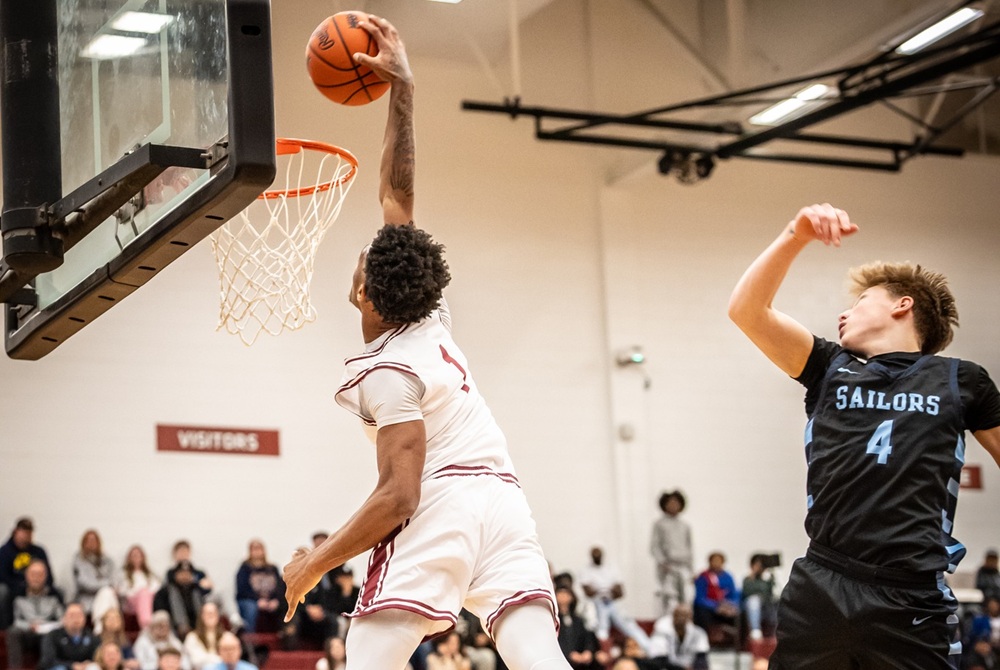
PHOTOS (Top) Muskegon’s James Martin throws down a dunk against Muskegon Mona Shores during a Jan. 30 win. (Middle) Flushing’s Raymond Neither (10) works for post position against Goodrich’s Jensen LePla during the Raiders’ 52-51 Metro League title clincher. (Muskegon/Mona Shores photo by Tim Reilly. Flushing/Goodrich photo by Terry Lyons.)