

'Retro' Award Rewards 1st Hoops Legends
January 4, 2017
By Ron Pesch
Special for Second Half
Before the start of the MHSAA’s 2009 Boys Basketball finals, Basketball Coaches Association of Michigan director Tom Hursey stopped by my seat at Michigan State University’s Breslin Center to say hello.
Our chat would alter a decade of my Michigan winters.
Somewhere between hello and goodbye, our chat included conversation on one of my favorite BCAM ventures. In 1981, the Michigan High School Basketball Coaches Association, as BCAM was once known, named its first “Mr. Basketball.” I was two years out of high school when Lansing Eastern’s Sam Vincent edged Eric Turner of Flint Central for that first award. Designed to honor the state’s top senior, the award was named in honor of Detroit Free Press writer Hal Schram. “The Swami,” as he was nicknamed, Schram began covering high school sports for the newspaper in 1945.
The 2009 selection was 6-foot-9 Derrick Nix of Detroit Pershing. I mentioned my affinity for the Mr. Basketball program to Tom, but stated that I always thought it a crime that the award didn’t start years earlier, at least when Michigan hoop fans became infatuated with a kid nicknamed “Magic.”
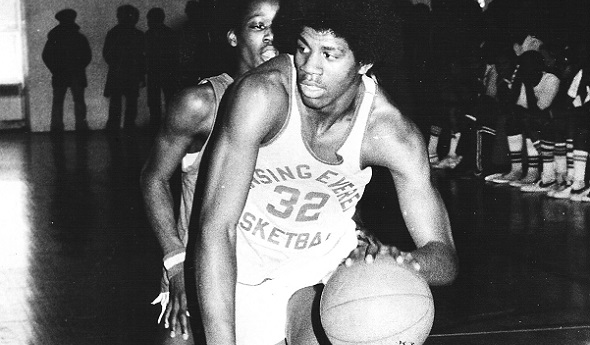
Earvin Johnson prepped at Lansing Everett and was the talk of the state in basketball circles before becoming a household name during his time at Michigan State and with the Los Angeles Lakers. Earlier this year, ESPN named Johnson the greatest point guard to ever play the game. Tom noted that “Magic” was really the inspiration for the “Mr. Basketball” award.
Then I posed a question to Tom.
What about creating a “new” award, designed to honor those greats from the past?
As my hobby of researching the history of high school sports in Michigan and beyond had grown over the years, I’d found the Great Lakes state had always produced shining stars on the basketball court. The crime was that the “Mr. Basketball” award hadn’t been launched many years before.
Harry Kipke, was perhaps the state’s first true basketball star. He won 12 varsity letters at Lansing Central and guided the basketball team to the semifinal round of the state tournament in 1920 as a senior, before heading to the University of Michigan where he earned letters in football, basketball and baseball. After stops at the University of Missouri and Michigan State, Kipke would serve as Michigan’s football coach, guiding the Wolverines to two national gridiron championships.
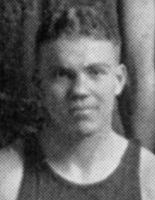 As a junior, the basketball antics of Grand Rapids Union’s Royal “Red” Cherry captured the state’s attention when he led Union to the state basketball championship. Considered the best all-around player of the tournament, Cherry led the team to a second consecutive title as a senior. He, too, attended Michigan, earning laurels on the basketball court and the baseball diamond.
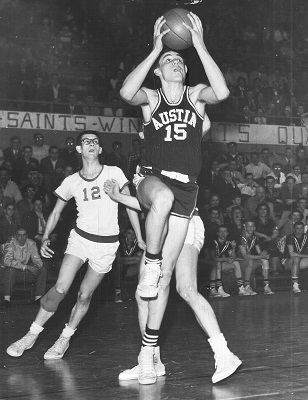
Many other legends of the hardcourt populated Michigan’s past: Saginaw’s Ernie Thompson; the Burton brothers, M.C. and Ed, of Muskegon Heights; Detroit Pershing’s Ralph Simpson and Spencer Haywood; Dave DeBusschere of Detroit Austin Catholic; Willie Betts and Blanche Martin of River Rouge; Ron Kramer of East Detroit; Benton Harbor’s Chet Walker and L.C. Bowen.
After a few weeks of research, discussion and thought, Tom agreed, and over the next several months the framework for the “Retro Mr. Basketball” project was developed
The idea was to try and mimic the current model. Only seniors, and their high school basketball careers, should be considered. While any “senior” player would be eligible, a ballot of the state’s elite would comprise the candidates for the award. Like their modern-day equivalents, where the events of life that would follow high school graduation had yet to occur, post-high school life would be disregarded as much as possible for “Retro” candidates.
Finally, the program would follow a 10-year arc, kicking off in the spring of 2010. This December marks my eighth year of research tied to the mission. Two more will follow.
Since the Schram “Mr. Basketball” award began in 1981, the “Retro” award would honor basketball players from the years 1920 through 1980. That first year, a ballot comprised of players from the years that ended in zero - 1920, 1930, 1940, 1950, 1960, 1970 and 1980 – was created. A senior for each year would be named the winner of the “Retro” award. That meant with the selection of “Mr. Basketball” and the six “Retro” winners for the years 1929, 1939, 1949, 1959, 1969 and 1979, scheduled for the spring of 2019, BCAM would be able to point to a combined list of Mr. Basketballs totaling 100 of the state’s finest.
To identify each year’s award winner, a committee of veteran BCAM members was formed to study a ballot of candidates and select a winner.
Technology, combined with scanning old-fashioned reels of microfilm, has helped with research of potential candidates. In those very early years, personal statistics were rarely kept. Rather, an assessment of a player’s skills, tied to the position he played, often served as a means to identify an area’s top athletes. Tournament play was often the only time an athlete’s abilities were on display to a larger audience. Scouring newspaper articles for all-tournament teams and yearbooks for additional details and years of study helped uncover the state’s top senior players. Understanding the game and its evolution was important. The center jump after each basket emphasized the importance of a tall, skilled center in those games played before the winter of 1938-39.
Beginning in 1935, all-state teams began to appear in state newspapers. Eventually, the Detroit Free Press, the Detroit Times, the Detroit News, The Associated Press and even United Press International became involved in identifying the state’s top basketball players and naming all-state squads. Much work is involved in parsing the 15,811 names (not including honorable mentions) found in those lists. When duplicates are removed, the names of 8,430 prep players remain spread over the 61 years that mark the “Retro” field of possible candidates.
Research to identify seniors, players named by multiple media outlets, and mini biographies are compiled for the top players. The field of candidates is then narrowed to 10 or fewer. Over state championship weekend, the ballots are brought to the BCAM committee for discussion, and finalists are named for each year. Finally, one player is named for each eligible season.
Like the modern day award, the selection may create some controversy. Some amazing ballplayers have landed on the finalist list, but were denied the Hal Schram Mr. Basketball award: Traverse City’s Dan Majerle, Roy Marble of Flint Beecher, Detroit Southwestern’s Jalen Rose, Detroit Northern’s Derrick Coleman and Draymond Green of Saginaw are among a few.
 The same applies to the “Retro” list. Fennville’s Richie Jordan, Robert “Bubbles” Hawkins from Detroit Pershing, Dennis Bankey of Detroit St. Thomas, Bill Chmielewski of Detroit Redeemer, Highland Park’s Terry Duerod and Detroit Kettering’s Lindsay Hairston all have been honored on the finalist lists, but fell short of the top prize.
In many cases, Michigan was loaded with prep talent – it’s tough to name Roy Marble Mr. Basketball when Flint Northwestern’s Glen Rice was on the same ballot, or Rose the state’s best when Country Day’s Chris Webber was another candidate. While the “Fennville Flash” amazed the state with his eye-popping statistics in 1965, Bowen led Benton Harbor to back-to-back Class A titles. Named an all-state basketball player as a junior, Hairston grew an inch and improved his game as a senior, but Pontiac Central’s “Campy” Russell dominated headlines that season, and was the “Retro” Mr. Basketball selection for 1971.
In some cases, it’s a challenge to look at the final balloting results without judging selections based on future basketball success. That certainly is the case with 2008. That season, Michigan’s Mr. Basketball award went to 6-foot guard Brad Redford, who posted incredible back-to-back high school seasons at Frankenmuth. Runner-up to the award that year was Saginaw’s Green. Considering Green’s success in the NBA, that’s hard for many to believe.
While the debates may never be settled, the beauty of Schram and “Retro” Mr. Basketball balloting can be found in the argument. With those disputes, people recall, research and learn about Michigan’s incredible prep basketball past.
The remaining three years of the “Retro” project will include many more legends of Michigan High School basketball, including, among others, DeBusschere, Walker, Haywood and Simpson.
This season, that “Magic” kid will be one of the names among the mix. Forty years after high school graduation, will he earn the honor that eluded him in high school, only because the honor didn’t yet exist?
 Ron Pesch has taken an active role in researching the history of MHSAA events since 1985 and began writing for MHSAA Finals programs in 1986, adding additional features and "flashbacks" in 1992. He inherited the title of MHSAA historian from the late Dick Kishpaugh following the 1993-94 school year, and resides in Muskegon. Contact him at [email protected] with ideas for historical articles.
PHOTOS: (Top) Lansing Everett’s Earvin Johnson drives around a defender during his celebrated high school career. (Middle) Grand Rapids Union’s Royal “Red” Cherry. (Below) Detroit Austin Catholic’s Dave DeBusschere drives to the hoop as an opponent gets in position to rebound. (Photos from MHSAA and Ron Pesch historical files.)
Breslin Bound: 2021-22 Boys District Preview
By
Geoff Kimmerly
MHSAA.com senior editor
March 7, 2022
It's March, its MHSAA Tournament time, and generally that's enough to explain the excitement and urgency as we begin the annual championship portion of a four-month journey that will end again in East Lansing.
 District tournaments tip off all over the state tonight. Check out “Tracking the Tournament” on MHSAA.com for every matchup from all of them, and see below for some of last week’s most eye-catching scores and three Districts in each division that could make the biggest impacts this week on the overall postseason pictures.
“Breslin Bound” is powered by MI Student Aid.
Week in Review
The countdown of last week’s five most intriguing results:
1. Orchard Lake St. Mary’s 50, Detroit Martin Luther King 49 St. Mary’s (16-4) edged King (18-2) in the annual Operation Friendship game between the champions of the Detroit Catholic League and Public School League Tournaments.
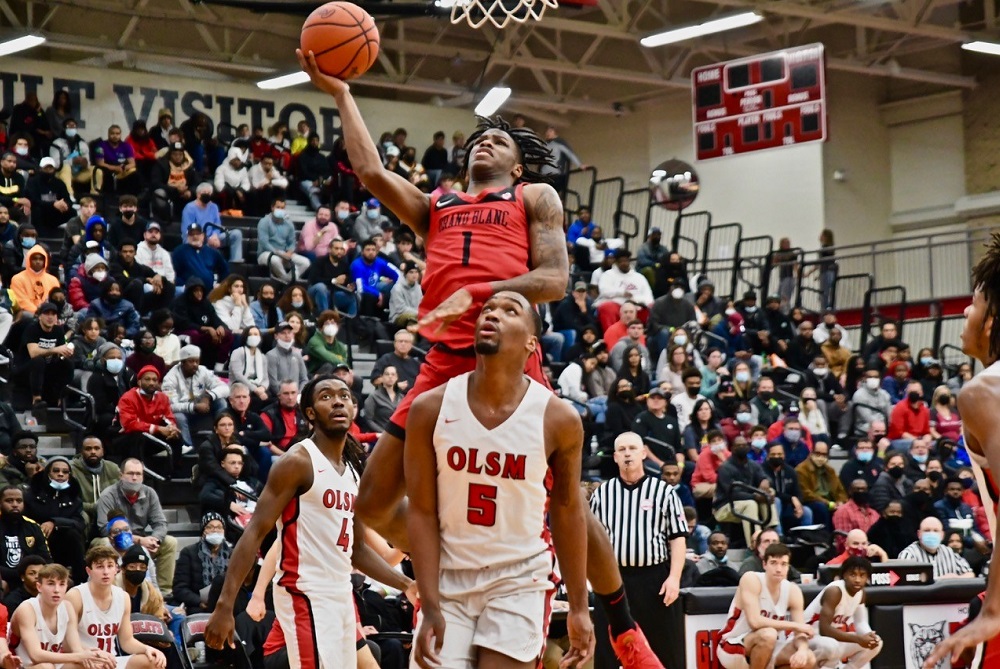
2. Grand Blanc 68, Flint Beecher 57 The reigning Division 1 champion Bobcats (15-5) finished the regular season defeating last year’s Division 3 champion Beecher (17-2).
3. Kalamazoo Central 51, Muskegon 46 The Maroon Giants (12-7) have had some massive wins and tough losses this season, but this certainly files under the former as the Big Reds (18-2) are Division 1 title contenders.
4. Hartland 42, Canton 39 The Eagles (16-4) had finished second to Canton (15-5) in the Kensington Lakes Activities Association West, but with this victory claimed the league tournament title.
5. Carson City-Crystal 32, Blanchard Montabella 29 The Eagles (17-3) earned a share of the Mid-State Activities Conference title by adding a second three-point win over the Mustangs this season (17-3).
Districts at a Glance
These could be among our most competitive brackets. Host sites are in bold:
DIVISION 1
Detroit Western
1. Detroit Martin Luther King (18-2), 2. Detroit Cass Tech (17-3), River Rouge (17-3), Detroit Western (15-4), Melvindale (10-9).
This power-packed bracket includes the champions from the Detroit Public School League Blue (King) and Gold (Western), the runner-up from the Blue (Cass Tech) and the runner-up from the Michigan Metro Athletic Conference Black (Rouge). King, No. 3 overall in Division 1 MPR, defeated Cass by five in league play and Western in the PSL Tournament championship game, in addition to impressive wins over Flint Beecher (17-2), Grand Blanc (15-5), Ann Arbor Huron (17-3), Kalamazoo Central (12-7) and others. Its one-point loss to Orchard Lake St. Mary’s last week was its first since the season opener. Cass Tech’s losses were by a combined 12 points and it has a win over Flint Carman-Ainsworth (14-6); the Technicians could open with Western in a semifinal after falling to the Cowboys 57-53 on Feb. 17. Western opens with River Rouge, which lost its final two games but against Hamtramck (17-3) and Grand Blanc.
Muskegon
1. Muskegon (18-2), 2. Grand Haven (17-3), Muskegon Reeths-Puffer (13-7), Coopersville (13-7), Grand Rapids Kenowa Hills (13-7), Grand Rapids Union (8-11), Muskegon Mona Shores (9-11).
The Big Reds are coming off an undefeated run through the Ottawa-Kent Conference Green, which includes Reeths-Puffer and Mona Shores, but also are coming off a loss to Kalamazoo Central in the regular-season finale. Muskegon’s only other defeat was to Ferndale, and an 84-79 win over 2021 Division 1 champion Grand Blanc on Feb. 19 is what people should recall first when thinking of the team’s prospects this month. Grand Haven saw its O-K Red title chance slip away with a pair of losses in its final two league games, but similarly a win over league champ Rockford (18-2) showed what the Buccaneers are capable of presenting. Coopersville had a win this season over Grand Rapids West Catholic (15-5), and Kenowa Hills defeated Coopersville in overtime at the start of February.
West Bloomfield
1. Orchard Lake St. Mary’s (16-4), 2. Bloomfield Hills Brother Rice (14-6), Bloomfield Hills (16-4), Birmingham Groves (12-7), Birmingham Seaholm (8-11), West Bloomfield (4-15).
The Detroit Catholic League Central’s five teams all finished among the top six in overall Division 1 MPR, and this is the only District with multiple. St. Mary’s, No. 2 overall, lost to Brother Rice 45-43 on Jan. 14 and 62-50 on Feb. 1, and didn’t see the Warriors on the way to winning the Catholic League Bishop Tournament. The win over King last week was just one of many impressive ones for the Eaglets, who have five victories over teams that finished 15-5 or better including Grand Blanc and Ferndale as well. Brother Rice, No. 5 overall, also has wins over Grand Blanc and Carman-Ainsworth and won’t have to face Bloomfield Hills, which opens on St. Mary’s side of the bracket. The Black Hawks shared the Oakland Activities Association White championship and closed on a five-game winning streak.
DIVISION 2
Grand Rapids West Catholic
1. Hudsonville Unity Christian (20-0), 2. Grand Rapids Catholic Central (19-1), Grand Rapids West Catholic (15-5), Ada Forest Hills Eastern (15-5), Allendale (6-14), Wyoming Lee (5-15).
This District features the two most recent Division 2 champs, last year’s winner Grand Rapids Catholic Central and 2019 champ Unity Christian (with 2020 canceled because of COVID-19). Unity Christian won the O-K Blue, handing West Catholic two of its defeats along the way, while GRCC won the O-K Gold and defeated Forest Hills Eastern twice during league play. Third rounds of both are part of this bracket if West Catholic and FHE win their openers. GRCC defeated Unity Christian 71-52 in last season’s District Final on the way to its undefeated finish.
Marshall
1. Marshall (18-2), 2. Olivet (19-1), Battle Creek Pennfield (14-6), Battle Creek Harper Creek (14-6), Eaton Rapids (10-10), Charlotte (8-12).
League title winners also line up on opposite sides of this bracket, with Interstate 8 Athletic Conference co-champ Marshall and the Great Lakes Activities Conference’s Olivet. The Eagles’ only loss this season was by two to league rival Leslie (11-9), and Olivet will open Wednesday against the winner of an I8AC matchup between Harper Creek and Pennfield – last season’s Division 2 runner-up. Harper Creek won its regular-season matchups with Pennfield by 18 and 12. Pennfield did deal Marshall a loss, by four, Jan. 11.
Wyoming Kelloggsville
1. Grand Rapids Christian (16-4), 2. Grand Rapids South Christian (15-5), Wyoming Godwin Heights (9-8), Wyoming Kelloggsville (12-8), Grand Rapids West Michigan Aviation Academy (14-6), Kentwood Grand River Prep (6-8).
The Eagles enter the top seed as runners-up from the O-K White but with all three of their losses to Division 1 opponents and as the only team to defeat Grand Rapids Northview (19-1). South Christian tied for second in the O-K Gold, but all of its losses were to teams that finished 15-5 or better – including a season-opening defeat to Grand Rapids Christian, 66-58. Godwin Heights, Kelloggsville and WMAA all were upper-division teams in their respective leagues as well, with Kelloggsville and Godwin Heights meeting in an opener after splitting their regular-season series.
DIVISION 3
Buchanan
1. Niles Brandywine (13-5), 2. Watervliet (16-3), Bridgman (12-8), Cassopolis (16-4), Buchanan (12-8).
This District features five teams that all finished among the top 42 in overall Division 3 MPR, with Brandywine at No. 10 and Watervliet at No. 14. Brandywine lines up as the Berrien-Cass-St. Joseph Conference Red champ on one side of the bracket, facing league opponent Buchanan for the third time. Watervliet was the co-champ of the Southwestern Athletic Conference Lakeshore and sits on the other side. Cassopolis was second in the Southwest 10 Conference and opens with a rematch against Bridgman, which tied for second in the BCS Red and defeated the Rangers by 16 on Dec. 28. The winner of that game sees Watervliet on Wednesday.
Maple City Glen Lake
1. Traverse City St. Francis (18-2), 2. Benzie Central (17-3), Elk Rapids (14-6), Maple City Glen Lake (15-5), Mancelona (14-6).
All five teams finished among the top 52 in overall Division 3 MPR, led by St. Francis (No. 4), Elk Rapids (13) and Benzie (19). St. Francis was first in the Lake Michigan Conference, with Elk Rapids second. Benzie won the Northwest Conference a game ahead of Glen Lake, while Mancelona was runner-up in the Ski Valley Conference. Benzie avenged its Jan. 25 eight-point loss to Glen Lake with a 13-point win Feb. 25 but lost both of its games last week against larger Big North Conference opponents. St. Francis’ only losses this season were to Division 1 teams.
Michigan Center
1. Vandercook Lake (18-2), 2. Napoleon (18-2), Michigan Center (14-6), Grass Lake (6-13), Jackson Lumen Christian (3-17), East Jackson (5-15).
This lines up as concluding with a third game between Cascades Conference champ Vandercook Lake and runner-up Napoleon – and Vandercook Lake won the regular-season meetings by seven and six points. But surely the Jayhawks are keeping an eye on Michigan Center, which finished third in the Cascades and won the second meeting with Vandercook 68-66 on Feb. 4. They would meet again in a District Semifinal if Michigan Center defeats Lumen Christi in their opener. Grass Lake is an interesting upset prospect after losing to Vandercook Lake by only four and five points and to Michigan Center in overtime in their second meeting.
DIVISION 4
Carney-Nadeau
1. Powers North Central (16-4), 2. Hannahville Nah Tah Wahsh (18-2), Norway (14-6), Stephenson (13-6), Crystal Falls Forest Park (9-11), Carney-Nadeau (4-14), Felch North Dickinson (3-17).
The Jets went undefeated in winning the Skyline Central Conference small-school division, although they did lose a pair of games last week. North Central defeated Norway twice by double digits and would see the Knights again Wednesday if Norway gets by Forest Park for a third time. On the other side, the Soaring Eagles also are coming off a pair of losses last week, including by 26 to Stephenson – their opponent in tonight’s opener. Stephenson has won six straight.
Deckerville
1. Ubly (15-4), 2. Kinde North Huron (15-5), Deckerville (14-6), Carsonville-Port Sanilac (5-13), Caseville (1-12).
Ubly (12), North Huron (24) and Deckerville (27) were top-30 teams in the final overall Division 4 MPR. Ubly won the Greater Thumb Conference East, while North Huron was first in the North Central Thumb League Stars and Deckerville second. Deckerville did win their first matchup by five before North Huron won the rematch by six Feb. 18 as part of a 10-game winning streak. They could meet again in a Wednesday District Semifinal.
Three Oaks River Valley
1. New Buffalo (19-1), 2. Eau Claire (14-5), Three Oaks River Valley (15-5), Benton Harbor Countryside Academy (11-7), St. Joseph Lake Michigan Catholic (7-11), St. Joseph Michigan Lutheran (6-13).
New Buffalo finished No. 1 in overall Division 4 MPR, with Eau Claire No. 15 and River Valley No. 20. All six of these teams are from the BCS White, with New Buffalo the champion, Eau Claire a co-runner-up, River Valley fourth and Countryside fifth. New Buffalo’s only loss this season came to Niles Brandywine, and it defeated Eau Claire by nine and 15 points and possible Wednesday opponent River Valley by 12 and 16. Eau Claire defeated Countryside by 12 and 25, and they could meet a third time as well Wednesday.
Second Half’s weekly “Breslin Bound” previews and reviews are powered by MI Student Aid, a part of the Office of Postsecondary Financial Planning located within the Michigan Department of Treasury. MI Student Aid encourages students to pursue postsecondary education by providing access to student financial resources and information. MI Student Aid administers the state’s 529 college savings programs (MET/MESP), as well as scholarship and grant programs that help make college Accessible, Affordable and Attainable for you. Connect with MI Student Aid at www.michigan.gov/mistudentaid and find more information on Facebook and Twitter @mistudentaid.
PHOTO Orchard Lake St. Mary's downed Grand Blanc 65-62 on Jan. 8. Both are considered Division 1 championship contenders as District play begins. (Photo by Terry Lyons.)