

'Retro' Award Rewards 1st Hoops Legends
January 4, 2017
By Ron Pesch
Special for Second Half
Before the start of the MHSAA’s 2009 Boys Basketball finals, Basketball Coaches Association of Michigan director Tom Hursey stopped by my seat at Michigan State University’s Breslin Center to say hello.
Our chat would alter a decade of my Michigan winters.
Somewhere between hello and goodbye, our chat included conversation on one of my favorite BCAM ventures. In 1981, the Michigan High School Basketball Coaches Association, as BCAM was once known, named its first “Mr. Basketball.” I was two years out of high school when Lansing Eastern’s Sam Vincent edged Eric Turner of Flint Central for that first award. Designed to honor the state’s top senior, the award was named in honor of Detroit Free Press writer Hal Schram. “The Swami,” as he was nicknamed, Schram began covering high school sports for the newspaper in 1945.
The 2009 selection was 6-foot-9 Derrick Nix of Detroit Pershing. I mentioned my affinity for the Mr. Basketball program to Tom, but stated that I always thought it a crime that the award didn’t start years earlier, at least when Michigan hoop fans became infatuated with a kid nicknamed “Magic.”
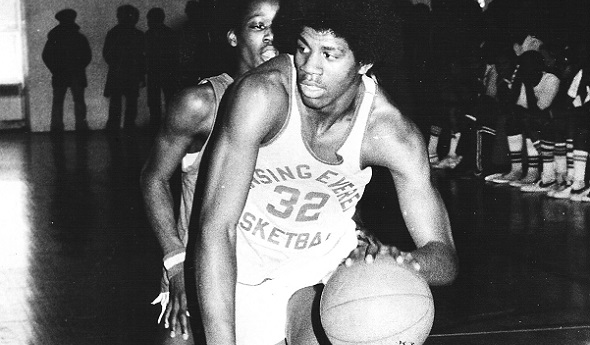
Earvin Johnson prepped at Lansing Everett and was the talk of the state in basketball circles before becoming a household name during his time at Michigan State and with the Los Angeles Lakers. Earlier this year, ESPN named Johnson the greatest point guard to ever play the game. Tom noted that “Magic” was really the inspiration for the “Mr. Basketball” award.
Then I posed a question to Tom.
What about creating a “new” award, designed to honor those greats from the past?
As my hobby of researching the history of high school sports in Michigan and beyond had grown over the years, I’d found the Great Lakes state had always produced shining stars on the basketball court. The crime was that the “Mr. Basketball” award hadn’t been launched many years before.
Harry Kipke, was perhaps the state’s first true basketball star. He won 12 varsity letters at Lansing Central and guided the basketball team to the semifinal round of the state tournament in 1920 as a senior, before heading to the University of Michigan where he earned letters in football, basketball and baseball. After stops at the University of Missouri and Michigan State, Kipke would serve as Michigan’s football coach, guiding the Wolverines to two national gridiron championships.
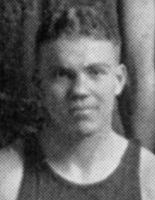 As a junior, the basketball antics of Grand Rapids Union’s Royal “Red” Cherry captured the state’s attention when he led Union to the state basketball championship. Considered the best all-around player of the tournament, Cherry led the team to a second consecutive title as a senior. He, too, attended Michigan, earning laurels on the basketball court and the baseball diamond.
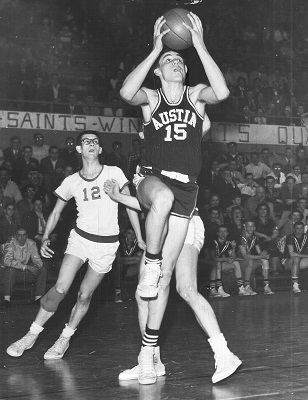
Many other legends of the hardcourt populated Michigan’s past: Saginaw’s Ernie Thompson; the Burton brothers, M.C. and Ed, of Muskegon Heights; Detroit Pershing’s Ralph Simpson and Spencer Haywood; Dave DeBusschere of Detroit Austin Catholic; Willie Betts and Blanche Martin of River Rouge; Ron Kramer of East Detroit; Benton Harbor’s Chet Walker and L.C. Bowen.
After a few weeks of research, discussion and thought, Tom agreed, and over the next several months the framework for the “Retro Mr. Basketball” project was developed
The idea was to try and mimic the current model. Only seniors, and their high school basketball careers, should be considered. While any “senior” player would be eligible, a ballot of the state’s elite would comprise the candidates for the award. Like their modern-day equivalents, where the events of life that would follow high school graduation had yet to occur, post-high school life would be disregarded as much as possible for “Retro” candidates.
Finally, the program would follow a 10-year arc, kicking off in the spring of 2010. This December marks my eighth year of research tied to the mission. Two more will follow.
Since the Schram “Mr. Basketball” award began in 1981, the “Retro” award would honor basketball players from the years 1920 through 1980. That first year, a ballot comprised of players from the years that ended in zero - 1920, 1930, 1940, 1950, 1960, 1970 and 1980 – was created. A senior for each year would be named the winner of the “Retro” award. That meant with the selection of “Mr. Basketball” and the six “Retro” winners for the years 1929, 1939, 1949, 1959, 1969 and 1979, scheduled for the spring of 2019, BCAM would be able to point to a combined list of Mr. Basketballs totaling 100 of the state’s finest.
To identify each year’s award winner, a committee of veteran BCAM members was formed to study a ballot of candidates and select a winner.
Technology, combined with scanning old-fashioned reels of microfilm, has helped with research of potential candidates. In those very early years, personal statistics were rarely kept. Rather, an assessment of a player’s skills, tied to the position he played, often served as a means to identify an area’s top athletes. Tournament play was often the only time an athlete’s abilities were on display to a larger audience. Scouring newspaper articles for all-tournament teams and yearbooks for additional details and years of study helped uncover the state’s top senior players. Understanding the game and its evolution was important. The center jump after each basket emphasized the importance of a tall, skilled center in those games played before the winter of 1938-39.
Beginning in 1935, all-state teams began to appear in state newspapers. Eventually, the Detroit Free Press, the Detroit Times, the Detroit News, The Associated Press and even United Press International became involved in identifying the state’s top basketball players and naming all-state squads. Much work is involved in parsing the 15,811 names (not including honorable mentions) found in those lists. When duplicates are removed, the names of 8,430 prep players remain spread over the 61 years that mark the “Retro” field of possible candidates.
Research to identify seniors, players named by multiple media outlets, and mini biographies are compiled for the top players. The field of candidates is then narrowed to 10 or fewer. Over state championship weekend, the ballots are brought to the BCAM committee for discussion, and finalists are named for each year. Finally, one player is named for each eligible season.
Like the modern day award, the selection may create some controversy. Some amazing ballplayers have landed on the finalist list, but were denied the Hal Schram Mr. Basketball award: Traverse City’s Dan Majerle, Roy Marble of Flint Beecher, Detroit Southwestern’s Jalen Rose, Detroit Northern’s Derrick Coleman and Draymond Green of Saginaw are among a few.
 The same applies to the “Retro” list. Fennville’s Richie Jordan, Robert “Bubbles” Hawkins from Detroit Pershing, Dennis Bankey of Detroit St. Thomas, Bill Chmielewski of Detroit Redeemer, Highland Park’s Terry Duerod and Detroit Kettering’s Lindsay Hairston all have been honored on the finalist lists, but fell short of the top prize.
In many cases, Michigan was loaded with prep talent – it’s tough to name Roy Marble Mr. Basketball when Flint Northwestern’s Glen Rice was on the same ballot, or Rose the state’s best when Country Day’s Chris Webber was another candidate. While the “Fennville Flash” amazed the state with his eye-popping statistics in 1965, Bowen led Benton Harbor to back-to-back Class A titles. Named an all-state basketball player as a junior, Hairston grew an inch and improved his game as a senior, but Pontiac Central’s “Campy” Russell dominated headlines that season, and was the “Retro” Mr. Basketball selection for 1971.
In some cases, it’s a challenge to look at the final balloting results without judging selections based on future basketball success. That certainly is the case with 2008. That season, Michigan’s Mr. Basketball award went to 6-foot guard Brad Redford, who posted incredible back-to-back high school seasons at Frankenmuth. Runner-up to the award that year was Saginaw’s Green. Considering Green’s success in the NBA, that’s hard for many to believe.
While the debates may never be settled, the beauty of Schram and “Retro” Mr. Basketball balloting can be found in the argument. With those disputes, people recall, research and learn about Michigan’s incredible prep basketball past.
The remaining three years of the “Retro” project will include many more legends of Michigan High School basketball, including, among others, DeBusschere, Walker, Haywood and Simpson.
This season, that “Magic” kid will be one of the names among the mix. Forty years after high school graduation, will he earn the honor that eluded him in high school, only because the honor didn’t yet exist?
 Ron Pesch has taken an active role in researching the history of MHSAA events since 1985 and began writing for MHSAA Finals programs in 1986, adding additional features and "flashbacks" in 1992. He inherited the title of MHSAA historian from the late Dick Kishpaugh following the 1993-94 school year, and resides in Muskegon. Contact him at [email protected] with ideas for historical articles.
PHOTOS: (Top) Lansing Everett’s Earvin Johnson drives around a defender during his celebrated high school career. (Middle) Grand Rapids Union’s Royal “Red” Cherry. (Below) Detroit Austin Catholic’s Dave DeBusschere drives to the hoop as an opponent gets in position to rebound. (Photos from MHSAA and Ron Pesch historical files.)
Athens' #13 Makes 'Miracle' Comeback
By
Pam Shebest
Special for MHSAA.com
October 19, 2015
ATHENS — Damon Knowles talked about baseball and basketball with his cousin, Luke Lamson, one warm Sunday last December.
That’s not unusual for the two young teens, but that day Lamson lay crushed beneath the wheels of a semi trailer loaded with corn and weighing more than 30,000 pounds.
 His cousin had crawled beneath the trailer to keep Lamson awake until the ambulance arrived with the Jaws of Life. Both boys were in eighth grade at the time.
Immediately following the accident, “My dad told me to go get the phone so we could call 911,” Knowles, 14, said. “I went under the trailer and was talking to Luke. I just had to keep asking him if he could breathe.”
That accident drastically changed the way Lamson figured his freshman year at Athens High School would play out. Instead of running cross country and playing basketball this year, he is on the sidelines cheering his teammates.
The fact the 14-year-old can actually do that now is a story of amazing recovery and faith.
Knowles, his dad John and Lamson were the only ones at the farm, moving the corn to the silo at the time of the accident. None of them knows exactly how the accident happened, but John Knowles said the ground was soft from rain the day before, which probably kept his nephew from being crushed to death.


 Lamson said he was awake the entire time, but doesn’t remember much about the accident.
“It didn’t kill him because we kept the pressure on him,” an emotional John Knowles said. “I could have drove the truck off him. Had a piece of machinery there, I could have tipped the truck off him.
“But I kept the pressure on him and he didn’t bleed internally. There was a higher power telling me not to get the trailer off him. He should have never made it out from under the trailer, never made it to the hospital. The first couple days were nerve-wracking.
“By the time I got to the hospital (later that day), half of Athens was there. We had over 90 people in the waiting room that night; probably 25 of them spent the night.”
Said Lamson’s mother, Lucy: “Being the adult and the one driving the vehicle, my brother was a mess. This little guy (Damon) was down there with Luke, underneath the trailer while he was pinned and held his head and made him stay awake and just kept talking with him.
“To me, that was the first miracle. Luke is sitting here right now because of it.”
The family created a Facebook page, Lukey Lamson’s Comeback, to post updates for friends and family.
The first entry explained: “He has a shattered pelvis, a compound fracture in his shoulder, a fracture in his lower back, and numerous open wounds. He currently just got out of surgery and they were able to attach a wound vac to help his wounds heal.
“We are receiving some communication from him such as waves, thumbs up, and hand squeezes when he is off his sedation medication, which is only for a few minutes at a time.”
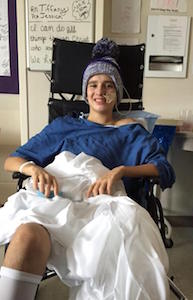 Lamson, who spent two months in Kalamazoo’s Bronson Methodist Hospital and one in University of Michigan’s C.S. Mott Children’s Hospital, said at the beginning he wasn’t sure he would live.
“There was times in the hospital that Luke wasn’t real fun to be around,” his uncle said. “There was one time I come around the corner and my mother and my sister were crying. I said what’s wrong. They said Luke wants to die.
“So I walked in there. I asked the two nurses to leave. We had a good heart-to-heart talk, and things changed.”
By Dec. 10, three days after the accident, Lamson was taken off the ventilator. And by Christmas, he had survived seven surgeries.
On Dec. 28 he was moved from the intensive care unit to a regular room, and by Jan. 20 he was able to sit in a wheelchair for the first time. He left Bronson for Mott’s on Feb. 3.
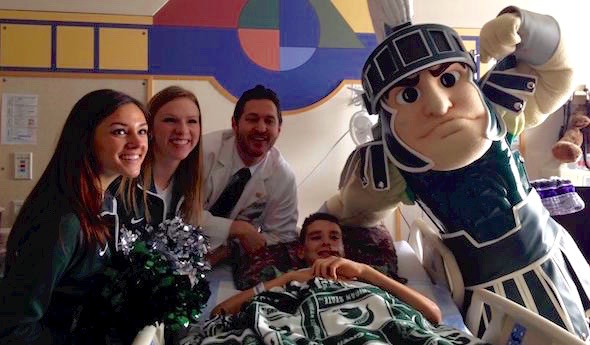
One bright spot in those early days came from Bronson Hospital’s Dr. Michael Leinwand who learned that Lamson is a huge Michigan State fan. He arranged for a visit from two students from the MSU dance team along with mascot Sparty.
Lamson had an attitude adjustment at Mott’s, where he found inspiration after watching an ESPN short called “Miraculous: The Austin Hatch Story,” about the University of Michigan basketball player.
“(Hatch) survived two plane crashes and lost his mother, father, two siblings and a stepmother in those two airplane crashes,” Lucy Lamson said. “He had a crushed pelvis, brain injuries. He worked like there was no tomorrow, and he didn’t have the family to support him.
“After we watched the story, Luke looked at me and said he doesn’t even have his mom and his dad to help him, and I do. That’s when he kicked it in.”
Lamson has had 22 surgeries with another scheduled for later this week, goes for physical therapy three times a week and has actually walked Athens’ home course at Stanton Farms with the cross country team.
He expects to be on the sidelines cheering on the team at its regional Oct. 31 and hopes to be a manager for the basketball team.
Lucy Lamson said it is not just the community who has come together to support the family, but also teams in the Big 8 Conference.
While at Mott’s, the teen wanted a leave to attend an Athens basketball game when his sister, Josie, was on the homecoming court.
 He worked hard to meet all the criteria his doctors set and planned the surprise.
“We played our rival, Union City,” Lucy Lamson said. “They did a fundraiser for him, too. My sister was thanking everyone and then Luke rolled in in his wheelchair. and everybody just cried.”
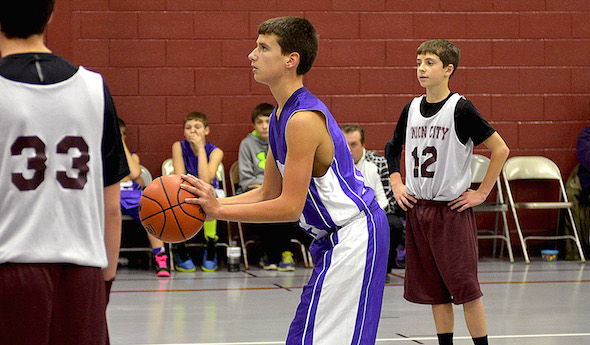
Lamson’s basketball number has always been 13, and that number actually gave the family some comfort.
“After the accident, that number kept showing up everywhere,” his mother said. “The room he was in at one point was 13. Damon’s first gymnastics meet after the accident, he drew 13. They won a basketball game by 13.
“Players had headbands made that had 13 on them. Other teams in our conference that played our team would come in with 13 on their shirts or wristbands. At a dollar store for fundraiser stuff, the amount came to exactly $13. That was our way of knowing that God was with us and Luke would be OK.”
Lamson, Knowles and Riley Howard, all freshmen, figured they would be battling each other on the cross country team this year.
Instead, Knowles and Howard are running with Lamson cheering them on.
Although basketball is his first love, “We talked Luke into running cross country his seventh grade year, so he ran seventh and eighth grade years,” said coach Missy Hamilton, who also teaches science at the middle school.
“He’s just amazed everybody because we didn’t think he’d be back in school last year. He came back after spring break, in a wheelchair. He’s starting to walk a little bit. Now he walks the halls (with a brace on his left leg).
“I’m hoping he’ll be ready to run with us next year, and by the time he’s a junior, full time. As he works through his physical therapy, he becomes stronger and stronger.”
Damon Knowles has dedicated this cross country season to his cousin.
Asked if he thinks of Luke running beside him during meets, Damon replied, laughing and without hesitation: “Maybe behind me.”
Howard said Lamson is an inspiration to the other athletes.
“I’ve known him my whole life,” Howard said. “I was worried that he wasn’t going to make it, but I was really surprised because he’s up and walking.
“It’s inspired me to work harder, actually, because he’s not doing this right now, but he’ll be back. The team likes it when he’s there supporting us.”
John Knowles said the family has become even closer since the accident.
“There’s been a lot of great things that have come from this accident that is bigger than any one person or any one sport,” he said. “You’ve got to have bad days to appreciate the good days. Sports is a great teacher of that.”
 Pam Shebest served as a sportswriter at the Kalamazoo Gazette from 1985-2009 after 11 years part-time with the Gazette while teaching French and English at White Pigeon High School. She continues to freelance for MLive.com covering mainly Kalamazoo Wings hockey and can be reached at [email protected] with story ideas for Calhoun, Kalamazoo and Van Buren counties.
PHOTOS: (Top) Luke Lamson, in bed, is surrounded by his doctor, members of the Michigan State University dance team and Sparty during his stay at Bronson Hospital. (Middle) From left, John Knowles, Damon Knowles, Lucy Lamson. (Middle below) Luke Lamson sits up as his recovery continues. (Below) Lamson played basketball during middle school. (Top and middle photos courtesy of Lamson family; head shots by Pam Shebest, basketball photo by Photography by Char.)