

Where's Cros-Lex? Among Hoops Best
By
Paul Costanzo
Special for MHSAA.com
February 16, 2021
Conversations about Croswell-Lexington basketball have long been common in Lance Campbell’s barbershop.
 Hearing them on the opposite side of the state, though, is something new.
“It’s nice to go on Twitter and have people talking about Cros-Lex,” said Campbell, the Cros-Lex boys coach whose full-time job is running Campbell’s Cuts in Croswell. “It hasn’t been something that’s happened. It’s nice to get the statewide attention. A friend of mine went to a showcase in Grand Rapids, and said he was sitting in the stands and people were like, ‘Who the (heck) is that Croswell whatever? Where the (heck) are they?’”
To answer the question: Cros-Lex is a few miles inland from Lake Huron in the southern half of the Thumb. But the folks on the west side were talking because they had already found Cros-Lex – near the top of the Division 2 boys basketball rankings.
The Pioneers were 20-1 a year ago, spending most of the season in the top five of the polls. They were ranked No. 25 in all divisions by MLive heading into the postseason and were picked by multiple writers and followers of the sport to make the school’s first run to the Breslin Center for the MHSAA Final Four.
The online chatter never had a chance to turn into more, as the season was ended prior to the District Final because of COVID-19. But with much of the team back, led by four-year standouts Hunter Soper and Tyler Johnson, the Pioneers are looking to prove all the talk was justified.
“Last year felt perfect,” Soper said. “It’s hard to think about it, and going to bed every night with a ‘What if?’ Everything felt like it was clicking for us. We’re trying to get back to that this year. We’re hoping to make a deep run again and not end on a ‘what if,’ but a ‘we won.’”
Campbell, a Cros-Lex graduate himself, won’t say outright that he saw this coming. But he also won’t say that he didn’t.
While he’s in his fourth year as varsity coach, he’s been coaching at some level in the program since the early 2000s, when his former coach Don Roberts asked him to come aboard. He watched the players who now make up his team grow up as athletes on the basketball court, baseball diamond and football field.
“Five or six years ago, we kind of looked and thought this could be a special class, but I’ve seen that happen multiple times and you never know how it will work out,” Campbell said. “When I was in eighth grade, I think four of the five starters didn’t even play basketball by the time we were on varsity. This senior class, Joey Noll was a role player, he was the eighth or ninth kid on the eighth-grade team, now he’s a starter. Two kids who started on that eighth-grade group aren’t playing anymore. We kind of envisioned this being a special group, but again, I’ve seen where it doesn’t always work out.”
There was also a question as to whether the talented group would turn its focus to one sport over another. Many of the Campbell’s current players grew up playing baseball together on travel teams. As they reached high school, however, the multi-sport focus has only increased. Campbell said each member of main rotation is a multi-sport athlete, many of them playing three sports. That’s a source of pride for Campbell, who is also the school’s golf coach.
“When we had four-man workouts, I was like, ‘Basketball is not even on your radar right now. Focus on things football related,’” he said. “We have to collectively work together. (Football coach Mike LeGrow) did a good job this year, and hopefully that will continue. I know some of these kids are starting to throw some baseballs. We also tell them to not overdo it. We’re going six days a week right now, three days of games, three days of practices, and once in a while you have to be a kid. You have to stay home and play PlayStation or Xbox. If you have a girlfriend, you have to take her to the movies. You have to spend some time with your parents.”
The players also weren’t sure of what could come, even though Soper and Johnson were showing early signs of being special on the court, having moved up to the fifth-grade team as third graders.
“I think back then we were mostly focused on baseball,” said Johnson, who is still weighing playing baseball and basketball in college. “We were part of a really good travel baseball team. It wasn’t until our sophomore year that we thought, ‘OK, basketball could be it.’ That was our first summer playing AAU.”
Johnson said playing multiple sports together has brought the team closer together, referring to his teammates as brothers. It’s also helped to build chemistry on each field of play.
“I feel like it helps out a lot with the different roles everyone plays on the baseball diamond or football field,” Soper said. “You get to understand what guys do, and their tendencies.”
Soper and Johnson are the unquestioned stars on the basketball court. Both stand at 6-foot-5 and are dangerous from anywhere on the court. While neither has signed with a college, they both plan to play at the next level. Soper was the Blue Water Area Conference MVP a year ago, and Johnson was runner-up.
As Cros-Lex has rolled to a 3-0 start this season, Soper is averaging 17.3 points per game and Johnson 14. Soper also has set the school record for career rebounds.
But the Pioneers have shown they go much deeper than their two stars as they are winning by an average of 40.6 points per game. Juniors Saige Slanec and Jake Townsend have also contributed double-figure scoring games. Seniors Noll and Nolan Durand continue to play major roles on both ends of the floor, and sophomore point guard Trey Kolakovich has meshed nicely with his older teammates in his second varsity season.
 “Collectively, we’ve got so many kids that do things that kind of get overlooked,” Campbell said. “The great thing with our team is, I had a guy send me a message after the game (Saturday against Brown City) and he said there were instances in the fourth quarter when we had some bench players on the floor and they did things well and everyone on the bench was up and cheering. I always tell them that I was all-area in high school, but no one remembers that. If we would have been good enough to put up a championship on a banner, then everyone would see it. If we do things collectively, as a team, that’s something not anybody can take away from you.”
The Pioneers have never won a Regional title, something this year’s team hopes to end. But they know it won’t be easy, and after last year, they are simply embracing the opportunity.
“I feel like every practice, every time we’re together and every time you’re on the court, we don’t take it for granted,” Soper said. “Especially for a senior, everybody talks about how fast it goes, but you don’t really know until you live through it.”
They’re also not taking the online chatter and recognition for granted, even if they’re much more interested in showing the state how good they are in person.
“It’s really cool that a little town in east Michigan in the Thumb and on the lake can get all this recognition, and that people are talking about us,” Johnson said. “We see most of it, and we talk about it, but it’s not like we freak out about it. Coach keeps us pretty under control. You can look at this stuff, but it doesn’t mean much. You just have to keep playing.”
 Paul Costanzo served as a sportswriter at The Port Huron Times Herald from 2006-15, including three years as lead sportswriter, and prior to that as sports editor at the Hillsdale Daily News from 2005-06. He can be reached at [email protected] with story ideas for Genesee, Lapeer, St. Clair, Sanilac, Huron, Tuscola, Saginaw, Bay, Arenac, Midland and Gladwin counties.
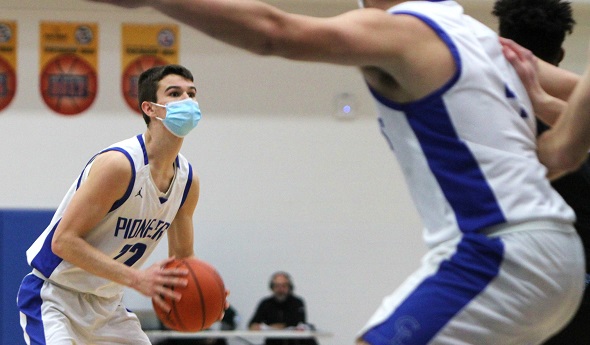
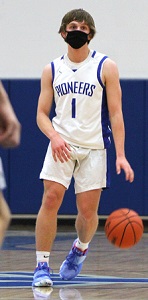
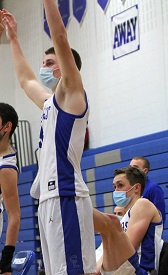
PHOTOS: (Top) Croswell-Lexington’s Saige Slanec looks into the post during a game this season. (Middle) Trey Kolakovich brings the ball up the floor. (Below) Croswell-Lexington’s bench anticipates a teammate’s 3-pointer. (Photos courtesy of Mike Gallagher/Sanilac County News.)
Breslin Bound: Boys Report Week 8
February 4, 2020
By Geoff Kimmerly
Second Half editor
Whether it was last week’s Upper Peninsula matchup of statewide Division 3 contenders or the Saturday night showcase of recent MHSAA Finals champions, this boys basketball season at the start of February already has taken on a tournament-time atmosphere.
 That should only continue to build this week as league races get more intense and state powers meet again for another big event in the Grand Rapids area.
“Breslin Bound” is powered by MI Student Aid and based on results and schedules posted for each school at MHSAA.com. Send corrections or missing scores to [email protected].
Week in Review
The countdown of last week’s five most intriguing results:
1. Benton Harbor 73, Ypsilanti Lincoln 51 – The marquee matchup of the Grand Rapids Redhawk Classic saw the Tigers move up to No. 5 in Division 2 MPR with this win over the reigning Division 1 champion Lincoln, which was No. 1 in Division 1 last week but fell to No. 6.
2. Orchard Lake St. Mary’s 65, Hudsonville 47 – The Eaglets took back the top spot in Division 1 MPR by handing Hudsonville its first loss, also at the Redhawk Classic.
3. Iron Mountain 69, Negaunee 51 – A full house watched the unbeaten Mountaineers hand the Miners their first loss; they meet again in the regular-season finale March 5.
4. Erie Mason 70, Onsted 67 (2 OT) – The Eagles, with their lone Lenawee County Athletic Association loss by a basket to Blissfield nine days prior, moved back into a tie for first with this win over another co-leader.
5. Muskegon 77, Saginaw 74 – The Big Reds remain unbeaten against in-state competition with this Redhawk Classic nail-biter their third victory by three points or fewer this winter.
Watch List
With an eye toward March, here are two teams in each division making sparks:
DIVISION 1
Clarkston (10-1) The cast mostly has changed since the Wolves’ back-to-back Class A titles in 2017 and 2018, but second-year coach Tim Wasilk has Clarkston on a nine-game winning streak and atop the Oakland Activities Association Red standings with recent wins over second-place Ferndale and third-place (tied) North Farmington and West Bloomfield. The team’s only loss was to Orchard Lake St. Mary’s on Dec. 20; Clarkston also owns wins over Detroit Martin Luther King and Flint Carman-Ainsworth.
Flint Southwestern (10-1) The Jaguars are riding a 10-game winning streak after winning a combined seven games over the last two seasons. Their lone loss this winter was to Burton Bendle (10-2) in the season opener, and they handed Croswell-Lexington its only defeat, 53-50, on Dec. 27. Another major test comes tonight against undefeated Bridgeport, and Flint Beecher (11-1) also will provide a valuable measuring stick Feb. 18.
DIVISION 2
Grand Rapids Catholic Central (11-1) A six-point loss Dec. 17 to still-undefeated Grand Rapids Christian is all that’s kept GRCC from perfect as well this winter – and the Cougars actually entered this week with the top MPR in Division 2, two spots ahead of the Eagles. That’s a credit to GRCC’s body of work, which includes handing the only defeats to Otsego (12-1) and River Rouge (12-1) and nine wins total over teams with records above .500. Saturday’s Floyd Mayweather Classic matchup with Benton Harbor will be the game of the week in this state.
Goodrich (11-1) The Martians’ 46-44 win over Flint Metro League Stripes leader Linden last week arguably was their most impressive of the season, although it also followed up a 45-point win over Clio (11-2). Goodrich leads the Metro League Stars division by two games over the Mustangs and see them again Feb. 28. The Martians’ only loss was a close one, 61-58 in overtime to Carman-Ainsworth (8-4) on Jan. 21.
DIVISION 3
Detroit Edison (7-3) The Pioneers’ position atop Division 3 MPR is a nod to its impressive schedule and wins over Waterford Mott (10-2) and Detroit Douglass (12-3). Division 1 Clarkston and Detroit Martin Luther King are among opponents coming up, but Edison is plenty familiar with the big powers after losing just 53-50 to still-unbeaten Ann Arbor Huron and 75-58 to Ypsilanti Lincoln. That third defeat came Dec. 16 against reigning Division 4 champion Southfield Christian, 61-52.
Schoolcraft (12-0) The Eagles are making a run at a second-straight season with at least 20 wins, with only a 58-56 overtime victory over Hopkins in the season opener finishing closer than 14 points. Schoolcraft sits atop the Southwestern Athletic Conference Valley standings, two games ahead of second-place Kalamazoo Christian thanks in part to a 51-37 victory Jan. 10. The Eagles also own a win over reigning league champion Kalamazoo Hackett Catholic Prep, 53-26 on Jan. 7
DIVISION 4
Munising (12-1) The Mustangs are contending with Bark River-Harris atop the Skyline Central Conference Large schools division and defeated Small schools leader Powers North Central 67-31 to close last week. Munising is seeking a fourth-straight league title and hosts Bark River-Harris tonight. The Mustangs also handed Pickford its only loss, 57-47 on Dec. 28, and its only defeat came in a low-scoring 35-20 matchup with Crystal Falls Forest Park on Jan. 16.
Pickford (9-1) Pickford has matched last season’s success after finishing 2018-19 at 9-11. The Panthers have only the loss to Munising during an otherwise unbeaten run. They’ve handed defeats to three nine-win teams – Dearborn Advanced Tech, Rudyard and Pellston – and the 55-54 victory over Advanced Tech was one of two one-pointers Pickford has held on to claim this winter.
Can't-Miss Contests
Be on the lookout for results of these games coming up:
Tuesday – Portage Central (10-0) at Kalamazoo Central (7-3) – The leaders of the Southwestern Michigan Athletic Conference West and East, respectively, face off.
Tuesday – Flint Southwestern (10-1) at Bridgeport (12-0) – This kicks off a week for the Bearcats that also will include games against Unionville-Sebewaing (9-1) and Frankenmuth (9-1).
Wednesday – Beaverton (8-2) at Sanford Meridian (10-2) – The co-leaders in the Jack Pine Conference will meet a second time after Beaverton won the first 40-38 on Dec. 17.
Saturday – Benton Harbor (11-1) vs. Grand Rapids Catholic Central (11-1) at Ottawa Hills – As noted above, this is the game of the week statewide and a potential preview of a playoff showdown.
Saturday – Grand Blanc (10-3) at Muskegon (10-1) – This also could foreshadow a postseason matchup as these are two of the best in Division 1.
Second Half’s weekly “Breslin Bound” reports are powered by MI Student Aid, a part of the Office of Postsecondary Financial Planning located within the Michigan Department of Treasury. MI Student Aid encourages students to pursue postsecondary education by providing access to student financial resources and information. MI Student Aid administers the state’s 529 college savings programs (MET/MESP), as well as scholarship and grant programs that help make college Accessible, Affordable and Attainable for you. Connect with MI Student Aid at www.michigan.gov/mistudentaid and find more information on Facebook and Twitter @mistudentaid.
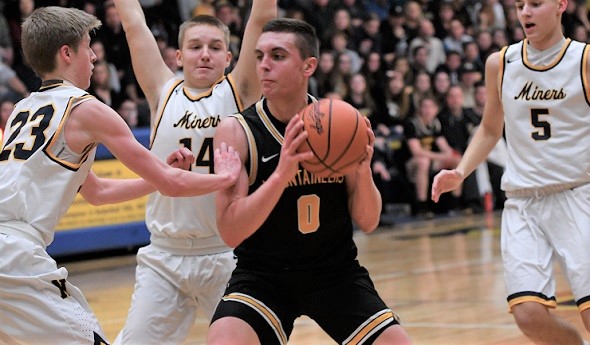
PHOTO: Iron Mountain's Foster Wonders drives to the basket while being defended by Negaunee's Drew Lindberg (23), Will Luke (14), and Chas Kumpula (5) near the end of the second quarter of last week’s matchup. (Photo by Cara Kamps.)