

Sleeman Charting 50th Season at Pioneer
By
Chip Mundy
Special for Second Half
October 20, 2017
By Chip Mundy
Special for Second Half
ANN ARBOR – It is fitting that Don Sleeman coaches high school students to excel at making long runs.
 Sleeman’s run at Pioneer, however, has not been long as compared to a cross country course. It has been long in terms of a marathon.
This fall, the 79-year-old Sleeman is coaching his 50th boys cross country team at Pioneer, and fittingly, it is ranked No. 1 in Lower Peninsula Division 1 and a serious contender for the MHSAA title. He took over the program in 1968 – just a month before Al Kaline, Denny McLain and Mickey Lolich led the Detroit Tigers to the World Series title.
Those former Tigers are long retired. Sleeman still relishes everything about his coaching career. While running is his passion, the relationships he has formed with his athletes are the everlasting rewards.
“Recently, I just saw one of the guys from my first team,” Sleeman said. “My first team stands out; those guys will always be my first team, and they’re in their 60s now. When I see them, it’s like we’re old friends.
“There are a multitude of memorable teams. We won the state title in 1987, and it was the greatest thing that ever happened. We won it again in 1990, and every time it happens it’s the greatest thing that ever happened.”
Pioneer won Class A titles again in 1993 and 1994 and added a Division 1 title in 2008. If it can win a title this year, Sleeman and Pioneer would have MHSAA Finals titles in the top division in four consecutive decades. And Sleeman has the team that can do it.
Eight men deep
Sleeman has a pleasant problem with his 50th team.
“I’ve got a thing most people would be glad to have, but it is kind of a problem,” he said. “I can run seven, but I have eight kids who deserve it. One kid is on the sidelines every meet, and that is something I have fumbled with. I don’t want to leave anyone out.
“I just look at the total picture and try to be as fair as I can to everybody. One of the underlying thoughts is whoever has the last best performance gets the nod unless there are other extenuating circumstances. I try to focus on who has had the most recent success, so it’s sort of a challenge for them to match up to that.”
Pioneer has five seniors and three juniors, and all of them are capable of scoring. On Thursday, Pioneer had seven of the top 14 finishers as it won the third and final Southeastern Conference jamboree of the season.
 Junior Nick Foster has been the top runner this season. Foster, who finished seventh in the Division 1 meet last year, set a course record Thursday at Hudson Mills in Dexter as he won in 15 minutes, 29.5 seconds.
“I think he can be top three in the state this year, but I’ve always thought he had that kind of capability,” Sleeman said of Foster, who might be the team leader but also has plenty of help.
Two other juniors, Ethan Mielock and Michael Shkolnik, finished 37th and 52nd, respectively, last year at the MHSAA Final. Seniors Jack Wallace (74th) and Aldo Pando Girard (75th) also placed last year. Junior John Florence, who did not place at the 2016 Final, was fourth Thursday in the SEC jamboree, while senior Philip Valtadoros was 10th.
“On other teams when we’ve won it, if any of my top five kids had faltered, we wouldn’t have won,” Sleeman said. “I had five and that was it. And on the occasion when we got second, I had five and that was it.
“We have a luxury this year in that we have great depth. Actually, from one through eight, all have struggled at times and all have done good.”
Sleeman said he has one other luxury this season.
“One of the greatest things that is going on right now is that I have incredibly supportive parents who are willing to do all sorts of things to help me and help the team,” he said. “They are very involved. In past years I’ve had very supportive parents in terms of having a positive outlook toward what I am doing but they didn’t necessarily get involved.
“This set of parents is very involved, and they are involved in a positive sort of way.”
Getting started
Sleeman is a graduate of Fenton High School, and around that time he fell in love with running.
“I always just loved running, going back to high school,” he said. “I was running back when nobody else was, and people thought I was nuts.
“I liked the feel of it. I remember the first long run I did. We were all out at the local lake called Silver Lake. It wasn’t terribly far from town, but everybody else got a ride back. I ran back, and everybody thought I was nuts. I’ve been running literally ever since.”
 Sleeman’s path to Pioneer was not a direct one. He enrolled in the Air Force. He went to college. He even did a stint in the Peace Corps. But all the time, Sleeman continued to run.
However, one thing eluded him: A steady job.
“Prior to being 30, I tried my best not to have a regular job,” Sleeman said. “I didn’t want to be tied down; I wanted to experience things. All of a sudden after I got my master’s degree, I kind of looked around and thought that I needed to get a job.”
Sleeman landed at Pioneer, where he taught for 27 years. After he retired from teaching, Sleeman stayed busy with a job in admissions at the University of Michigan. And he continued to coach Pioneer.
It was a different time in 1968. Running wasn’t very popular, and nobody had a portable phone or any type of electronic device that could cause a lapse in concentration.
Sleeman had to adjust his ways throughout the years to stay current with his student-athletes. But the running has stayed the same.
“The only difference is we have better stopwatches and GPS, and everything is online,” he said. “We have automatic timing at the finish line.
“The one thing that has changed is that I get a lot of kids who have had very little physical activity before I get them. That has changed. You get a lot of kids like that, and it takes those kids a while to adapt to cross country. It’s all about development and being able to run more, not less.”
Sleeman said sometimes he has to recruit the classes and halls at Pioneer for runners. Other times, the program recruits itself.
“Some kids come to you interested, and some kids you just pass in the hallway and you just kind of blind side them a little bit and start talking about it,” he said. “A lot of them look at you like, ‘What are you talking about?’ Then you get the ones who follow through. I’ve got kids on the team now that I didn’t know who they were when they showed up.
“It’s always been a mixture, not one way or the other. They just show up on their own. I got an e-mail this week from a kid who said, ‘I might get cut from the basketball team. If I do, I want to run. What do I have to do?’ OK, sounds good to me, and I don’t even know who he is. When you get something like that, you hope it’s because he has heard something good about the program.”
Setting an example
Many years ago, Sleeman thought it might be getting close to the time to retire.
“Just throwing a number out, it could have been 20, 25 years ago when things weren’t going well, and it was kind of a me generation at that time,” Sleeman said. “I’m thinking, ‘Why am I doing this?’ I worked my way through it, and I realized that it was just a momentary thing, and I had to do like my athletes. I had to make something out of it myself. I can’t rely on others to make it better for me.”
 It wasn’t the only time he thought about retiring.
“I remember being in my late 60s and I thought to myself – I didn’t say it to anybody – but I thought, ‘I don’t need to be coaching past 70.’ Then I got past 70, and now I’m 79 and I’m still going.”
Sleeman offers no hint at his future plans, but he sounds like he still enjoys coaching and staying active.
“I don’t know how people retire and go chase a ball around a hole and hang out at the 19th hole,” he said. “I don’t know how they keep going.
“One of the things that has been beneficial to me is that I’m in pretty good health. I have some aches and pains, and in the last couple of weeks, I’ve been able to be more active. I don’t know what happened. I’m just glad that it is happening. I’ve been able to go around at the meets from Point A to Point B better. I ride my bike from Point A to Point B to see what they’re doing.”
It would seem like, at age 79 and still so active, Sleeman is setting a perfect example for his student-athletes. But his mind is working as fast – if not faster – in an effort to help.
“My personality is don’t mess with me,” he said. “I try to teach the kids what is happening and why it’s happening. I try to make everything as clear as I can in an education sort of way, but as I do that, inevitably it comes down to them listening. I tell them to look at me when I’m talking to them.
“I am a disciplinarian, and one of the things that goes with that is a certain amount of negativity about it. I don’t like that. I don’t like being a cop. I don’t like being an authority figure, but you find yourself in that position, and I’m not going to shy away from it.”
 Chip Mundy served as sports editor at the Brooklyn Exponent and Albion Recorder from 1980-86, and then as a reporter and later copy editor at the Jackson Citizen-Patriot from 1986-2011. He also co-authored Michigan Sports Trivia. E-mail him at [email protected] with story ideas for Jackson, Washtenaw, Hillsdale, Lenawee and Monroe counties.
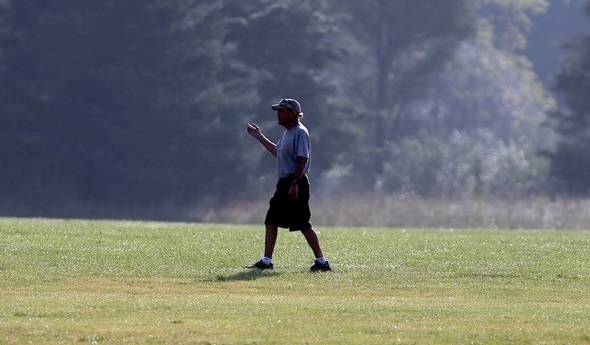
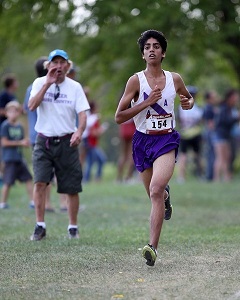
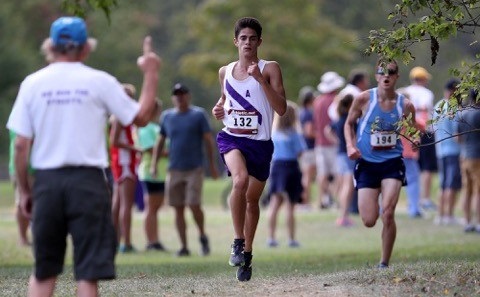
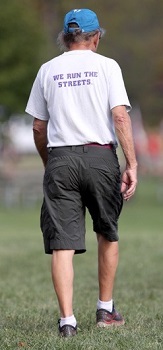
PHOTOS: (Top) Ann Arbor Pioneer boys cross country coach Don Sleeman has been guiding runners on the course for 50 years. (Top middle) Sleeman yells to Angad Sidhu as Sidhu passes him during a race. (Bottom middle) Sleeman signals to approaching Nick Foster. (Below) Sleeman has led Pioneer to five MHSAA titles and could have a sixth champion on the way this fall. (Photos by Peter Draugalis.)
Work, Patience Paying Off as EGR's Workman Finds Pace Among State's Lead Pack
By
Dean Holzwarth
Special for MHSAA.com
September 25, 2025
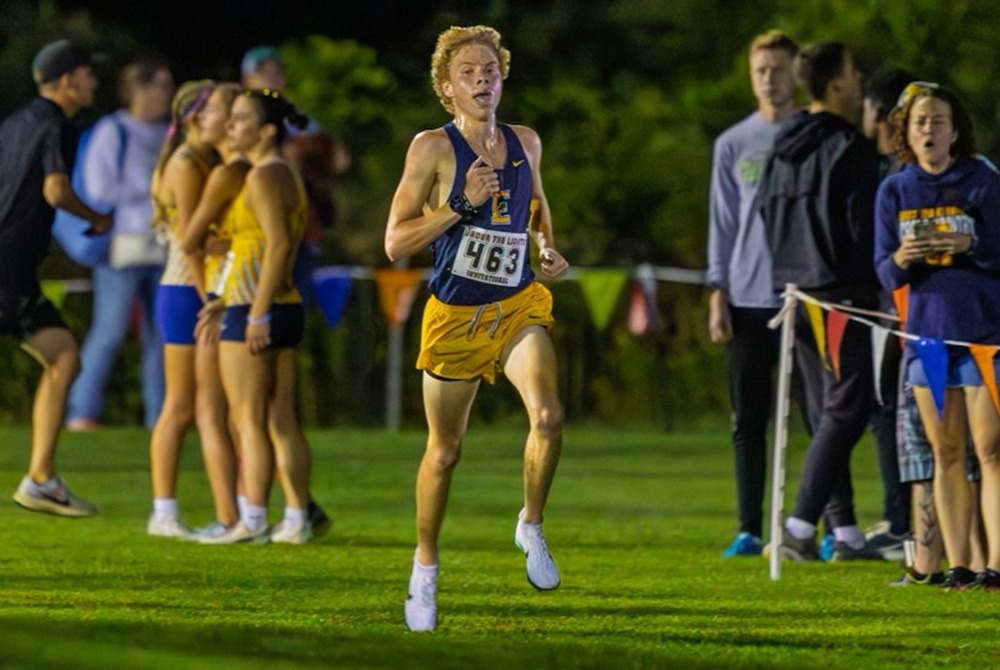
EAST GRAND RAPIDS – Earlier this month, East Grand Rapids cross country standout Jonah Workman arrived at the Sparta Invitational feeling less than enthusiastic to run as raindrops began to fall.
 “I came into the race not really thinking I was going to try super hard, to be honest,” Workman said. “I got to the race and it started to rain and the course was super muddy when we were warming up. We really didn't want to run.”
A day of angst quickly turned to exhilaration hours later after Workman eclipsed 15 minutes for the first time to win the event easily.
He clocked a personal-record 14:58.8 and won the race by almost a minute.
“Jonah asked me what I thought the course record was, and I jokingly said, ‘If you break 15, I think you will get it’, and then he went out and just hammered and put it away,” Pioneers boys cross country coach Drew Collette said. “That’s a quick course, but I didn't know if the conditions would be perfect for that. But he went for it and blew me away.
“It was a significant PR, and anytime you can break 15 it's a big deal, especially by yourself. That’s really special, and it was super fun to see that.”
Workman is one of only three runners in Michigan to run under 15 minutes this season as he joins Ann Arbor Pioneer’s Kamari Ronfeldt (14:47.9) and Beckett Crooks (14:56.1).
“I went the first mile in like 4:42 and I was like, ‘I feel good. I can run pretty hard,’” Workman said. “I ran hard after that mile. It was a fluke of a race, but glad it happened.”
Workman is one of the top returning runners in the state this season and the catalyst of a talented Pioneers squad.
He finished fifth overall at the Lower Peninsula Division 2 Final last season, but hopes to end his career accomplishing a goal he set for himself in middle school when first meeting Collette.
“I met him in eighth grade, right before I took the job, and we talked about his goals and he wanted to win a state title his senior year,” Collette said. “I told him that we could get there, and we can work on that.
“He had natural talent, and he's been very dedicated to his craft and very dedicated to his goals. When you have that type of talent and mix it with someone that is driven the way he is … it's not a real surprise to see four years later and here we are.”\
Workman recalled that first encounter with Collette and the conversation concerning what he hoped to attain.
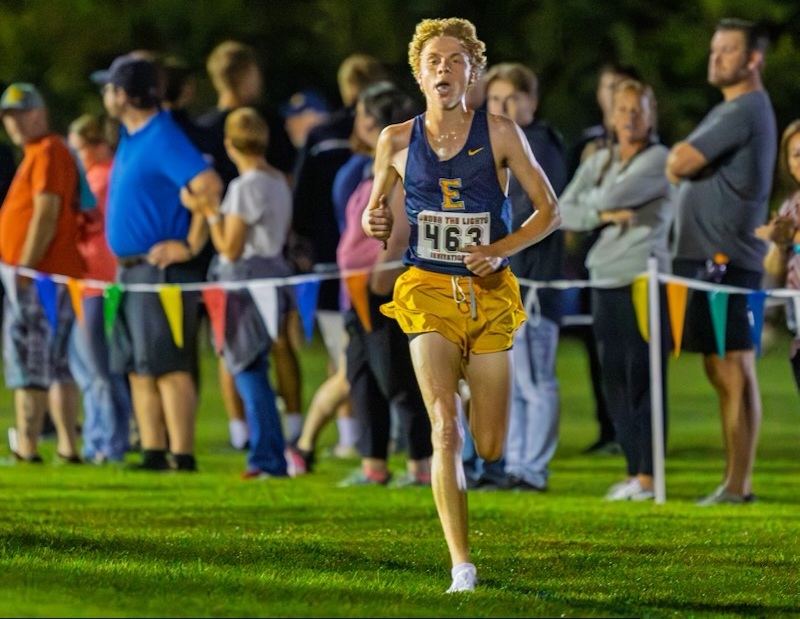 “When I met him I had just PR’d and won this race and was very pumped up with energy and confidence,” Workman said. “I thought I could have a future in this, and that would be winning a state championship for me.
“I always watched my sister, Ainsley, running at the state meet and I also watched all these family friends win it and be successful. So in middle school, I kind of always had that in the back of my mind.”
Running has been a common thread in the Workman family.
“I was put into running in sixth grade by my parents, who both ran at Calvin College, and my sisters ran, so it was kind of natural for me to go into running as well,” Workman said. “I played basketball freshman year, but sat the bench and I thought to myself, ‘Why am I sitting the bench when I can go train for track?’”
Workman was a freshman when East Grand Rapids won a Division 2 team championship, the first in program history. He finished 45th individually that season and 31st as a sophomore before making a giant leap his junior year.
“We were really careful about him and his progression,” Collette said. “He was watching and learning from the older guys and then had more of a workload as a junior when he became a lot stronger and became a leader on the team.
“Seeing him take fifth last year and now being exactly where he wants to be and where we wanted him to get to in a place where we can vie for that individual title is really exciting. It’s been an awesome progression of just being patient, being smart and having that long-term goal in mind the whole time.”
Workman’s mindfulness to his training, coupled with a strong worth ethic, were main factors in his times continuing to drop.
“It’s all about consistency within my training and building confidence over time,” Workman said. “I used to beat my stuff up after bad races and that set me back, but now I go with the one-third rule and coach has been a great tool to keep instilling that confidence in me that I can compete at a high level.”
Workman has his sights set on the EGR record (14:56), as well as capping his high school career with another Finals title. The Pioneers have finished third as a team the past two years.
“Winning state as a team is one of my biggest priorities, especially after my freshman year being able to win it as a team," Workman said. "Being able to win it now with all of my friends would just be a super way to end high school cross country.
“These guys have been dedicated to their craft and have been for four years with me. It's been amazing to be in this type of environment, and I'm surrounded by guys who want it as bad as I do.”
Expectations remain high for this group because of the runners’ experience and depth.
“It’s a group that is really driven and really wants to get back on top,” Collette said. “We want to bookend by trying to win one more time for this group. It’s going to be a hard challenge, but that’s what we’re aiming for.”
 Dean Holzwarth has covered primarily high school sports for Grand Rapids-based WOOD-TV for five years after serving at the Grand Rapids Press and MLive for 16 years along with shorter stints at the Ionia Sentinel and WZZM. Contact him at [email protected] with story ideas for Allegan, Kent and Ottawa counties.
PHOTOS East Grand Rapids’ Jonah Workman runs at Grand Rapids South Christian’s Under the Lights Invite on Aug. 22. (Photo by Willoughby Sports Photography.)