

Be the Referee: Soccer Penalty Kick
By
Paige Winne
MHSAA Director of Brand Management
September 16, 2025
Be The Referee is a series of short messages designed to help educate people on the rules of different sports, to help them better understand the art of officiating, and to recruit officials.
Below is this week's segment – Soccer Penalty Kick - Listen
We have a soccer “You Make the Call” for you today.
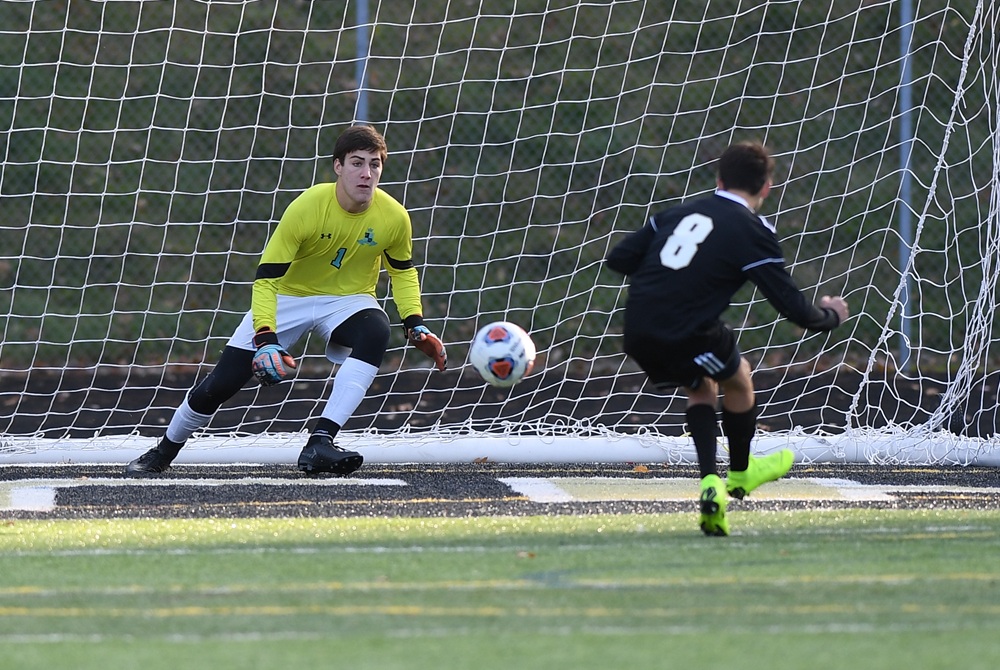
A player is lined up to take a penalty kick. His shot gets past the keeper and hits the post, rebounding back to him. Since the keeper dove to stop the shot, he has a wide-open net, and calmly sends his second attempt straight to the back of the net.
Good goal?
It is not. After a penalty kick is taken, the kicker can only play the ball again after the goalie or another player touches it. A ball kicked off the post and directly back to the original kicker cannot be played.
In this instance, the goal is not awarded, and the defending team is given an indirect free kick at the spot of the infraction.
If the original P-K had glanced off the keeper first, then hit the post and back to the original kicker who scored, then it would have counted.
Previous 2025-26 editions
Sept. 9: Forward Fumble - Listen
Sept. 2: Field Hockey Basics - Listen
Aug. 26: Golf Ball Bounces Out - Listen
Be the Referee: Soccer Foul After Shot on Goal
By
Paige Winne
MHSAA Director of Brand Management
September 2, 2026
Be The Referee is a series of short messages designed to help educate people on the rules of different sports, to help them better understand the art of officiating, and to recruit officials.
Below is this week's segment – Soccer Foul After Shot on Goal - Listen
We’re on the soccer field today, and the home team has the ball and is on the attack.
The ball makes it around to a forward from the home team, who is on-side and within the penalty area. His shot just misses – going wide for a goal kick.
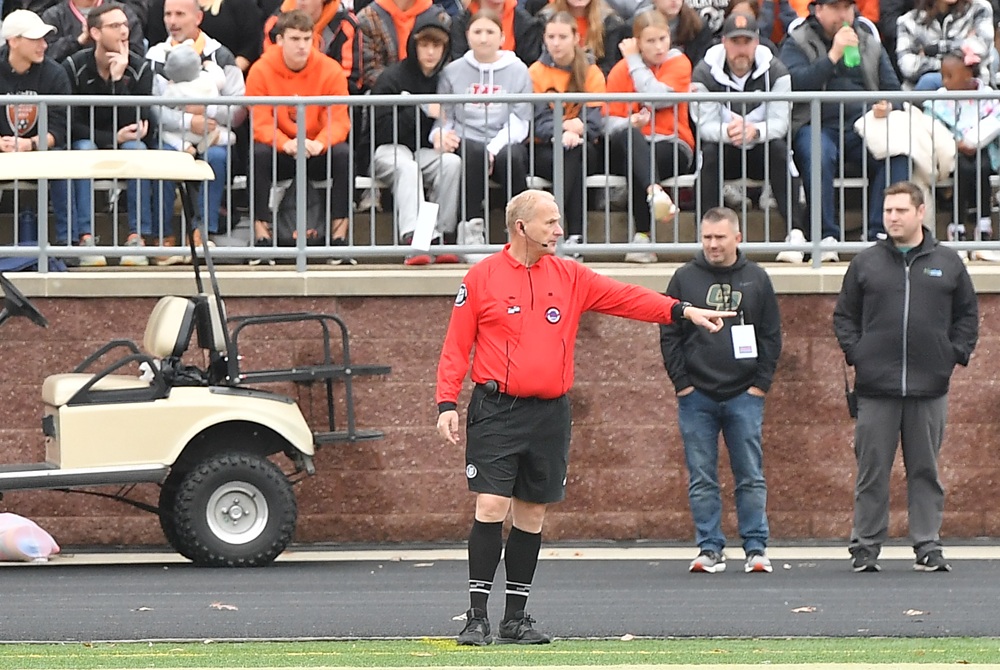
However, just after the ball crossed the goalline, a player from the away team tackles the home team forward with excessive force.
What’s the call?
Because excessive force was used, it’s a red card for the away team player, which is an automatic ejection. But because it happened after the ball crossed the goalline and not at the time of the shot, it’s still a goal kick for the away team, not a penalty kick for the home team.
Previous 2026-27 editions
Aug. 25: Fumble Out of Bounds - Listen