


To Assist and Honor Those Who Served
By
Geoff Kimmerly
MHSAA.com senior editor
September 7, 2012
Born into a multiple-generation U.S. Military family, Eddie Ostipow understood early the honor in serving one’s country.
His father, Mike, did so in Vietnam. Grandfather Alex Ostipow – now 90 – was part of the D-Day Invasion of France during World War II, then taken as a prisoner of war during the Battle of the Bulge in Belgium, and earned three purple hearts while deployed from 1942-46.
Tonight, as the Orioles’ football coach leads his team against Eaton Rapids, both will take the field with him – symbolically at first, and then down from the stands with a larger group of veterans and active-duty soldiers who will be honored for their contributions to this country.
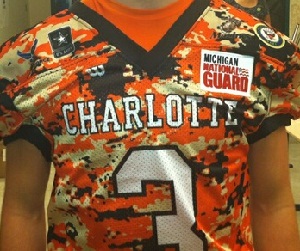 Mike and Alex Ostipow's names are among those that will be worn on both teams’ jerseys as part of their “Victory for Veterans” game to benefit the Veterans of Foreign Wars National Home for Children based in Eaton Rapids.
Funds raised from the purchase of those jerseys and other donations all will benefit the National Home, which was built in 1925 and provides a variety of services to military members and their families, including housing when a family member is deployed. Total, the schools raised roughly $6,300 for the home, which receives all of its funding through donations.
“The kids don’t always understand what those people sacrificed for the freedom we have to even play football on Friday nights,” Ostipow said. “It’s close to me. (And) for me, selfishly, I’ll be able to honor my grandfather.”
Kickoff is 7 p.m. Both teams will wear camouflage jerseys featuring the names of military personnel that were purchased with donations of $100. Charlotte players were given the opportunity to wear the names of family members. For those who did not have names to wear, jerseys were sponsored by teachers and other members of the community.
Charlotte 2002 graduates Nick Cantin and Matt Lamoreaux will serve as honorary captains – Cantin is in the Air Force and Lamoreaux serves in the Navy. After the game, players from both teams will present their jerseys to the service members or their families who they honored.
This cause was a natural for the Orioles. On the Friday before Memorial Day each spring, Charlotte hosts a school-wide round table of veterans, who speak candidly with students about their war experiences. And this opportunity allowed both communities to donate to an effort close to home – both schools are in Eaton County, and Eaton Rapids is only 11 miles from Charlotte.
Ostipow had heard of the home previously – in fact, his grandmother had visited the facility while his grandfather was deployed. But until he began researching for tonight’s event, he didn’t realize the variety of services it provides.
His student teacher, former Eaton Rapids quarterback Matt Marriott, is the son of one of the home’s facility managers. After a series of meetings with Marriott's dad, representatives from the home and Eaton Rapids’ administration and coaches, the plan was hatched.
The Orioles received a bonus when their local National Guard recruiter heard about the effort, and the Guard paid for $2,500 of the $2,800 it would have cost to print the Orioles’ jerseys. That meant $2,500 more that Charlotte could donate to the home.
Click to learn more about the VFW National Home for Children.
1st & Goal: 2026 Week 2 Review
By
Geoff Kimmerly
MHSAA.com senior editor
September 8, 2026
Two three-overtime games and one four-overtime record setter would have been enough to kick off the story of this season’s Week 2.
 Add in a few dramatic comebacks, wins over five 2025 Finals champions and a few more rivalry nail-biters, and we’re still only getting started unfolding the emerging stories of this fall – but there certainly are plenty to tell.
Bay & Thumb
HEADLINER Almont 14, Armada 0 Almont (2-0) ran its Blue Water Area Conference winning streak to 25, and even though it was the league opener took what might be a massive step toward running its BWAC championship streak to four. Also notable, the shutout lowered Almont’s points-allowed average against league teams during that run to 13.8 ppg. Click for more from the Port Huron Times Herald.
Watch list Saginaw Swan Valley 16, Freeland 6 Swan Valley is 2-0 for the first time since 2018, and by defeating the Falcons to start the Tri-Valley Conference Red schedule assumes the role as top contender to take on reigning champion Frankenmuth after finishing second to the Eagles last season. They play in Week 8.
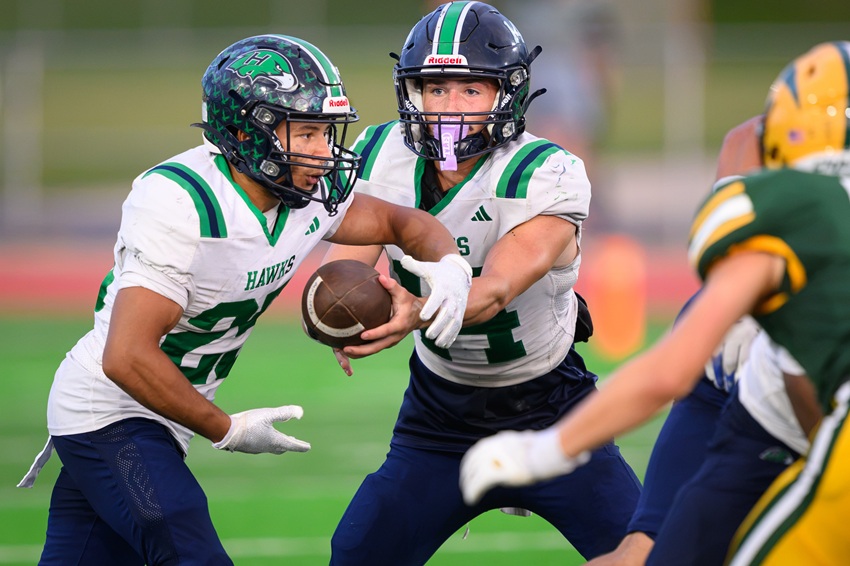
On the move Caro 28, Harbor Beach 6 The Tigers are 2-0 for the first time since 2009 after giving up just six points for the second-straight week – this time against the reigning Division 8 champion Pirates (0-2). Fenton 27, Haslett 20 These two have split their meetings over the last four seasons, the last three all decided by seven points or fewer. Saginaw Heritage 32, Midland Dow 30 The Hawks (1-1) avenged last season’s 15-point loss to Dow (1-1) and bounced back from a 10-point Week 1 defeat against Mount Pleasant.
Greater Detroit
HEADLINER Detroit Martin Luther King 44, Orchard Lake St. Mary’s 42 (3OT) This matchup between statewide giants didn’t disappoint. Neither team scored during the final eight minutes of regulation, which ended in a 22-22 deadlock, but the Crusaders (2-0) emerged with a 2-point conversion after doubling their score during overtime. Click for more from the Detroit News.
TRIPLE OVERTIME MADNESS. 😱
Detroit King punches in the two-point conversion to win an absolute thriller over Orchard Lake St. Mary’s, 44-42.
Powered by @CallSam pic.twitter.com/3RBxBy8Muj— STATE CHAMPS! Michigan (@statechampsmich) September 5, 2026
Watch list Detroit Catholic Central 56, Davison 14 The reigning Division 1 champion Shamrocks (2-0) have topped 50 points in both of their first two games, this one especially impressive over a Davison team (1-1) that went 8-2 last season.
On the move Rochester Adams 21, Rochester 19 The Falcons (1-1) scored with 15 seconds to play to reach the doorstep of a first win over Adams since 1996, but the Highlanders (1-1) stopped the 2-point conversion try to tie. Wyandotte Roosevelt 35, Trenton 21 With its first win over Trenton (1-1) since 2019, Roosevelt (2-0) likely shook up the Downriver League a bit as it looks to get back to its successful past. Detroit Cass Tech 48, Grandville 21 The Technicians (2-0) spread the scoring wealth, but Julian Taylor led with three touchdowns on the ground as Cass Tech built on last season’s three-point win over Grandville (1-1).
Mid-Michigan
HEADLINER Mason 30, DeWitt 17 The Lansing area’s current power matchup played out in another headlining chapter as Mason (2-0) evened the recent series at 2-2 by handing the reigning Division 3 champion Panthers (1-1) their first loss since the 2024 Semifinals. The Bulldogs, who also gave DeWitt its closest game a year ago, led this one 27-0 at halftime. Click for more from the Lansing State Journal.
Watch list New Lothrop 23, Durand 14 The Hornets (2-0) ended a two-game skid against Durand (1-1) as they look to contend again in the Mid-Michigan Activities Conference after finishing fourth, tied for sixth, second and third over the last four seasons.
On the move Howell 41, Belleville 31 The Highlanders (2-0) are back to piling up points this season with a combined 90 over two games. These two could meet again as they’ll begin league play this week in opposing divisions of the Kensington Lakes Activities Association. Hastings 50, Williamston 21 The Saxons (1-1) bounced back from a Week 1 loss and avenged last year’s seven-point defeat against the Hornets (1-1) in a matchup of playoff regulars. Pewamo-Westphalia 35, Ottawa Lake Whiteford 0 The Pirates (2-0) are quickly making an impression, especially defensively as they’ve given up a combined nine points over the last two weeks to opponents that finished a combined 15-6 a year ago.
Northern Lower Peninsula
HEADLINER Ogemaw Heights 33, Traverse City St. Francis 13 Ogemaw Heights (2-0) has had plenty of major moments over the last few seasons, but this fall’s start might end up ranking high among them especially if the Falcons continue to build on last year’s Division 5 Semifinals march. Their only regular-season loss last season came against St. Francis (1-1) in Week 2. Click for more from the Traverse City Record-Eagle.
Watch list Johannesburg-Lewiston 14, Benzie Central 8 The Cardinals (2-0) already have surpassed last season’s win total and with one more victory will guarantee their best finish since 2020.
On the move Gaylord 35, Escanaba 25 After opening this season with a one-score loss to North Branch, reigning Big North Conference champion Gaylord (1-1) bounced back with a nice win over last year’s BNC runner-up. Cadillac 34, Alpena 21 The Vikings (1-1) also bounced back from a Week 1 loss to kick off BNC play as they look to rebound from a tough 2025. Charlevoix 28, Boyne City 12 The Rayders (2-0) opened play in the new Northern Shores Conference the best way, especially heading into this week’s mega matchup with Kingsley that could eventually decide the league title.
Southeast & Border
HEADLINER Brooklyn Columbia Central 34, Michigan Center 14 Columbia Central (2-0) nearly won the Cascades Conference West a year ago after starting the fall 0-2, and anticipation is growing for the upcoming league schedule especially with the Golden Eagles winning this one over last season’s Cascades East champion. This also avenged last year’s 49-14 loss to the Cardinals (1-1). Click for more from the Jackson Citizen Patriot.
Watch list Jonesville 64, Leslie 62 (3OT) This tied for the fifth highest-scoring overtime game in MHSAA history, and Leslie (1-1) has piled up a combined 119 points over its first two games with the Comets (2-0) just slightly behind with a combined 98.
On the move Monroe St. Mary Catholic Central 29, Flat Rock 19 These were two of four teams the Huron League sent to the playoffs last season, and this was a key win for the Falcons (2-0) after finishing last year as one of three co-champions as well. Ypsilanti Community 12, Ypsilanti Lincoln 7 After falling by just a point in this rivalry matchup a year ago, YCS (1-1) defeated Lincoln (0-2) for the first time since 2019. Union City 41, Reading 8 Union City (2-0) quickly has moved into the lead pack in the Big 8 Conference and done so impressively outscoring its first two opponents by a combined 89-8.
Southwest Corridor
HEADLINER Battle Creek Central 31, Lansing Everett 26 The Bearcats are 2-0 for the first time since 2018 thanks to avenging last season’s loss to the Vikings by nearly the same score. They’ll seek to avenge a second 2025 defeat in a row this week against Mattawan. Click for more from the Battle Creek Enquirer.
Watch list Stevensville Lakeshore 21, Niles 16 Lakeshore is 2-0 coming off back-to-back three-win seasons and downed the Vikings (2-0) after being shut out by Niles both of the last two years.
On the move Sturgis 27, Battle Creek Pennfield 8 After falling by just a point in its season opener, Sturgis (1-1) earned its first victory since Week 8 of 2023 and after falling to Pennfield (0-2) by 22 a year ago. Battle Creek Harper Creek 19, Cedar Springs 0 The Beavers (2-0) begin Interstate 8 Athletic Conference play this week and have yet to allow a point this fall. Portage Central 42, Grand Rapids Forest Hills Central 21 After opening with a loss to Ohio power Toledo Central Catholic, Portage Central (1-1) rebounded just in time for this week’s rivalry matchup with Portage Northern.
Upper Peninsula
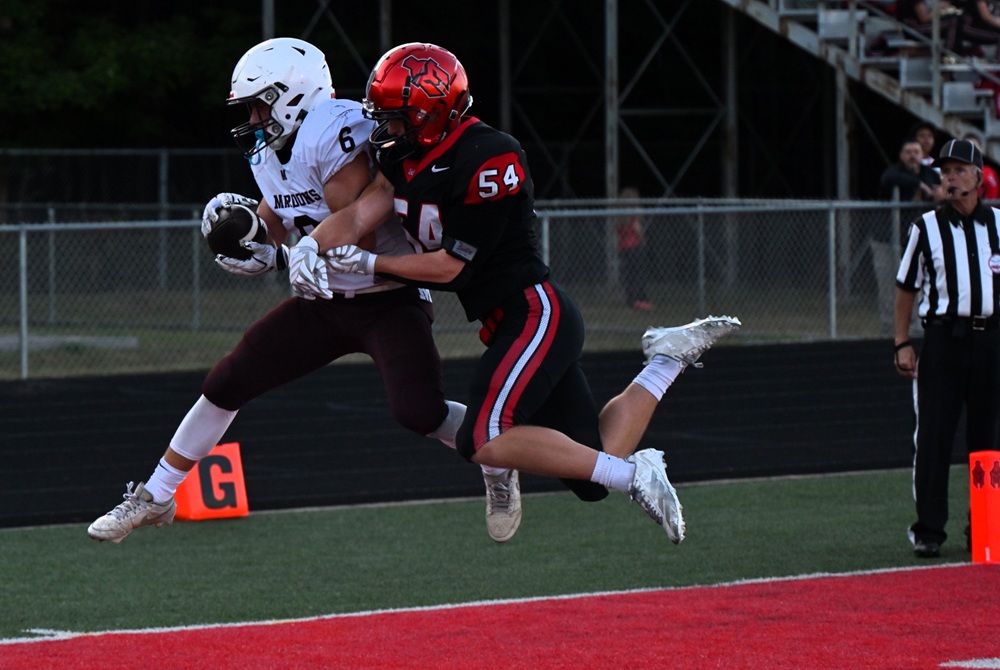
HEADLINER Menominee 49, Marquette 19 These longtime rivals met again for the first time since 2022, and four years later the Maroons avenged a loss to the Sentinels in that most recent matchup. Dylan Beal threw five passes to help the reigning Division 7 champions run their winning streak to 16. Click for more from the Eagle Herald.
Watch list Hancock 58, West Iron County 0 The Bulldogs (1-1) have totaled one win each of the last three seasons and lost to West Iron by 10 points to finish last fall. But this big victory certainly is a positive sign with two more league opponents Manistique and Gwinn up next.
On the move L’Anse 35, Manistique 22 The Purple Hornets (2-0) are off to another fast start as they look to build on last year’s playoff return. Calumet 27, Ishpeming Westwood 8 Calumet (2-0) has especially shined on defense so far, holding its first two opponents to one touchdown apiece and with high-scoring Negaunee up next. Negaunee 42, Gladstone 6 The Miners (2-0) found their stride especially defensively as they prepped for a much-anticipated matchup this week against the Copper Kings – who defeated Negaunee a year ago.
West Michigan
HEADLINER East Kentwood 42, Byron Center 14 Just like a year ago, East Kentwood (2-0) is off to a dominating start on both sides of the ball, up to a combined 97 points scored over two games and giving up just these 14 over the first two weeks. Byron Center (1-1) scored the only points of the first quarter, but East Kentwood erupted for 28 straight to build its lead. Click for more from WZZM.
East Kentwood (@EastKentwoodFB) is making some noise early. 👀🔥
The Falcons roll past Byron Center, 42-14, and keep their strong start going.
Powered by @LawrenceTechU pic.twitter.com/31KgLJlHF2— STATE CHAMPS! Michigan (@statechampsmich) September 7, 2026
Watch list Coopersville 41, Grand Rapids West Catholic 21 Coopersville is 2-0 after starting 0-3 last season and still reaching the Division 3 District Finals. Both wins this fall avenged 2025 losses, including this one after the Broncos fell last year to the eventual Division 5 champion Falcons by 20.
On the move Ravenna 28, Oakridge 27 Oakridge (0-2) rallied late to get within a point, but Ravenna (1-1) held on with a 2-point conversion stop to win this rivalry matchup for the second-straight season. Lowell 35, St. Joseph 34 The Red Arrows were able to come all the way back, scoring 21 unanswered points to move to 1-1 and send the Bears to the same. Rockford 42, Muskegon 6 The Rams (1-1) rebounded from a Week 1 loss to Saline for a fourth-straight win over Muskegon (0-2) since those two renewed their rivalry in 2023.
8-Player
HEADLINER Blanchard Montabella 52, Portland St. Patrick 24 Montabella faced both of last season’s 8-Player Finals champions to start this fall and has emerged 2-0 with a combined margin of victory of 113-36. This one also avenged the Mustangs’ 26-point loss to the eventual Division 2-winning Shamrocks from a year ago. Click for more from the Mount Pleasant Morning Sun.
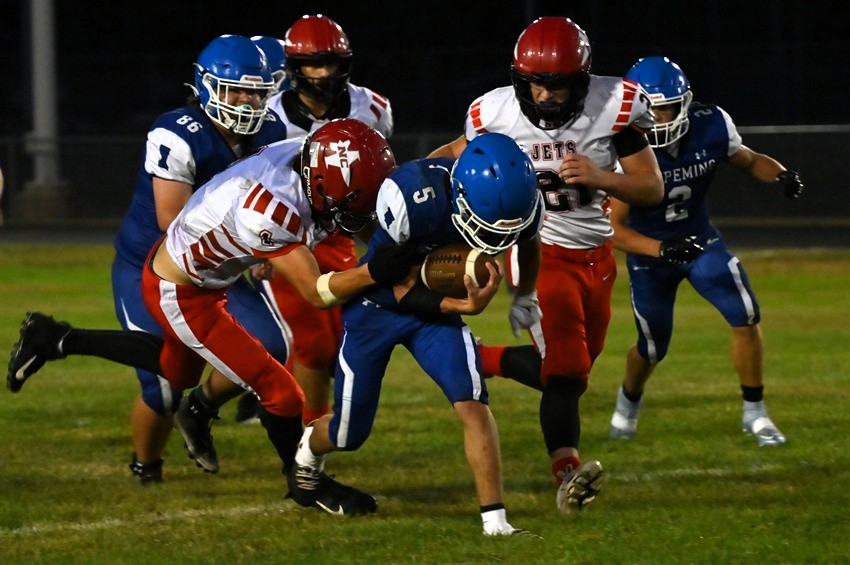
Watch list Ishpeming 50, Powers North Central 22 The Hematites fell back to two wins last season, although with a series of close defeats, and can definitely build on this triumph over the Jets, one of the most consistently successful 8-player programs with 11 straight playoff seasons.
On the move Fulton 70, St. Charles 68 (4OT) This easily set the record for highest-scoring overtime game in MHSAA 8-player history, a combined 12 points higher than the previous record holders. Merrill 54, Morrice 7 The Vandals (2-0) are off to a nice start with a combined 94-15 score over opponents that finished a combined 14-5 a year ago. Climax-Scotts 36, Britton Deerfield 26 The Panthers’ followed a solid Week 1 win over Concord with an even louder statement as Climax-Scotts (2-0) became one of only five teams to hold the Patriots (1-1) under 40 points since the start of 2024.
MHSAA.com's weekly “1st & Goal” previews and reviews are powered by MI Student Aid, a division within the Department of Lifelong Education, Advancement, and Potential (MiLEAP). MI Student Aid encourages students to pursue postsecondary education by providing access to student financial resources and information. MI Student Aid administers the state’s scholarship and grant programs that help make college Accessible, Affordable and Attainable for you. Click to connect with MI Student Aid and find more information on Facebook and Twitter @mistudentaid.
PHOTOS (Top) Menominee's Jackson Myszak is able to hold onto the ball to score a 2-point conversion while closely covered by Marquette's Josiah Youngren. (Middle) Saginaw Heritage senior running back Daijon Wynn takes a handoff from quarterback Anthony Fries during the first quarter of the Hawks’ eventual victory over Midland Dow. (Below) Ishpeming's Kian Gauthier (5) is able to find a hole before he gets tackled by North Central's Pryar LaBonte. (Menominee/Marquette and Ishpeming/North Central photos by Cara Kamps. Heritage/Dow by Kolleth Photo.)