

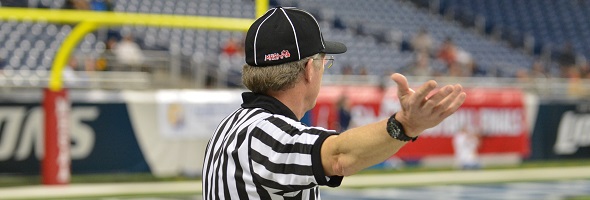
Be the Referee: Automatic 1st Downs
October 24, 2019
This week, MHSAA officials coordinator Sam Davis explains differences in high school football rules regarding automatic first downs from similar rules at the college and pro levels.
Be The Referee is a series of short messages designed to help educate people on the rules of different sports, to help them better understand the art of officiating, and to recruit officials.
Below is this week's segment - Automatic 1st Downs - Listen
Today we are going to talk about one of the biggest rule difference areas in high school football from those rules used in college and pro games – automatic first downs.
When watching that college game on Saturday or the pro game on Sunday, all of us know there are several defensive fouls that give the offense an automatic first down. However, under high school rules, the opposite is true most of the time.
The only high school fouls that result in an automatic first down for the offense are the roughing fouls – roughing the passer, the kicker, the holder and the long snapper. Fouls such as defensive pass interference or any other personal foul do not bring an automatic first down under high school rules.
Past editions
Oct. 17: Catch Momentum - Listen
Oct. 10: Golf Rules Changes - Listen
Oct. 3: No Tackle Box - Listen
Sept. 26: You Make the Overtime Call - Listen
Sept. 19: Swimming Finishing Touch - Listen
Sept. 12: Curbing Gamesmanship By Substitution - Listen
Sept. 5: Football Safety Rules Changes - Listen
Aug. 29: 40-Second Play Clock - Listen
Nearly 1,000 Officials Converge in Grand Rapids for Officiate Michigan Day
By
Geoff Kimmerly
MHSAA.com senior editor
August 5, 2026
GRAND RAPIDS – Nearly 1,000 MHSAA-registered officials – and some of the biggest names in officiating nationwide – attended Officiate Michigan Day on July 25 at DeVos Place.
Attendees enjoyed opportunities to hear football rules analyst and longtime official Mike Pereira and World Cup and Olympic soccer official Kari Seitz during the opening and closing addresses, respectively. They also took part in training sessions throughout the day including four that were sport-specific, with clinicians including several of the state’s highest-regarded officials at the high school level and some of the best-known at the collegiate and professional levels nationwide who grew up or reside in our state.
Above are highlights from the event and insights from several accomplished officials. Click for photos from throughout the day, from Adam Sheehan.
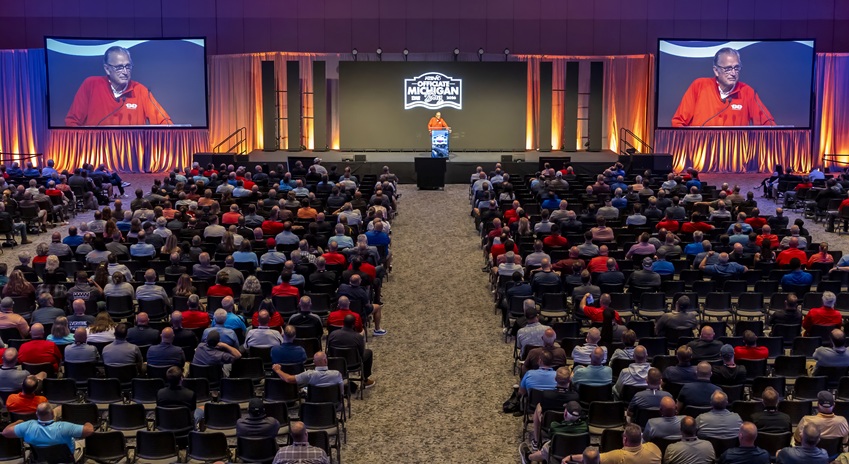
PHOTO Football rules analyst Mike Pereira speaks during the opening address at Officiate Michigan Day. (Photo by Adam Sheehan.)