

Be the Referee: Pass Interference
By
Geoff Kimmerly
MHSAA.com senior editor
September 2, 2021
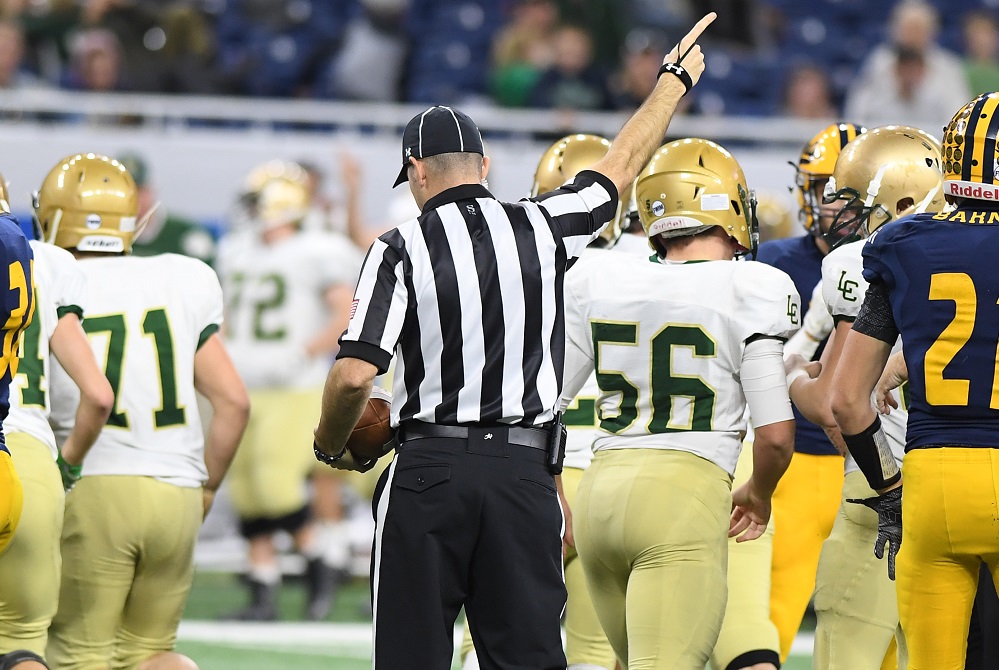
This week, MHSAA officials coordinator Sam Davis explains the differences in high school pass interference rules from those at the college and pro levels.
Be The Referee is a series of short messages designed to help educate people on the rules of different sports, to help them better understand the art of officiating, and to recruit officials.
Below is this week's segment – Pass Interference – Listen
One of the big differences between high school football and the college or pro game is how pass interference is called.
In high school, there is no such thing as an “uncatchable” pass. If there is illegal contact by the defender while the ball is in the air, that’s pass interference, no matter where the pass ultimately ends up.
Also – in high school – a defender can “face guard” as long as no contact is made with the receiver. That is not pass interference, even if the defender does not look back for the ball.
Both of those interpretations differ from the college and pro game. Both (of those) levels have an uncatchable exception, and neither allows for face guarding.
Keep that in mind the next time you think you’ve spotted pass interference at the high school level.
Previous editions
Aug. 26: Protocols and Mechanics – Listen
Be the Referee: Soccer Scoring Area Penalty
By
Paige Winne
MHSAA Director of Brand Management
April 22, 2025
Be The Referee is a series of short messages designed to help educate people on the rules of different sports, to help them better understand the art of officiating, and to recruit officials.
Below is this week's segment – Soccer Scoring Area Penalty - Listen
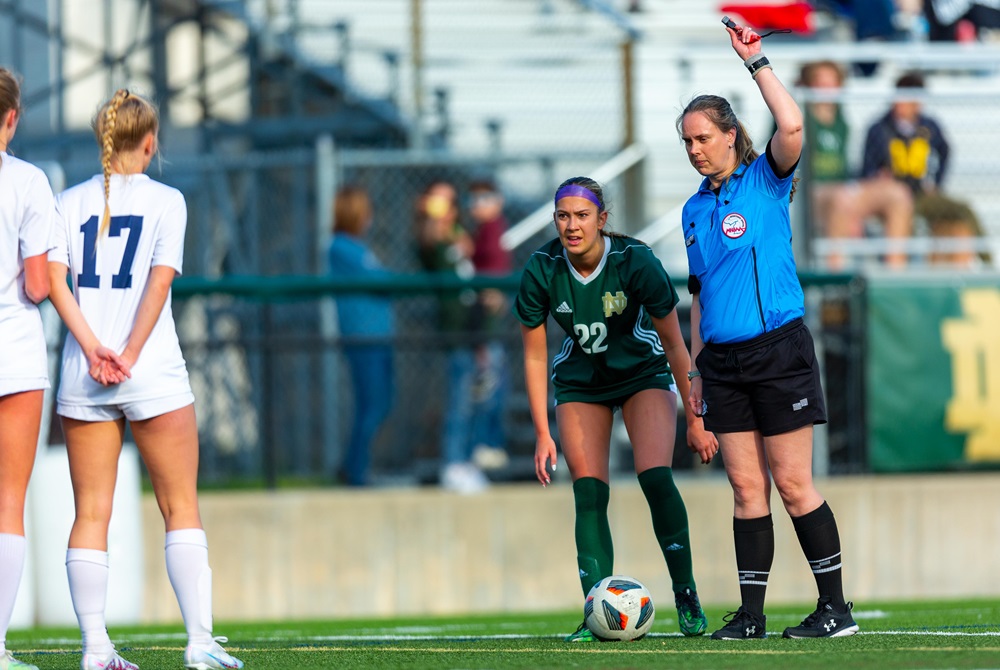
Let’s head out to the soccer field today for a “You Make the Call.”
Team A has possession of the ball inside Team B’s penalty area. Team A’s No. 9 makes a move to free herself and has some open space to get closer before attempting a shot.
As she dribbles forward, a defender for Team B rushes in and grabs her by the shoulder in an attempt to slow her down and ruin the goal-scoring opportunity.
What’s the call?
Because the defender made no attempt to play the ball, it’s a penalty kick for Team A and a yellow card for the Team B defender.
Had she made a play at the ball, it would have been just a penalty kick with no yellow card.
Previous 2024-25 Editions
April 15: Fair or Foul? - Listen
April 8: Girls Lacrosse New Stoppage Rule - Listen
April 1: Base Runner Interference - Listen
March 25: Pine Tar Usage - Listen
March 11: Basketball Replay - Listen
March 4: Gymnastics Deduction - Listen
Feb. 25: Competitive Cheer Inversion - Listen
Feb. 18: Ice Hockey Delay of Game - Listen
Feb. 11: Ski Helmets - Listen
Feb. 4: Wrestling In Bounds or Out? - Listen
Jan. 21: Block or Charge? - Listen
Jan. 14: Out of Bounds, In Play - Listen
Jan. 7: Wrestling Scoring - Listen
Dec. 17: Bowling Ball Rules - Listen
Dec. 10: Neck Laceration Protector - Listen
Dec. 3: Basketball Goaltending - Listen
Nov. 26: 11-Player Finals Replay - Listen
Nov. 19: 8-Player vs. 11-Player Football - Listen
Nov. 12: Back Row Setter - Listen
Nov. 5: Football OT - Listen
Oct. 29: Officials Registration - Listen
Oct. 22: Volleyball Serve - Listen
Oct. 15: "You Make the Call" - Soccer Offside - Listen
Oct. 8: Roughing the Passer - Listen
Oct. 1: Abnormal Course Condition - Listen
Sept. 25: Tennis Nets - Listen
Sept. 18: Libero - Listen
Sept. 10: Cross Country Uniforms - Listen
Sept. 3: Soccer Handling - Listen
Aug. 24: Football Holding - Listen
(Photo by Chris Mudd/National Photo Scout.)