

Bear Lake Coach Invited to NFL Forum
January 25, 2019
By Chris Dobrowolski
Special for Second Half
BEAR LAKE — Samantha Mullet lives and breathes football.
 Mullet figures to be right in her element then when she takes part in the National Football League’s “Women’s Careers in Football Forum” over Feb. 26-27 in Indianapolis.
The Bear Lake assistant football coach is among a select group of 40 invitees to the event, which is in its third year and includes panel discussions, presentations and breakout sessions in an effort to connect female candidates for positions as coaches, trainers, officials, scouts and front office personnel. The forum was developed as part of the NFL’s interest in expanding diversity and providing opportunities for women in football.
“It’s a really big honor,” said Mullet, who has been the Lakers’ offensive coordinator the last two years. “I’m really grateful for the opportunity to go and learn more about football — all aspects of the game at different levels and be able to bring that back to Bear Lake.”
Bear Lake athletic director Karen Leinaar was contacted by the NFL in November about having Mullet apply to attend the forum. The league then selected the 40 invitees from a collection of nationwide applicants. Leinaar believes the publicity Mullet received from video features done by Fox Sports Detroit and local CBS affiliate WWTV tipped the NFL to extend the offer for Mullet to apply.
“Between those two things, that caught the eye of someone at the NFL front office,” said Leinaar. “I had never heard of this forum. They contacted me and asked if I would give them Sam’s information, and I said, ‘Oh my gosh, yes.’ Here’s a young lady who loves the game and has literally sunk her soul into the game. It’s amazing, and this is a great opportunity for her.”
Mullet is a 2013 graduate of Bear Lake, where she played basketball, golf and ran cross country. But the school didn’t get its own football program until an 8-player squad was established in 2017 — just as Mullet was returning home after earning a bachelor’s degree in English from Concordia University-Ann Arbor.
She approached her high school science teacher, John Prokes, who had been named the head coach of the program and asked him if she could help in any capacity. Prokes surprised Mullet by inviting her to help design the new team’s offense. She followed through with so much proficiency that Prokes extended an offer for her to join his coaching staff.
“I said, ‘Here’s an offense I’m thinking of running; can you outline this and tweak it? Let’s go over it and help me organize this offense,’” Prokes recalled. “It started from there. Next thing you know, she took over. She started incorporating her ideas and just running with it. It was a no-brainer. I told her, ‘You’re good at this. You’re hard-working on it. You take it to that 11th level. You run our offense.’”
Mullet has proven to have a great football mind in the two years she’s been with the program, added Prokes.
“I’ve encountered a lot of people, and I’m not just saying this because she’s my assistant coach and working with me, but she’s one of the most knowledgeable people in football that I know,” he said. “When I found out she was selected for this, and she had the opportunity to share experiences and network with other people in the field, I was extremely excited and pumped for her.”
Despite not playing on the gridiron, football has always been a part of Mullet’s life. Her family has had season tickets to Michigan State games for the past 20 years, and she picked up a great deal of knowledge about football along the way.
“We always went to football games as a family,” she said. “Football is something I’ve loved forever, for as long as I can remember. I’m really grateful to be able to turn a passion into a career. A lot of people don’t get the opportunity to do something they love for work. I’m really grateful that football has become for me something I can do and something I can share with other people because the game means a lot to me.”
Mullet’s passion for football has only deepened through coaching, as has her understanding of the game.
“I spend all my time now watching film and researching different things,” she said. “My knowledge has definitely increased, even more than I thought it could. I just love the game in so many more ways, seeing all the different levels that you don’t see being in the stands.”
Besides coaching football, Mullet also serves as Leinaar’s assistant in the athletic department and is the school’s yearbook advisor. Her dream job, however, would be to become an offensive coordinator in the NFL.
“I think that would be the ultimate thing,” she said. “Just to gain that perspective from that sideline and all the things that happen in a week there. To be completely immersed in football all the time and not have to have a different part-time job, to be completely absorbed in football would be amazing.”
Leinaar thinks the connections Mullet could make at the upcoming forum might open new doors in the world of football, perhaps even allowing Mullet to someday get a position at the highest level of the sport.
“I’m hoping that she gets an opportunity to keep going in football,” said Leinaar. “I think the sky is the limit for her. She would truly like to see what’s there at the next level and how they do some of the things they do. I think if somebody gave her an opportunity to work in one of their front offices, she’d be there in a heartbeat.”
 Chris Dobrowolski has covered northern Lower Peninsula sports since 1999 at the Ogemaw County Herald, Alpena News, Traverse City Record-Eagle and currently as sports editor at the Antrim Kalkaska Review since 2016. He can be reached at [email protected] with story ideas for Manistee, Wexford, Missaukee, Roscommon, Ogemaw, Iosco, Alcona, Oscoda, Crawford, Kalkaska, Grand Traverse, Benzie, Leelanau, Antrim, Otsego, Montmorency, Alpena, Presque Isle, Cheboygan, Charlevoix and Emmet counties.
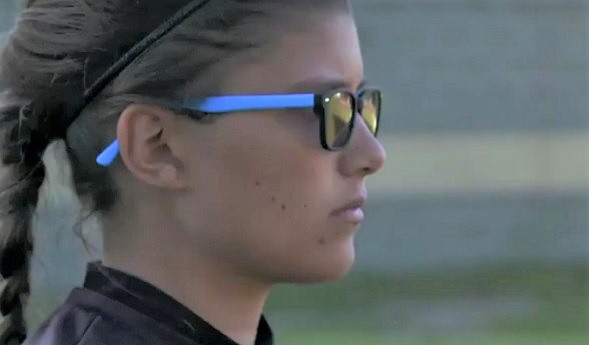
VIDEO: Fox Sports Detroit featured the Bear Lake 8-player football program during its first season in 2017. The above photo is taken from that video.
Be the Referee: Illegal Substitution/Participation
By
Paige Winne
MHSAA Director of Brand Management
November 11, 2025
Be The Referee is a series of short messages designed to help educate people on the rules of different sports, to help them better understand the art of officiating, and to recruit officials.
Below is this week's segment – Illegal Substitution/Participation - Listen
We’re on the football field this week with 23 players.
Twenty-three is one too many; there should only be 22 on the field at once – 11 on offense, 11 on defense.
But on this play, the offense had a 12th player lined up on the field.
What’s the call?
It depends on when the penalty is spotted.
If the officials catch it before the play is run, that’s an illegal substitution and a 5-yard penalty.
But if the ball is snapped and a play is run with 12 on the field – and the 12th player is not attempting to get off the field – then it’s illegal participation and a 15-yard penalty. It’s also a 15-yard penalty if the offense uses a substitution to create a deception.
Previous 2025-26 editions
Nov. 4: Losing a Shoe - Listen
Oct. 28: Unusual Soccer Goals - Listen
Oct. 21: Field Hockey Penalty Stroke - Listen
Oct. 14: Tennis Double Hit - Listen
Oct. 7: Safety in Football - Listen
Sept. 30: Field Hockey Substitution - Listen
Sept 23: Multiple Contacts in Volleyball - Listen
Sept. 16: Soccer Penalty Kick - Listen
Sept. 9: Forward Fumble - Listen
Sept. 2: Field Hockey Basics - Listen
Aug. 26: Golf Ball Bounces Out - Listen