

Drive for Detroit: Week 3 in Review
September 11, 2017
By Geoff Kimmerly
Second Half editor
There are a handful of significant turning points every Michigan high school football season – and Week 3 always proves to be the first.
There are 106 11-player and 12 8-player teams statewide celebrating 3-0 starts, including a good share enjoying big-time turnarounds from a year ago. There also are 117 11-player teams – including a handful of notable powers – that have opened 0-3 and find themselves starting their personal playoffs six weeks earlier than usual as they now must win out to guarantee a spot in the postseason.
Our look back at Week 3 tells how some of those teams got there, plus hits on a few rivalry streaks now broken and more shaking up among the 8-player elite.
Bay & Thumb
Flushing 26, Detroit Country Day 19 (OT)
Flushing’s season – and decade – got a massive boost with this upset of last season’s Division 4 runner-up. The Raiders are coming off consecutive 4-5 finishes and have only one winning season over the last six (going 9-3 in 2014). But they’re 2-1 this fall after jumping out to a 13-0 lead Friday, seeing it dissolve, but then rising again in overtime. Country Day (2-1) didn’t lose in the regular season last year and had lost only one regular-season game going back to the start of 2015.
Also noted:
Bay City Central 35, Flint Powers Catholic 28 – For the second straight week Central (2-1) pulled off a nail-biter in the Saginaw Valley League Red, handing Powers (2-1) its first loss.
Cass City 54, Brown City 30 – The Red Hawks (3-0) are halfway to a fourth straight playoff berth, and this time they’ve put up more than 50 points twice with 138 their most three games in since 2006.
Richmond 35, Croswell-Lexington 28 – This one definitely could’ve tripped up the Blue Devils (3-0) as they go for a third straight Blue Water Area Conference title; Croswell-Lexington (2-1) can stay in the mix with wins over the next two weeks again also-contenders Almont and Algonac.
Davison 40, Flint Carman-Ainsworth 13 – Davison (3-0) is rolling on offense again with a second 50-point game this season over a 2016 playoff team; Carman-Ainsworth has its work cut out after falling to 1-2.
Greater Detroit
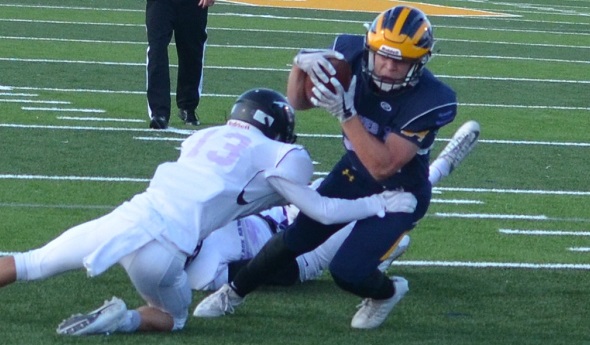
Clarkston 34, Bloomfield Hills 20
The Wolves are 3-0 against teams that went a combined 24-8 last season, with reigning Oakland Activities Association Blue champion Bloomfield Hills the most recent to fall. The teams traded scores most of the game and the Black Hawks (2-1) led early in the fourth quarter before Clarkston scored 21 unanswered points. Bloomfield Hills moved this season into the OAA Red, where Clarkston is the reigning co-champion. Click for more from the Oakland Press.
Also noted:
Detroit Denby 12, Detroit Central 6 – Denby (2-0) got off to a slow start with no Week 1 game, but has caught up quickly handing another 2016 playoff team Central (2-1) its first loss.
Livonia Stevenson 20, Livonia Churchill 9 – These neighbors have now split their last 10, with Stevenson (2-0) claiming the last two while handing Churchill (2-1) its first loss for the second straight season.
Riverview 34, Monroe St. Mary Catholic Central 7 – The Pirates (2-1) downed SMCC for the first time since 2011, in the process equaling their win total from last year and putting the Falcons (1-2) down two games in Huron League play.
New Boston Huron 31, Carleton Airport 30 – Sticking in the Huron, New Boston Huron is 3-0 for the first time since 1970, according to Michigan-football.com, after Austin Atherton’s late 36-yard field goal got the Chiefs past Airport (2-1).
Mid-Michigan
Haslett 28, St. Johns 24
These teams are regulars in the chase after DeWitt in the Capital Area Activities Conference Red. Although this was a league opener, it would seem to indicate Haslett (2-1) is back as the top competition for the Panthers in the latter’s final season before moving into the CAAC Blue. The teams traded scores throughout the second and third quarters, but the Vikings held St. Johns (1-2) scoreless over the final 18 minutes. Both of the Redwings’ losses this fall are by four points or fewer. Click for more from the Lansing State Journal.
Also noted:
Belding 21, Hopkins 20 – The Black Knights (2-1) bounced back from a one-point Week 2 loss to Lake Odessa Lakewood to win a close one over Hopkins (1-2).
Holt 29, Jackson 27 – The Rams (1-2) didn’t let losses to Grandville and Hudsonville derail their season, edging Jackson (0-3) thanks to 265 yards and four touchdowns on 51 carries by Troy Jordan.
Portland 21, Williamston 14 – The Raiders (2-1) made it six wins in their last seven against the CAAC White rival Hornets (2-1), bouncing back this time from a Week 2 loss to Lansing Sexton.
Fowler 14, Bath 7 – A rare loss last week to Saranac could’ve knocked Fowler (2-1) off course, but the Eagles instead avenged last season’s loss to the Bees (2-1).
Northern Lower Peninsula
Traverse City West 29, Traverse City Central 27
After five straight meetings between these neighbors decided by seven points or fewer, the latest didn’t disappoint. West looked to break away multiple times during the second half, but Central (2-1) continued to answer before the Titans finally put away the “Patriot Game” victory by securing an onside kick attempt in the final minute. The Trojans had won the last four matchups between the two – including by two points during the regular season and one in the playoffs in 2016. West is 3-0 for the first time since 2004. Click for more from the Traverse City Record-Eagle.
Also noted:
Petoskey 34, Cadillac 19 – Last season’s one-win finish is becoming a distant memory for Petoskey (2-1), which not only doubled its win total from 2016 in Week 3 but tied its highest scoring performance from all of last season in getting past Cadillac (1-2).
Lake City 28, McBain 8 – Lake City (3-0) has rumbled back into the mix after winning only two games last season and losing three straight to Highland Conference foe McBain (2-1).
Evart 15, Leroy Pine River 7 – The Wildcats (2-1) have ridden last season’s upswing into this fall, downing 2016 Division 6 semifinalist Pine River (0-3) for the first time since 2013.
Manistee 42, Ludington 28 – The Chippewas (1-2) got on the board by avenging last season’s loss to Ludington (2-1) and after losing their first two games this season by a combined 14 points.
Southeast & Border
Ypsilanti Lincoln 26, Chelsea 14
A pair of 20-point losses to Chelsea contributed to Lincoln’s back-to-back 4-5 finishes the last two seasons. Getting one back couldn’t have come at a better time. The Railsplitters (1-2) fell to Pinckney by nine on opening night and one to Tecumseh a week ago, but now can enjoy some confidence picked up by handing the Bulldogs (2-1) their first regular-season loss since Week 7 in 2015. Chelsea had beaten Pinckney in Week 2 and still should figure into the Southeastern Conference White title chase after winning outright or sharing the championship the last two seasons. Click for more from the Ann Arbor News.
Also noted:
Salem 10, Brighton 7 – The Rocks (2-1) are one point this season from a perfect start as they seek their first winning season in 2012, while Brighton (1-2) now has two losses both by three points as they go for a third straight playoff berth.
Reading 52, Homer 38 – The Rangers (2-1) have gone from 3-6 last year to beating two of three reigning co-champions from the Big 8 Conference over the last two weeks, this time handing Homer (2-1) its first loss after an impressive start.
Hudson 48, Brooklyn Columbia Central 21 – The Tigers (3-0) handed Columbia Central (2-1) its first loss to move to 13-2 since the start of 2016.
Napoleon 17, Michigan Center 14 – The Pirates (2-1) are becoming strong favorites to add another Cascades Conference championship after downing the other reigning co-champ, Grass Lake, in Week 2, and edging another likely contender in the Cardinals (2-1) this time.
Southwest Corridor
Battle Creek Harper Creek 22, Jackson Lumen Christi 21 (OT)
A two-point conversion in overtime gave Harper Creek its second straight win over Lumen Christi – the reigning Division 6 champion – and put the Beavers in nice position in the Interstate 8 Athletic Conference after sharing the league title with the Titans in 2016. Harper Creek came back from 14 points down and trailed by a score heading into the fourth quarter. The Beavers went for two after answering Lumen’s TD and extra point to begin overtime. Click for more from the Battle Creek Enquirer.
Also noted:
Watervliet 52, Maple City Glen Lake 26 – The Panthers (3-0) have yet to score fewer than 50 points, and the reigning Division 6 runner-up Lakers (1-2) hadn’t given up that many since 2014.
Stevensville Lakeshore 24, Portage Central 7 – Give the Lancers (3-0) the early upper hand on the Mustangs (2-1) as one of these two has won or shared the Southwestern Michigan Athletic Conference West title the last five seasons.
Battle Creek Central 32, Battle Creek Lakeview 13 – The Bearcats (1-2) downed their rival for the second time in three seasons, especially impressive because Central is seeking its first playoff season since 2008 and Lakeview (1-2) has made the postseason five straight.
Kalamazoo Loy Norrix 21, Kalamazoo Central 14 – The Knights (1-2) got their first win since opening night 2015 and first over rival Central (0-3) since 2014.
Upper Peninsula
Gladstone 43, Negaunee 0
Gladstone is 3-0 for the first time since 2014, and the Braves also started 3-0 in 2009. But this opening surge has included outscoring their first three opponents by a combined 129-6 – and shutting out a pair of 2016 playoff teams in Gwinn and now the Miners. Gladstone had lost to Negaunee by 23 in 2016 and 24 in 2015. The Miners, meanwhile, face their toughest path forward since 2000 as they try to make the playoffs for a sixth straight season. Click for more from the Escanaba Daily Press.
Also noted:
Ishpeming Westwood 38, L’Anse 10 – The Patriots not only are 3-0 after winning two games last season, but they’ve outscored those first three opponents by a combined 98-22; the Purple Hornets (2-1) were the first to reach double digits.
Escanaba 21, Detroit Loyola 20 – The Eskymos (2-1) crossed the bridge and just edged the reigning Division 7 runner-up Bulldogs (0-3).
Fond du Lac, Wis. 49, Menominee 20 – The Maroons (2-1) had only one other regular-season loss (to DeWitt last season) since mid-2012, but Fond du Lac is 3-1 and made the quarterfinals of its Wisconsin division last season.
Iron River West Iron County 35, Iron Mountain 3 – The Wykons (2-1) had lost by 26 and 27 to the rival Mountaineers (0-3) the last two seasons.
West Michigan
East Grand Rapids 16, Lowell 14
East Grand Rapids got ahead by a pair of touchdowns but needed a late field goal by Mark Boeve to finish off what has to be considered its most impressive win this decade. The Pioneers handed the Red Arrows (2-1) their first regular-season defeat since opening night 2015 and first in this series since EGR’s undefeated run in 2010. East Grand Rapids is 3-0 for the second time in three seasons. Click for more from the Grand Rapids Press.
Also noted:
Muskegon Mona Shores 30, Rockford 24 (OT) – The Sailors (3-0) evened their recent series with the Rams (1-2) at 2-2 while continuing one of the most impressive starts in the state this fall.
Grand Rapids West Catholic 17, Zeeland West 6 – The Falcons (2-1) avenged last season’s loss to West (1-2) by holding the Dux to their fewest points since a 2014 Division 3 Semifinal defeat.
East Kentwood 24, Hudsonville 17 – The Falcons (3-0) opened the Ottawa-Kent Conference Red schedule with a third win over a 2016 playoff team while dropping Hudsonville to 1-2.
Holland 36, Hudsonville Unity Christian 30 (OT) – The Dutch are 3-0 for the first time since 2011 and after two straight 2-7 finishes; Unity (2-1) had won all five previous meetings since Holland joined the O-K Green.
8-Player
Stephenson 42, Crystal Falls Forest Park 16
Another week, another massive 8-player result from the Upper Peninsula. Forest Park couldn’t celebrate for long breaking Powers North Central’s 27-game winning streak in Week 2, as Stephenson now can stake a claim as the team to chase in a loaded Western Eight Conference. The Eagles (3-0) are joined by Rapid River and Ontonagon among undefeated squads in the league that also includes the Trojans and Jets among others. This win avenged two losses to Forest Park last year, including the second in a playoff opener. Click for more from the Iron Mountain Daily News.
Also noted:
Camden-Frontier 46, Battle Creek St. Philip 14 – The Redskins (3-0) look good to continue rising in their second season of 8-player after beating power St. Philip (2-1) for the second straight time.
Brimley 26, Onaway 25 – The Bays are suddenly 3-0 after not having enough players to field a team in 2016 and going 0-9 in 2015; Onaway fell to 1-2.
Pickford 40, Engadine 22 – Engadine (2-1) has made the playoffs six straight seasons, but Pickford (3-0) now has two straight wins on the Eagles after losing to them last regular season but also beating them by two in a Regional Final.
Ontonagon 32, Powers North Central 30 – The Gladiators (3-0) handed reigning MHSAA champion North Central (1-2) its second straight loss.
PHOTO: A Clarkston ball carrier dives for the end zone during Friday's win over Bloomfield Hills. (Click for more from HighSchoolSportsScene.com.)
1st & Goal: Week 4 in Review
September 22, 2020
By Geoff Kimmerly
Second Half editor
High school football returned to communities all over Michigan this past weekend. Everything from mask requirements to spectator limits made games look different.
But by the end of Saturday, much more felt closer to normal as nearly 600 teams took the field.
We’re still running a little behind, but catching up quickly with our “Week 4” review briefly detailing some of the results that could end up mattering most as we quickly roll through this abbreviated regular season.
We again split the state into regions and 8-player, with links to coverage and available video highlights included if tweeted by statewide media.
Bay & Thumb
HEADLINER Frankenmuth 41, Freeland 3 Both won nine games last season and would be part of the Tri-Valley Conference Central together again this fall, but that division was split into two smaller ones for the abbreviated schedule. The Eagles got off to a fast start rolling up 312 yards rushing and holding the Falcons to only 144 yards total. Click for more from the Saginaw News.
Watch list Harbor Beach 16 Ubly 14 Harbor Beach claimed last year’s Greater Thumb Conference East title by a win over Ubly, and finds itself quickly leading the way again thanks to a late go-ahead 2-point conversion.
Remember this one Beaverton 6, Sanford Meridian 0 The Beavers started their Jack Pine Conference repeat campaign by defeating another major challenger in Meridian – and Beaverton doesn’t play last year’s runner-up Clare this season as that game previously had been scheduled for Week 3.
More shoutouts Linden 35, Flushing 21 The Eagles are coming off two straight 4-5 finishes, both of which began with losses to Flushing. Davison 48, Flint Powers Catholic 0 These teams combined for 22 wins last season, but Davison won the matchup this weekend by this score for the second straight year.
Greater Detroit
HEADLINER Detroit Cass Tech 34, Detroit Martin Luther King 26 It’s tough to think of a better season start for the Technicians than avenging last year’s 47-7 loss to their biggest rival. But this might just be round one again this fall. These two very well could meet in the Detroit Public School League championship game in four weeks. Click for more from the Detroit News and see highlights below from State Champs Sports Network.
VIDEO: Check out the highlights of the Detroit King (@DetKingFootball) at Cass Tech (@Detroit_CTFB) football game from Saturday afternoon.
Brought to you by @LTUAthletics pic.twitter.com/ft01PSpn8l— STATE CHAMPS! Michigan (@statechampsmich) September 20, 2020
Watch list Macomb Dakota 29, Clinton Township Chippewa Valley 20 Dakota already had avenged last season’s 27-21 loss to eventual Macomb Area Conference Red champion Chippewa Valley, defeating the Big Reds 34-13 in a playoff opener. But this win makes the Cougars possible league favorites.
Remember this one Armada 24, Richmond 23 The Tigers are playing for their first winning season since 2012, and breaking a nine-game losing streak against Richmond is a great way to start.
More shoutouts West Bloomfield 39, Oak Park 0 These two Oakland Activities Association 2019 division champions are playing in the same OAA Red this fall. Orchard Lake St. Mary’s 28, Walled Lake Western 7 The Eaglets opened with an impressive win over a Western team that fell a one-point loss to the eventual champion short from playing at Ford Field in 2019.
Mid-Michigan
HEADLINER DeWitt 37, Portland 3 After Portland’s 29-27 win in this matchup was one of the most memorable games in the Lansing area for 2019, DeWitt made one of the loudest impressions statewide to start 2020. Both programs have averaged double-digit wins over the last five seasons. Click for more from the Lansing State Journal.
VIDEO: Check out the highlights of the DeWitt (@DeWitt_Panthers) vs. Portland football game from Friday night.
Brought to you by @MHSAA pic.twitter.com/NPy2H299lr— STATE CHAMPS! Michigan (@statechampsmich) September 20, 2020
Watch list Williamston 22, Fowlerville 6 Both were among four teams from the Capital Area Activities Conference Red to make the playoffs last season, and Williamston likely jumps in among the league title contenders with this win.
Remember this one Grand Ledge 34, St. Johns 17 The Comets won just two games a year ago, but opened with a win over a 2019 playoff team.
More shoutouts Saranac 35, Fulton 6 Saranac is halfway to last year’s win total after avenging a 29-point loss to the Pirates. Ithaca 47, Saginaw Nouvel 27 This was a major win for the Yellowjackets as both 2019 playoff teams are now part of the same division of the TVC West.
Northern Lower Peninsula
HEADLINER Traverse City Central 53, Traverse City West 13 This was the largest margin of victory in this rivalry game ever, after West split off from the former Traverse City High School in 1997. The Trojans have won two straight in the series. Click for more from the Traverse City Record-Eagle.
Watch list McBain 30, Lake City 0 The Ramblers had lost five straight to Lake City, but look immediately like a contender in the Highland Conference.
Remember this one Charlevoix 58, Frankfort 14 The Red Rayders enjoyed one of the state’s most impressive turnarounds last season, and the momentum seems to be continuing as they scored their most points in a game since 2014.
More shoutouts East Jordan 14, Elk Rapids 6 The Red Devils had lost 12 straight to the Elks and hadn’t won a season opener since 2016. Harbor Springs 49, St. Ignace 0 These two were both playoff teams last season, when Harbor Springs won their matchup only 16-0.
Southwest Corridor
HEADLINER Sturgis 25, Three Rivers 21 The Trojans have won just one game each of the last two seasons, but former star quarterback Chance Stewart has them off to a great start in 2020. This win in his head coaching debut was the program’s first over Three Rivers since 2015, the last time Sturgis finished a season with a winning record. Click for more including video from JoeInsider.com.
Watch list Schoolcraft 49, Constantine 14 The Eagles ran their winning streak to eight over rival Constantine, but both still have league title hopes in separate divisions after sharing a championship a year ago while playing in the same Southwestern Athletic Conference Lakeshore.
Remember this one Battle Creek Pennfield 26, Battle Creek Harper Creek 20 Two good signs: The Panthers matched last season’s win total in the season debut and with their second win in seven tries against Harper Creek since the two joined the Interstate 8 Athletic Conference together.
More shoutouts Portage Northern 15, Stevensville Lakeshore 12 This has turned into one of the state’s closest annual matchups with now nine of their last 10 matchups decided by eight points or fewer; Northern has won three straight over the Lancers. Mendon 26, White Pigeon 24 The Hornets avenged last season’s two-point loss, especially key in a Southwest 10 Conference that’s down to just five 11-player teams.
Southeast & Border
HEADLINER Adrian Madison 42, Ottawa Lake Whiteford 24 The Trojans, seeking their first winning season since 2009, couldn’t have started better than with their first victory over Whiteford since 1980. The Bobcats had won last year’s matchup 42-14. Click for more from the Adrian Daily Telegram.
Watch list Jackson Lumen Christi 28, Marshall 27 This was arguably the most exciting nail-biter of this week’s openers, with the Titans coming back to score the game-winning points during the final minutes.
Remember this one Hillsdale 28, Hudson 21 For the third time in five seasons, this one was decided by eight points or fewer, as the reigning Lenawee County Athletic Association champion ran its league winning streak to nine.
More shoutouts Chelsea 35, Dexter 12 The Bulldogs retained their streak in this rivalry after a much closer win a year ago. Erie Mason 54, Petersburg Summerfield 21 A capable scorer in 2019 that struggled defensively, Erie Mason opened its tenure in the Tri-County Conference giving up its fewest points in a game since Week 2 of 2016.
Upper Peninsula
HEADLINER Sault Ste. Marie 14, Traverse City St. Francis 7 Many eyes likely were caught by this Blue Devils win, with St. Francis coming off a trip to last year’s Regional Finals and averaging nearly 11 wins per season over the last five. But Sault Ste. Marie quietly has been building toward an attention grabber like this one, going 7-4 a year ago and winning a Division 4 playoff game. Click for more from The Sault Evening News.
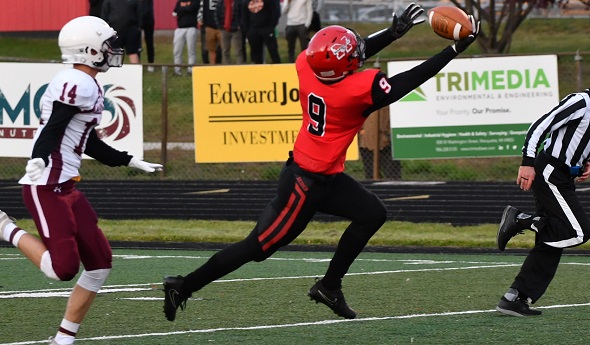
Watch list Marquette 41, Menominee 18 This first meeting of two this fall didn’t count toward the Great Northern Conference standings but did send a pretty strong message as Marquette looks to win a third-straight title.
Remember this one Kingsford 17, Calumet 16 The Flivvers moved ahead to stay with 4:35 to play, handing Calumet only its second regular-season loss since 2017.
More shoutouts Houghton 3, Bark River-Harris 0 The Gremlins won their season opener for the first time since 2016 and after earning only two victories all of last season. Negaunee 39, Manistique 8 After just edging the Emeralds by two in 2019, Negaunee was able to stretch the margin this weekend.
West Michigan
HEADLINER Grand Rapids Forest Hills Central 21, Grand Rapids Christian 13 Forest Hills Central, which finished second last season in the Ottawa-Kent Conference White, welcomed reigning O-K Gold champion Grand Rapids Christian back into the league after four seasons away. The Rangers should again be White contenders, especially with reigning champion Cedar Springs among teams that moved to a new-look Gold this fall.
Check out the highlights of the Forest Hills Central (@fhcrangerball) vs. Grand Rapids Christian football game from Friday night. Video Courtesy: WXMI
Brought to you by @MHSAA pic.twitter.com/wbeW5OMPMe— STATE CHAMPS! Michigan (@statechampsmich) September 19, 2020
Watch list Kent City 14, Morley Stanwood 0 The Eagles avenged the loss that decided the Central State Activities Association Silver title in favor of Morley Stanwood a year ago.
Remember this one Rockford 16, Jenison 13 (OT) The Rams are reigning champs in the O-K Red but got an immediate challenge from new league member Jenison, which formerly played in the O-K Black.
More shoutouts Hopkins 43, Muskegon Orchard View 0 The Vikings enjoyed an impressive start against an Orchard View program that was undefeated last regular season. Hudsonville 21, East Kentwood 13 East Kentwood had dismantled what was left of Hudsonville’s league title hopes last season – and the Eagles also broke a three-game losing streak to the Falcons with this avenging.
8-Player
HEADLINER Vestaburg 28, Onekama 6 After going 0-9 in its final season of 11-player two years ago, Vestaburg improved substantially to 5-3 with the move to 8-player in 2019. But this weekend’s opening win certainly has been its most impressive post-switch, as the Portagers are just two years removed from finishing 8-Player Division 2 runner-up and went 7-4 last fall. Click for more from the Greenville Daily News.
Watch list Posen 52, Mio 22 The Thunderbolts’ undefeated league title run last season included a 20-point win over Posen, but the Vikings opened this fall by earning an upper hand in the North Star League’s first-year 8-player standings.
Remember this one Deckerville 58, New Haven Merritt Academy 17 These two reigning North Central Thumb League division champs are in the same division this fall, and Deckerville made an early statement.
More shoutouts North Adams-Jerome 14, Battle Creek St. Philip 12 The Rams beat the Tigers for the first time in four recent tries and after falling 41-0 last season. Genesee 54, Kingston 28 The Wolves more than flipped last year’s score after losing 52-30 to Kingston in 2019.
PHOTO: Marquette’s Justin Jurmu tries to pull in a pass from quarterback Austin Ridl, with Menominee’s Brady Waara trailing. (Photo by Cara Kamps.)