

Drive for Detroit: Week 4 in Review
September 17, 2012
By Geoff Kimmerly
Second Half editor
Most conferences in Michigan have between six and eight teams, and all start each season with hopes of ending up number one.
In a few weeks, showdowns to determine those top teams will take place all over the state. But in the meantime, the leg work must be done to set up those colossal matchups. And a number of those games were played during Week 4, although the most notable result came in a game that instead matched potential MHSAA championship contenders.
West Michigan
Muskegon 36, Lowell 21
The Big Reds have two running backs on pace to rush for 1,000 yards this season if the team makes any kind of run in the playoffs, and at this point it looks like they might run away from the rest of the Division 2 field. Muskegon added another win to its impressive start, in a game that some suggested matched the two best teams in the division this fall. Click to read more from the Muskegon Chronicle.
Also noted:
Zeeland East 27, Grand Rapids Forest Hills Central 23 – The Chix have to be considered one of the hottest teams in all of Michigan so far, with this win perhaps its most impressive of a 4-0 start.
Caledonia 14, Grandville 7 – After two straight seasons at 4-5, Caledonia is 4-0 heading into a series of tough O-K White games.
Comstock Park 13, Allendale 8 – This was one of the best rivalries of the old O-K Silver, and this first matchup between the two since 2004 was a strong way to start off the O-K Blue schedule.
Muskegon Mona Shores 21, Grand Haven 14 – Mona Shores’ 3-1 start is its best since 1997, and comes after the team won a combined three games over the last two seasons.
Greater Detroit
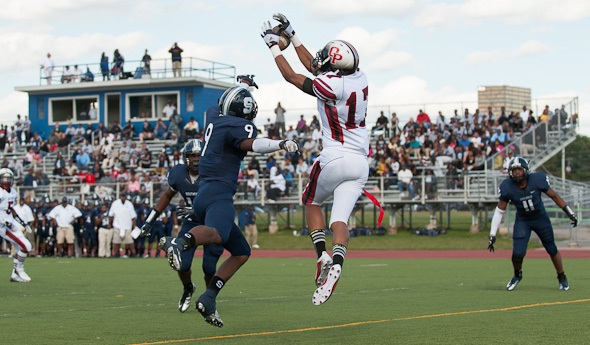
Oak Park 24, Southfield 18 (OT)
This has become Oak Park's most serious conversation about league contention since at least 2003, when it finished second in the Oakland Activities Association III to Farmington – which just happens to be the other team tied for first this fall in the OAA White, and also this week’s opponent. Oak Park needed overtime in this one to get past Southfield, which fell to 2-2 but is much better than that middling record suggests. Click to read more from the Oakland Press.
Also noted:
Farmington 19, Oxford 13 (OT) – This is the other overtime thriller that helped set up this week’s OAA White matchup; the Falcons haven’t given up more than 14 points this fall.
Birmingham Brother Rice 28, Warren DeLaSalle 0 – This is usually a much closer matchup (see explanation last week), but Brother Rice’s defensive performance was stunning and earns the Warriors top billing going forward in the Detroit Catholic League Central.
Waterford Our Lady 24, Royal Oak Shrine 21 – The Catholic League has other divisions too, and with this win Our Lady earned the status as biggest contender to Loyola in the Intersectional.
Milan 21, Grosse Ile 14 – Milan moved to 4-0 after winning just one game last season; the Big Reds look like Huron League favorites heading into this week’s matchup with Monroe St. Mary Catholic.
Southwest and Border
Stevensville Lakeshore 41, Portage Central 40
This nearly ended with the classic comeback, with Portage Central trailing by 20 at halftime. But Lakeshore hung on through a two-point conversion called back because of a penalty. That one-point swing will surely come to mean more as the Southwestern Michigan Athletic Conference West season moves into October. Click to read more from the Kalamazoo Gazette.
Also noted:
Bridgman 27, Niles Brandywine 26 – The Lakeland Conference is down to just three teams after playing with six only three seasons ago, and Bridgman looks like the favorite already after beating Brandywine for the first time since 2006.
Reading 26, Springport 20 – This was a big one as the Rangers move quietly toward another Big Eight Conference decider in Week 8 against Union City.
Portage Northern 7, St. Joseph 0 – This was the other SMAC West game of most note, with these two now among four that are 1-1 in the league and 3-1 overall, but tied for third in the league.
Sturgis 27, Kalamazoo Loy Norrix 12 – The Trojans were in a bit of a rough spot at 1-2 and coming off their first playoff berth in seven seasons; this victory could kick off a run back into the mix.
Lower Up North
Grayling 28, Traverse City St. Francis 20
The Vikings ended a nine-game losing streak against St. Francis, and after falling by three and one point the last two seasons, respectively. Grayling is considered one of the best teams in Division 5 and the Lake Michigan Conference favorite, and beating the Division 7 power Gladiators will no doubt strengthen both expectations. Click to read more from the Traverse City Record-Eagle.
Also noted:
Maple City Glen Lake 56, Benzie Central 12 – The Lakers are 4-0 for the first time since 2001 and appear to have made the Northwest Conference race a two-team battle with Kingsley.
Boyne City 14, Harbor Springs 7 – Boyne City improved to 4-0 to equal last season’s win total heading into this week’s matchup with St. Francis.
Traverse City Central 40, Petoskey 0 – The Trojans announced their Big North Conference contention in a big way over a usual favorite, and next week can equal their 2011 win total by moving to 4-1.
Elk Rapids 48, Charlevoix 22 – Two losses by a combined 11 points have put the Elks at 2-2 and against the playoff wall, but this was a big step with two more tough games coming up.
Upper Peninsula
Escanaba 31, Marquette 22
This was a little unexpected, perhaps more than a little, with Marquette coming in undefeated and the Eskymos having been outscored 99-37 during their 1-2 start. But Escanaba’s defense shut down the Redmen during the second half to win the Great Northern Upper Peninsula Conference opener. Click to read more from the Marquette Mining Journal.
Also noted:
Bessemer 39, Lake Linden-Hubbell 12 – Bessemer not only broke an eight-game losing streak to Lake Linden-Hubbell, but this victory also helped the Speedboys move to 3-1 and equal last season’s three wins.
Negaunee 28, Iron Mountain 6 – The Miners’ broke a two-game losing streak to Iron Mountain and have started 4-0 for the first time since 2006.
Ishpeming 38, Ishpeming Westwood 8 – Ishpeming pushed it to 16 straight over Westwood and hs now won 11 straight regular-season games.
Iron Mountain North Dickinson 55, Stephenson 30 – The Nordics’ point totals this season, in chronological order, have been 41, 42, 48 and 55.
Mid-Michigan
DeWitt 28, Haslett 27
The Panthers have won this rivalry game 10 straight times, which might make it seem like it shouldn’t be a rivalry anymore. Don’t buy it. This game still matters a ton to both communities, and this brought back memories of the classics from the beginning of the 2000s. It also kept DeWitt tied for first in the Capital Area Activities Conference Red and has Haslett needing to win out to guarantee a playoff berth.
Also noted:
Perry 14, Flint Beecher 13 – The Ramblers should celebrate some small victories, like their best start since 2006; two wins already equals their most since that same season.
Lansing Everett 21, Holt 3 – This was the first of four tough CAAC Blue foes the Vikings must survive; Grand Ledge, East Lansing and Lansing Sexton still loom after a 4-0 start.
St. Johns 14, Owosso 13 – The CAAC Red has been tough to read so far, but this combined with the DeWitt win means the Panthers and Redwings likely will play for the title again.
Morrice 44, Burton Atherton 14 – Before opening night, the last time Morrice (4-0) had won was 2009; the last time Morrice won four games in a season was 2006, and the last time the Orioles started 4-0 was 1997.
Thumb and Bay
Flint Powers Catholic 34, Saginaw Nouvel Catholic 12
This game may not have turned out as close as might have been expected. But the reigning Division 5 champion Chargers had plenty to celebrate after falling to Nouvel 55-14 in 2011, when Nouvel finished as Division 7 champion. Click to read more from The Saginaw News.
Also noted:
Saginaw Swan Valley 31, Alma 26 – The Vikings handed Alma its first Tri-Valley Conference Central loss, meaning Swan Valley and Hemlock are the only two still perfect in league play.
Montrose 13, Goodrich 12 – This leaves Montrose and Lake Fenton as the teams to beat in the Genesee Area Conference Red.
Almont 17, Richmond 13 – By way of a series of three and four-point games, including this one, Almont is again among those chasing Croswell-Lexington at the top of the Blue Water Conference standings.
Beaverton 26, Houghton Lake 21 – The Beavers might not contend in the Jack Pine Conference after losing big to Gladwin in Week 3, but this win put them at 3-1 to equal their most wins since 2007 and has them halfway to their first playoff berth since 2000.
Trophy Games
Each week, the MHSAA highlights trophy games around the state. A number were played during Week 4.
- Little Brown Jug: Union City hosted Athens in a Big Eight Conference matchup and kept the trophy for the 12th straight season. Final: Union City 33, Athens 18.
- Little Brown Jug: The Kingsley/Suttons Bay matchup has been much more even, with the teams splitting their last 10 games although Kingsley won for the second straight: Final: Kingsley 62, Suttons Bay 7.
- Little Brown Jug: Concord won its ninth of the last 10 against Homer (including a forfeit in 2006), but this was the closest of the recent renditions. Final: Concord 28, Homer 27.
- The Axe: Newberry kept its strong start going by breaking a seven-game losing streak to rival Munising. Final: Newberry 29, Munising 12.
- Rocket-Rebel Trophy: Wyoming Kelloggsville has won all six since it began playing Wyoming Lee annually again in 2007. Final: Kelloggsville 21, Lee 6.
- Pioneer-Thunderbird Spirit Bowl: Dearborn has won three straight over its Western Wayne Athletic Conference rival Edsel Ford. Final: Dearborn 35, Edsel Ford 14.
PHOTO: Southfield (blue) and Oak Park battled into overtime of a key Oakland Activities Association game that in the end went Oak Park's way, 24-18. (Click to see more at Terry McNamara Photography.)
Drive for Detroit: Playoff Week 2 Review
November 6, 2017
By Geoff Kimmerly
Second Half editor
From 288 to 144 to 72, these MHSAA Football Playoffs are shaking out a little differently than the last few seasons.
 All in all, this fall’s postseason over the first two weeks has included more surprises than what seem usual. This week’s action was endured through uncharacteristic stormy weather – and saw two more of last season’s finalists leave the field, meaning this month’s championship games will include at least nine teams that didn’t play for titles a year ago.
Below is a look at games from every division that especially jumped out as 11-player District champions and 8-player Regional champions were celebrated. The MHSAA Playoffs are sponsored by the Michigan Army National Guard, and “Drive for Detroit” is sponsored by MI Student Aid.
11-Player Division 1
Canton 28, Belleville 25
The Chiefs (10-1) ran their winning streak this fall to 10 straight and reached 10 wins for the second time in three seasons by putting up the second-most points given up by a stellar Belleville defense this fall. The Tigers (10-1) were allowing only 7.5 points per game heading into the District Final, and finished with their best record since also going 10-1 in 1995. Click for more from the Detroit News.
If you haven't already, watch the highlights from @CantonHSChiefs' 28-25 District Final win over Belleville! @CantonSection @Engel1Connor pic.twitter.com/xCjprvSKS2
— STATE CHAMPS! (@statechampsnet) November 4, 2017
Also noted:
Holland West Ottawa 33, Rockford 28 – The Ottawa-Kent Conference Red champion Panthers (10-1) downed runner-up Rockford (7-4) the second time this season as both games were decided by five points.
Detroit Cass Tech 27, Dearborn Fordson 22 – A late score and then defensive stand gave Cass Tech (8-2) its eighth straight District title and Fordson (9-2) only its second loss of its best season since 2014.
Utica Eisenhower 10, Rochester Adams 6 – Eisenhower (11-0) crossed for the game’s only touchdowns with 1:33 to play in what was the lowest-scoring game for both teams this fall; Adams finished 9-2.
Clinton Township Chippewa Valley 45, Macomb Dakota 20 – Chippewa Valley (10-1) reached double-digit wins for the first time since 2003 with its second victory this season over rival Dakota (7-4).
11-Player Division 2
Traverse City Central 17, Traverse City West 14
Central ran its recent record against neighbor West to five wins in six games by avenging the 29-27 Week 3 defeat to the Titans (9-2) that ended up deciding the Big North Conference. Central (8-3) scored the eventual winning points with just under two minutes to play as the teams met in the playoffs for the second straight season. The District title was Central’s first since West opened in 1997. Click for more from the Traverse City Record-Eagle.
Score: TC Central 17, TC West 14, 1:59 Q4. @TSchwan23 goes 38 yards to the house for go-ahead score. #Battle4TC #mhsaafb pic.twitter.com/cWuduc16QX
— Brett A. Sommers (@BAsportswriter) November 4, 2017
Also noted:
Grand Rapids Forest Hills Central 28, Muskegon Mona Shores 21 – The Rangers (11-0) tied a program record for wins set in 1994 by holding Mona Shores (9-2) to its fewest points this season.
Flushing 28, Fenton 21 – Flushing (9-2) hadn’t beaten rival Fenton (9-2) during their four years together in the Flint Metro League, including a 52-35 defeat in Week 7, but did so this time to win a District title after not making the playoffs the last two years.
Livonia Franklin 21, Livonia Churchill 19 – Franklin’s 14-point loss to Churchill in Week 4 ended up deciding the Kensington Lakes Activities Association Gold title for the Chargers (8-3), but this rematch win gave Franklin (9-2) its second District title in three seasons.
Ypsilanti Lincoln 21, Wyandotte Roosevelt 19 – Lincoln (9-2) is making history every week, first with its first playoff win ever on Oct. 27 and now with its first District title after stopping a two-point conversion that would’ve pulled previously-undefeated Roosevelt (10-1) even late.
11-Player Division 3
Riverview 38, Gibraltar Carlson 14
The Pirates (10-1) have enjoyed one of the best turnaround seasons in Michigan this fall. This win gave them their first District title since 2004 and double-digit wins in a season also for the first time since that season, to go with a Huron League title – all after finishing just 2-7 a year ago. Carlson (9-2) also has reason to be pleased despite the loss; the Marauders were 4-5 a year ago and hadn’t made the playoffs since 2009. Click for more from the Southgate News-Herald.
Riverview 7 Carlson 0 pic.twitter.com/IL9xv6kiwM
— Friday Night Victors (@FNVictors) November 3, 2017
Also noted:
DeWitt 36, Cedar Springs 12 – The Panthers (10-1) reached double-digit wins for the 13th time in 17 seasons by stopping an offense that was scoring 40 points per game heading into the night; Cedar Springs finished 7-4.
Battle Creek Harper Creek 42, Stevensville Lakeshore 24 – Harper Creek (11-0) won a matchup of league champions to claim its first District title since 2012, also the last season it had faced (and lost to) Lakeshore (9-2).
Farmington Hills Harrison 33, Warren Woods-Tower 0 – The Hawks (8-3) secured their third District title in five years but first since 2014 by shutting down a Titans offense averaging nearly 34 points per game; Woods-Tower finished 8-3.
Muskegon 55, Zeeland West 20 – West (7-4) scored first, but Muskegon (11-0) scored the next 28 to claim a sixth straight District title.
11-Player Division 4
Grand Rapids Catholic Central 45, Wyoming Kelloggsville 34
The reigning Division 4 champion Cougars (11-0) held off a serious threat from Kelloggsville, which came back from a big deficit to lead in the third quarter. But the Rockets (10-1) ultimately couldn’t stop GRCC standout back Nolan Fugate, who shined again against a defense giving up only 14 points per game entering the night. Click for more from WOODTV.
TIE GAME! Catholic Central ends scoring drought with 42-yd TD, Nolan Fugate’s 4th score.
Catholic Central 28
Kelloggsville 28
3rd Q pic.twitter.com/F5koyavoTE— Luke Stier (@LukeStier) November 4, 2017
Also noted:
Williamston 47, Pontiac Notre Dame Prep 21 – It’s seemed like there was something to be said for the Hornets (7-4) losing four games this season by a combined 21 points; they made a statement winning their first District title since 2010 by putting up the most points allowed this season by Notre Dame Prep (8-3).
Belding 55, Comstock Park 49 – Belding (9-2) has won its playoff games by a combined eight points to get to its best record since 1998; Comstock Park (7-4) capped a great run coming back from 2-7 a year ago.
Edwardsburg 30, Three Rivers 12 – The best of the Wolverine Conference have been taking turns dealing each other heartache, but Edwardsburg (10-1) ended up with the league and now also a District title by avenging a Week 7 loss to Three Rivers (8-3).
River Rouge 35, Chelsea 10 – The Panthers (9-2) clinched their fourth straight District title while denying Chelsea (9-2) the same accomplishment.
11-Player Division 5
Frankenmuth 42, Marine City 23
This wasn’t nearly as dramatic as Frankenmuth’s first-round win over Almont, when the Eagles (11-0) scored the winning points with just more than two seconds to play. But a second-half comeback still was required to get this District Final win, which helped Frankenmuth tie its record for victories in a season. Marine City finished 8-3, bouncing back from 4-5 a year ago and with its best record since 2014. Click for more from the Saginaw News.
Also noted:
Menominee 24, Kingsford 21 – The Flivvers (8-2) were the best of the Great Northern Conference during the regular season, but Menominee (8-3) is moving on with a ninth straight District title thanks to avenging its 42-21 loss to Kingsford from Week 8.
Portland 35, Lansing Catholic 0 – The Raiders (10-1) avoided a similar fate in facing rival Lansing Catholic (8-3) for the second time, posting a third straight shutout to claim their first District title since 2012.
Algonac 24, Ida 16 – The Muskrats (10-1) have won 10 or more games now for the third straight season, this time by outlasting an Ida team hoping to accomplish the same; the Bluestreaks finished 8-3 and are 20-6 over the last three seasons.
Reed City 34, Clare 7 – The Coyotes (10-1) made it six 10-win seasons over the last seven with a third District title in four seasons; Clare (9-2) still finished with its best record since 2012.
11-Player Division 6
Montague 37, Kent City 13
For the second time in three weeks, Montague dealt an opponent the first loss of its season – and in this case, the only loss this fall for Kent City. The Eagles (10-1) hadn’t given up more than 29 points in a game, and Montague (11-0) also shut down a Kent City offense averaging 43 points per contest entering the weekend. The District title was Montague’s first since 2011. Click for more from Local Sports Journal.
Also noted:
Traverse City St. Francis 13, Maple City Glen Lake 0 – Although closer in the rematch, St. Francis (10-1) finished a sweep of the Lakers (7-3), last year’s Division 6 runner-up.
Watervliet 58, Delton Kellogg 50 – After three weeks scoring only 36 points in each game, Watervliet (11-0) popped back over 50 for the eighth time this season and just in time to hold off a second try from league foe Delton (6-5) – which earned its most wins this fall since 2001.
Blissfield 27, Brooklyn Columbia Central 17 – The Royals (7-4) also finished a sweep of a league mate, downing Columbia Central (7-4) for the second time to win a first District title since 2007 and after going only 4-5 a year ago.
Warren Michigan Collegiate 38, Detroit Central 34 – The Cougars (11-0) tied their school record for wins, and this was a big one for the Charter School Conference as well against a Detroit Public School League tournament winner in Central (8-3).
11-Player Division 7
Pewamo-Westphalia 35, New Lothrop 14
Reigning Division 7 champion P-W has won 24 of its last 25 games, and the Pirates leapt another giant obstacle on their repeat quest by handing New Lothrop (10-1) its lone defeat of the fall. The Hornets had won four straight District titles but were held to their fewest points since last season’s Regional Final loss. P-W has won six straight District titles. Click for more from FOX17.
HUGE District Finals, for QB/DE @JamesLehman2018 ????
?? 3 Passing TD's, 1 Rush TD
?? 5 TFL, 3 Sacks, & 2 Pass Breakspic.twitter.com/2BGK0kuDbK— P-W Football® (@PWGRIDIRON) November 6, 2017
Also noted:
Lake City 25, Ishpeming Westwood 16 – The Trojans (11-0) reached 11 wins for the first time with their first District title since 2013 as Westwood (9-2) ended its winningest season.
Elkton-Pigeon-Bay Port Laker 18, Cass City 14 – The two meetings between the best in the Greater Thumb Conference West went similarly this season; champion Laker (7-3) won in Week 5 by six points and this time by four over league runner-up Cass City (9-2).
Cassopolis 31, Reading 16 – The Rangers (10-1) won their third straight District title by holding Reading (8-3) to only 130 yards and while gaining only 186.
Monroe St. Mary Catholic Central 19, Hudson 16 – The Falcons (7-4) earned their first District title since 2014 on a field goal during the final seconds after Hudson (9-2) came back to tie the score late.
11-Player Division 8
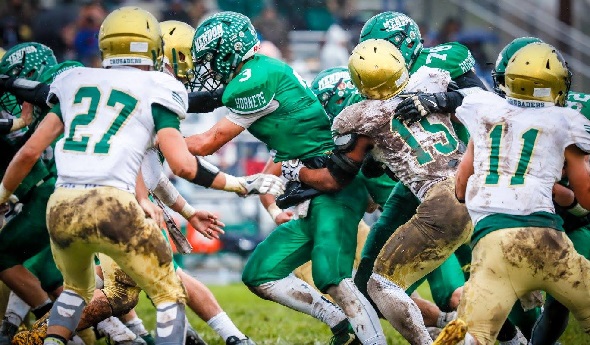
Mendon 26, Muskegon Catholic Central 15
Mendon made the weekend’s biggest football splash by eliminating the reigning four-time champion in this division. The Hornets (11-0) muscled to 364 yards rushing while throwing the ball only once to win their first District title since 2014 and beat MCC for the first time since 2011. The Crusaders (8-2) did manage 338 total yards, going to the air nine times during a rainy afternoon, but were able to put up only their second-fewest points over the last two seasons. Click for more from JoeInsider.com.
Also noted:
Frankfort 53, Gaylord St. Mary 30 – The Panthers (8-2) broke 50 points for the fourth time but first since Week 5 to win a third straight District title and end the best season for St. Mary (10-1) since 2003.
Lincoln Alcona 56, Hillman 34 – The Tigers (9-2) secured their first District championship against a familiar opponent, having also beaten Hillman (6-5) to open the North Star League schedule in Week 2.
Saginaw Nouvel 27, Harbor Beach 26 – The Panthers (11-0) won their first District title since 2012 thanks to a fourth-down touchdown with just more than a minute to play after Harbor Beach (9-2) built a 12-point lead.
Climax-Scotts 14, Pittsford 13 – The Wildcats (9-2) handed Climax-Scotts its first league loss since 2008 in Week 8, but the Panthers (9-2) avenged to earn a third straight District title.
8-Player Division 1
Deckerville 38, Morrice 0
The Eagles (10-1) left no doubt in this rematch of North Central Thumb League Stars champions, avenging the 33-32 loss to the Orioles suffered in Week 6. The win also gave Deckerville its fifth Regional title in six seasons since making the switch from 11-player, while Morrice ended 9-2 after going only 4-5 a year ago. Click for more from the Huron Daily Tribune.
Also noted:
Stephenson 30, Cedarville 24 – The Eagles (9-2) earned their first Semifinal berth as the last Upper Peninsula team standing in this division, handing Cedarville (8-3) its second loss by six or fewer points this fall.
Central Lake 58, Suttons Bay 26 – The Trojans (11-0) tied their program record for wins set in 2006 with a second victory this season over another first-year 8-player program in Suttons Bay (7-4).
Bellevue 60, Lawrence 24 – This postseason has featured Bellevue’s first playoff win since 2010 and now its first advancement ever to the third round plus its first time reaching double-digit wins (at 10-1); Lawrence ended 5-6 after opening the playoffs by upsetting Camden-Frontier.
8-Player Division 2
Pickford 26, Onekama 14
Pickford earned a second straight trip to the Semifinals with one of the most impressive defensive performances in 8-player this season. The Panthers (11-0), who are giving up only 10 points per game, held to 14 an Onekama offense that entered averaging 51. The Portagers finished their first season of 8-player at 9-2. Click for more from the Sault Ste. Marie Evening News.
Also noted:
Crystal Falls Forest Park 62, Engadine 20 – The Trojans are 9-2 for the second season in a row after making the switch to 8-player and put more points on Engadine (8-3) than the Eagles had given up in a game since Week 2 of 2015.
Kinde-North Huron 38, Bay City All Saints 36 – This rematch of the NCTL Stripes’ top teams fell the same way, although closer than when champion North Huron (10-1) beat runner-up All Saints (7-4) by 10 points in Week 9.
Portland St. Patrick 50, Flint International Academy 0 – The Shamrocks (10-1) advanced to their first Semifinal since 2012 with their second shutout of the season, limiting a Blazers offense averaging 44 points per game entering the weekend; International finished 8-3.
Second Half’s weekly “Drive for Detroit” previews and reviews are powered by MI Student Aid, a part of the Student Financial Services Bureau located within the Michigan Department of Treasury. MI Student Aid encourages students to pursue postsecondary education by providing access to student financial resources and information, including various student financial assistance programs to help make college more affordable for Michigan students. MI Student Aid administers the state’s 529 savings programs (MET/MESP) and eight additional aid programs within its Student Scholarships and Grants division. Click for more information and connect with MI Student Aid on Facebook and Twitter @mistudentaid.
PHOTO: Mendon and Muskegon Catholic Central locked up for a rainy, muddy Division 8 District Final on Saturday. (Photo by Tim Reilly.)