

Drive for Detroit: Week 6 in Review
October 1, 2018
By Geoff Kimmerly
Second Half editor
Start printing the tickets.
 A total of 55 undefeated 11-player football teams have clinched spots in this season’s 256-team field, all but one doing so with wins during our latest highlight-filled weekend. (Jackson Lumen Christi, playing eight regular-season games, clinched a berth in Week 5.)
Our look below at 45 results from Friday and Saturday notes many of these, but focuses mostly on league races – some partially clinched, many still completely up for grabs with three weeks to play until the postseason begins.
“Drive for Detroit” is powered by MI Student Aid.
Bay & Thumb
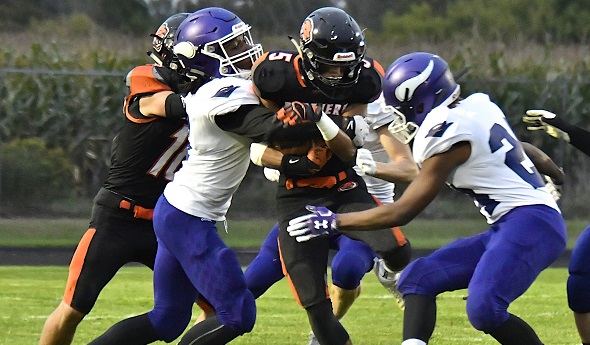
HEADLINER: Saginaw Swan Valley 34, Alma 6 The Vikings (6-0) clinched a share of the Tri-Valley Conference Central title for the second straight season with another stifling defensive performance. Swan Valley has given up 54 points total this season and no more than seven in four league games. Alma (5-1) hadn’t been held to so few points since Week 4 of 2016. Click for more from the Saginaw News and see highlights below from WJRT.
The @SwanValleyFball team knocks off @Panther_Country in a battle of unbeatens in the Tri-Valley @AlexFries11 @ChampneyEthanhttps://t.co/WTFVDvwMxS
— ABC12WJRT (@ABC12WJRT) September 29, 2018
Also of note: North Branch 37, Richmond 0 This was the Broncos’ best win in … well, at least this decade and perhaps longer. North Branch (5-1) is on a major comeback after going 1-8 a year ago, and in its first season in the Blue Water Area Conference suddenly sits in second place after winning big against one of the yearly favorites.
Remember this one: Flint Hamady 34, Goodrich 28 These teams are leading separate divisions of the Genesee Area Conference, but beating the Martians (4-2) will help Hamady (6-0) down the road. Six of the Hawks’ opponents are Class C, but Goodrich is Class B and provides a nice playoff point boost.
More shoutouts: Lapeer 42, Grand Blanc 10 With this win over the third-place Bobcats (4-2), Lapeer (6-0) guaranteed its Week 9 game against co-leader Davison will guarantee one of those teams at least a share of the Saginaw Valley League Blue title. Swartz Creek 49, Linden 28 The Dragons’ now-squashed losing streak against Linden (3-3) stretched 12 seasons to when the former joined the Flint Metro League in 2006. Swartz Creek (5-1) can earn its first playoff berth since 2012 next week and remains undefeated in league play.
Greater Detroit
HEADLINER: Belleville 29, Dearborn Fordson 26 The Tigers (6-0) went ahead for good in the fourth quarter and held on through a late Fordson drive to move into first place alone in the Kensington Lakes Activities Association East – and take an upper hand at the statewide level as both stand to be Division 1 contenders when the playoff field is selected in three weeks. The Tractors (5-1) have lost only to Belleville over the last two regular seasons. Click for more from MLive-Detroit and see highlights below from State Champs Sports Network.
??VIDEO: Check out the highlights of the Belleville (@JermainCrowell) vs. Fordson (@Fordsontractors) game from Friday night pic.twitter.com/UNYtPhkpiV
— STATE CHAMPS! (@statechampsnet) October 1, 2018
Also of note: Detroit Loyola 20, Bloomfield Hills Cranbrook Kingswood 17 Loyola (4-2) sits atop the Detroit Catholic League AA standings by a half game with one more league win than Detroit U-D Jesuit, this week’s opponent. The Cranes fell to 4-2 with their losses by a combined 10 points.
Remember this one: Detroit Osborn 12, Detroit Western International 6 The Knights, after going only 1-8 a year ago, clinched a share of the Detroit Public School League Gold title. Western (4-2), however, remains in position to secure its second straight playoff berth after making the postseason a year ago for the first time.
More shoutouts: Detroit Community 30, Detroit University Prep Science & Math 8 Community won an outright division title in the Michigan Metro Athletic Conference, and also clinched the first playoff berth in the program's eight varsity seasons. Grosse Ile 33, Monroe St. Mary Catholic Central 14 The Red Devils (6-0) face both second-place teams in the Huron League over the next two weeks and need to beat one to clinch a share of the title. But that opportunity started with getting past the Falcons (4-2), who beat Grosse Ile 20-7 a year ago. Gibraltar Carlson 47, Allen Park 29 The Marauders (5-1), after finishing second in the Downriver League a year ago, are tied for first after beating the only team, Allen Park (4-2), that has beaten co-leader Brownstown Woodhaven (which defeated Carlson in Week 1).
Mid-Michigan
HEADLINER: Mount Pleasant 40, Midland 20 The Oilers (6-0) moved into a first-place tie with only Midland Dow in the SVL Red by sending Midland (3-3) into third place. All three teams still have three league games to play, but Mount Pleasant has guaranteed its best record and first playoff berth since 2015. Click for more from the Mount Pleasant Morning Sun.
Mt. Pleasant remeans undefeated with a big win over Midlandhttps://t.co/JdMutANJgi
— ABC12WJRT (@ABC12WJRT) September 29, 2018
Also of note: Haslett 33, St. Johns 14 These two and Williamston are tied for first place in the Capital Area Activities Conference Red. The Vikings (5-1) finish with winless Lansing Eastern, while St. Johns (3-3) faces a challenge this week from Fowlerville and Williamston gets Mason.
Remember this one: Dansville 40, Fowler 9 It’s hard to get credit in the Central Michigan Athletic Conference when two-time reigning Division 7 champion Pewamo-Westphalia is dominating the headlines. But the Aggies (5-1) are tied for first heading into this week’s game with the Pirates and after going 3-6 a year ago. And Fowler (4-2) has equaled its win total from last season with three more games to play.
More shoutouts: Mason 19, Fowlerville 15 The Bulldogs (3-3) have rebounded from 2-7 a year ago and are a combined nine points from being 5-1 and tied for first in the CAAC Red as well. Olivet 56, Vermontville Maple Valley 8 The Eagles quietly are off to a second straight 6-0 start (and with a win over Ottawa-Kent Conference Silver leader Hopkins) heading into this week’s Greater Lansing Activities Conference title decider against reigning champion Lake Odessa Lakewood.
Northern Lower Peninsula
HEADLINER: Maple City Glen Lake 23, Elk Rapids 15 The Lakers (3-3) opened 0-2 and took a third tough defeat to Gladstone two weeks ago, but rallied to claim a share of the Northern Michigan Football League Leaders championship. Elk Rapids (4-2) and Frankfort are tied for second with a game to play for all three. Click for more from the Traverse City Record-Eagle and check out highlights below from MI Sports Now.
.@GlenLakeSchools holds off @ElkRapidsFB for share of NMFL Leaders title https://t.co/rXLIOqFQKA pic.twitter.com/MoknnsiEum
— MISportsNow (@MISportsNow) September 29, 2018
Also of note: Lake City 27, Leroy Pine River 0 The Trojans (6-0) clinched a share of a second straight Highland Conference title by downing an improved Pine River team that fell to 4-2 but would’ve created a three-way tie for first with a win.
Remember this one: Traverse City West 19, Flint Carman-Ainsworth 13 Although a non-league win for Big North Conference leader West (4-2), it should be a key playoff confidence builder as the Cavaliers have played much better than their 3-3 record.
More shoutouts: Manistee 39, Riverview Gabriel Richard 6 A week after clinching a share of the Lakes 8 Conference, Manistee (6-0) won big against the Catholic League Intersectional l-leading Pioneers (3-3). Oscoda 50, Tawas 15 Defeating rival Tawas (3-2) is always a plus, and the Owls (5-1) extended their winning streak to five with their fourth game of 50 or more points this fall.
Southeast & Border
HEADLINER: Jackson 39, Ypsilanti Lincoln 14 The Vikings (6-0) pulled a major step closer to earning their first league title since 1942, downing the second-place Railsplitters (4-2). Jackson finishes its league schedule against back-to-back opponents with 2-4 records. Click for more from the Jackson Citizen-Patriot and see highlights below from JTV.
Ypsilanti Lincoln vs. Jackson High School Football Video Highlights https://t.co/wvn7JR7HkQ
— JTV Sports (@JTV_Sports) October 1, 2018
Also of note: Grass Lake 14, Michigan Center 10 A year after Michigan Center and Napoleon shared the Cascades Conference title, Grass Lake (6-0) and Napoleon are tied for first with two league games to play and the Cardinals (5-1) now trailing by one win. Grass Lake and Napoleon play this week.
Remember this one: Hillsdale 37, Blissfield 27 The final three games are going to be just as difficult, but getting past the Royals (4-2) put the Hornets (6-0) in first alone in the Lenawee County Athletic Association.
More shoutouts: Pittsford 28, Athens 6 This win combined with Lenawee Christian’s loss gave the Wildcats (6-0) a share of the Southern Central Athletic Association title and dropped Athens (3-2) out of contention. Parma Western 30, Battle Creek Pennfield 13 The Panthers (5-1) moved into a second-place tie in the Interstate 8 Activities Conference by knocking Pennfield (4-2) out of a tie for first.
Southwest Corridor
HEADLINER: Kalamazoo Central 26, Battle Creek Central 20 (OT) Meeting 115 between these century-old rivals was a classic and earned the Maroon Giants (4-2) a share of the Southwestern Michigan Athletic Conference East title. The Bearcats (4-2) came back from two scores down after three quarters, but Kalamazoo Central made a last stand in overtime. The teams were a combined 5-13 just a year ago. Click for more from the Battle Creek Enquirer and see below for highlights from FOX 17.
Game of the Week: Kalamazoo Central vs. Battle Creek Central https://t.co/G80q8ogWy4
— FOX 17 Blitz (@FOX17Blitz) September 29, 2018
Also of note: St. Joseph 13, Portage Central 6 Despite a Week 4 loss to Stevensville Lakeshore, St. Joseph is back in the SMAC West hunt thanks to a second-straight win over formerly first place Portage Central (4-2).
Remember this one: Centreville 20, Mendon 0 The Bulldogs (6-0) had been outscored by Mendon (3-3) a combined 145-0 over the last three seasons, but sit atop the Southwest 10 Conference thanks to this win.
More shoutouts Climax-Scotts 62, Adrian Lenawee Christian 20 In its only home game this season and last as an 11-player team (C-S is switching to 8-player next season), the Panthers shook up the SCAA standings and kept their playoff hopes alive. Schoolcraft 63, Constantine 27 The Eagles (5-1) stayed tied for first in the Southwestern Athletic Conference Valley with a big win keyed by an MHSAA-record nine rushing touchdowns from junior Kobe Clark.
Upper Peninsula
HEADLINER: Ishpeming 44, Gwinn 8 The Hematites (6-0) set up a likely league-deciding matchup this week with Iron River West Iron County with a big win over former Western Peninsula Athletic Conference small-school co-leader Gwinn. The Modeltowners (4-2) still could figure into the race with a Week 8 meeting against West Iron also coming up. Click for more from ABC10.
Friday Night Frenzy highlights and scores 9/28/18 - https://t.co/rC5yxTEDid
— ABC 10 UP Sports (@ABC10UPSports) September 29, 2018
Also of note: Marquette 21, Kingsford 20 The Redmen (3-3) have climbed back from an 0-2 start to move into first place alone in the Great Northern Conference. Kingsford (2-4) must win out for a chance at an at-large playoff bid.
Remember this one: Escanaba 20, Menominee 12 The Eskymos (4-2) made it two in a row over the Maroons (1-5), and also formerly ended Menominee’s chances at making the playoffs for a 23rd straight season.
More shoutouts: Calumet 24, Iron Mountain 0 The Copper Kings (6-0) haven’t allowed a point in two weeks and have given up only 32 total – and Iron Mountain (4-2) was averaging 30 per game entering the night. Sault Ste. Marie 14, Gladstone 7 The Blue Devils (4-2) won their third game this season by seven points or fewer – and their four wins are as many as the last two seasons combined.
West Michigan
HEADLINER: Grand Rapids Christian 21, Middleville Thornapple Kellogg 14 The Eagles avenged last season’s four-point loss to the Trojans (5-1) by knocking them out of a tie for first place in the O-K Gold. Grand Rapids Christian (5-1) continues to share the top spot with East Grand Rapids. Click for more from FOX 17.
Blitz Battle: Grand Rapids Christian vs. Thornapple Kellogg https://t.co/u3yf7srI48
— FOX 17 Blitz (@FOX17Blitz) September 29, 2018
Also of note: Grand Rapids West Catholic 38, Spring Lake 21 The Falcons (3-3) aren’t done yet. With their playoff hopes on the line, reigning Division 5 champion West Catholic handed Spring Lake (5-1) its first loss – and moved into a tie for first in the O-K Blue.
Remember this one: Wyoming Godwin Heights 23, Wyoming Kelloggsville 14 Last season a one-point Kelloggsville win decided the O-K Silver. The Wolverines (3-3) broke a two-game losing streak to the Rockets (3-3) this time to push both into a second-place tie with Belding, one win behind leader Hopkins.
More shoutouts: East Grand Rapids 42, Grand Rapids South Christian 29 EGR (4-2) shares first in the O-K Gold and likely will be cheering for the Sailors (3-3) this week against Grand Rapids Christian. Hudsonville 16, Grandville 13 (OT) The Eagles (5-1) just held on as one of two teams undefeated in the O-K Red, breaking a four-game losing streak to the Bulldogs (2-4).
8-Player
HEADLINER: Pickford 59, Stephenson 8 Will anyone catch the Panthers? No team has so far, as Pickford (6-0) has outscored its opponents by a combined 327-47. This big win came against a Stephenson team that while 4-2 could still push for a league title. Click for more from the Sault Ste. Marie Evening News.
No. 1 Pickford rolls past No. 5 Stephenson by 51https://t.co/5GgnwxQTZp pic.twitter.com/rWnf3C9AK7
— MISportsNow (@MISportsNow) September 29, 2018
Also of note: Colon 51, Camden-Frontier 0 The Magi (6-0) continued to impress in their first season of 8-player, handing the Redskins (4-2) their first shutout in three seasons playing this format.
Also of note: Powers North Central 52, Crystal Falls Forest Park 28 The Jets (5-1) moved into first place alone in the Great Lakes Conference West, a win away from clinching a share of the title while Forest Park (3-3) sits tied for second.
More shoutouts: Hillman 38, Posen 34 The Tigers (5-1) continued factoring into the Midwest Central Michigan Conference East race by knocking Posen (5-1) out of a tie for first. Peck 8, Mayville 0 The Pirates (5-1) moved into first place with Deckerville in the North Central Thumb League Blue by sending Mayville (4-2) into a tie for third.
Second Half’s weekly “Drive for Detroit” previews and reviews are powered by MI Student Aid, a part of the Student Financial Services Bureau located within the Michigan Department of Treasury. MI Student Aid encourages students to pursue postsecondary education by providing access to student financial resources and information, including various student financial assistance programs to help make college more affordable for Michigan students. MI Student Aid administers the state’s 529 savings programs (MET/MESP) and eight additional aid programs within its Student Scholarships and Grants division. Click for more information and connect with MI Student Aid on Facebook and Twitter @mistudentaid.
PHOTO: Saginaw Swan Valley locks down an Alma ball carrier during Friday's win over the Panthers. Click for more from HighSchoolSportsScene.com.)
Search for Longest FG Starts in '50s
October 30, 2020
By Ron Pesch
Special for Second Half
Rob LaMielle’s first attempted field goal was a memorable one, and frankly, a bit amazing.
For starters, his track record on extra points, at least to that point in the season, was less than stellar. Flint Holy Redeemer entered their third game of the 1963 slate with a 1-1 record. The Flyers were defeated by Bad Axe in Week 1, then trounced Imlay City the next week. The senior had been successful on only 3 of 9 extra-point placements on the year.
“You had to bring that up,” said LaMielle over 55 years later, laughing at the statistic. “That’s probably so. Bad Axe was rated No. 1 in the state in Class ‘B.’ We were a ‘C’ school. They beat us 13-12 that night, because I missed two extra points. They scored in the very last couple minutes.”
The fact that his field goal was on the mark is all the more impressive considering it traveled 50 yards, clearing the crossbar by three feet, according to observers. Even more remarkable, it was a mere three yards shy of Lou ‘The Toe’ Groza’s best effort for the National Football League’s Cleveland Browns, and just six yards short of the NFL record, set by Bert Rechichar of the Baltimore Colts in 1953. Rechichar held the mark until it was famously topped by New Orleans Saints kicker Tom Dempsey in 1970 against the Detroit Lions.
“We practiced behind our football field,” said LaMielle, recalling how he got the job. “Behind our football field was two baseball fields with a backstop at each end. Well the coach lined everybody up on second base and said, ‘OK, we’re going to find out who can kick a field goal.’ So we started kicking the ball over the backstop. One of the times I kicked it, and it went a long ways.”
St. Redeemer’s coach Dick Clark stopped the drill and named LaMielle the team’s kicker.
“Before my senior year, I’d never kicked off, never attempted an extra point.”
At the time, the 220-pound LaMielle, who, like Groza, played tackle, was asked if he was surprised by the success of his kick.
“I was more surprised Coach Clark asked me to try it,” he said.
The field goal helped Flint Holy Redeemer top Bay City St. James, 29-6.
It also prompted another question from sports reporters. Was LaMielle’s kick a Michigan high school record?
The Search
The publicity surrounding the kick sent sportswriters around the state scurrying for the archives.
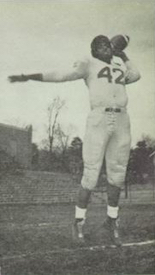 Initial inquiries indicated that Jim Yore of Battle Creek Central held the state mark, with a 56-yard field goal about 10 years prior, but a recheck of records by Dick Kishpaugh, “sports publicity director at Kalamazoo College and a close observer of Michigan prep football records,” indicated that Yore’s longest had been a 38-yard field goal, kicked on the last play of the game to beat Ypsilanti 3-0 on Oct. 3, 1952. It was thought to be the longest in state history.
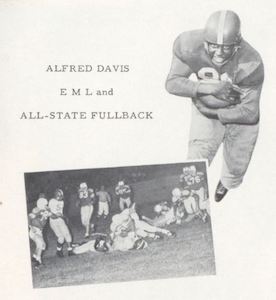
Additional digging found that Port Huron High School’s Alfred Davis, a 212-pound fullback, had drilled a flawless 46-yard field goal in a 19-14 win over Hazel Park in 1953.
“The word ‘tremendous’ is probably one of the most overused words in sports lexicon,” wrote Port Huron Times reporter Fred J. Vincent, “but it should be used in describing this kick.”
Vincent called it “perfect, splitting the uprights and clearing the bar by about six feet.”
Impressively, Davis also had kicked a 36-yarder earlier in the contest. “Bob Boyd held on both kicks,” added the sportswriter. “Not since Oct. 8, 1930 had a Big Red player kicked a three pointer. Hank Ceasor did it then to best Ferndale, 3-0.”
Word came that Cheboygan Catholic’s Joe Poirier had kicked one “reported to have traveled at least 53 yards from the point of the kick to the goal posts” in a 10-0 victory over Alcona in 1957. Since the MHSAA didn’t keep records at the time, Kishpaugh added it to his listing of unofficial state records.
The Ironwood Daily Globe unearthed a nugget. While it wasn’t considered by Kishpaugh for his record book, it did bring back memories of changes seen in the game.
Ironwood’s John ‘Cutz’ Cavosie made a “tremendous boot on Oct. 10, 1925 in the final seconds of a game at Oliver Field here in which Ironwood swamped Menominee 41-0. Cavosie apparently was back to punt, but instead he dropkicked the ball squarely through the goal posts 55 yards away. He was in his senior year that fall and was captain of the team. He played a big role in the rout on Menominee by scoring on runs of 42, 51 and 67 yards.”
Record Toppled
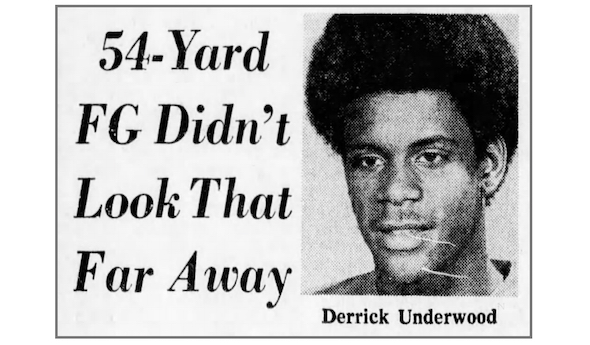
So it was quite the event when, nearly 19 years later, junior Derrick Underwood broke Poirier’s mark on a cold October Friday at Inkster.
A week earlier, Underwood had made his first field goal of the season, a 23-yard boot in overtime to give Ecorse its first victory of the year in five starts, 9-6, over River Rouge. This time, his kick gave Ecorse a 3-0 victory over the Vikings, although in decidedly less dramatic fashion as the kick came in the second quarter.
 “The strange thing is I didn’t even know that I was kicking it from the 44-yard line. To be honest, I wasn’t paying that much attention and it didn’t look that long,” Underwood told the Detroit Free Press in 1976. “But I got a real good snap on it and an excellent hold.
Red Raiders coach Patrick Kearney believed the kick would have been good from another five or 10 yards out.
“It felt good when I hit it,” added Underwood, “but because I was in front of the goal posts, I couldn’t tell whether it went over or under the crossbar. But I saw my teammates jumping up and down on the sidelines and I knew it made it.
“I was pretty loose because I figured that if I missed, we still had another half to come back and win it.”
Underwood’s accomplishment garnered national attention in the June/July ’77 issue of Joe Namath’s National Prep Sports magazine. At the time, Jerry Spicer of Hobart (Ind.) High School held the national record with a kick of 61 yards in 1975.
Exasperation to Jubilation
Underwood, who also served as the Red Raiders’ quarterback and defensive end, guided the team to Inkster’s one-foot line in that same game as the clock wound down. But with the lead, instead of pushing for the end zone, they let time expire.
A year earlier, in 1975, the Ecorse players watched their season disappear after a single game.
“The school millage was defeated just prior to the start of that season,” said Underwood, recalling his high school days some 45 years later. “I was the starting QB for the Red Raiders through my senior year ('78). We were heartbroken that our season was over after the first game against Muskegon Heights. No energy for that game.
“We were foaming at the mouth to be playing organized football. Some of us played flag football to stay active.”
“I was just practicing holding for a teammate,” Underwood had told the Free Press back in October 1976. “Eventually I thought I’d try and I got to be pretty good at it.”
“I didn’t take kicking seriously at all,” he states now. “I wasn’t a dedicated kicker. My stars were aligned in my head as being the next Thomas Lott.”
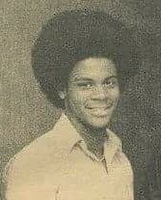 Lott, a Parade All-American out of San Antonio, Texas, played quarterback at Oklahoma, where his coach, the legendary Barry Switzer, once called him the greatest wishbone quarterback in Oklahoma history.
“Went down to Tennessee State University and found out how much football I didn’t know,” Underwood said.
Reminiscing he added, “Looking back, wouldn’t change a thing growing up in Ecorse.”
Equaled, then Topped – in the Same Game
Underwood’s mark would hold in Michigan until 1979, when junior Harold Moore of Dearborn equaled, then topped the mark in a season-ending game against Plymouth Canton.
Moore, a left-footed, straight-on kicking specialist, matched Underwood’s record with a 54-yard boot in the game’s first half, and then topped the record with a 55-yard field goal during the second half.
“I’ve never seen anyone with the leg power he has,” said his coach, Dick Ryan. “His 55-yard field goal cleared the bar with 20 feet to spare.”
Over the next two seasons, three players – Mike Prindle of Grand Rapids Union (1980), Bob Hirschman from Sterling Heights Ford (1980), and Dave Blackmer of Farmington Hills Harrison (1981) – would match Moore’s longest kick.
Since then, only five players have matched or exceeded 55 yards. John Langeloh of Utica shattered the mark in 1985 with a 58 yarder. Doug Kochanski of Warren Woods-Tower is the state’s current record holder, with a kick in 1994 that traveled 59 yards before splitting the uprights. The successful kick came in his final high school contest.
In these days of more and more specialization, one wonders, will Michigan ever see one of 60 yards or more?
 Ron Pesch has taken an active role in researching the history of MHSAA events since 1985 and began writing for MHSAA Finals programs in 1986, adding additional features and "flashbacks" in 1992. He inherited the title of MHSAA historian from the late Dick Kishpaugh following the 1993-94 school year, and resides in Muskegon. Contact him at [email protected] with ideas for historical articles.
PHOTOS: (Top) The Detroit Free Press told the story behind Derrick Underwood’s record field goal for Ecorse in its Oct. 30, 1976 edition. (2) Battle Creek Central’s Jim Yore was one of the earliest record holders for longest field goal in Michigan high school history. (3) Alfred Davis also was a standout fullback for Port Huron. (4) Underwood also played quarterback and defensive end for the Red Raiders. (Photos gathered by Ron Pesch.)