


Football Scheduling
December 23, 2014
The major complaint about the MHSAA Football Playoffs is not that too few teams qualify or too many, or that a five-week playoff is too long or should become six weeks, or that some worthy teams miss out while some less worthy teams get in. No; most people find a five-week, 11-player tournament after a nine-game regular season is the best that our late start to fall classes and our early start to winter weather will allow us in Michigan.
Many people appreciate being able to complete our 14-week season in the warmth of Ford Field on the Friday and Saturday of Thanksgiving weekend. Most people think that nearly 45 percent of 11-player schools is a sufficient tournament field. Many people like the excitement that the six-win threshold creates for teams that had been eliminated earlier from league championships.
The most serious and legitimate complaint about the season-ending playoffs is the stress it has placed on conferences and the struggles many schools have in building nine-game regular-season schedules. Some critics want to mess with the Football Playoffs because of the mess they believe it makes for regular-season schedulers.
Having the MHSAA provide every school a nine-game regular season schedule of the most nearby teams of the most nearly equal enrollments would shift scheduling headaches from the local level to the MHSAA.
I’m not suggesting that this solution to local problems doesn’t create new, large headaches for the MHSAA. But in fact, that is the tradition of school sports: when an issue is large enough in scope and common enough among member schools, the state high school association is asked to be the problem-solver. That’s how we got transfer rules, defined sports seasons and competitive cheer tournaments, for example. Just about every policy and procedure and program of the MHSAA arises from a common local problem looking for a statewide solution.
The 2014 Update Meeting Opinion Poll indicates that 70 percent of responding administrators do not favor the solution of the MHSAA making all schools’ regular-season varsity football schedules. Maybe the question should be narrowed to having the MHSAA complete member schools’ non-conference scheduling.
Meanwhile, we will keep watching as high school associations in other states move to statewide scheduling. For if scheduling is the problem, then scheduling itself needs to be the focus of the solution.
1st & Goal: 2023 Playoff Week 3 Review
By
Geoff Kimmerly
MHSAA.com senior editor
November 13, 2023
Seven of last season’s MHSAA Football Finals champions remain in the playoff mix as we move into the final two weeks of the 2023 season, and no doubt at least a few of the annual contenders have become accustomed to playing this late into the fall.
 But plenty more also are sharing in the thrill of playing mid-November football for the first time.
This weekend’s 8-Player Semifinals sent Indian River Inland Lakes into its first championship game in this sport, and Marion to its first since 1990. The 11-player brackets saw five first-time champions Regional champions – and two more that won Regional titles for the first time since well before any of their current players were born.
See below for a glance at all 72 games as the ride continued through the playoffs' third week, and click here for the full playoff schedule (including linked schedules for all 288 teams in the field this season).
8-Player Division 1
HEADLINER Indian River Inland Lakes 12, Pickford 0 Inland Lakes (11-1) earned its first trip to a football championship game with yet another impressive win – the Bulldogs’ last four opponents finished a combined 33-9. The shutout came against an offense that averaged 46.5 points per game entering the weekend. Pickford finished 10-2, its best since its 2019 championship season. Click for more from the Cheboygan Daily Tribune.
HEADLINER Martin 42, Kingston 34 The reigning Division 1 champion will play for a repeat as Martin outlasted Kingston in its closest matchup since back-to-back losses in Weeks 3 and 4. The Clippers (10-2) hadn’t had a single-digit game since, but stayed a step ahead by reaching 40 points for the third time over the last four weeks. Kingston (9-3) is a combined 18-4 over the last two seasons. Click for more from the Kalamazoo Gazette.
8-Player Division 2
HEADLINER Marion 42, Lake Linden-Hubbell 36 Playing in a fourth-straight Semifinal, Marion (11-0) earned its first championship game trip since 1990, coming back from a 14-8 halftime deficit as both offenses found their footing over the final two quarters. Marion’s final touchdown – which ended up the deciding score – was run in by an offensive lineman who stepped back into his former position. Lake Linden-Hubbell (8-4) finished its winningest season since 2016. Click for more from Cadillac News.
HEADLINER Adrian Lenawee Christian 42, Deckerville 14 Another dominating Lenawee Christian run continued, as the Cougars (12-0) pulled within one more win of a third undefeated season over the last four. They have not scored fewer than 41 points in a game this fall, and were able to slow a Deckerville offense that entered the weekend averaging 48.5 ppg. The Eagles (9-3) capped their winningest season since 2019. Click for more from the Adrian Daily Telegram.
11-Player Division 1
HEADLINER Davison 28, Rockford 14 The Cardinals won this Regional Final matchup of undefeated teams, doing so in part thanks to arguably its most impressive defensive performance of the fall. Davison (12-0) held Rockford scoreless until midway through the third quarter, limiting an attack that averaged nearly 43 points per game entering the weekend. The Cardinals also found their way offensively against a Rams defense that had given up only 10 points per game during its 11-0 start. Click for more from the Flint Journal.
D1 REGIONAL FINALS: Davison ripped off 21 unanswered points to start their game against Rockford.@DavCardFootball goes on to beat the Rams, 28-14.
Davison advances to play Belleville in the state semis.
🎥 WZZM 13 (@markskoljrTV)@sawyerglennie42 @Ajhilljr @810_Buddy pic.twitter.com/oYDUqAou16— Yousef Nasser (@YousefNasserTV) November 12, 2023
Regional Roundup Belleville 49, Northville 7 Belleville (12-0) won a sixth-straight Regional title by adding to a 42-0 Week 9 win over Northville (10-2) in the Kensington Lakes Activities Association championship game. Those were the Mustangs’ only losses this fall. West Bloomfield 21, Clarkston 20 The Lakers (10-2) may be talking about this one for years to come, as they trailed Clarkston 20-0 before coming back to not only claim a Regional title but avenge their Week 6 loss to the Wolves (6-6). Southfield Arts & Technology 31, Clinton Township Chippewa Valley 21 A&T (11-1) clinched its first Regional title since the school opened in 2016 after a merger of the former Southfield High and Southfield-Lathrup, and this was the school community’s first Regional championship including those predecessor programs since 2014. Chippewa Valley (9-3) capped its winningest season since 2019 with its three defeats by a combined 14 points.
11-Player Division 2
HEADLINER Waterford Mott 40 Gibraltar Carlson 19 A special season for Mott just became historic, as the Corsairs (10-2) – after winning their second District title in program history last week – claimed their first Regional championship and also set a program record for wins. Kalieb Osborne threw for three touchdowns and ran for two more for Mott. Carlson finished 10-2 and sets its program record for wins as well this fall. Click for more from the Oakland Press.
Check out the highlights from Waterford Mott's victory over Carlson in the Division 2 Regional Final! 🏈🔥 Mr. Football candidate and Toledo commit Kalieb Osborne, was on fire, with 5 total touchdowns (3 passing and 2 rushing). Mott is now set to face off against Warren De La… pic.twitter.com/FFU8wLfeQo
— STATE CHAMPS! Michigan (@statechampsmich) November 12, 2023
Regional Roundup Muskegon 42, Saginaw Heritage 14 Muskegon (10-2) earned its seventh Regional championship over the last eight seasons. Heritage (9-3) finished its winningest season since 2006, with Braylon Isom adding two more receiving touchdowns to his MHSAA career record that ended at 52. East Lansing 42, Byron Center 20 East Lansing (10-2) is on its way to the Semifinals for the first time since 2007 after breaking away during the fourth quarter against the Bulldogs (10-2), who completed their longest run since 2016. Warren De La Salle Collegiate 34, Roseville 14 The reigning Division 2 champion Pilots (10-2) won their sixth Regional title over the last seven seasons, ending the fall for Roseville (8-4) for the fourth-straight season.
11-Player Division 3
HEADLINER Mason 44, Walled Lake Western 41 (OT) This matchup was up for grabs until the very end before Mason secured a third-straight Regional title. Western (10-2) nearly avenged Mason’s 30-7 win over the Warriors in Week 8; the Bulldogs (12-0) led at halftime, then trailed by double digits much of the third quarter, and then Western sent the game to overtime before Mason’s Kaleb Parrish scored the game winner on a pass from Cason Carswell. Click for more from the Lansing State Journal.
ICYMI: Game-winning heroics in overtime! Cason Carswell connected with Kaleb Parrish for the walk-off touchdown, securing an epic 44-41 victory over Walled Lake Western in the Division 3 Regional Final!
🎙️ Evan Stockton and Grant Perry @MHSAA | @MasonFootball2 pic.twitter.com/vyCcvKPIfY— STATE CHAMPS! Michigan (@statechampsmich) November 11, 2023
Regional Roundup Detroit Martin Luther King 20, River Rouge 19 (OT) The two-time reigning champion Crusaders (7-5) pulled a win closer to possibly playing for a third-straight title, holding on into overtime as well to end Rouge’s six-game winning streak and season at 7-5. Grand Rapids Forest Hills Central 33, Gaylord 7 Last season’s Division 2 runner-up Forest Hills Central (11-1) also is one win away from a potential return to Ford Field after handing Gaylord (11-1) its only loss. The Blue Devils capped their best season since 2002. Zeeland West 42, Parma Western 7 West is headed back to the Semifinals for the first time since 2015, giving the Ottawa-Kent Conference Green two of the final 32 teams (with Muskegon). Western finished 10-2, having tied its program record for wins with its third District title victory over the last six years.
11-Player Division 4
HEADLINER Portland 21, Niles 14 Portland (12-0) broke free from a 7-7 game heading into the fourth quarter to win its second Regional title in three seasons. Both defenses shined, holding their opponents to season lows. Niles’ only other defeat was by a point in Week 2 as the Vikings (10-2) capped their best run with a program record for wins and first District title. Click for more from the Lansing State Journal.
Portland comes through in the second half to beat Niles 21-14, Raiders win 3rd regional title since 2018https://t.co/8aHNdeUB1i pic.twitter.com/4E8Pz6V2TM
— FOX 17 Blitz (@FOX17Blitz) November 11, 2023
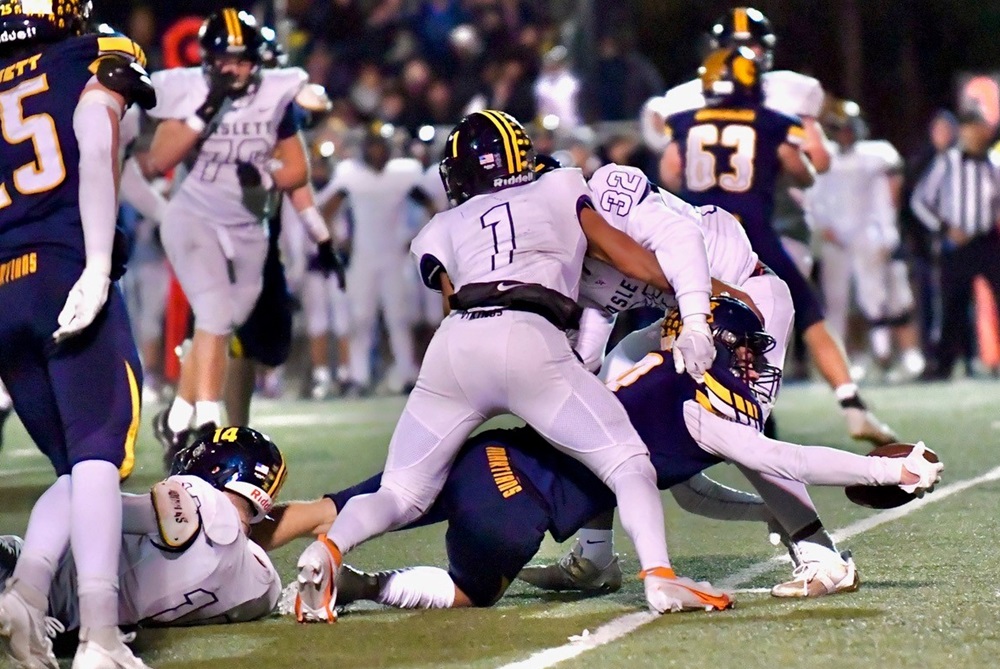
Regional Roundup Goodrich 24, Haslett 17 The 2022 Division 4 runner-up Martians (11-1) pulled within one more win of playing for the title again, twice holding off Haslett comeback attempts after building double-digit leads. The Vikings (8-4) capped their longest run since 2005. Grand Rapids South Christian 55, Big Rapids 35 The reigning champion Sailors (9-3) scored their most points since opening weekend to distance themselves from a Big Rapids team that finished its winningest season since 2003 at 10-2. Harper Woods 46, Carleton Airport 19 Harper Woods (9-3) claimed its first Regional title as it continued its best season since 2007. Airport’s only losses this fall in finishing 10-2 were to teams playing in Semifinals. (See Week 3 opponent Flat Rock below.)
11-Player Division 5
HEADLINER Grand Rapids Catholic Central 30, Grand Rapids West Catholic 28 The was the closest matchup between these longtime rivals since 2017, as West Catholic took a 28-24 lead with 3:49 to play but GRCC’s Connor Wolf then ran in for the winning score to go with his two touchdown passes. The Regional title was the eighth straight for the Cougars (11-1). The Falcons finished 11-1 coming off their Division 6 title in 2022. Click for more from the Grand Rapids Press.
Check out the electrifying highlights from Grand Rapids Catholic Central's victorious game against West Catholic in the Division 5 Regional Final! Quarterback Connor Wolf showcased his skills with 3 touchdown passes, leading his team to an intense 30-28 win. Catholic Central is… pic.twitter.com/BdL9e3fflN
— STATE CHAMPS! Michigan (@statechampsmich) November 12, 2023
Regional Roundup Flat Rock 56, Detroit Southeastern 26 Flat Rock (9-3) is another first-time Regional champion, earning its first trip to the Semifinals since 1976 (when the MHSAA Playoffs were only two rounds). Southeastern finished 8-4, its winningest record since also going 8-4 in 2018. Corunna 56, Macomb Lutheran North 18 Corunna (12-0) topped 300 yards rushing and 400 yards of total offense in winning its first Regional championship since 1996. Lutheran North capped arguably the best bounce-back season in the state this season, going from 3-6 a year ago to a 9-3 with a first District championship and school record for wins. Frankenmuth 35, Kingsford 13 Frankenmuth won its fourth-consecutive Regional title, scoring the most points Kingsford (10-2) allowed this season and holding the Flivvers to 176 total yards and -6 rushing. Kingsford capped its winningest season since 2004.
11-Player Division 6
HEADLINER Ovid-Elsie 38, Constantine 25 From the division that seemed heading into the weekend like perhaps the most wide-open, Ovid-Elsie (8-4) may have earned the biggest stunner of the Regional Finals. The Marauders were just 3-4 with two regular-season games to go but have won their first Regional title since 2008 and by handing Constantine (10-2) it first loss since Week 2. Click for more from the Kalamazoo Gazette.
Constantine falls in a tough battle against Ovid-Elsie. The Falcons end their year 10-2. https://t.co/8aHNdeUB1i pic.twitter.com/YhaUJm2RDz
— FOX 17 Blitz (@FOX17Blitz) November 12, 2023
Regional Roundup Kingsley 51, Gladstone 27 Kingsley (10-2) is headed back to the Semifinals for the first time since 2019 as the offense raised its scoring average to nearly 49 points per game by going over 50 for the fourth time over the last five weeks. Gladstone finished 9-3 for the second-straight season. Reed City 28, Midland Bullock Creek 14 The Coyotes (9-3) have won eight straight games to reach the Semifinals for the second-straight season, this time ending Bullock Creek’s longest playoff run since 2005. The Lancers finished 8-4 coming off two straight 4-5 seasons. Almont 49, Detroit Edison 24 Almont (11-1) also is back in the Semifinals for the first time since 2019 after ending Edison’s longest playoff run and winningest season at 8-4 with a first District title.
11-Player Division 7
HEADLINER North Muskegon 28, Pewamo-Westphalia 27 North Muskegon led through the first half, then trailed until late, but scored last to secure its first Regional title since 1986. These two also had met in a season opener, the Norsemen (12-0) winning that one 17-14, and this time QB James Young scrambled back-and-forth nearly the width of the field to find Landon Christensen on the game winner with 1:21 to play. P-W finished 10-2, both losses to North Muskegon by that margin of four total points. Click for more from the Muskegon Chronicle.
Time to party like it is 1986!
What a finish at Oakridge today as North Muskegon takes down Pewamo-Westphalia 28-27 for the regional championship.@James_4_Young @anewville12 @Landonnm_11 @13OYSL @NorthMuskegonFB pic.twitter.com/aBDJrRdhJ3— Mark Skol, Jr. (@markskoljrTV) November 12, 2023
Regional Roundup Jackson Lumen Christi 21, Clinton 14 The reigning Division 7 champion will play in its seventh Semifinal in eight seasons after advancing from one of its only close matchups this fall. Clinton (10-2) led 8-7 at halftime before Lumen (11-1) moved ahead halfway through the third quarter and held off a late comeback attempt. Menominee 40, McBain 0 Menominee (10-2) won its first Regional championship since 2016 and is the final Upper Peninsula team playing this fall after posting its fifth shutout this season and fourth-straight game giving up 14 or fewer points. McBain ended its longest run since 2015 at 7-5. Millington 35, Montrose 15 Millington claimed its first Regional title since 2016 and set a school record for wins as Dallas Walsh raced to four touchdown runs. Montrose’s 8-4 record ran its streak of winning seasons to 14.
11-Player Division 8
HEADLINER Ubly 41, Ithaca 20 Ubly’s profile already was pretty high entering this season with two Division 8 championship game appearances over the last three seasons, and it no doubt grew with this win over the Yellowjackets (11-1) – who were also undefeated and considered a title contender. The Regional title was the fifth straight for the Bearcats (12-0). Click for more from the Huron Daily Tribune.
In our Friday Night Lights Game Of The Week:@ITHACAJACKETFB travelled to take on @UblyFootball and for the 5th straight year, the Bearcats take home a Regional Championship defeating the Yellowjackets 41-20@WNEMTV5news pic.twitter.com/OMD5We5vGO
— Austin Szumowicz (@AustinSzumowicz) November 12, 2023
Regional Roundup Beal City 20, Iron Mountain 6 Beal City (11-1) still has given up only 95 points this season, and it slowed down an Iron Mountain offense that scored 50 per game during its 11-0 start. Ottawa Lake Whiteford 54, White Pigeon 6 Another meeting of undefeated contenders saw the reigning Division 8 champion Bobcats (12-0) score nearly half the 109 points that White Pigeon (11-1) allowed this season. Riverview Gabriel Richard 31, Clarkston Everest Collegiate 28 Gabriel Richard (8-4) also was 3-4 with two regular-season games to play and joined the first-time Regional champions, handing Everest (9-3) its first loss since Week 3.
MHSAA.com's weekly “1st & Goal” previews and reviews are powered by MI Student Aid, a part of the Office of Postsecondary Financial Planning located within the Michigan Department of Treasury. MI Student Aid encourages students to pursue postsecondary education by providing access to student financial resources and information. MI Student Aid administers the state’s 529 college savings programs (MET/MESP), as well as scholarship and grant programs that help make college Accessible, Affordable and Attainable for you. Connect with MI Student Aid at www.michigan.gov/mistudentaid and find more information on Facebook and X (Twitter) @mistudentaid.
PHOTO Haslett defenders bring down a Goodrich ball carrier stretching for extra yardage Friday. (Photo by Terry Lyons.)