

Ice Man: Skyline's Copp sets football records, leaves legacy
October 27, 2011
Eventually, Andrew Copp may be best-known as a hockey star. His spot on the USA under-18 national team development program squad marks him as one of the top players his age in the country.
But he’ll be remembered as one of Ann Arbor Skyline’s first standout athletes for another sport he simply couldn’t give up.
Bittersweet and heart-breaking are how Copp described the end of this football season. The MHSAA playoffs begin this weekend, and he hoped to be a part -- a possibility that was likely closer than Skyline’s 3-6 record might imply, given four of those losses were by four or fewer points. And that’s not the worst part. Even if Skyline had earned a berth, Copp would’ve been forced to watch after breaking his right collarbone in multiple spots three weeks ago.
Still, there will be plenty to remember fondly for the first quarterback in his school’s four-year history. Two MHSAA records and his school’s first varsity football wins will top the list, even as the combination of football and the injury will force Copp the miss the first half of his USA team’s season.
“It means a lot, starting something new and trying to put your stamp on it,” Copp said. “As the quarterback, it’s a lot of weight on your shoulders to start something that 10, 20 years down the road people are going look at.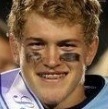
“Last year, when I got offered to play (USA) but had to quit football after the first game, I couldn’t do it. I just couldn’t quit on the team.”
That kind of leadership was “worth its weight in gold” for a school and program only just getting started, Skyline athletic director John Young said.
Copp likely would’ve attended Ann Arbor Pioneer -- like both of his parents had -- had Skyline not opened in fall 2008.
The Eagles’ football program started that first fall, but didn’t field a varsity team until 2010. Copp was the quarterback all four years until his he was injured on a run during the first quarter of his team’s Week 7 game against Temperance Bedford.
Two weeks earlier, against Ann Arbor Pioneer, Copp had thrown for an MHSAA record 557 yards and record-tying seven touchdowns. In six games this fall plus a few minutes of that seventh, Copp completed 96 of 156 passes for 1,732 yards and 27 touchdowns. Those season touchdown passes also qualify for an MHSAA record book listing, as do the 31 completions that led to his record-setting numbers against Pioneer.
“Obviously, I can’t throw for 557 yards without my line doing a great job, my receivers catching balls and making plays. And probably the most unsung heroes on our team are the running backs, who were blocking for me,” Copp said. “I just remember everything going our way, almost like a recess football game.”
But it took some flexibility from USA hockey and a tough decision by Copp to make it possible. Usually, USA players aren’t allowed to play other sports, Copp said, but he was granted that exception. He joined USA hockey after his junior football season, and this summer started that team’s workouts at 8 a.m. before then moving on to workouts and film study for football. This fall, after his five classes at Skyline to start the day, he’d work out for hockey from 1:30-4 p.m. every week Monday through Wednesday, then start football practice at 4:30. All while remaining a strong student and adhering to a hockey-imposed 9 p.m. curfew.
Ironically, the 6-foot, 185-pound Copp joined the football team to become more physical for hockey on the advice of his father Andy, a successful youth hockey coach. Andrew has seen some similarities between the two sports -- as a hockey center he also controls play. Hockey helped Copp be ready for a fast pace of play and developed the quick decision-making necessary to thrive at quarterback.
His football mind helped him help the Eagles when he could no longer lead them on the field. “He had surgery on Tuesday, missed Wednesday, and was back at practice the next day,” Skyline coach Rodrek Jones said. “That was the same day my offensive coordinator was not able to come to practice, and (Copp) called the entire practice for me. He stayed very focused.”
Copp still can’t carry his backpack around school, but hopes to play hockey by January. He is almost assured of an outstanding college hockey opportunity, and Jones thinks he has the ability to play college football as well. Young said Copp, along with receiver Jordan Woods (committed to Purdue) and volleyball player Maggie Halloran (committed to Michigan State), has put Skyline on the map. Despite the tough end this fall, it’s a legacy Copp is glad to leave for those who come after him.
“He’s one of the most popular kids in school, on the Homecoming king court ... a typical All-American kid,” Young said. “I’m extremely happy for him. I was disappointed he broke his collarbone, because he was on track for a more spectacular year. But he helped, along with other players, to elevate their play this year.”
PHOTO
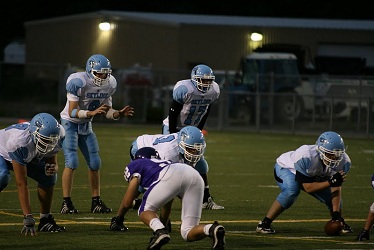
Skyline quarterback Andrew Copp (9) takes a snap against Ann Arbor Pioneer on Sept. 23. Copp threw for an MHSAA-record 557 yards and a record-tying seven touchdowns in a 52-49 loss. (Photo courtesy of Jeff Lepley. Head shot by Pete Draugalis.)
1st & Goal: Week 4 Preview
September 17, 2020
By Geoff Kimmerly
Second Half editor
After a slight delay, we’re back – and landing right in the heart of the 2020 Michigan high school football season.
After missing the previously-scheduled first three weeks due to COVID-19 precautions, there’s no time for teams to ease into the action. This week’s schedule is loaded with some of the major matchups we circle every fall.
Below is a look at storylines coming out of every region of the state and 8-player for this opening weekend (we’re going to continue calling it Week 4). We’ll again be tracking scores in real time with the MHSAA Score Center. And remember, attendance limits are in place – but we’ll have at least 32 games broadcast Friday and Saturday on MHSAA.tv. (Nine games kicked the varsity season off Thursday night, and you can catch one of those as well on demand.)
Records below are for the 2019 season.
Bay & Thumb
Beaverton (10-1) at Sanford Meridian (8-4)
The Beavers are coming off their best season ever, after claiming the Jack Pine Conference championship and closing the regular season with four straight shutouts. The zero streak began with a 20-0 win over Meridian, which went on to finish third in the JPC but then claimed a District title. The Mustangs are hoping to next beat Beaverton for the first time since their best season ever, in 2015.
Keep an eye on these: FRIDAY Linden (4-5) at Flushing (5-5), Frankenmuth (9-2) at Freeland (9-3), Flint Carman-Ainsworth (2-7) at Grand Blanc (5-5), Ubly (10-3) at Harbor Beach (10-1).
Greater Detroit
Detroit Martin Luther King (11-3) at Detroit Cass Tech (7-5), Saturday
The Detroit Public School League kicks off with its annual game of the year. These rivals will play in different divisions of the PSL again and could meet a second time, as is frequent, in the PSL championship game in five weeks. King is coming off a big win in last season’s matchup after a similar Cass Tech victory in 2018 – so another classic may be due.
Keep an eye on these: FRIDAY Macomb Dakota (6-5) at Clinton Township Chippewa Valley (9-1), West Bloomfield (10-2) at Oak Park (8-2), Utica Eisenhower (9-3) at Sterling Heights Stevenson (8-5) SATURDAY Bloomfield Hills Brother Rice (6-5) at Warren De La Salle Collegiate (5-5).
Mid-Michigan
Portland (8-3) at DeWitt (10-3)
Both will look to hit the ground running in what should again this season be one of the best matchups in the Lansing area. The Panthers’ three losses last year came by a combined 28 points, and their closest was a 29-27 defeat to the Raiders in Week 2. Portland scored the most points DeWitt gave up last fall, but arrived in a similar spot later with three losses over its final four games and by a combined 29 points.
Keep an eye on these: FRIDAY Williamston (5-5) at Fowlerville (7-4), Pewamo-Westphalia (14-0) at Laingsburg (6-4), Saginaw Nouvel (7-5) at Ithaca (8-2), Saginaw Swan Valley (8-4) at Alma (4-5).
Northern Lower Peninsula
Traverse City West (7-3) vs. Traverse City Central (8-2) at Thirlby Field
Talk about a different look this season. The “Patriot Game” between these rivals generally brings about 10,000 fans to downtown Traverse City. But this region is allowed a maximum of 500 people (including players) at outdoor games under Phase 5 of the MI Safe Start Plan. Still, smaller crowds won’t change the meaning for the teams on the field. Central’s 32-0 win last year was the first double-digit victory in the series since 2012, and it decided the Big North Conference title.
Keep an eye on these: FRIDAY Kingsley (12-1) at Cheboygan (4-5), Boyne City (4-5) at Maple City Glen Lake (12-2), Lake City (6-4) at McBain (6-5) SATURDAY Sault Ste. Marie (7-4) at Traverse City St. Francis (8-4)
Southeast & Border
Dexter (8-2) at Chelsea (12-1)
Dexter – remember one of the great stories of 2018 when it made the playoffs for the first time – continued its surge last fall with its most wins during at least the MHSAA playoff era. And the Dreadnaughts were close to accomplishing possibly much more, with last year’s defeats by a combined seven points. Chelsea’s 22-17 win over Dexter in Week 1 ended up deciding the Southeastern Conference White title, making this rematch potentially another of the “right into the fire” moments of this season’s start.
Keep an eye on these: FRIDAY Ida (4-5) at Clinton (9-1), Hanover-Horton (4-5) at Michigan Center (4-5), Pittsford (4-5) at Sand Creek (8-3), Dundee (5-5) at Blissfield (6-4).
Southwest Corridor
Constantine (8-3) at Schoolcraft (10-2)
These were two of three teams that shared the Southwestern Athletic Conference Lakeshore title last season, thanks to Schoolcraft’s 27-24 win of their matchup. The Eagles have won six straight meetings with Constantine, including two in the playoffs – and this game will still mean a lot to both although the teams are in different divisions of the SAC this fall.
Keep an eye on these: FRIDAY Portage Northern (10-2) at Stevensville Lakeshore (4-5), East Lansing (7-3) at Portage Central (5-5), Fennville (4-5) at Lawton (10-1), Jackson Lumen Christi (12-1) at Marshall (6-5).
Upper Peninsula
Menominee (7-4) at Marquette (5-5)
This rematch could be one of the best regular-season games north of Mackinac Bridge this fall. Marquette is the reigning Great Northern Conference champion as both of these teams made the postseason a year ago. Marquette’s 28-21 win over the Maroons broke a seven-game losing streak against the annual league foe.
Keep an eye on these: FRIDAY Harbor Springs (6-4) at St. Ignace (5-5), Kingsford (4-5) at Calumet (10-2), Gwinn (1-8) at Hancock (5-4), Manistique (3-6) at Negaunee (6-4).
West Michigan
Hudsonville (8-4) at East Kentwood (6-5)
The Eagles have had to wait all offseason and then some for a chance to avenge a painful 2019 loss. Despite falling to Rockford the previous week last season, Hudsonville came into last year’s matchup with East Kentwood still tied for first in the Ottawa-Kent Conference Red – and then was upset 31-20 by the eventual fourth-place Falcons. Maybe it wasn’t an upset though, as East Kentwood has beaten Hudsonville in three straight and picked up a playoff win over Rockford at the end of last fall.
Keep an eye on these: FRIDAY Grand Rapids Forest Hills Central (8-3) vs. Grand Rapids Christian (7-3) at Forest Hills Eastern, Muskegon Mona Shores (12-2) at Muskegon Reeths-Puffer (5-4), Jenison (4-5) at Rockford (8-2), East Grand Rapids (5-5) at Lowell (1-8).
8-Player
Deckerville (10-1) at New Haven Merritt (8-2)
Deckerville’s only loss last season came in a Regional Final, and the Eagles yearly are one of the strongest statewide contenders. Merritt is looking to make that jump. The Mustangs have reached the playoffs five of the last six seasons, and they’ll get two serious tests – plus major postseason prep – right away this month in Deckerville and Morrice as a new member of the North Central Thumb League Stars.
Keep an eye on these: FRIDAY Camden-Frontier (6-4) at Climax Scotts (9-3), Martin (10-1) at Wyoming Tri-unity Christian (5-5), Cedarville (6-5) at Engadine (8-2), Bellevue (6-4) at Colon (13-0).
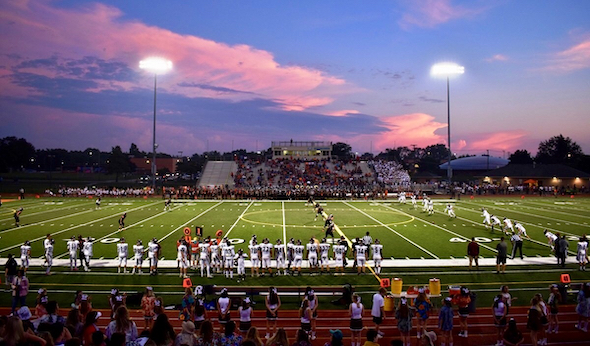
PHOTO by Robert Batzloff.