

Inside Selection Sunday: Mapped Out
October 19, 2012
By Geoff Kimmerly
Second Half editor
NOTE: This originally was published Oct. 24, 2011, after selection of last season's playoff field. It's an explanation of how the MHSAA creates the playoff pairings for its football tournaments, a delicate task we will undertake again Sunday.
Sitting on the other side of this process for a number of years, I can admit to occasionally scratching my cynical head over some of the matchups that have come out of Selection Sunday.
How could teams so far from each other play in the same district? Why would two schools in the same town play in different regionals? Are they picking out of a hat at 1661 Ramblewood Drive?
Now, I have answers.
Sunday morning, we filed into headquarters for what might be the most important non-game day on the MHSAA calendar. “We” were made up of half of the MHSAA staff, plus a representative from the Michigan High School Football Coaches Association.
Here’s some of what I learned from being a part of the process:
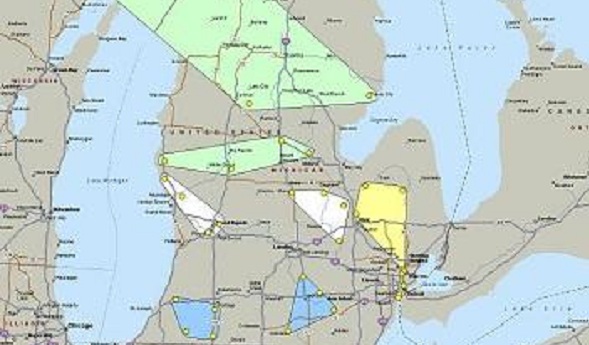
- First, a brief history lesson. In early years (or until the middle of the last decade), lines were drawn by hand. Dots representing qualifying schools were pasted on maps, one map for each division, and those maps were then covered by plastic sheets. Districts and regionals literally were drawn with dry-erase markers. No longer. Using a variety of spreadsheets and mapping software, we’ve gone digital. Staff is split into two teams, each considering four divisions (and the 8-player map) before we reconvene and look at all nine divisions together.
- We are presented digital maps of the state covered in dots. That’s about it. The rule of the day, simply, is “geography rules.” Which teams are represented by the dots is not considered, much less discussed, until lines are drawn. While considering my group’s first map, I began to bring up teams – and immediately was shot down (with good reason). Teams, matchups, rivalries, previous playoff pairings, etc. DO NOT come into play. We draw boxes in what we figure are the most logical ways of making districts and regions work.
- Travel distance and ease DO come into play. This especially is true when considering which districts will include teams from the Upper Peninsula. An example: Marquette is closer to the schools we placed in its district – Fenton, Bay City Western and Okemos – than some other options because those schools are closer to I-75. Schools further north on the map but farther from a main highway would’ve created longer trips.
- Sometimes, maps get ugly. And sometimes, it was a matter of choosing the least ugly situation. Of course, a Division 4 District of Lansing Sexton, Dearborn Heights Robichaud, Battle Creek Pennfield and Vicksburg isn’t ideal. But with no other Division 4 schools within 35 miles of Lansing, we were put in a tough spot. Add in that there were 13 teams in the Detroit area, leaving one as the odd team out of three districts based there. Something had to give, and drawing things up as we did caused the fewest messes.
- Considering how to set up the entire state is different than figuring out what teams make the most sense for just one school or area. And shifting just one dot on a map can change things for all 32.
- Back to “geography rules.” The Division 8 district including Saugatuck, Muskegon Catholic, Mendon and St. Joseph Lake Michigan Catholic might be the most competitive, on paper, in the state. Saugatuck is the reigning MHSAA runner-up in the division, and Muskegon Catholic and Mendon were ranked Nos. 1 and 2, respectively, in the most recent Association Press poll. Seeing that after we’d drawn the line caused a collective “ouch.” But again, the line was drawn based on dots on a map.
I thought back on some of the matchups I’d questioned in the past, and came back to what I’d ask people now: How would you do things differently?
I imagine there would be some creative answers, but I also would guess we considered those scenarios too.
And remember, determining the playoff schedule is just one step in many. Eight state champions must survive it, regardless of which opponents they face along the way.

1st & Goal: 2025 Week 2 Review
By
Geoff Kimmerly
MHSAA.com senior editor
September 8, 2025
Most of the time, it's pretty easy to pick out the top matchups across the state heading into a football weekend, and the potentially most impactful results coming out of one.
 But perhaps the most fun part of building our "1st & Goal" reviews every Monday is highlighting our "Watch list" teams – ones that stuck out in a notable way that could indicate big things to come.
We introduce another set below, along with our headliners and more who made noise during this 2025 Week 2.
Bay & Thumb
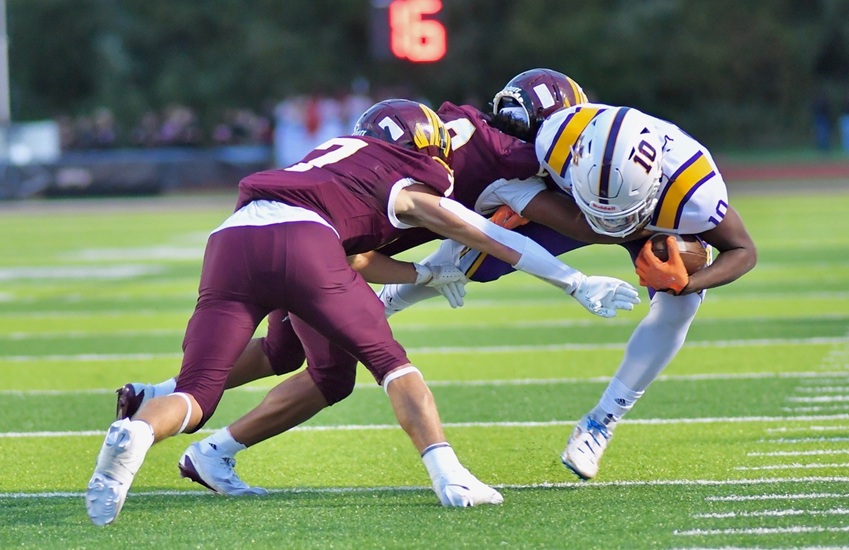
HEADLINER Davison 23, Warren De La Salle Collegiate 21 The Cardinals held off a late De La Salle rally to improve to 2-0. The victory avenged a 21-3 loss last year to the Pilots (1-1) and gave Davison a 2-1 series lead since the pair of championship contenders began playing openers against each other in 2023. Click for more from the Detroit Free Press.
Watch list Bay City Western 38, Petoskey 32 The Warriors (2-0) should carry some momentum into Saginaw Valley League play this week after avenging last year’s 34-point loss to Petoskey (1-1), which had won 10 consecutive regular-season games.
On the move Harbor Beach 43, Ottawa Lake Whiteford 14 The Pirates (2-0) have played two 2024 playoff teams to start this season and outscored them by a combed 85-22. Midland Dow 49, Saginaw Heritage 34 The Chargers also are 2-0 opening against a pair of playoff teams from a year ago – and have avenged 2024 losses against both, having lost to the Hawks (0-2) by a point last season. Armada 34, Croswell-Lexington 12 It may be super early, but this might end up a league title decider with these two and reigning champion Almont the top three in the Blue Water Area Conference last fall.
Greater Detroit
HEADLINER Detroit Catholic Central 27, Toledo Central Catholic 14 The Shamrocks (2-0) outscored TCC 21-0 during the second half in this matchup of reigning champion and runner-up, respectively, from the Catholic High School League Central. Cameron Swearingen starred. Click for more from MLIVE-Detroit.
Watch list Oxford 24, Birmingham Groves 21 The Wildcats will ride an impressive win into their the Oakland Activities Association Red opener against Clarkston, having ended Groves’ 10-game regular-season winning streak to move to 2-0.
On the move Harper Woods 27, Clarkston 21 The Pioneers (2-0) have made a massive jump over the last three seasons, but this may turn out to rank among their most impressive wins during that time as Clarkston (1-1) was coming off a big one over Belleville. Detroit Cass Tech 31, Grandville 28 (OT) Cass Tech (2-0) scored the game’s final 10 points, including a winning field goal in overtime, in a matchup of top Division 1 teams statewide. Madison Heights Lamphere 3, Port Huron Northern 2 This had potential anyway to be a high-profile game as both were division champions in the Macomb Area Conference last season, but the statistical oddity just adds to the intrigue. The Rams (2-0) have won their games this fall by a combined four points.
Mid-Michigan
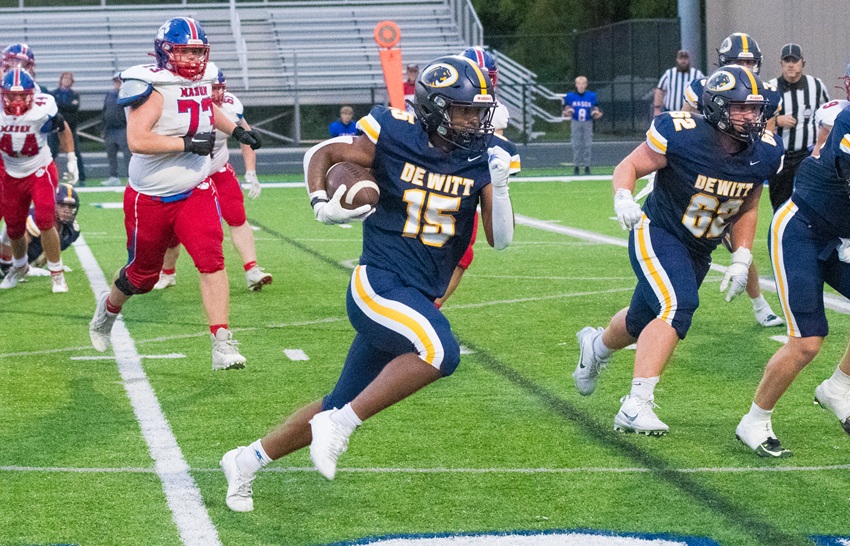
HEADLINER DeWitt 44, Mason 37 The recent rivalry between these two Lansing-area powers saw a couple of major swings as DeWitt scored 24 unanswered points during the first half and Mason trailed by as many as 18 before coming on late. Click for more from the Lansing State Journal.
Watch list Williamston 36, Hastings 29 The Hornets scored and added the two-point conversion with seven seconds to play to avenge a 2024 loss for the second week in a row and move to 2-0 after finishing last season 3-7. Hastings fell to 1-1 with its first two games both decided during the closing seconds.
On the move Haslett 15, Fenton 14 The Vikings (1-1) scored the go-ahead two-point conversion with 57 seconds to play, then held on through a Fenton field-goal attempt as time expired. Durand 40, New Lothrop 33 The Railroaders (2-0) made it two wins in a row and three in four seasons over New Lothrop (1-1) with all three victories decided by seven points or fewer. Ithaca 36, Lawton 7 The Yellowjackets (2-0) surged in a matchup of teams that finished a combined 18-4 a year ago.
Northern Lower Peninsula
HEADLINER Traverse City St. Francis 42, Ogemaw Heights 32 St. Francis (2-0) took a big early lead and maintained distance to win this matchup of 2024 league champions. The Falcons (1-1) pulled within two and three points during the final quarter before the Gladiators pulled away.
Watch list Gaylord 21, Kingsley 14 The Blue Devils (2-0) won by this score for the second straight week, in doing so avenging a 16-0 defeat from a year ago and moving closer to equaling last season’s 3-6 finish.
On the move Maple City Glen Lake 42, Frankfort 6 The Lakers bounced back big from a season-opening loss to St. Francis, with this likely to be a key game as they look to repeat as Northern Michigan Football League Legacy champions. Kalkaska 20, Oscoda 14 (OT) The Blazers are 2-0 for the first time since 2017 as they ready for NMFL Legends play starting this week. Tawas 44, Erie Mason 14 Tawas (1-1) has won one game both of the last two seasons, but could be ready to make noise with those 44 points their most in one contest since 2022.
Southeast & Border
HEADLINER Jackson Lumen Christi 54, Pontiac Notre Dame 34 Perhaps not surprisingly, the meeting of the reigning Division 6 and 5 champions, respectively – which both averaged more than 42 points per game last season – turned into a high-scoring matchup although Lumen did build a 20-point lead early and maintained it most of the game. In doing so, the Titans (1-1) avenged last season’s 28-24 loss to the Fighting Irish (1-1).
TOUCHDOWN NOTRE DAME PREP🍀 🏈
Brody Sink runs a BEAUTY of a route to get the Irish back within 2 scores!
Lumen Christi: 35
NDP: 20
Delivered by @hungryhowies
Catch the game live on the State Champs YouTube page and Local 4 plus! pic.twitter.com/ejPtk1IOKN— STATE CHAMPS! Michigan (@statechampsmich) September 6, 2025
Watch list Ypsilanti Lincoln 27, Ypsilanti Community 26 The Railsplitters are 2-0 for the first time since 2019 and ran its winning streak against the Grizzlies (1-1) to six.
On the move Hudson 8, Ida 3 After giving up only 10 points per game last season, Hudson (2-0) hasn’t lost stride allowing a total of 11 over its first two victories this fall against opponents that went a combined 21-3 last year. Monroe St. Mary Catholic Central 36, Flat Rock 20 SMCC (2-0) is off to a nice start toward repeating as Huron League champ as Flat Rock (1-1) was among contenders as well last season. Hanover-Horton 28, Napoleon 8 Cascades Conference West reigning champion Hanover-Horton (1-1) bounced back from a Week 1 loss by shutting down a Cascades East regular contender in Napoleon (1-1).
Southwest Corridor
HEADLINER Edwardsburg 40, St. Joseph 37 The Eddies are 2-0 for the first time since 2021 thanks to a second close win, this one following a seven-point victory over McBain in Week 1 and avenging last year’s 36-29 loss to the Bears. St. Joseph’s two defeats are by a combined 11 points to teams that finished 19-6 in 2024. Click for more from the St. Joseph Herald-Palladium.
Watch list Portage Central 41, Grand Rapids Forest Hills Central 0 Few teams in the state are off to as impressive a start as Portage Central, which has defeated FHC and East Lansing by a combined 86-0 after losing to both last season before finishing 8-4.
On the move Berrien Springs 32, Otsego 14 The Shamrocks have reached the playoffs 11 straight seasons, the last two after 0-2 starts, but they are now 2-0 this fall. Plainwell 34, Galesburg-Augusta 20 The Trojans have won one game both of the last two seasons but are up to 2-0 as well this fall. Decatur 26, Bronson 20 (2OT) Bronson (1-1), from the Big 8 Conference, is playing in the Southwest 10 Conference this season and provided an exciting league opener against last season’s SW10 runner-up Raiders (1-1).
Upper Peninsula
HEADLINER Bark River-Harris 30, Iron Mountain 22 (OT) Watch out for the Broncos (2-0). Bark River-Harris has been a playoff team most of the last decade but took a major step with its first win over Iron Mountain (1-1) in 11 recent tries. This one was at Iron Mountain, and they will face off again Oct. 10 in Harris. Click for more from the Iron Mountain Daily News.
Watch list L’Anse 20, West Iron County 14 The Purple Hornets avenged 29 and six-point losses to West Iron from a year ago to move to 2-0 this fall – after winning one game total over the last two seasons.
On the move Calumet 55, Ishpeming Westwood 6 The Copper Kings have outscored their first two opponents by a combined 96-6 as they prepare for this weekend’s major matchup with Negaunee. Escanaba 36, Cadillac 7 Escanaba is 2-0 for the first time since 2019 as it readies to take on reigning Big North Conference champion Petoskey this week. Kingsford 29, Houghton 6 The Flivvers (1-1) got back on the right track after a Week 1 defeat.
West Michigan
HEADLINER Rockford 30, Muskegon 26 The Rams (1-1) trailed 20-17 heading into the fourth quarter but followed Luke Ahern to a big finish as Rockford made it three wins in three years against the Big Reds (0-2). Click for more from the Grand Rapids Press.
Watch list East Kentwood 43, Byron Center 14 The Falcons (2-0) began showing signs last season of making a jump, and they may be nearing full flight with this win avenging last year’s 43-20 loss to the eventual Division 2 runner-up Bulldogs (0-2).
On the move East Grand Rapids 21, Grand Rapids South Christian 0 This was quite a rebound after EGR’s Week 1 loss to Lowell, as the Pioneers (1-1) avenged a 42-28 defeat from the Sailors from a year ago. Hudsonville Unity Christian 40, Schoolcraft 19 Unity’s offense continued to surge, as the Crusaders moved to 2-0 with this victory over a Schoolcraft team (1-1) that reached the Division 7 Semifinals last season. Muskegon Oakridge 15, Montague 7 Oakridge (2-0) is back on top in this longtime rivalry and also atop the West Michigan Conference Lakes standings after avenging last season’s 14-7 loss to the Wildcats (0-2).
8-Player
HEADLINER Mendon 28, Britton Deerfield 24 It’s not difficult to imagine these two meeting again as both reached Semifinals last season – Mendon in Division 1 and B-D in Division 2 – with both playing in Division 2 this fall. They kicked off Week 2 with a Thursday night gem. Click for more from the Adrian Daily Telegram.
Watch list Felch North Dickinson 52, Rudyard 7 After struggling mightily between 2017-22 and not having a varsity at all in 2023, North Dickinson came back last season to finish 6-3 – and with two victories this fall is riding a seven-game winning streak.
On the move Crystal Falls Forest Park 28, Ishpeming 22 This celebration of 1975 Finals champions was won by last year’s Division 2 title winner as the Trojans (1-1) bounced back from a Week 1 defeat. Portland St. Patrick 14, Morrice 7 These rivals kept the score low in another showdown, making it three of the last four meetings decided by seven points or fewer – and three straight wins during the regular season for the Shamrocks (2-0). Onekama 38, Marion 16 The Portagers’ only defeat last fall before the Division 2 Semifinals came to Marion in Week 2, and they avenged that 44-8 loss in a big way to improve to 2-0 this season.
MHSAA.com's weekly “1st & Goal” previews and reviews are powered by MI Student Aid, a division within the Department of Lifelong Education, Advancement, and Potential (MiLEAP). MI Student Aid encourages students to pursue postsecondary education by providing access to student financial resources and information. MI Student Aid administers the state’s scholarship and grant programs that help make college Accessible, Affordable and Attainable for you. Click to connect with MI Student Aid and find more information on Facebook and Twitter @mistudentaid.
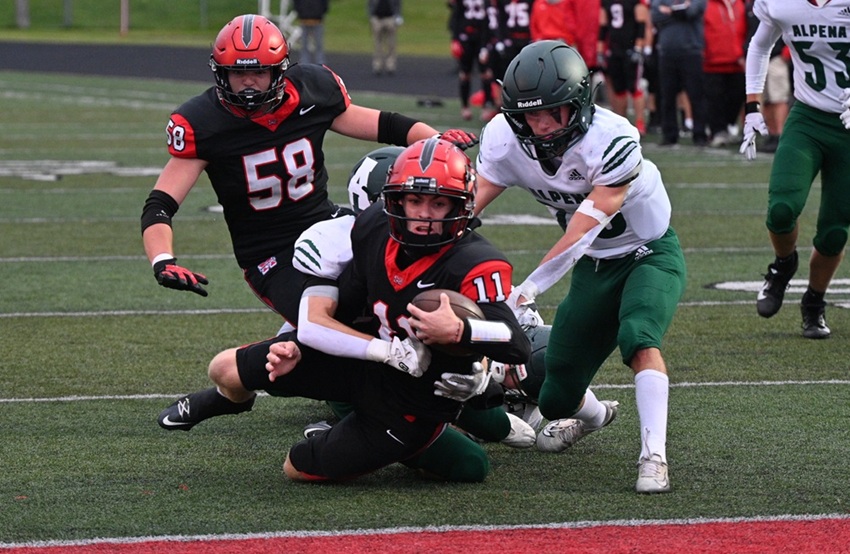
PHOTOS (Top) Marquette's Brody Clements hauls in a pass during his team's 41-13 win over Alpena. (2) A pair of Davison defenders wrap up a De La Salle ball carrier. (3) DeWitt's Channing Ridley breaks toward the sideline during his team's win over Mason. (4) Marquette's quarterback Ford Richardson is able to just get in the end zone to score a touchdown against Alpena. (Top photo by Randy Ritari. Davison/De La Salle photo photo by Terry Lyons. DeWitt/Mason photo by Tom Pearson/TCP Photography. Marquette/Alpena Richardson photo by Cara Kamps.)