

Lung Transplant Survivor Inspires, Teaches Through Football
By
Doug Donnelly
Special for MHSAA.com
September 1, 2021
ADRIAN – As the final seconds ticked off the clock in the 2019 Division 8 Regional Football Final at Reading, Adrian Lenawee Christian assistant coach Jon Willett started looking for his wife.
 Reading would be going on to play the next week, while the LCS’s season was over. Willett desperately needed oxygen. He could barely breath.
Hillary Willett, Jon’s wife, pulled the car as close to the Reading field as she could, and Jon opened the door.
“I got in the car and sat down,” Willett said. “And I looked at her and I said, ‘I just coached my last game.’”
As miracles go, Willett was wrong. Less than two months after that football game that Willett thought was his last, he underwent a double lung transplant at the University of Michigan Hospital. He still doesn’t know how he survived so long, but is certain there was divine intervention.
“I’ve always had a close relationship with Jesus Christ,” Willett said. “And I’ve always been passionate about football. I always thought that if I survived, I would use football as a tool to reach younger people. I’m doing that today.”
Willett helped coach the Cougars to last season’s 8-Player Division 1 championship and is back on the sidelines this season, coaching the Cougars JV team and continuing to serve as an assistant with the varsity.
He even gets in on some drills now and then, such as doing push-ups with the quarterbacks.
“Jon has been with me for seven or eight years,” LCS varsity head coach Bill Wilharms said. “He’s a great man and a great football coach. The kids love having him around, and he loves them. I love coaching with him, and he’s a big part of our coaching family.”
Willett grew up in Sand Creek, about 10 minutes south of Adrian in Lenawee County. He played on some outstanding Aggies football teams for Hall of Fame coach Ernie Ayers. Willett led the 1990 Aggies in rushing, finishing just shy of 1,000 yards his senior season.
He got into coaching when his sons, Noah and Isaiah, began playing flag football.
“I coached them in flag football, then in Pop Warner,” Willett said. “I love coaching football. When Noah was in middle school I coached him one year, then became an assistant for the varsity.”
 Wilharms tabbed Willett to be the JV head coach, a position he’s held for the last couple of years. He also coaches varsity wide receivers and defensive backs and will assist the LCS scout team quarterbacks at practice. He jumps in whenever needed.
Sometimes, it’s as a motivational speaker.
“I share my testimony whenever possible,” Willett said. “I tell my players that life is short. You never know how long you are going to have. You truly don’t. You have to live your life to the fullest.”
Willett first was diagnosed with idiopathic pulmonary fibrosis – chronic, progressive lung disease – in April 2017 when he visited the doctor due to a constant cough and shortness of breath. The prognosis was not good.
“The doctor said at that point I had 65-percent capacity of my lungs,” he said. “They gave me three to five years unless I could get a double lung transplant. They said that would be the only option and that there was no cure.”
Willett believed the doctors, of course, but admits he wasn’t the best patient.
“I figured if I could make it 10 years, my kids would be out of school,” he said.
The disease had other ideas. While he was put on oxygen due to shortness of breath, his LCS football players had no idea.
“I never did it in front of them,” he said. “I should have. I wasn’t a very good patient. I was wanting to be with the team. I wanted to coach.”
In July 2019, he noticed a big change.
“My lung capacity had dropped,” he said.
He continued to coach. He had some doctors’ appointments here and there but remained coaching the entire season.
“It was a mental thing,” he said. “I wanted to get through the season.”
He rode the bus to the LCS-Reading game. When the game was over, he told Wilharms that he had to go home.
“I told Coach Wilharms that I was just getting in the car with my wife,” he said. “She pulled the car up to the gate because it was so hard to walk. I couldn’t get air because of not having oxygen.”
When he told his wife that he thought he would never coach again, she said no.
“She looked at me and she said, ‘(You’ve coached your last game) with those lungs.’”
By Christmas of 2019, Willett had been in and out of the hospital on numerous occasions. He was on oxygen tanks around the clock. He went home at Christmas, believing it was his last.
“I said I want to go home. I think it’s my last Christmas. I wanted to be with my family,” he recalled.
When he returned to the hospital after Christmas, his son Noah sat in the backseat during the car ride changing out oxygen tanks every few minutes just to keep his father alive. Willett’s oxygen levels were dangerously low.
 “When I got to U-M, there was a whole team of people waiting for me. They worked on me and sent me up to ICU. It was bleak,” he said.
The LCS community sent out word via social media to pray for Coach Willett, his wife, two sons and two daughters, Emily and Abigail. Willett said those prayers were answered.
Willett was told by doctors he had to have a double lung transplant within 24 hours, or he would die. Seven hours and 13 minutes later, the doctor walked in, with tears in his eyes, and told the family they found a match.
Willett is feeling better now. In February of this year, about a month after Willett watched from the sidelines as LCS won the championship in Brighton, the medications he had been on took hold and he began to improve.
When the season started this summer, Willett was no doubt going to be part of the Cougars staff.
“Everything is very stable right now,” he said. “My lungs keep getting better. I can tell at football practice, walking from end zone to end zone, I’m feeling better. I’m building up. That exercise helps.”
Some day he plans on reaching out to the family of the person who donated lungs to him. For now, he’s grateful to be alive and thankful for every moment he gets to spend coaching football.
“I’m feeling great and loving the opportunity I have to keep coaching and be with the kids,” Willett said. “The story I get to share with my players is truly a miracle. God took me to the point where it was 100 percent out of my control.
“If I can use football as a tool to keep talking to the youth and help them become better men, I’m going to do that. Football is what drives me.”
 Doug Donnelly has served as a sports and news reporter and city editor over 25 years, writing for the Daily Chief-Union in Upper Sandusky, Ohio from 1992-1995, the Monroe Evening News from 1995-2012 and the Adrian Daily Telegram since 2013. He's also written a book on high school basketball in Monroe County and compiles record books for various schools in southeast Michigan. E-mail him at [email protected] with story ideas for Jackson, Washtenaw, Hillsdale, Lenawee and Monroe counties.
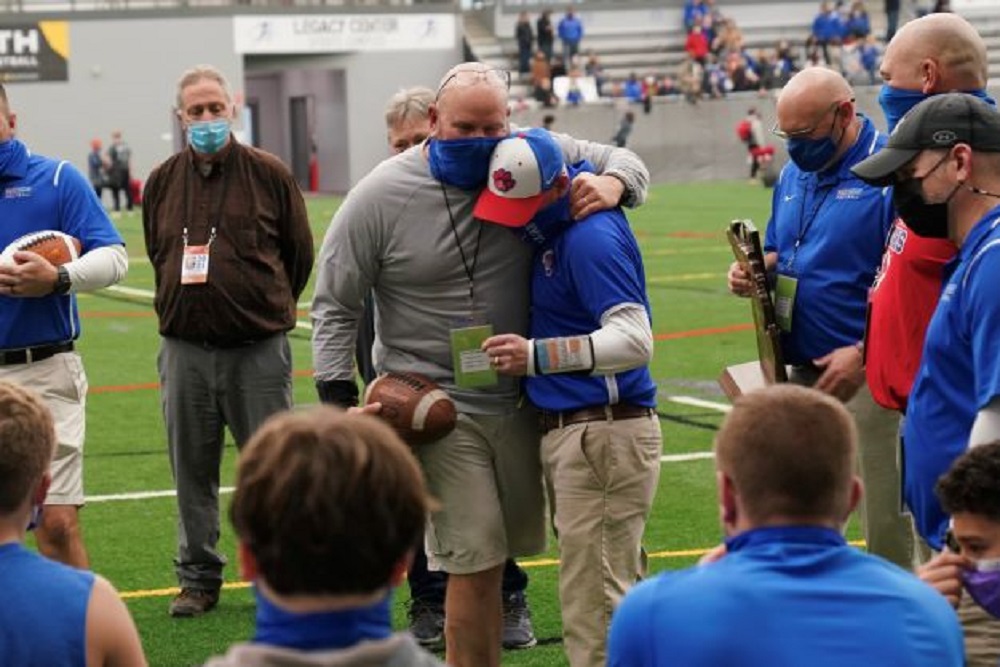
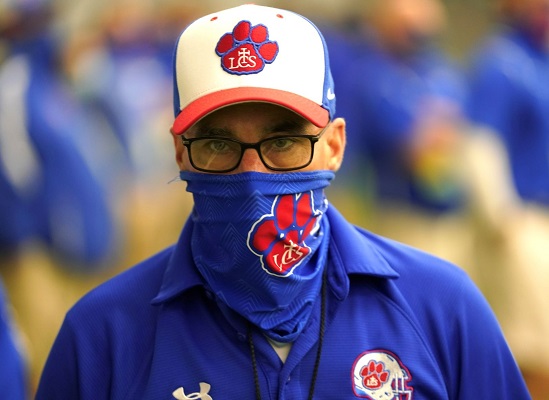
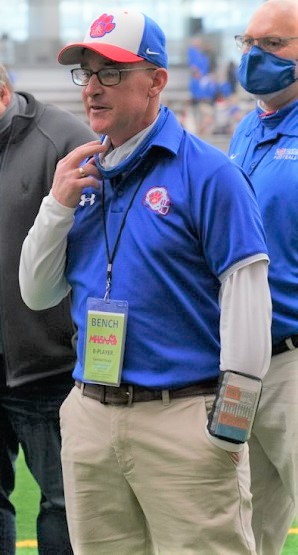
PHOTOS: (Top) Lenawee Christian head varsity coach Bill Wilharms (holding football) gives assistant Jon Willett a hug after last season’s 8-Player Division 1 Final win. (Middle) Willett returned to the sideline a year after a double lung transplant. (Below) Willett serves as junior varsity head coach and varsity assistant. (Photos by Jeff Jameson/Lenawee Christian Schools.)

1st & Goal: 2024 Week 8 Review
By
Geoff Kimmerly
MHSAA.com senior editor
October 21, 2024
This forecast for late October never fails:
 As expected, championships were celebrated and big playoff pushes were made all over the state during Week 8 of another football regular season that will be over by this time next week.
This week's "Review" details several of those league races now decided, but also the movements of several teams in, or out, of the potential playoff field as we inch closer to Sunday's selection announcement.
Bay & Thumb
HEADLINER Frankenmuth 21, Freeland 20 Frankenmuth (8-0) clinched the Tri-Valley Conference Red title and extended its league winning streak to 66 games, but with Freeland (7-1) providing one of the strongest challenges to the decade-plus run. Logan Diener’s second touchdown, with 3:58 to play, and Aiden Labissoniere’s go-ahead extra point helped put the game, and title, away. Click for more from the Saginaw News.
It's always a heated battle when @FrankenmuthF and Freeland square off!
Freeland battle tested the Eagles going into the second half as they took the lead, 20-14.
However, Frankenmuth would prevail to secure their 13th straight conference title, 21-20. pic.twitter.com/LRV2sjhRyn— Miriam Bingham (@mbinghamreports) October 19, 2024
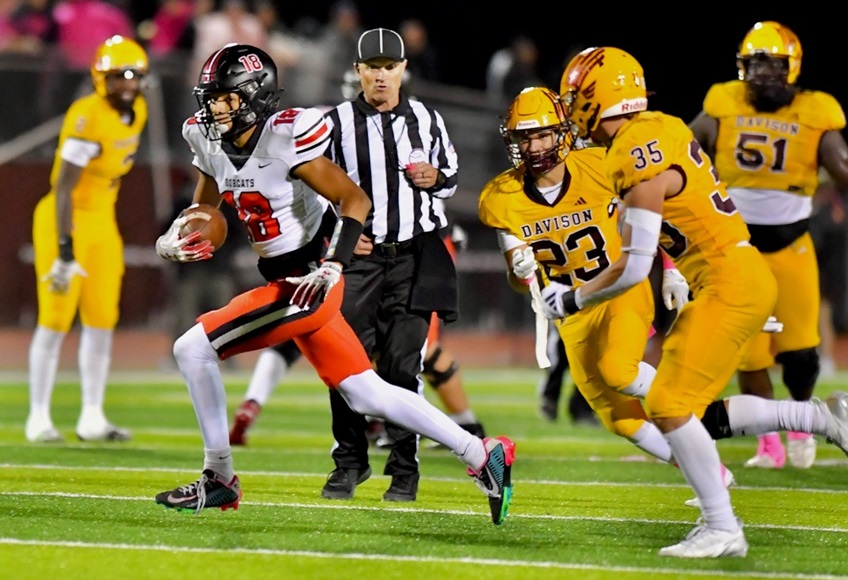
Watch list Grand Blanc 55, Davison 49 Grand Blanc (7-1) finished a perfect run through the Saginaw Valley League Red by handing Davison its lone Valley loss, although the Cardinals (6-2) finish with Lapeer this week. The Bobcats’ championship was their first since 2021 and came after finishing second to Davison a year ago.
On the move Goodrich 42, Fenton 3 Goodrich (7-1) won the overall Flint Metro League championship game and in doing so handed the Tigers (7-1) their first loss, finished a run of reaching 42 points in all seven league games and gave up a total of 45 points to Metro opponents. Ubly 30, Cass City 12 No one should have thought Ubly (5-3) was going away quietly with its 0-3 start this fall after last season’s Division 8 championship. Those first three opponents are a combined 23-1, and the Bearcats are up to No. 19 on the Division 8 playoff point list. Midland Dow 23, Lapeer 14 Dow (5-3) has won five of its last six games to jump into the Division 2 playoff picture for the first time this season, moving up seven spots to No. 26 while sending Lapeer to 5-3 and the No. 24 position on the Division 1 list.
Greater Detroit
HEADLINER Detroit Cass Tech 30, Detroit Martin Luther King 14 Cass Tech (6-2) again broke the recent trend in this rivalry, taking the Detroit Public School Blue City championship after King won their first meeting this season and finished with the PSL Blue regular-season title. It was the second time in three years the Technicians have avenged a King loss from a month earlier, and also only the second time in five years that the winner of the first matchup didn’t finish with a sweep. Cass Tech’s Alex Graham scored on a kickoff return and catching a pass as the Technicians reached the end zone three times through the air. Click for more from the Detroit News.
Check out the highlights of Detroit Cass Tech (@Detroit_CTFB) winning the City Championship for the 3rd straight year over rival King on October 18th, 2024. Powered by @altaequipment pic.twitter.com/ii4R1afVTH
— STATE CHAMPS! Michigan (@statechampsmich) October 19, 2024
Watch list Detroit Central 22, Detroit Denby 18 Central (6-2) has won six straight games and avenged a pair of losses from last season to Denby (5-3) to take the PSL Gold City championship after these two shared the regular-season title. The Trail Blazers gave up six points total with four shutouts over five division games and cooled a Denby offense that was averaging 33 points per game.
On the move Gibraltar Carlson 42, Allen Park 0 Carlson (7-1) clinched a share of the Downriver League title, its fourth straight, with Allen Park (6-2) holding out hope for a share as well if Lincoln Park can catch the Marauders this week. Clarkston Everest Collegiate 42, Royal Oak Shrine Catholic 3 The Mountaineers (8-0) finished off an outright title run in the Catholic High School League Intersectional #2, their second straight as they ran their league game winning streak to 12 with a seventh in a row over Shrine (6-2) – which has guaranteed its best record since 2020. Belleville 31, Dearborn Fordson 0 Belleville (8-0) closed out an eighth-straight league title by finishing another sweep of the Kensington Lakes Activities Association East, with this the Tigers’ second-straight shutout and third over seven KLAA games. Walled Lake Western 20, Mason 17 Walled Lake Western (8-0) entered the week No. 2 in the Division 3 coaches poll, and Mason (6-2) was No. 6 and had won both matchups with the Warriors last season including in a Regional Final.
Mid-Michigan
HEADLINER Howell 36, Brighton 14 The Highlanders (8-0) completed a KLAA West outright championship, defeating Brighton (6-2) for the second-straight season to avoid what would have been a shared league title with the Bulldogs. Justin Jones ran for three touchdowns and caught a fourth to pace Howell, which faces Belleville this week in the overall KLAA championship game. Click for more from the Livingston Daily Press & Argus.
Watch list Portland 33, Lansing Sexton 0 Portland coach John Novara reached 200 career wins as the Raiders (8-0) finished another perfect run through the Capital Area Activities Conference White, extending their league game winning streak to 20. The shutout kept Portland at No. 9 on the Division 4 playoff list and Sexton (4-4) just outside the field at No. 34.
On the move Clare 54, Pinconning 28 After sharing the Jack Pine Conference Division 1 title, Clare (7-1) won this matchup with JPC Division 2 runner-up Pinconning (5-3) to move up to No. 11 on the Division 5 playoff list. Ionia 16, St. Johns 13 After this close win over St. Johns (5-3), the Bulldogs (5-3) are a win away from guaranteeing their best record since 2013 with rival Lake Odessa Lakewood up next. Olivet 27, Lansing Catholic 14 Olivet has two wins over Lansing Catholic (5-3) in two seasons in the CAAC White, with this one giving the Eagles (6-2) second place in the league and sending the Cougars into a tie for third.
Northern Lower Peninsula
HEADLINER East Jordan 33, Frankfort 6 This could pay off in multiple ways for East Jordan (6-2). The Red Devils can continue to hold out hope of a title share in the Northern Michigan Football League Legacy (if Mancelona defeats first-place Maple City Glen Lake this week), and East Jordan also jumped past Frankfort on the Division 8 playoff list after trailing the Panthers (6-2) by one position entering Friday. Click for more from the Traverse City Record-Eagle.
Watch list Ogemaw Heights 64, Harrison 28 The JPC Division 1 co-champion Ogemaw Heights (7-1) handed Division 2 winner Harrison (7-1) its first loss and scored a season high in bouncing back from a Week 6 defeat to Standish-Sterling.
On the move Boyne City 36, Oscoda 0 Boyne City (6-2) has climbed the Division 6 playoff list for the fourth-straight week, this time up to No. 18 while sending Oscoda (5-3) down only two slots to No. 30 in Division 7. Maple City Glen Lake 32, Saginaw Valley Lutheran 13 Glen Lake (7-1) has put together its best season since 2019 and heads into a potential outright league title clincher after a solid win over the Chargers (4-4). Manistee 65, Montague 32 Manistee (5-4) moved up from No. 30 to 24 on the Division 6 playoff list and moved Montague (3-5) from 31 to just outside the field at No. 33.
Southeast & Border
HEADLINER Hudson 22, Clinton 6 Hudson (7-1) has a share of the Lenawee County Athletic Association championship and winless Hillsdale to play this week to make it outright, while Clinton and Ida are tied for second and likely the newest Hillsdale fans. Clinton (6-2) had won 24 straight LCAA games and the last two league titles. Click for more from the Adrian Daily Telegram.
Watch list Ottawa Lake Whiteford 30, White Pigeon 16 On paper, Whiteford (4-4) has had a tougher run than usual this fall. But its losses are to teams that are a combined 31-2, and the Bobcats are up to No. 21 on the Division 7 playoff list after handing White Pigeon (7-1) its lone defeat.
On the move Hanover-Horton 28, Brooklyn Columbia Central 19 The Cascades Conference West title belongs entirely to Hanover-Horton (8-0) as the Comets clinched it outright in sending Columbia Central (3-5) into third place and avoiding a potential three-team share. Grass Lake 28, Leslie 7 Leslie (7-1) already had the Cascades Conference East outright title in hand, but this is major win for Grass Lake (5-3) nonetheless as it bumped the Warriors up four spots to No. 37 on the Division 6 playoff list. Chelsea 21, Trenton 20 Division 4 contender Chelsea (7-1) needed a score during the final minutes to get past the Trojans (5-3), who remain No. 11 on the Division 3 playoff list.
Southwest Border
HEADLINER Kalamazoo United 35, Parchment 13 In a matchup of tough defenses, United’s was able to hold its ground most and slowed a Parchment offense that was averaging 42 points per game. In doing so, the Titans (7-1) clinched the outright Southwestern Athletic Conference Lakeshore championship, sending the Panthers (6-2) to second place with their only league defeat. Click for more from the Kalamazoo Gazette.
Watch list Mattawan 42, Kalamazoo Central 20 Over the last two weeks, Mattawan (5-3) has defeated leaders of both the Southwestern Michigan Athletic Conference West and now East, in the process jumping from No. 39 two weeks ago to No. 22 on the Division 2 playoff list. Central (5-3) is tied for first in the East and plays Loy Norrix this week for that outright title.
On the move Decatur 18, Hopkins 0 Decatur (7-1) may have fallen eight points shy of catching champion White Pigeon in the Southwest 10 Conference, but it earned this win over Ottawa-Kent Conference Silver co-leader Hopkins (6-2) to guarantee its winningest season since 2014. Portage Northern 45, Kalamazoo Loy Norrix 0 The SMAC West could send four of its five teams to the playoffs, with this win over the Knights (5-3) bumping Northern (5-3) up to No. 21 on the Division 2 playoff list. Lawton 26, Saugatuck 10 Lawton (6-2) concluded the SAC Valley schedule by winning this matchup for second in the standings, further solidifying itself in the middle of the Division 7 field while Saugatuck (5-3) occupies the same in Division 8.
Upper Peninsula
HEADLINER Kingsford 13, Menominee 12 This season’s Western Peninsula Athletic Conference Copper race couldn’t have been much closer, with champion Kingsford (8-0) edging Menominee (7-1) this time to go with its two-point win over Negaunee in Week 4. The Flivvers will face Marquette this week as they play for a perfect regular season. Click for more from the Iron Mountain Daily News.
Watch list Calumet 19, Gladstone 6 While just a notch below contending in the Copper, Calumet (5-3) gave Kingsford a 14-point game in Week 5 and won its three games since. The Copper Kings climbed the Division 6 playoff list for the third straight week, now to No. 26.
On the move Iron Mountain 42, Manistique 21 The Mountaineers (8-0) pulled within a win of a potential second-straight undefeated regular season. L’Anse 40, Gwinn 22 L’Anse not only reversed a 33-6 loss to Gwinn from Week 3, but ended a 15-game losing streak stretching back to 2022. Marquette 41, Cadillac 32 The Sentinels (6-2) bounced back from a heartbreaker against Petoskey to surpass last year’s victory total. Despite the loss, Cadillac (4-4) actually moved up a spot on the Division 3 playoff list, to No. 27.
West Michigan
HEADLINER Grand Rapids West Catholic 54, Hamilton 14 After edging Ada Forest Hills Eastern by a point to take over first place alone in the O-K White in Week 7, West Catholic (6-2) sent Hamilton into third place and clinched the outright championship – its second straight after winning the O-K Blue outright last season. Click for more from the Grand Rapids Press.
Watch list Byron Center 17, Muskegon 14 With Byron Center’s move into the O-K Green this season, these two met for the first time since 2017 – and the Bulldogs (7-1) put a serious dent in the reigning Division 2 champion’s hopes of extending its playoff qualification streak that began in 2000.
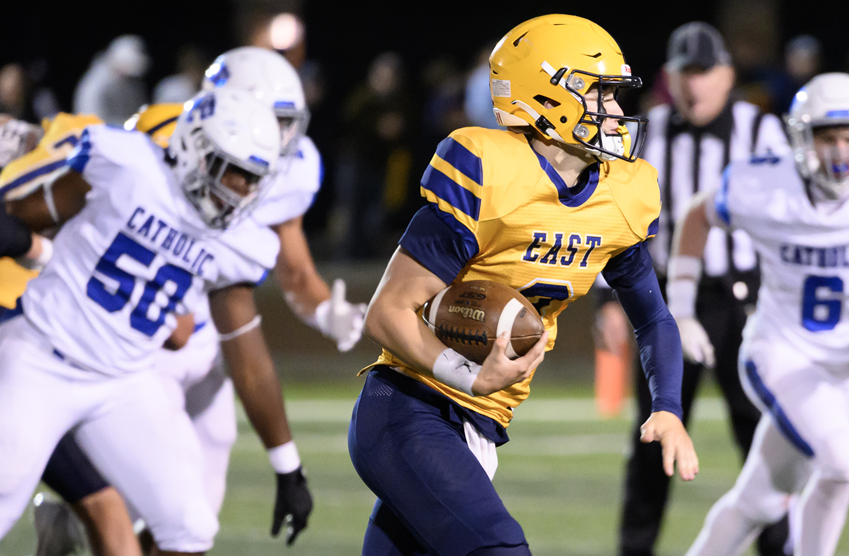
On the move Grand Rapids Northview 35, Holland Christian 20 Northview (8-0) finished an outright title run in the O-K Black while sending Holland Christian to 6-2. East Grand Rapids 31, Grand Rapids Catholic Central 28 East Grand Rapids (5-3) made second place in the O-K Black a three-team share with this win over the Cougars (5-3) in their first meeting since 2016. Big Rapids 24, Coopersville 7 Fresh off wrapping up a league title in Week 7, Big Rapids (7-1) handed a loss to River Cities Alliance co-leader Coopersville (5-3), which plays Cedar Springs this week for a potential outright league title.
8-Player
HEADLINER Climax-Scotts 46, Mendon 44 The Panthers (7-1) are outright Southern Central Athletic Association Red champions after handing the lone loss this fall to Mendon (7-1), with Jackson Bagwell scoring on a four-yard run and adding the winning 2-point conversion run with 55 seconds to play. Climax-Scotts scored first, and the teams then traded touchdowns all the way until the Panthers scored last. Click for more from WWMT.
Watch list Bay City All Saints 61, Kinde North Huron 22 The Cougars’ only loss this season came in Week 1 – to still-undefeated Deckerville – and they are Big Thumb Conference Red champions after this impressive winner-take-all performance against former co-leader North Huron (6-2).
On the move Pittsford 46, Waldron 14 The SCAA Blue belongs entirely to Pittsford (7-1), which clinched a share of the championship in Week 7 but needed to get past third-place Waldron (5-3) to finish the perfect run. Pickford 51, Norway 6 Pickford (8-0) clinched a share of the Great Lakes Eight Conference East title in this matchup of previous co-leaders. The Pirates may need to defeat third-place (tied) Munising this week to clinch it outright, with Norway (6-2) hoping to share with a win over the other third-place team, Rudyard, and a Munising victory. Indian River Inland Lakes 64, Bellaire 12 Inland Lakes (8-0) will play co-leader Gaylord St. Mary for the Ski Valley Conference title this week after turning back third-place Bellaire (6-2).
MHSAA.com's weekly “1st & Goal” previews and reviews are powered by MI Student Aid, a division within the Department of Lifelong Education, Advancement, and Potential (MiLEAP). MI Student Aid encourages students to pursue postsecondary education by providing access to student financial resources and information. MI Student Aid administers the state’s scholarship and grant programs that help make college Accessible, Affordable and Attainable for you. Click to connect with MI Student Aid and find more information on Facebook and Twitter @mistudentaid.
PHOTOS (Top) Detroit Cass Tech’s Alex Graham pulls away for a touchdown against Detroit Martin Luther King at Ford Field. (Middle) Grand Blanc’s Caseton Sendry (18) eludes a pair of Davison defenders. (Below) East Grand Rapids’ Carson Thornton (8) finds a gap in the Grand Rapids Catholic Central defense. (Top photo by Olivia B. Photography. Grand Blanc/Davison photo by Terry Lyons. EGR/Catholic Central photo by Michigan Sports Photo.)