

MHSAA Opposes Big Ten Friday Football
November 2, 2016
By Geoff Kimmerly
Second Half editor
The executive director of the Michigan High School Athletic Association said today that he is “disappointed and disheartened” by the Big Ten Conference announcement that it will play and televise football games on Friday nights beginning with the 2017 season.
Friday night football remains one of the strongest and longest-standing traditions in high school athletics, and the MHSAA has fought since the start of this century to keep Friday nights sacred against the overstepping of college football and the damage televised Big Ten games are now expected to cause to attendance and media coverage of the sport at the high school level.
MHSAA Executive Director John E. “Jack” Roberts was contacted by both Big Ten Conference commissioner Jim Delany and Michigan State University athletic director Mark Hollis before the decision was announced. Roberts said he is appreciative of Michigan State and University of Michigan’s low tolerance to be included in this venture – at most, both will host a Thursday or Friday night game during Labor Day weekend and play one Friday night away game during the remainder of a season – but remains frustrated that similar respect for high school football was not shown by the conference as a whole.
Michigan State has played Friday night games during Labor Day weekend the last six seasons, hosting five and playing at Western Michigan University in 2015. However, most Michigan high school games continue to be scheduled and played on the Thursday before Labor Day, relieving holiday travel conflicts in most communities. University of Michigan did play on the Thursday before Labor Day at University of Utah in 2015, but has not played on a Friday night of Labor Day weekend this decade. The Wolverines are one of five Big Ten schools without a Friday night game in 2017.
“We are saddened by this decision. We had hoped that the Big Ten Conference would stay above this. We think this cheapens the Big Ten brand,” Roberts said. “Fans won’t like this. Recruits won’t like this. And high school football coaches won’t like this.
“We are grateful that Michigan State University and the University of Michigan are trying to minimize the effects of this decision by the Big Ten. But overall, this is just the latest step by major college athletics in the pursuit of cash that is just crushing high school sports.”
The MHSAA has shown its opposition to the use of Friday nights for televised collegiate football games for more than 15 years, dating back to 2001 when the NCAA lifted its restrictions on Friday night telecasts, which at first led to the broadcasting of “mid-major conference” games on the same night traditionally reserved for high school athletes.
The MHSAA launched in 2001 its “Save Our Friday Nights” campaign to emphasize the role that Friday night high school athletic events play in communities and to rally MHSAA member schools to contact NCAA member school football coaches, athletic directors and conference commissioners to voice their concerns.
In addition to causing lower attendance at events going up against Big Ten football games, Roberts anticipates that Friday night college games also will leave high school football as a secondary priority in many media markets. More than 80 radio stations statewide cover high school games regularly, but many also carry Michigan State or University of Michigan football. High school football could lose significant time on local TV highlights shows and in print and online coverage as well, as resources are diverted to cover a college game – potentially quieting significantly the positive buzz that comes from the typical high school football Friday night.
“Everyone knows that football is struggling right now,” Roberts said. “It’s getting a lot of bad publicity. Participation is declining. And now this; there couldn’t be worse timing.”
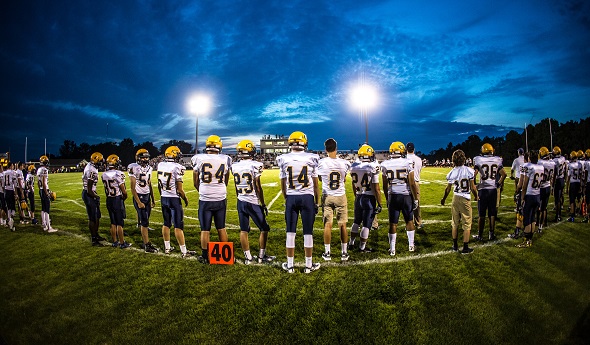
PHOTO: Grand Ledge takes on Okemos under the Friday night lights this season. (Click to see more from HighSchoolSportsScene.com.)
1st & Goal: 2024 Week 2 Review
By
Geoff Kimmerly
MHSAA.com senior editor
September 9, 2024
Every Monday during football season we provide at least a glance at the “story behind the scores” from nearly 50 of the previous weekend’s games across Michigan.
 Several of those storylines were obvious during Week 2.
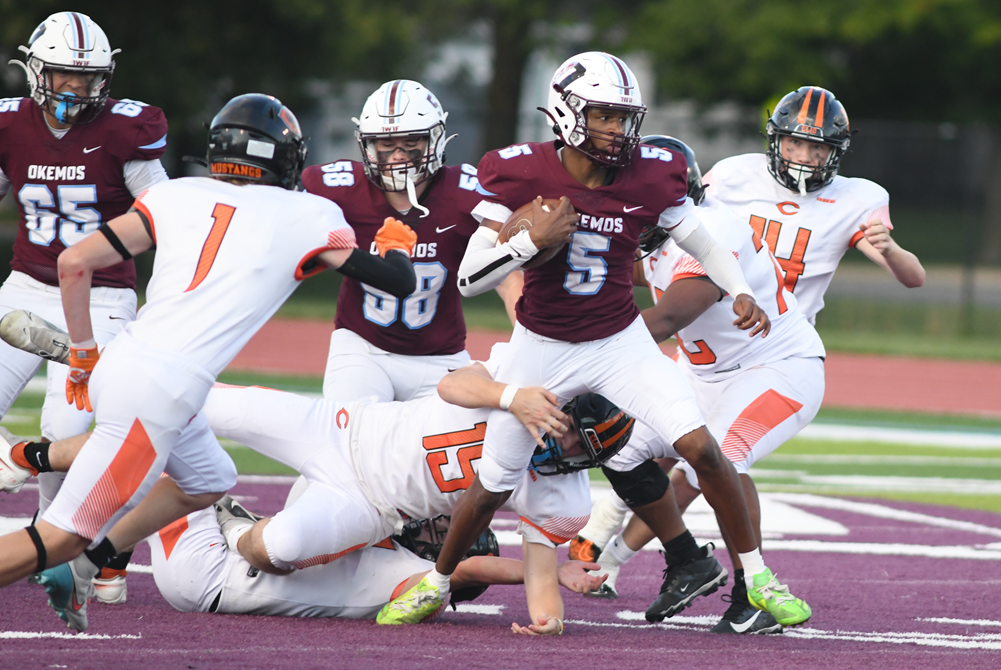
One of the most notable celebrations took place in Okemos, where the Wolves defeated Clio 35-0 to end a 41-game losing streak dating back to the third game of the 2019 season.
Martin, meanwhile, has celebrated two straight 8-player Division 1 championships, and can add ending Bridgman’s 35-game winning streak to the list after the Clippers prevailed 42-36.
Eyes are always on the champions, and five of last season’s Finals title winners fell during Week 2 – Clarkston defeated Southfield Arts & Technology (11-player Division 1), Rockford held off Muskegon (11-D2), Oxford downed Harper Woods (D4), Pontiac Notre Dame Prep defeated Jackson Lumen Christi (D7) and Clarkston Everest Collegiate edged Ubly (D8).
And finally, New Baltimore Anchor Bay and Roseville set the record for most points scored in a single-overtime 11-player game with 131 as Anchor Bay won 66-65. Tawas’ 70-69 win over Shepherd in 2002 – in four overtimes – remains the only higher-scoring 11-player game to go past regulation.
For many more “stories behind the scores” of Week 2, see below.
Bay & Thumb
HEADLINER Armada 14, Croswell-Lexington 0 Armada (2-0) has been on an upward trajectory for the last three seasons, and this first win over Croswell-Lexington since 2004 will certainly be remembered among the most important wins during the ascension. Not only did it end a 19-game losing streak against the Pioneers, but the Tigers handed Cros-Lex its first shutout since 2020. Click for more from the Port Huron Times-Herald.
Watch list Flushing 27, Zeeland East 21 The Raiders are 2-0 for the first time since 2011 and after finishing 3-6 a year ago. This one was especially impressive as East (1-1) was a playoff team last year. Flushing is seeking its first winning season since 2018.
On the move Fenton 21, Haslett 14 The Tigers and especially quarterback Noah Sheil made a series of big plays when needed to move to 2-0 for the first time since 2020 and send the Vikings to 0-2. Saginaw Heritage 28, Midland Dow 27 (OT) Jeremiah Walker was the hero with the overtime touchdown to move Heritage to 2-0 and Dow to 0-2. Bay City Central 12, Flint Kearsley 6 (OT) A tough Saginaw Valley League Blue schedule lies ahead, but Bay City Central (1-1) already has equaled last season’s win total and did so against a Kearsley team that had won impressively in its season opener.
Greater Detroit
HEADLINER Warren De La Salle 35, Detroit Martin Luther King 13 In arguably the most anticipated matchup of the weekend statewide, De La Salle opened a 14-0 lead by the end of the first quarter and led 28-7 at halftime. The defense especially continued to impress in following up on the three points allowed to Davison in Week 1. Click for more from the Detroit News.
Warren De La Salle, currently ranked number two on our STATE CHAMPS! Top 25, went on the road to Detroit King, and secured a 35-13 victory. 🎥 powered by @reactiontech@DLS_Football | @coachrohn pic.twitter.com/gXJOfTZ6pQ
— STATE CHAMPS! Michigan (@statechampsmich) September 7, 2024
Watch list Oxford 38, Harper Woods 0 The Wildcats (1-1) bounced back from a season-opening defeat with one of the loudest wins in the state over the first two weeks, shutting out last season’s Division 4 champion. Harper Woods (1-1) averaged 34 points per game during last year’s run and had put up 43 against Redford Union to start this fall.
On the move Pontiac Notre Dame Prep 28, Jackson Lumen Christi 24 Notre Dame Prep (2-0) has strung together 11 playoff seasons over the last 15 and lost only once a year ago – but downing the reigning Division 7 champion Titans (1-1) will certainly have the Fighting Irish getting some significant attention, and with last season’s Division 5 champion Grand Rapids Catholic Central coming to town this week. Birmingham Groves 28, West Bloomfield 13 Groves (2-0) avenged last season’s 41-10 loss to West Bloomfield (1-1), made even more impressive by the Lakers’ 42-0 win over Clinton Township Chippewa Valley to start this season. Detroit Catholic Central 21, Toledo Central Catholic (Ohio) 7 It's early, but this is massive in the Catholic High School League Central as TCC was last season’s champion and defeated the Shamrocks 42-21 in 2023.
Mid-Michigan
HEADLINER Durand 22, New Lothrop 16 Coming off a league championship in 2022, Durand fell back to 3-6 a year ago – but that’s becoming a distant memory quickly with the Railroaders (2-0) already having avenged two losses from a year ago. They lost 29-12 to New Lothrop last year but nearly flipped that result this time and have two more possible revenge games coming up with Montrose and Ovid-Else over the next two weeks, respectively. Click for more from the Flint Journal.
Watch list Lansing Sexton 13, Lansing Catholic 9 The J-Dubbs (1-1) quickly bounced back from a 28-0 loss to Everett in their season opener to win an important Capital Area Activities Conference White matchup. Sexton contended with eventual champion Portland last season, but Lansing Catholic (1-1) also looks to be in the mix this fall.
On the move DeWitt 55, Mason 21 The Panthers have scored 124 points over two games and with this one avenging a pair of losses from last season to the eventual Division 3 runner-up Bulldogs (1-1). Hastings 16, Williamston 12 That Hastings is off to a solid start isn’t stunning given its success over the last four seasons, but the Saxons should savor this one after taking the lead for good in the fourth quarter against a Williamston team that has made the playoffs eight straight seasons. Ionia 43, Eaton Rapids 7 Ionia is 2-0 for the first time since 2016 and also avenged a 2023 loss to Belding in Week 1 – two nice boosts heading into this week’s league matchup with Portland.
Northern Lower Peninsula
HEADLINER Kingsley 16, Gaylord 0 The reigning Division 6 champion Stags (1-1) got back on track after a Week 1 loss to Reed City, avenging a 42-39 loss to Gaylord from a year ago. The shutout was Kingsley’s first in two years. Gaylord, meanwhile, is 0-2 but has given up only a combined 22 points over those defeats. Click for more from the Traverse City Record-Eagle.
Watch list Traverse City St. Francis 31, Lawton 14 St. Francis (2-0) is another program that lives among the statewide contenders most seasons, but the Gladiators were just 4-5 a year ago. The rebound is on, as their two wins so far this fall have come against opponents that went a combined 18-4 in 2023.
On the move Cheboygan 35, Sault Ste. Marie 12 Cheboygan’s only win last season came in its final game, but against playoff-bound Benzie Central. The Chiefs (1-1) took another notable step in avenging their 26-0 loss from last year to Sault Ste. Marie (0-2), which is coming off a sixth-straight winning season. Maple City Glen Lake 50, Frankfort 7 After scoring 221 points a year ago, Glen Lake (2-0) has nearly half that over two games and after this one avenging a 28-15 loss to Frankfort (1-1) from last season. Lake City 38, Evart 27 Lake City was another team that didn’t let an opening loss send it off-course. The Trojans (1-1) came back after falling to Hart in Week 1 by avenging last season’s 20-12 loss to Evart (1-1), which is coming off a fourth-straight playoff season.
Southeast & Border
HEADLINER Saline 34, Dexter 14 Saline (2-0) earned a potentially-important early advantage in the Southeastern Conference Red – so important, that the result of this matchup a year ago ended up deciding the league title in the Hornets’ favor. James Rush had two touchdowns to open the Saline scoring, and the defense held Dexter (1-1) to its fewest points in a game since the 2020 opener. Click for more from the Ann Arbor News.
Highlights of Saline's 34-14 win over Dexter from September 6th, 2024. The Hornets improved to 2-0 on the season. 🎥 Delivered by @hungryhowies@SalineAthletics | @SalineFootball pic.twitter.com/2hgUwTWG44
— STATE CHAMPS! Michigan (@statechampsmich) September 8, 2024
Watch list Ida 21, Ottawa Lake Whiteford 6 Keep an eye on Ida, which is 2-0 for the first time since 2018. Whiteford entered this weekend with a 24-game regular-season winning streak, but the Bluestreaks earned their first win in the series since the two began playing each other again in 2021. Whiteford had won last year’s meeting 22-7.
On the move Hanover-Horton 21, Michigan Center 20 Hanover-Horton (2-0) is 2-0 for the first time since 2014, has as many wins this season as all of last, and edged a Cardinals team that while 0-2 is almost annually a league title contender (now on the other side of the two-division Cascades Conference). Manchester 20, Addison 8 In another cross-division Cascades matchup, Manchester (2-0) earned a notable win over last season’s West title winner. Blissfield 20, Tecumseh 19 Both are 1-1 and finished 5-5 a year ago, but there’s some intrigue here for the Division 7 Royals with a solid win over a returning Division 4 playoff team.
Southwest Corridor
HEADLINER White Pigeon 16, Buchanan 9 White Pigeon (2-0) extended its regular-season winning streak to 15 with its closest win of the string. In doing so, the Chiefs also held Saugatuck (1-1) to single-digit scoring for only the second time since 2021. Click for more from WBET.
Watch list St. Joseph 36, Edwardsburg 29 Two weeks into the season, St. Joseph (2-0) has arguably the best start in the southwest with this win following up its victory over Niles in the opener. This was the first meeting between the Bears and Eddies (1-1) since the 2019 playoffs.
On the move Niles 46, Stevensville Lakeshore 0 Niles (1-1) quickly bounced back from its opening loss to St. Joseph, avenging last season’s 15-14 defeat against Lakeshore (0-2) that ended up the Vikings’ lone loss before the Regional Finals. Schoolcraft 28, Centreville 6 The Eagles (2-0) have opened with a pair of wins over 2023 playoff teams in advance of this week’s matchup with rival Constantine. Bronson 26, Sand Creek 6 Bronson (1-1) is seeking its first winning record since 2012 and has to be pleased with opening Big 8 Conference play by avenging last season’s 8-6 loss to the Aggies (1-1).
Upper Peninsula
HEADLINER Escanaba 28, Cadillac 21 (OT) It’s been a tough run lately for Escanaba, but this is the kind of win that could spark things. Escanaba (1-1) had lost to Cadillac the last two seasons, including 43-36 last fall after joining the Vikings in the Big North Conference. Cadillac is 0-2, but with both losses by seven points. Click for more from the Escanaba Daily Press.
Watch list Calumet 30, Ishpeming Westwood 14 The Copper Kings (2-0) are only one win away from equaling last season’s total, with this their best start since 2019 – when they went on to finish 10-2. A significant test against Negaunee is up next.
On the move Kingsford 28, Houghton 8 The Flivvers (2-0) have begun with another solid opening stretch, outscoring their first two opponents by a combined 49-8. Negaunee 28, Gladstone 7 Negaunee (2-0) certainly enjoyed this start to league play after falling to Gladstone 42-14 a year ago and going on to share the Western Peninsula Athletic Conference Copper title with Kingsford because of it. Marquette 51, Alpena 0 Gaylord this week could provide the toughest challenge yet for Marquette (2-0), but the Sentinels are 2-0 for the first time since 2013 and haven’t given up a point.
West Michigan
HEADLINER Rockford 28, Muskegon 21 To no one’s surprise, this was exciting until the end as Muskegon scored the final 14 points of the game but couldn’t come all the way back. Rockford improved to 2-0 with both wins this season by seven points, while Muskegon fell to 0-2 and is off this week before beginning league play. Click for more from the Grand Rapids Press.
Rockford stays winning despite a tough battle against Muskegon where the Big Reds nearly came back to win. Rams come out on top 28-21. @RockfordRamsFB https://t.co/lfLN7rjXsw pic.twitter.com/YwBTks3foZ
— FOX 17 Blitz (@FOX17Blitz) September 7, 2024
Watch list Muskegon Mona Shores 21, River Rouge 6 Mona Shores (2-0) is opening this season with three straight road games (and four over the first five weeks) but added this successful trip to an impressive Week 1 win at Grand Blanc.
On the move Montague 14, Muskegon Oakridge 7 The Wildcats (1-1) are back on top in this rivalry for the first time since 2021 and after losing to Oakridge (1-1) by 21 points in their Week 9 meeting last season. Grand Rapids South Christian 42, East Grand Rapids 28 South Christian (2-0) avenged last season’s 23-21 loss to EGR (1-1), a nice boost heading into this week’s matchup with Grand Rapids West Catholic. Grand Rapids Forest Hills Central 7, Portage Central 0 The reigning Division 3 champion Rangers (2-0) made a second-quarter touchdown stand in handing Portage Central (0-2) its first shutout since its matchup with FHC in 2022.
8-Player
HEADLINER Martin 42, Bridgman 36 After two losses by a combined three points the last two years, Martin earned this one-score win over Bridgman – and in the process ended the Bees’ 35-game winning streak. The Clippers built a 36-14 lead and held on to defeat the only opponent they hadn’t beaten at least once during their back-to-back Division 1 championship seasons. Click for more from the Kalamazoo Gazette.
Watch list Ontonagon 72, Rapid River 22 Ontonagon’s offense couldn’t have started this season more in stride, as the Gladiators (2-0) have scored a combined 158 points over the first two weeks.
On the move Atlanta 38, Whittemore-Prescott 12 For the second-straight week, Atlanta (2-0) avenged a loss from 2023, this time after falling to Whittemore-Prescott 54-34 a year ago. St. Charles 32, Carson City-Crystal 24 St. Charles (1-1) bounced back from a heavy Week 1 loss to down last season’s Mid-State Activities Conference Blue champion in a league opener. Climax-Scotts 54, Newberry 28 Climax-Scotts (1-1) was another Week 2 rebounder, evening its record against a Newberry team that is 0-2 but coming off three straight winning seasons.
MHSAA.com's weekly “1st & Goal” previews and reviews are powered by MI Student Aid, a division within the Department of Lifelong Education, Advancement, and Potential (MiLEAP). MI Student Aid encourages students to pursue postsecondary education by providing access to student financial resources and information. MI Student Aid administers the state’s scholarship and grant programs that help make college Accessible, Affordable and Attainable for you. Click to connect with MI Student Aid and find more information on Facebook and Twitter @mistudentaid.
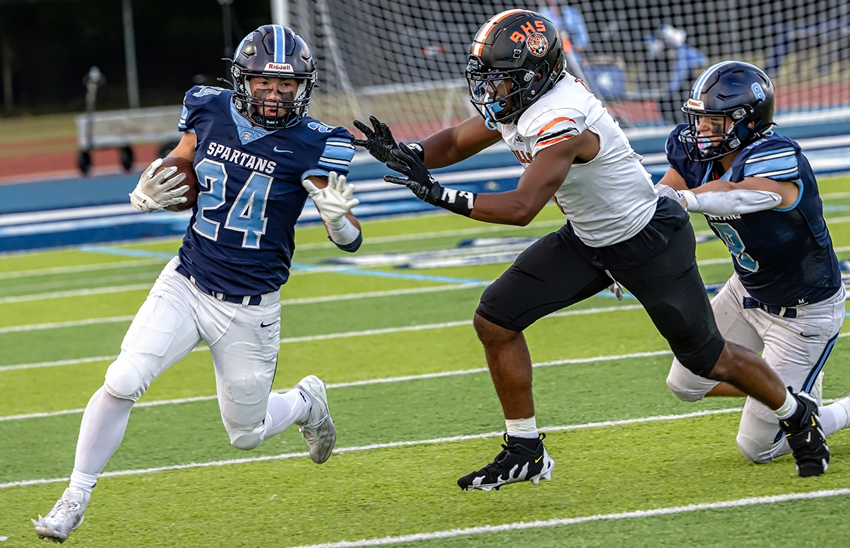
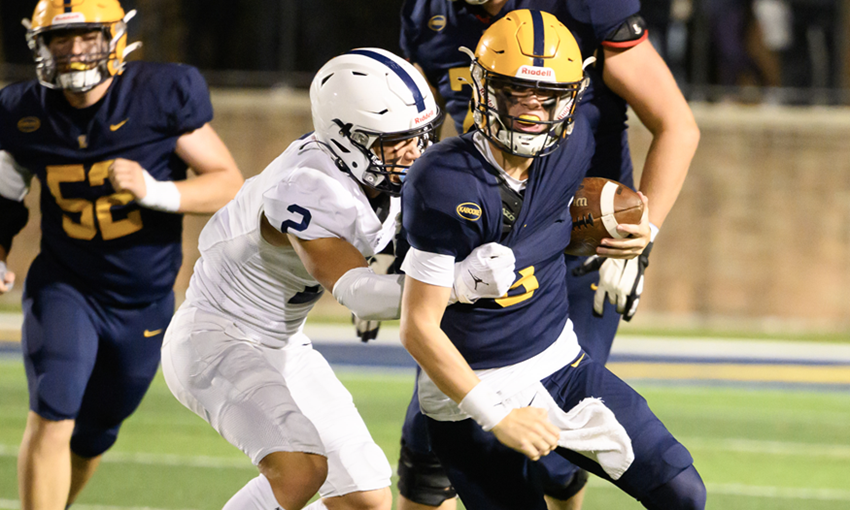
PHOTOS (Top) Okemos' Jamaris Graham (5) works to pull away from a Clio tackler Friday. (Middle) A Belleville defender closes in on Livonia Stevenson's Tasso Kotsogiannis (24). (Below) Grand Rapids South Christian's Owen Burgess (2) works to wrap up an East Grand Rapids ball carrier. (Top photo by John Johnson. Middle photo by Douglas Bargerstock. Below photo by Michigan Sports Photo.)