

MHSAA Opposes Big Ten Friday Football
November 2, 2016
By Geoff Kimmerly
Second Half editor
The executive director of the Michigan High School Athletic Association said today that he is “disappointed and disheartened” by the Big Ten Conference announcement that it will play and televise football games on Friday nights beginning with the 2017 season.
Friday night football remains one of the strongest and longest-standing traditions in high school athletics, and the MHSAA has fought since the start of this century to keep Friday nights sacred against the overstepping of college football and the damage televised Big Ten games are now expected to cause to attendance and media coverage of the sport at the high school level.
MHSAA Executive Director John E. “Jack” Roberts was contacted by both Big Ten Conference commissioner Jim Delany and Michigan State University athletic director Mark Hollis before the decision was announced. Roberts said he is appreciative of Michigan State and University of Michigan’s low tolerance to be included in this venture – at most, both will host a Thursday or Friday night game during Labor Day weekend and play one Friday night away game during the remainder of a season – but remains frustrated that similar respect for high school football was not shown by the conference as a whole.
Michigan State has played Friday night games during Labor Day weekend the last six seasons, hosting five and playing at Western Michigan University in 2015. However, most Michigan high school games continue to be scheduled and played on the Thursday before Labor Day, relieving holiday travel conflicts in most communities. University of Michigan did play on the Thursday before Labor Day at University of Utah in 2015, but has not played on a Friday night of Labor Day weekend this decade. The Wolverines are one of five Big Ten schools without a Friday night game in 2017.
“We are saddened by this decision. We had hoped that the Big Ten Conference would stay above this. We think this cheapens the Big Ten brand,” Roberts said. “Fans won’t like this. Recruits won’t like this. And high school football coaches won’t like this.
“We are grateful that Michigan State University and the University of Michigan are trying to minimize the effects of this decision by the Big Ten. But overall, this is just the latest step by major college athletics in the pursuit of cash that is just crushing high school sports.”
The MHSAA has shown its opposition to the use of Friday nights for televised collegiate football games for more than 15 years, dating back to 2001 when the NCAA lifted its restrictions on Friday night telecasts, which at first led to the broadcasting of “mid-major conference” games on the same night traditionally reserved for high school athletes.
The MHSAA launched in 2001 its “Save Our Friday Nights” campaign to emphasize the role that Friday night high school athletic events play in communities and to rally MHSAA member schools to contact NCAA member school football coaches, athletic directors and conference commissioners to voice their concerns.
In addition to causing lower attendance at events going up against Big Ten football games, Roberts anticipates that Friday night college games also will leave high school football as a secondary priority in many media markets. More than 80 radio stations statewide cover high school games regularly, but many also carry Michigan State or University of Michigan football. High school football could lose significant time on local TV highlights shows and in print and online coverage as well, as resources are diverted to cover a college game – potentially quieting significantly the positive buzz that comes from the typical high school football Friday night.
“Everyone knows that football is struggling right now,” Roberts said. “It’s getting a lot of bad publicity. Participation is declining. And now this; there couldn’t be worse timing.”
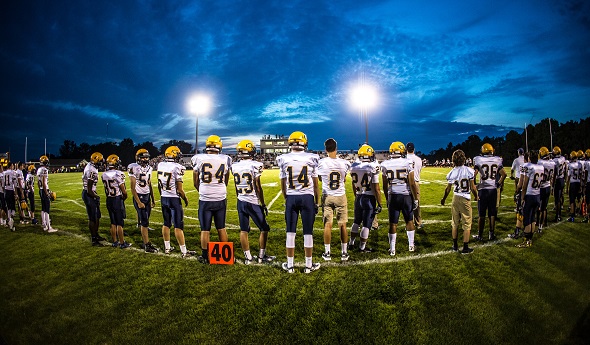
PHOTO: Grand Ledge takes on Okemos under the Friday night lights this season. (Click to see more from HighSchoolSportsScene.com.)
Saginaw United Era Begins with Memorable Welcome, Game-Like Atmosphere
By
Paul Costanzo
Special for MHSAA.com
August 13, 2024
SAGINAW – James King wanted to reward his Saginaw United players Monday for their hard work throughout the summer.
 He wanted to make a moment for them on the first day of practice for a new program, so they held it under the lights at Saginaw High and invited the public to come watch.
They deserved it, and for what they’re trying to accomplish, they needed it.
But when the moment came, the first-year coach and former Saginaw Arthur Hill star found it was quite a moment for himself, as well.
“That was probably one of the most emotional walkouts I’ve ever took,” King said. “To go back and come back out and kind of breathe it in was like, ‘Damn.’ This was me at one point, following another coach as a leader of a program that I helped lead and build at Arthur Hill from nothing to (Saginaw) Valley champs and the playoffs two years in a row. But (Monday) was probably my most emotional walkout. I didn’t know my playoff game was going to be my last game, so I didn’t have that emotional walkout. That was very emotional.”
Monday was the opening day for fall sports practices in Michigan, and nearly 100,000 student-athletes were expected to be taking practice fields across the state. Some schools began during the earliest morning hours, going under the lights at midnight, while many others had more typical early-morning or afternoon practices.
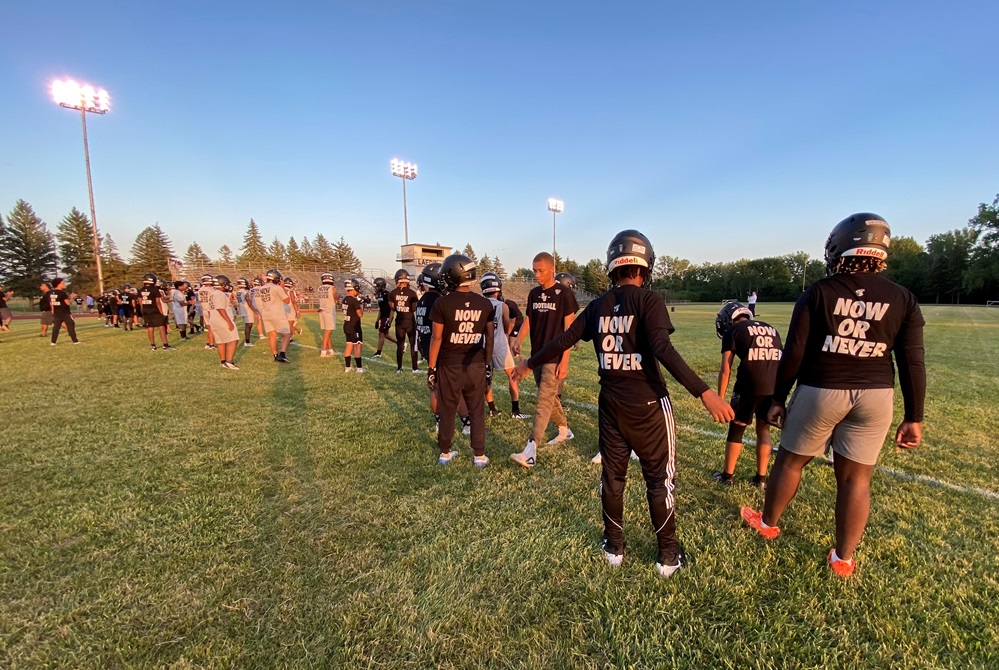
In Saginaw, where the new season is also part of a new era with the opening of Saginaw United High School, King created a game-like atmosphere for his players, complete with specialists warming up early and the team running onto the field with music playing and fans cheering them on.
 “This is for them,” King said while pointing toward his players. “Everybody is here for them. I told them, ‘You worked all summer to get through Hell Week and once you get through Hell Week, this is it. This is football season. It’s August. Nothing else matters in the world to me. It’s football season.’ And these kids have absolutely bought into that, and this is what those kids deserve. They deserve their community, their family, their friends to be able to come out and support them. This is big for them.”
The energy was certainly there for the players.
“We’re just happy to be here for real,” junior receiver Dion’Quavis Hardy said. “New season, new coaches, so we’re excited to see how this program is going to be this year.”
For the past three seasons, Arthur Hill and Saginaw High have combined forces as a co-op during football season. That co-op has finished a combined 0-27 over the past three seasons, but on Monday, it was stressed that this is a clean slate and a chance to build a program from scratch.
“New coaches, new players, new everything,” junior quarterback Jordan Allen said. “We’re a brotherhood, like a family. One big happy family.”
King added that the program is 0-0, and this group of players represents a beginning, not a continuation of that co-op.
“We’re Saginaw. It’s Saginaw United. We’re the Phoenix. We’re rising,” he said. “This is for Saginaw, and these kids deserve it. This community absolutely deserves it. I’m going to bleed (Arthur Hill) blue and gold for the rest of my life, but on top of that blood now is black and silver, and that will never change. This city will absolutely love what we’re doing, and the Phoenix represents everything that we’re about to accomplish and what we’re doing right now, not only as a football team, but as a community and as a school.”
 Saginaw will play in the Saginaw Valley League Red and is listed as a Division 2 school, based on an enrollment count of slightly more than 1,200 students.
With its football complex still under construction, it is practicing and playing at Saginaw High this season. But six of the Phoenix’s nine regular-season games will be played on the road, including the opener Aug. 29 at Freeland.
Turnout has been good throughout the summer, as King said there are about 85 players from freshmen through varsity, and as many as 15 others who could be in the mix as the season starts. He expects the Saginaw United freshmen team to have more than 30 players, a good sign for the future.
While that group has been turning up for workouts, it’s also been showing up the community, as King said the team has participated in 12 events throughout the city during the spring and summer. It’s the program’s way of giving back, and, for King, another way to help his players grow off the field.
“No. 1 for me is our youth,” he said. “And this is our youth, and I’m able to give back the way people gave back to me. Without the coaches I had, I could tell you right now, I wouldn’t be where I’m at. And that’s what I want to be, that’s what all our coaches want to be for them. This coaching staff, I couldn’t ask for more. It’s the most dedicated program I could ask for.”
 Paul Costanzo served as a sportswriter at The Port Huron Times Herald from 2006-15, including three years as lead sportswriter, and prior to that as sports editor at the Hillsdale Daily News from 2005-06. He can be reached at [email protected] with story ideas for Genesee, Lapeer, St. Clair, Sanilac, Huron, Tuscola, Saginaw, Bay, Arenac, Midland and Gladwin counties.
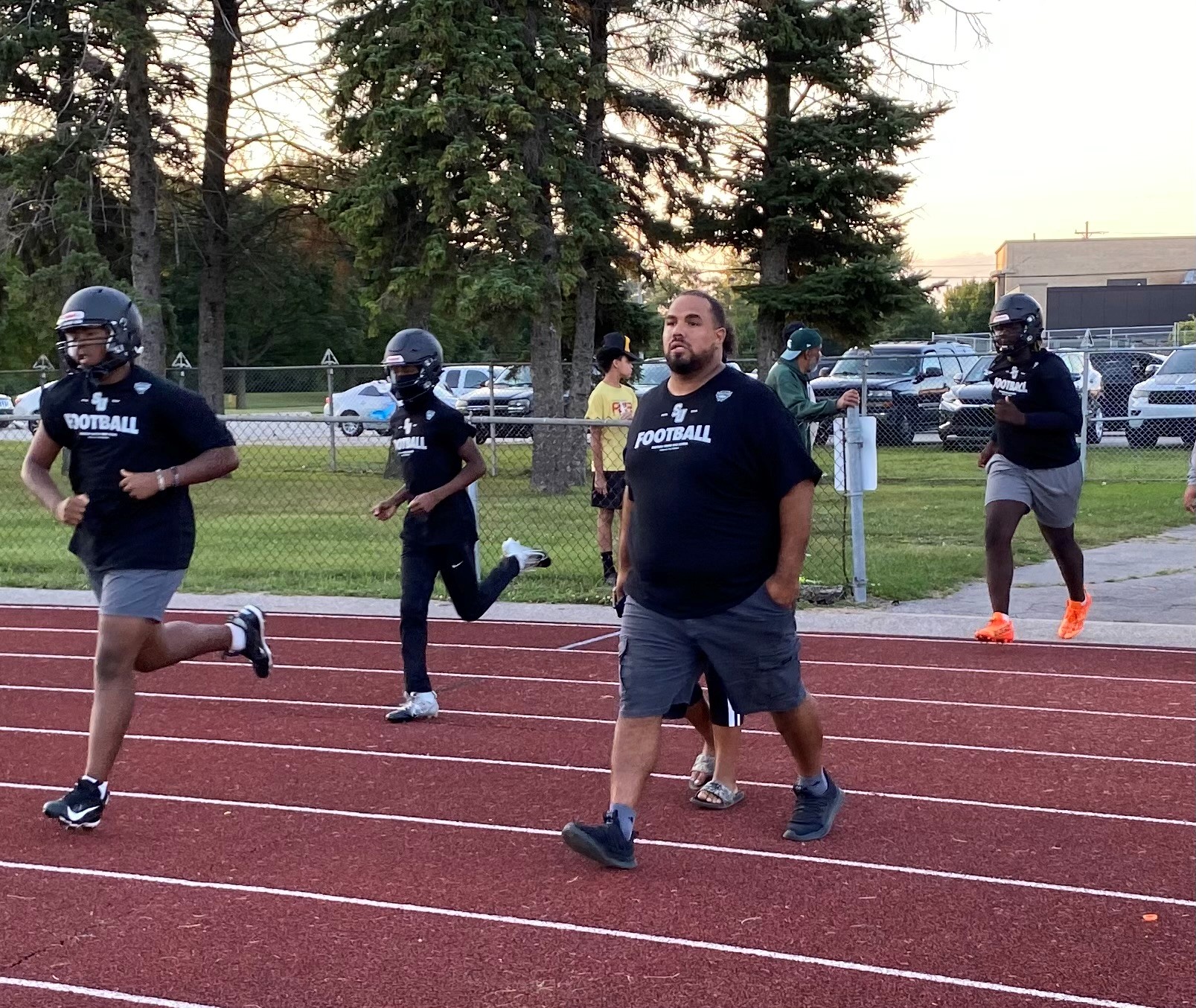
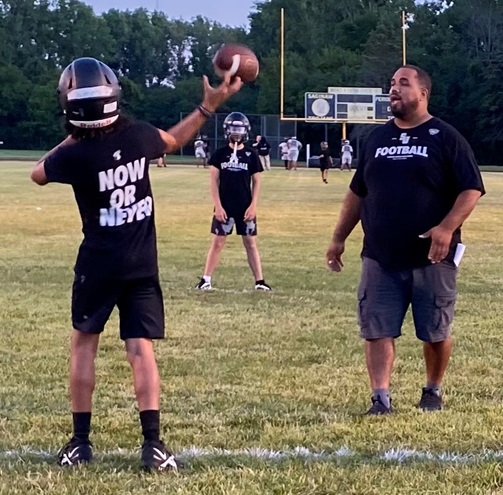
PHOTOS (Top) Saginaw United players take to the field at the former Saginaw High on Monday for their first practice as a new school and program. (Middle) United coach James King joins his players in walking out to the field. (Below) Phoenix players play catch during their first practice. (Photos by Paul Costanzo.)