


Michigan’s Football Numbers Game – Corrected
September 1, 2017
Today’s blog was written by MHSAA Second Half Editor Geoff Kimmerly
The demise of Michigan high school football has been greatly exaggerated – or, at least, recently misreported by one of the U.S.’s most recognizable newspapers that noted as part of a larger story on football decline that Michigan has seen a “net loss of 57 teams in the past five years.”
It’s easy to understand how this error took place – especially when a reporter is not familiar with the football landscape in our state – but that doesn’t make this statement any less misleading, or harmful considering the story since has been picked up by multiple large news organizations. So let’s quickly clear up the misinterpreted information:
-
The data that led to this error came from an annual participation report released by the National Federation of State High School Associations (NFHS). Every spring, state associations (like the MHSAA) from every state and Washington, D.C., tally up how many of their member schools have a sport and how many athletes play it.
-
For 2016-17, the MHSAA submitted to the NFHS a total of 580 schools with 11-player football – that number actually includes all schools that reported having at least one football player, including primary and secondary schools in co-ops. And yes, that 580 is 57 fewer than the 637 11-player schools the MHSAA submitted for 2012-13.
-
But saying Michigan has lost 57 football programs misses out on something incredibly significant – the MHSAA also submitted 60 schools with 8-player football last year, up from 16 in 2012-13, making that net decrease in football schools over five years 13 – far fewer than 57.
And with a few more brush strokes, the picture of football in our state actually shows a healthy landscape:
-
The 640 schools in Michigan with at least one football player for 2016-17, 11 and 8-player combined, is actually eight more than we reported to the NFHS four years ago and 10 more than three years ago.
-
A better picture of Michigan’s football consistency is shown by how many varsity programs are taking the field. This fall, that number is 616 – 555 11-player varsities and 61 8-player – and we also had 616 for most of the 2016 season, 616 in 2015 and 615 in 2014.
-
We’ve had programs bring back varsity teams this year, and in one case a school has a team on its own for the first time. Benzonia Benzie Central and Suttons Bay were unable to field varsities in 2016, but Benzie Central is back playing 11-player and Suttons Bay is back with an 8-player team. Brimley, an 8-player school going back to 2010, also is fielding a team again after being unable to do so last year. Mount Clemens played only two varsity games in 2016 and forfeited a third, but has seven scheduled for this fall and lost close in its opener last week. And Bear Lake, previously a secondary school in a co-op program, now has a team all its own for the first time and is playing at the 8-player level.
-
Yes, there has been a decrease in Michigan high school football participation when it comes to the number of players – for reasons we discuss frequently, including more extracurricular/entertainment options than ever for students, more who are specializing in other sports and safety fears that often are misplaced. But we’ve also seen a three percent drop in enrollment at MHSAA member schools over the last five years. And despite that trend, Michigan again had the sixth-highest 11-player football participation in the nation in 2016-17 (and seventh-highest in 8-player) while ranking 10th nationally in number of residents of high school age.
-
So yes, while a nine percent drop in the number of football players over the last five years in Michigan clearly is troubling, and something we’re working with the Michigan High School Football Coaches Association to reverse, let’s also put those numbers in perspective. At medium-sized to bigger schools, it could mean a roster of 40 might have only 36 players. A roster of 20 at an 8-player school might go down to 18. Neither would signal the need to eliminate a football program.
-
And that move by so many schools to 8-player? It definitely started as a way for low-participation programs to keep football (and has worked for most of them). While that still may be the driving force as schools move from 11 to 8, others have made the switch because most of their former opponents did and joining them makes scheduling easier and travel shorter. Michigan has a multitude of small towns, and you’ll find most of these 8-player programs in pockets in the thumb, southwest or northern Lower Peninsula, or Upper Peninsula. And keep in mind, only Class D teams remain eligible for the 8-player playoffs – and only two of 61 teams playing 8-player this fall are larger than Class D and its enrollment limit of 203 students for 2017-18.
The story behind “a decrease of 57 schools” clearly is a little complex to explain and explain away, but it’s necessary to do so.
Yes, Michigan’s total number of football players is down a few percent. But the sport’s prominence and importance in our schools and communities remains high.
Drive for Detroit: Playoff Week 3 Review
November 12, 2018
By Geoff Kimmerly
Second Half editor
The results are fewer at this stage of the MHSAA Football Playoffs, but the headlines are louder with more on the line and the best of the best running into each other with only a few weeks left to play.
 This third round saw our 8-Player Finals pairings set – with those championship games taking place this Saturday at Northern Michigan University’s Superior Dome. Morrice will face Pickford in Division 1, while Rapid River will take on Onekama in Division 2.
Meanwhile, in 11-Player Regional Finals, we saw history made for Belleville, Holton and Breckenridge to name a few. We also saw the end to Pewamo-Westphalia’s attempt at making a fourth a straight MHSAA championship game, and said good-bye to one of Michigan’s most prominent high school programs and the winningest coach in state history.
Click to check out the scores through the first three weeks of the tournament and the pairings for the weekend ahead. “Drive for Detroit” is powered by MI Student Aid.
Division 1
HEADLINER: Saline 13, Rockford 12 (OT) The Hornets’ impressive body of work this season grows by the week. By outlasting Rockford with a 2-point conversion stand, they advanced to the Semifinals for the first time since finishing Division 1 runner-up in 2014. Add to this one to wins over East Kentwood two weeks ago and Grand Rapids Catholic Central in Week 2 – and giving unbeaten Clinton Township Chippewa Valley its closest game of the season in a five-point Week 1 loss – and it continues to be quite a run. Rockford also should be proud; after opening 1-3 this fall, the Rams not only extended a record 24-year playoff streak but won their first District title since 2015. Click for more from the Ann Arbor News and see below for highlights from FOX 17.
Rockford falls to Saline in overtime https://t.co/hqXVzXeNxh
— FOX 17 Blitz (@FOX17Blitz) November 11, 2018
Regional Recap: Clarkston 13, Lapeer 0 The reigning Division 1 champion Wolves (10-2) locked down their fourth Regional title in six seasons and eliminated Lapeer (11-1) for the third time over the last five – and second time during that string where the Lightning entered the game undefeated. Belleville 13 West Bloomfield 10 The Tigers (12-0) have broken through with their first Regional title, defeating last season’s Division 1 runner-up West Bloomfield (9-3) to make their first Semifinal. Clinton Township Chippewa Valley 42, Dearborn Fordson 7 The Big Reds (12-0) are headed to the Semifinals for the first time since 2003 after shutting down a Tractors team that finished 10-2 and was averaging 38 points per game.
Division 2
HEADLINER: Birmingham Groves 53, Livonia Franklin 29 The Falcons (10-2) are headed to their second Semifinals in three seasons after downing Franklin (7-5), a semifinalist a year ago. Groves has run off 10 straight victories since opening this fall 0-2, and the 53 points were a season high. Franklin led at the end of the first quarter 2-0 before the Falcons ran off 21 unanswered points during the second. Click for more from the Oakland Press and see highlights below from State Champs Sports Network.
??VIDEO: Check out the highlights of the Birmingham Groves (@GrovesAthletics) vs. Livonia Franklin (@fhspatriots) - Division 2 @MHSAA Regional from last night pic.twitter.com/it2SgcfOdH
— STATE CHAMPS! (@statechampsnet) November 10, 2018
Regional Recap: Muskegon Mona Shores 58, Portage Northern 28 The Sailors (11-1) also scored a season high to win their second Regional title ever and first since 2014, over a Northern team that at 9-3 tied its program record for wins set in 1981. Midland 43, Walled Lake Western 0 The Chemics (9-3) won their first Regional title since 2007 with one of the most impressive victories of the weekend, handing Western (8-4) its first shutout since the 2016 Division 2 Final. Warren DeLaSalle 21, Port Huron Northern 3 The reigning Division 2 champion Pilots (10-2) ended the winningest season since 1986 for Northern (10-2), which did hold DeLaSalle to its third-fewest points of this fall.
Division 3
HEADLINER: Muskegon 34, Cedar Springs 18 The reigning Division 3 champion Big Reds (12-0) withstood one of their toughest challenges of this season, as Cedar Springs (10-2) trailed by only a point, 13-12, at halftime. Muskegon quarterback Cameron Martinez – who broke La’Darius Jefferson’s school season record of 2,095 rushing yards during the game – ran for 32 and 75-yard scores during the third quarter. The Red Hawks finished with their most wins since going 11-2 in 2000. Click for more from the Muskegon Chronicle and see highlights below from WZZM.
Muskegon runs past Cedar Springs, 34-18 https://t.co/3zLDlXpvwW pic.twitter.com/0BMZVhygq2
— 13 On Your Side (@wzzm13) November 10, 2018
Regional Recap: Zeeland East 50, Parma Western 24 The Chix are headed to the Semifinals for the first time since 1989 when East and West were one school. Parma Western ended its longest playoff run with a school record for wins at 10-2. DeWitt 42, Farmington 7 The Panthers (12-0) bounced back offensively after scoring nine points in the District Final and as a defense giving up eight points per game locked down the Falcons (8-4), who completed their longest run since 2002. Detroit Martin Luther King 54, Allen Park 15 The Crusaders (10-2) won their sixth Regional title in eight seasons, ending Allen Park’s at 9-3 after the Jaguars bounced back from just missing the playoffs in 2017.
Division 4
HEADLINER: Chelsea 21, Farmington Hills Harrison 14 The Bulldogs (9-3) have risen from third in their league during the regular season to win their second Regional title over the last four years, this time under first-year coach Josh Lucas. Chelsea’s win also marked the end of Farmington Hills Harrison football under coach John Herrington, who concluded as the winningest coach in MHSAA history with a 443-112-1 record since starting the program in 1970. Harrison (8-4) is closing next summer. Click for more from the Sun Times News.
??VIDEO: Check out the highlights of the Chelsea (@ChelseaBulldogs) vs. Farmington Hills Harrison - @MHSAA Division 4 Regional Final from this afternoon pic.twitter.com/ps3DE3V51Z
— STATE CHAMPS! (@statechampsnet) November 10, 2018
Regional Recap: Grand Rapids Catholic Central 35, Escanaba 6 For the third straight season, the two-time reigning Division 4 champion Cougars (11-1) eliminated the Eskymos (9-3), this time holding Escanaba to its fewest points of the fall. Edwardsburg 56, Holland Christian 21 The Eddies (12-0) set up a rematch of last season’s Division 4 Final (a 42-31 loss to GRCC) by scoring more than 50 points for the seventh time this season, ending a nice run for Holland Christian (8-4) with its best record since 2009. Williamston 28, St. Clair 0 The Hornets (10-2) advanced to their first Semifinal since 2010 by shutting out a St. Clair team that finished 9-3 and had scored a combined 132 points over its first two playoff games.
Division 5
HEADLINER: Saginaw Swan Valley 36, Reed City 28 Swan Valley’s side of this bracket began with four of the 30 undefeated teams left in all of 11-player at the end of the regular season, and the Vikings (12-0) remained one by edging another over the weekend. Reed City (11-1) gave Swan Valley its closest game this season and a closer one than when the two met and the Vikings won 29-14 in a Semifinal a year ago. How close was it? Reed City ended the game on Swan Valley’s 2-yard line. Click for more from the Saginaw News and see highlights below from WJRT.
.@SwanValleyFball fights back to beat Reed City, repeat as regional champion @swanvalleysporthttps://t.co/AG4qBQjVkp
— ABC12WJRT (@ABC12WJRT) November 11, 2018
Regional Recap: Hudsonville Unity Christian 39, Kalamazoo United 14 The Crusaders (10-2) advanced to their second Semifinal in three seasons by locking down a Titans offense averaging 53 points per game heading into Saturday. United finished 11-1, its best since the co-op between Hackett and Kalamazoo Christian was formed in 2014. Portland 40, Frankenmuth 6 The Raiders are headed to their first Semifinal since winning Division 5 in 2012 after stopping Frankenmuth (9-3) in its quest to win a third straight Regional title. Marine City 40, Detroit Denby 32 (2OT) The Mariners also finished third in their league during the regular season, but are headed to the Semifinals for the first time since winning Division 4 in 2013. Denby (9-3) concluded its winningest season and longest playoff run both since 2006, with its losses this fall by a combined 18 points.
Division 6
HEADLINER: Montrose 37, Flint Hamady 6 As noted above, this weekend was good to teams finishing third in their leagues this fall. The Rams (10-2) did so in the Mid-Michigan Activities Conference, but with this victory won their first Regional title since 2013 and ended the longest run and winningest season ever for Hamady (11-1). Click for more from the Flint Journal and see highlights below from WEYI.
.@MontroseRams with a dominant second half, they're moving on to the semifinals https://t.co/aAsB0C0vrt
— Jonathan Deutsch (@JonathanD_TV) November 11, 2018
Regional Recap: Montague 30, Schoolcraft 14 The Wildcats (10-2) reached double-digit wins for the third time in four seasons with their first Regional title since 2009 – when it went on to win the Division 6 title. Schoolcraft (9-3) finished by playing in its first Regional Final since 2013. Traverse City St. Francis 41, Kingsley 20 The Gladiators (12-0) won their third Regional title in four seasons, although Kingsley (10-2) cut the deficit after St. Francis won their first meeting by 35 in Week 4. Jackson Lumen Christi 33, Blissfield 0 Two-time reigning Division 6 champion Lumen Christi (11-0) won its third straight Regional title with its third shutout of the season. Blissfield (7-5) was held scoreless for the first time since 2016.
Division 7
HEADLINER: New Lothrop 26, Pewamo-Westphalia 14 It’s rare that the loudest headline from a football weekend comes from one of the divisions pitting the state’s smaller schools. But it certainly was noticed when New Lothrop (11-1) ended the two-time reigning champ Pirates’ 24-game winning streak. P-W (11-1) had beaten New Lothrop 35-14 in a District Final only a year ago, but now the Hornets will return to the Semifinals for the first time since 2015. Click for more from the Flint Journal.
??VIDEO: Check out the highlights of the Pewamo-Westphalia vs. New Lothrop (@NLAPS) - @MHSAA Division 7 Football Regional Final from last night. pic.twitter.com/R2KxGEr4XN
— STATE CHAMPS! (@statechampsnet) November 10, 2018
Regional Recap: Lake City 34, Roscommon 28 The Trojans (12-0) held off Roscommon (10-2) to make the Semifinals for the second straight season and extend their run of the last two years to a combined 24-1. Cassopolis 23, Monroe St. Mary Catholic Central 22 The Rangers’ defense, giving up now 4.3 points per game, was tested for the first time. But Cassopolis (12-0) won its second Regional title in three years by stopping St. Mary (9-3) on a goal line stand to finish the game. Madison Heights Madison 44, Riverview Gabriel Richard 7 The Eagles (12-0) are returning to the Semifinals after handing a playoff defeat to Gabriel Richard (7-5) for the second straight season.
Division 8
HEADLINER: Holton 14, Mendon 6 The Red Devils’ first playoff season since 2007 now includes its first Regional title ever. Holton (8-4) outlasted annual power Mendon to move on after both reached the playoffs as additional qualifiers at 5-4 to end the regular season. The Hornets, after winning their 10th District title in 12 seasons, finished 7-5. Click for more from the Muskegon Chronicle.
Holton’s dream season continues with regional final win over Mendonhttps://t.co/rOsnwjpYie
— FOX 17 Blitz (@FOX17Blitz) November 11, 2018
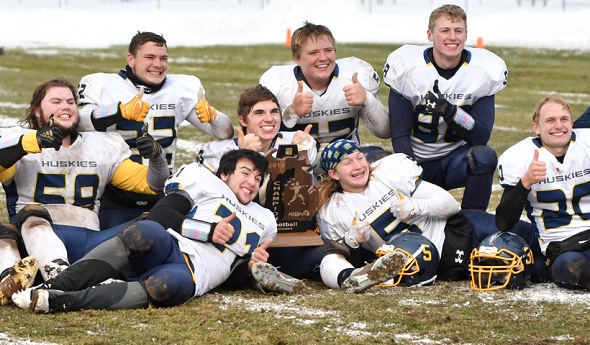
Regional Recap: Breckenridge 12, Ishpeming 6 The Huskies (12-0) have taken the steps from first playoff berth in 2016 since 1993, to first District title ever last season to now first Regional championship. Breckenridge drove north and handed Ishpeming (11-1) its only defeat by locking down an offense averaging 42 points per game entering the weekend. Harbor Beach 35, Flint Beecher 0 The Pirates (11-1) are back in the Semifinals for the first time since making three straight trips from 2012-14. Beecher (8-4) closed its longest playoff run since 2012 in Division 7. Reading 54, Detroit Southeastern 0 The Rangers (12-0) now have shutouts in half of their games this season and their first Regional title since 2008. It was a memorable fall for Southeastern (8-4), which made the playoffs for the first time since 2010 and only two years removed from a 3-24 three-year string.
8-Player Division 1
SEMIFINAL: Pickford 40, AuGres-Sims 20 The Wolverines (11-1) were giving up only 7.5 points per game and hadn’t scored fewer than 50 this season. But Pickford (12-0) dominated on both sides of the ball, breaking through for its first MHSAA championship game berth after missing in Semifinals the last two seasons. Click for more from the Sault Ste. Marie Evening News and see highlights below from MI Sports Now.
#Pickford is heading to the #SuperiorDome with a victory over #AuGresSims - https://t.co/GjMaqbuTQN pic.twitter.com/3Ef8cKnCzA
— MISportsNow (@MISportsNow) November 11, 2018
SEMIFINAL: Morrice 40, Colon 8 The Orioles (12-0) will continue their deepest playoff run ever, with this victory securing their first MHSAA Finals berth. Morrice locked down a Colon offense averaging 44 points per game, and the Magi (10-2) gave up a season high. Still, it was a strong 8-player debut for Colon, which went 2-7 in 11-player a year ago and was playing in its first Semifinal in either format. Click for more from the Lansing State Journal.
8-Player Division 2
SEMIFINAL: Onekama 28, Portland St. Patrick 14 The Portagers will play in their first MHSAA football championship game after doubling up last season’s Division 2 runner-up. Onekama (10-2) also set a program record for wins, piling up 20 straight points to hold off the Shamrocks (7-5). Click for more from the Traverse City Record-Eagle.
#Onekama is heading to the #SuperiorDome! The #Portagers punched their ticket today with a victory over #PortlandStPatrick - https://t.co/NsV2IwDomD pic.twitter.com/w8Twid3VHY
— MISportsNow (@MISportsNow) November 10, 2018
SEMIFINAL: Rapid River 36, Cedarville 30 One more third-place success story from the weekend. Rapid River (9-3) downed Cedarville 28-20 in Week 7 to eventually lock up that spot in the Great Lakes Conference East, and edged the Trojans (7-5) a second time to reach the 8-Player Finals for the third time this decade and first since 2013. Click for more from the Escanaba Daily Press.
??VIDEO: Check out the highlights of the Cedarville vs. Rapid River @MHSAA 8-Player Division 2 Football Semifinal from last night. pic.twitter.com/IfZW93F1MK
— STATE CHAMPS! (@statechampsnet) November 10, 2018
Second Half’s weekly “Drive for Detroit” previews and reviews are powered by MI Student Aid, a part of the Student Financial Services Bureau located within the Michigan Department of Treasury. MI Student Aid encourages students to pursue postsecondary education by providing access to student financial resources and information, including various student financial assistance programs to help make college more affordable for Michigan students. MI Student Aid administers the state’s 529 savings programs (MET/MESP) and eight additional aid programs within its Student Scholarships and Grants division. Click for more information and connect with MI Student Aid on Facebook and Twitter @mistudentaid.
PHOTO: Breckenridge seniors give a thumbs up while celebrating their Division 8 Regional championship in Ishpeming. (Photo by Cara Kamps.)