


New Football Practice Policies

March 25, 2014
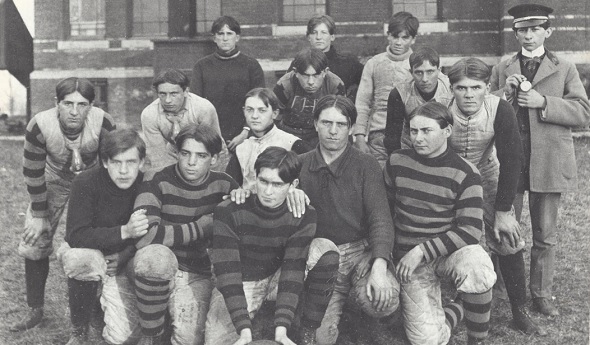
Last Friday, the MHSAA Representative Council adopted the proposals of the Football Task Force revising practice policies that take effect this fall, helping Michigan schools keep pace with an advancing standard of care – a standard that is reducing head-to-head contact in football practice on every level and in every league.

Michigan’s Football Task Force proposal – the result of four meetings during 2013 and much research and work between them – reduces collision practices to one a day before the first game and to two per week after the first game.

A collision practice is one in which there is live, game-speed, player-vs-player contact in pads (not walk-throughs) involving any number of players. This includes practices with scrimmages, drills and simulation where action is live, game-speed, player-vs-player.

A non-collision practice may include players in protective gear. Blocking and tackling technique may be taught and practiced. However, full-speed contact is limited to players versus pads, shields, sleds or dummies.

The new policies also increase the acclimatization period at the start of fall practice from three days to four days – helmets only permitted on the first two days, helmets and shoulder pads only on the third and fourth days.

Click this link for the Complete policy and FAQs.

Be the Referee: Football Overtime

October 1, 2014

This week, MHSAA assistant director Mark Uyl explains how football overtime is played at the high school level.

"Be the Referee" is designed to help educate people on the rules of different sports, to help them better understand the art of officiating and to recruit officials. The segment can be heard on Mondays, Wednesdays and Fridays during the school year on The Drive With Jack Ebling on WVFN-AM, East Lansing.  

Below is this week's segment - Overtime - Listen

There is nothing better for a football fan than a close game, and the ultimate is when that close game ends up going into overtime. 

The high school overtime rules are quite similar to those used at the college level. In other words, both teams are going to be guaranteed one possession of the ball starting out first down and goal to go from the 10-yard line. A couple of key differences are if the defense gets possession of the ball on an interception or on a fumble, the ball is dead and the teams switch offense and defense, In other words, that ball can’t be returned for a defensive score to end the game. 

There is also no requirement that the offense at any point after a touchdown be required to go for two (points). If the game would go seven or eight overtimes, teams can continue to simply kick the one point extra point.

Past editions
Aug. 25 - Targeting - Listen
Sept. 4 - Concussions - Listen
Sept. 11 - Pass Interference - Listen
Sept. 18 - Tackle Box -
 Listen
Sept. 25 - Field Goals - Listen