


New Football Practice Policies
March 25, 2014
Lelito's Work Helps St Clair Athletes Play
By
Paul Costanzo
Special for MHSAA.com
May 31, 2017
If not for sports, Tim Lelito isn’t sure he would have finished high school.
 Now that he’s entering his fifth season in the National Football League, Lelito is doing what he can to make sure kids in St. Clair County don’t have to worry about that.
The Lelito Legacy Foundation has teamed with the Community Foundation of St. Clair County to grant $9,000 for county schools to cover athletic participation fees for students in need.
“I used sports as a vehicle for where I am now – to get to college and get through high school,” the 2007 St. Clair High School graduate said. “If I didn’t have sports, I don’t think I would have graduated high school at all. School wasn’t a priority; the horses that my grandparents raised were the priority, because that was our livelihood.
“Making it to college and being the first one in my family to graduate with a degree, sports was that vehicle for me to get that degree, and that really hit home with me.”
Five St. Clair County community partners were able to raise $4,500, and Lelito’s foundation matched. The funds will be able to cover participation fees for 116 students at St. Clair County high schools and middle schools during the 2017-18 school year.
 The Port Huron Schools Endowment Fund, East China School District Athletic Boosters and PTOs, the Community Foundation of St. Clair County’s Youth Advisory Council and its Marysville Community Fund, and the Capac Adolescents Preventing Abuse and Crime (CAPAC) Fund were the five partners.
“It’s exciting to see someone who is not only successful and has come back to help his hometown, but he’s so humble about it,” Community Foundation Vice President Jackie Hanton said. “When we were in our meetings, it’s not about Tim. It’s that he has this vision to help kids who are like him.”
Lelito was a mauling all-state offensive lineman at St. Clair, paving the way for the team’s option attack. He was also an all-state thrower on the Saints’ track & field team.
Playing sports required a participation fee, something Lelito’s grandparents handled, even if they struggled to do so.
“When I was younger, my grandparents raised racehorses, and money was tight for a while,” Lelito said. “My grandparents put my brother and I in sports, and we always played sports. I didn’t realize how bad it was until I was older. They were pinching pennies together and taking care of us before taking care of their needs.”
Lelito earned a scholarship to Grand Valley State University, where – after redshirting as a freshman and being forced to take a medical redshirt his second year – he started 45 straight games and was named Offensive Lineman of the Year by the Great Lakes Intercollegiate Athletic Conference in 2012.
He was signed by the New Orleans Saints as an undrafted free agent in 2013, and worked his way into the rotation almost immediately, seeing action in 63 games during his four years in New Orleans and starting 24 games, including 13 in 2015.
This past offseason, Lelito signed a free-agent deal with the Tennessee Titans.
Throughout his NFL career, Lelito has given back, both to his hometown and his professional town. He has conducted free football camps for St. Clair County kids for the past few years.
 “He’s just a young man that I’ve continued to be impressed with how grounded he’s remained,” Bill Nesbitt, Lelito’s football coach at St. Clair, said. “He understands the big picture. His success is not just in playing at that level, but in helping others. That’s his great success.”
Funds for the participation fees will be given to the school districts in St. Clair County, and the schools will be tasked with selecting students most in need. In future years, Lelito hopes to help schools purchase equipment for kids in need, and eventually he wants his foundation to reach more than just athletes.
“My foundation isn’t just for kids in sports, it’s for underprivileged youth,” Lelito said. “I think moving forward, in the next five years, I want to be able to take care of a lot of kids in a very broad spectrum – in sports and arts and other extracurricular activities.”
That will take funding, but Lelito said he has found generous donors in St. Clair County.
“That’s why I bought a house here,” he said. “I love it here. I love the people; they’ll give you the shirt off their back. That’s why I wanted to put roots down here.”
With his efforts, Lelito is doing all he can to make it an even better place to call home. Nesbitt believes the funds could be the difference in playing sports as opposed to sitting out for some students, which he hopes will have a lasting effect.
“I think it definitely can have a positive impact that way,” Nesbitt said. “Hopefully, in a larger, greater, grander sense, these kids who are participants could one day give back themselves. If they are able to go on and have some success, maybe they could remember that somebody had helped them out and do the same.”
 Paul Costanzo served as a sportswriter at The Port Huron Times Herald from 2006-15, including three years as lead sportswriter, and prior to that as sports editor at the Hillsdale Daily News from 2005-06. He can be reached at [email protected] with story ideas for Genesee, Lapeer, St. Clair, Sanilac, Huron, Tuscola, Saginaw, Bay, Arenac, Midland and Gladwin counties.
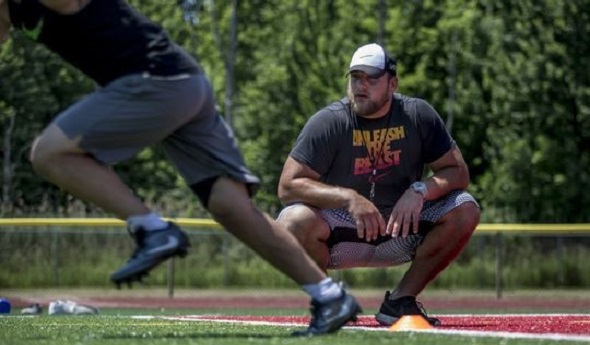
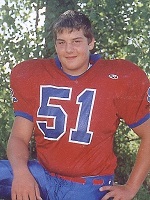
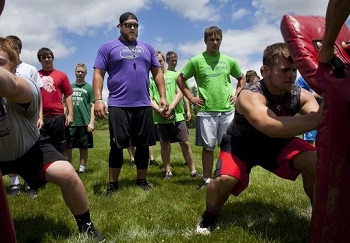
PHOTOS: (Top) Tennessee Titans offensive lineman Tim Lelito watches an athlete work out during a camp he conducts in the St. Clair area. (Middle) Lelito during his high school career at St. Clair. (Below) Lelito, middle, has worked this offseason to help pay participation fees for athletes in need of financial assistance. (Top and below photos courtesy of the Port Huron Times Herald.)