


NFHS Voice: Football Continues to Thrive
September 25, 2019
By Karissa Niehoff
NFHS Executive Director
When the annual High School Athletics Participation Survey was released by the National Federation of State High School Associations (NFHS) in August, many headlines across the country focused on the drop in the number of boys playing 11-player football. After all, the report showed 30,829 fewer participants than the year before. However, perhaps the most important number was overlooked – 14,247.
Yes, 14,247, the number of high schools with 11-player football teams. While there was a slight decline in the number of participants in many states, the number of schools sponsoring the sport was the highest in five years. In fact, the number of schools last year with 11-player teams has only been topped twice in the survey’s history – 14,262 in 2013-14 and 14,279 in 2010-11.
In addition, smaller schools in some states have shifted to 6-player, 8-player and 9-player football and have had good responses. The survey indicates an additional 156 schools and 1,594 participants involved in these alternate forms of the sport; and, in the past 10 years, participation by girls in 11-player football has doubled, with more than 2,400 participants this past year.
These numbers express the desire by high schools to keep alive one of the oldest and most treasured traditions in our nation – Friday Night Football Under the Lights. Although there are many options today for the entertainment dollar, nothing surpasses supporting the local high school football team on Friday nights. The No. 1 fan base in America? The answer is that number again – 14,247.
In Week 2 of the National Football League season, just under 1.1 million fans attended the 16 games. While impressive, it doesn’t come close to the number of fans who watched high school football during the corresponding week. It’s all in that number – 14,247.
With approximately 7,123 games every Friday night (14,247 divided by 2), and with a conservative estimate of 1,000 fans per game, there are more than 7 million fans in high school football stadiums every week. An unofficial attendance survey conducted by the NFHS in 2011 indicated about 165 million fans attended high school football games during that season, which included up to five weeks of playoffs and a weekly average of 11 million fans. Either way, the number of fans at high school football games dwarfs the numbers attending professional football games.
Early season crowds have been strong in many areas of the country with terrific fall weather – filled by current and former students; parents, grandparents and friends of players on the team; and longtime fans and supporters in the community. Unlike crowds at the college and professional levels where fans have little, if any, identity with the players, there is a connection between the players and fans at the high school level.
With concussion protocols and laws in place in every state, with a reduction in contact levels before the season and during practices, and with teaching of proper tackling skills at lower levels, we believe people, including parents of high school student-athletes, are seeing and believing that the sport of football at the high school level is as safe as it ever has been.
We urge you to support your local high school football team this Friday night.
Dr. Karissa L. Niehoff is in her second year as executive director of the National Federation of State High School Associations (NFHS) in Indianapolis, Indiana. She is the first female to head the national leadership organization for high school athletics and performing arts activities and the sixth full-time executive director of the NFHS, which celebrated its 100th year of service during the 2018-19 school year. She previously was executive director of the Connecticut Association of Schools-Connecticut Interscholastic Athletic Conference for seven years.
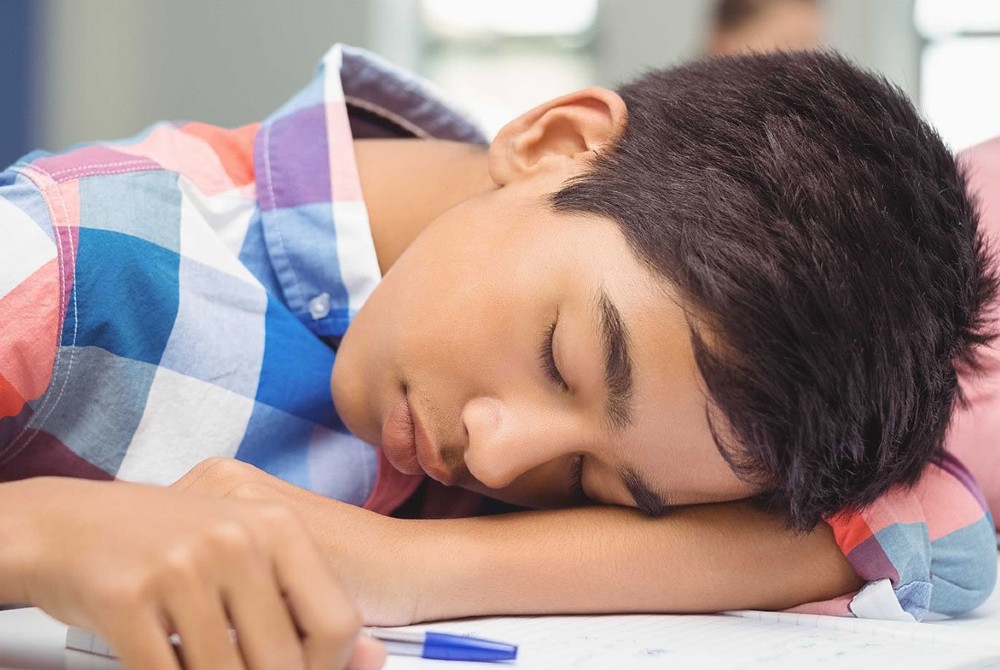
Is Your Teen Sleep-Deprived?
March 2, 2021

Many teens tend to stay up late. They’re on social media, watching television or YouTube, studying, or just tossing and turning for hours unable to fall asleep. Sleep can also be disrupted during stressful times during adolescence like exams or relationship problems.
More than two-thirds of high school students in the U.S. are failing to get sufficient sleep on school nights, according to a recent study from the Centers for Disease Control and Prevention (CDC).
“The American Academy of Sleep Medicine (AASM) recommends that teens should sleep eight to 10 hours per night on a regular basis to promote optimal health,” explains Virginia Skiba, M.D., a sleep specialist with the Henry Ford Health System. Insufficient sleep can have a negative impact on their grades, athletic performance and mental and physical well-being, including depression and anxiety issues and drug and alcohol use.
It’s a safety issue, as well. Motor vehicle crashes are a leading cause of teen deaths in the U.S. In a recent survey, more than half of teens admitted to having driven when feeling too tired and nearly one in 10 teens reported having fallen asleep at the wheel.
A typical high school student is biologically wired to fall asleep around 11 p.m. Many high schools in Michigan start school as early as 7 a.m. – long before a teen’s natural wake time. The AASM advocates a later middle school and high school start time of 8:30 a.m. or later.
Tips for a Good Night’s Sleep
Teenagers’ sleep-wake cycles are biologically determined – they are programmed to stay up late at night and sleep later in the morning. Most teens are instinctively night owls. Falling asleep is often a challenge, but there are things teens can do that may help them get a good night’s sleep.
Here are some tips from Dr. Skiba, which apply not only to teens but are great advice for anyone who is struggling with feeling sleep deprived:
► First and foremost, make sleep a priority. In our busy society, too often making time for sleep is last on the list.
► Maintain a consistent bedtime and wake time that allows at least eight hours of nightly sleep, including on weekends and vacation.
► Keep the bedroom quiet and dark. Keep the TV, computer, phone and video game system out of the bedroom.
► Set a technology curfew; turn off all devices one hour before bedtime.
► Engage in quiet activities before bed, like reading, journaling or yoga, and establish a relaxing bedtime ritual.
Dr. Virginia Skiba is a sleep medicine expert who sees patients at Henry Ford Medical Centers in Grosse Pointe and Sterling Heights.
If your teen is struggling with sleep issues, talk to your pediatrician or family doctor to find out if he or she could benefit from a sleep evaluation. Call 1-800-HENRYFORD (436-7936) or visit henryford.com to learn more.
Visit henryford.com/sports or call (313) 972-4216.