

Ratings, Polls & Birth of State's 'Top Ten'
September 30, 2020
By Ron Pesch
Special for Second Half
By December, with the annual announcement of Michigan’s All-State football team, the intense pressure of the 1951 season had disappeared for two of the state’s finest high school coaches.
The football season had started with an exceptional honor for Muskegon’s Harry Potter, one of the mentors.
“Six leading Michigan school-boy coaches, representing separate geographical areas of the state, again will write daily stories for Free Press readers heralding the outstanding All State candidates from week to week,” noted prep sportswriter Hal Schram.
Potter worked with Joe Rosbeck of Hamtramck, Bob Waldorf from Battle Creek Central, Willard Anderson of Stambaugh, Herb Korf of Saginaw High School and Hiram Becker of Cadillac High on the board.
“At the close of the 1951 campaign these six veterans in Michigan’s prep coaching ranks will be brought to Detroit by the Free Press to select Michigan’s official All-State team.” It was the third straight season the Detroit paper had done such.
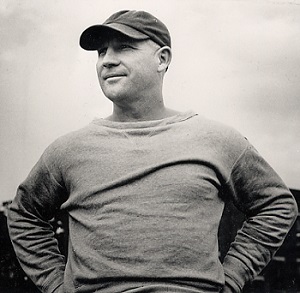
Potter had joined the Muskegon staff as reserve coach in 1927, serving as an assistant to head varsity coach C. Leo Redmond. In 1947, when the successful Redmond resigned to take a position as a principal within the district, Potter took charge of the varsity.
Ted Sowle could relate to the pressure no doubt felt by Potter. Schram, the Free Press’ high school sports editor, had really started his full-court press on prep coverage in 1949. For a nickel daily, readers could keep tabs on the state’s top teams and players. The head coach at Grand Rapids Catholic Central had been honored in 1950 to occupy one of those half-dozen cherished seats on the Free Press All-State board. Sowle (who had also replaced a successful and cherished coach in Edward Killoran at Catholic) joined a panel that featured well over 100 years of coaching experience, including future University of Nebraska coaching legend Bob Devaney, then guiding Alpena High School, and Howard Auer, who had led Flint Central since 1939. Bill Kelly, Saginaw Arthur Hill’s mentor, with 19 seasons, and Oscar E. ‘Okie’ Johnson of Muskegon Heights – Michigan’s Dean of Coaches with 24 campaigns under his belt – were among the six that sat on Schram’s first All-State board.
 All of the state’s high school gridiron coaches could assist the panel representatives by mail weekly, with material for their columns. “Postcards, addressed to their Board representative, are in the hands of all state schoolboy coaches for the ‘feeding’ process,” stated Schram explaining the procedure to readers. At season’s end, having received ballots from those coaches, game officials and sports reporters, the board named the Free Press’ All-State squad.
During the 1951 season, the six board members penned 42 by-lined stories for the paper. Potter’s updates appeared on Fridays in the Free Press.
On Friday, November 30th, five of the six All-State Board members gathered at Detroit’s Hotel Shelby, then spent seven hours on Saturday compiling, correlating, then distilling down “recommendations of more than 400 other Michigan coaches… which climaxed a season long search.” Herb Korf of Saginaw, “confined to his bed with the flu” had been unable to attend. His choices and material, however, had been sent to Detroit to be weighed with the others.”
Because of the method of involvement, Schram referred to the Detroit Free Press All-State squad as “Michigan’s OFFICIAL All-State” team. Released on Wednesday, December 5th after masterful pomp and circumstance by the advertising staff of the Detroit paper over the weeks previous, the 1951 team, like several before it, featured the names of nearly 400 prep players. The first, second and third teams each included 11 names that came from, but were not limited to, schools with the largest enrollment, labeled Class A in Michigan. An additional 22 players, 11 each from Class B and Class C enrollment-sized schools, were also accorded top honors. Finally, more than 300 other players were recognized on the extensive honorable mention list by the paper.
As challenging and rewarding as the work had been to Potter, it was not what had brought the majority of stress to the coach during the 1951 season.
Rivals
Located 40 miles apart, the cities of Muskegon and Grand Rapids had been longtime rivals, economically and athletically, since the turn of the century. The Big Reds had faced Catholic Central on the gridiron off and on since 1918. The teams had met to uncap the season in both 1949 and 1950. The Cougars had won both games, but Muskegon still led the 10-game series between the schools with seven wins against three defeats. With the end of their home-and-home contract, they would not play each other in 1951. Grand Rapids Press sportswriter Lendy Davis wrote the Big Reds were dodging Catholic, expected to be a strong squad.
So, it was a bit of a surprise when Potter and Sowle, rivals on the gridiron, united over issue with another aspect of the newspaper industry’s battle for readers – the weekly rating of high school football teams to identify a state champion.
Almost from the day football became a sport in Michigan, the battle for supremacy – local, state or national – has been part of the game. Claims on Michigan’s state prep title date back to at least 1894. Today, the Michigan High School Athletic Association awards 10 gridiron championship trophies – eight across Divisions in 11-player football and two across Divisions in 8-player football – via a structured playoff. However, the MHSAA’s first postseason football tournament didn’t arrive until 1975. That season, the Association awarded championships in four enrollment groupings – Class A, B, C and D.
Postseason basketball tournaments sponsored by the Association and its predecessors had produced annual champions in Michigan dating back to at least 1918. State Track and Field meets had named champions even before that time. But in football, operating without a postseason since its start before the turn of the 20th century, naming champions was left in the hands of the media and the schools prior to 1975. Without structured head-to-head competition to sort the results of the state’s nine-game season, titles were based on observation, opinion, guesswork or proclamation. Hence the term ‘mythical’ is applied to state titles proclaimed prior to 1975 in the Great Lakes State.
Rankings and the evolution of the 'Top Ten'
Initiated by a suggestion from Charles Sumner ‘Cy’ Sherman, a Lincoln, Nebraska sportswriter, The Associated Press (AP) launched college football’s Top Ten weekly rankings in 1936 with a national poll of a hundred sportswriters. In 1943, in the final weeks of the season, Watson Spoelstra of the AP in Michigan used late-season lists to relay the win-loss marks of the state’s undefeated and once defeated high school football teams with the largest enrollment numbers. Those lists were sorted, first by victories, then by points scored. (‘Waddy’ Spoelstra would later become a sportswriter for the Detroit News, a correspondent for The Sporting News and the founder of the Baseball Chapel, an international ministry responsible for the appointment of team chapel leaders, recognized by Major League Baseball.)
The Detroit Free Press writer Truman Stacey can be credited with the creation of Michigan’s weekly poll, starting with his arrival in Detroit in 1944. He brought the idea with him from his previous job as a sportswriter in Oklahoma. In 1943 at the Daily Oklahoman, published in Oklahoma City, Stacey’s byline regularly appeared with the ranking of the Sooner State’s “Top Ten” high school football teams. The concept, at least in Oklahoma, was initiated by his predecessor, sports editor Arthur Edson, in 1941. (Edson started at the Oklahoman in 1936, and later would become a longtime newsman for the Washington D.C. bureau of The Associated Press, and political writer for U.S. News and World Report).
In Michigan, Stacey’s “ratings proved so popular that both news services and other newspapers picked them up later,” wrote Schram at the dawn of the MHSAA Playoffs in 1975. “After all, a good thing is a good thing, even if someone else thinks of it first.”
Within weeks, Stacey quickly proved the impact and popularity of the polls with fans. His first top-ranked team was Jackson High School: “By reason of three decisive victories over strong foes, Jackson stands at the top of the list as the State’s finest football team.”
In Week 6, Jackson squared off with Muskegon, the state’s second-ranked team according to the rankings. In his weekly Tuesday column, Stacey relayed the result to readers in dramatic fashion:
“Jackson’s fancy Vikings, for five straight weeks the kingpins of high school football in Michigan, fell from their pinnacle this week as the list of the state’s top ten teams underwent its most drastic revision.
“Muskegon, by virtue of the completeness of its 19-0 victory over the former leaders, fell heir to Jackson’s scepter as the state’s schoolboy ruler.
“The two leaders clashed for the top in a game that created so much excitement in Muskegon Friday night the school officials were forced to close the gates of the stadium 15 minutes before the kickoff, after 10,000 fans had jammed their way inside.”
Blueprint for the future
The theatrics and playfulness that inspires chroniclers of the weekly polls today was present in 1944.
Muskegon stayed at the top of Stacey’s list as the year rolled on, with Grand Rapids South and Saginaw nipping at its heels.
With two games left to play in the season, Stacey’s column in the Friday paper leading up to Week 8’s games focused on a call he had received from Federal Judge Frank Picard. A Saginaw High and University of Michigan alum and devout Trojans football fan, Picard was questioning the writer’s smarts as the season headed for a conclusion.
“Fierce blue sparks darted from the telephone when I listened to him speaking in what, for want of a better description, I shall call his six-gun voice,” Stacey wrote.
 “’I see you haven’t yet learned that crime does not pay, Stacey,’ he said. ‘You still have Muskegon up there in first place ahead of Saginaw, which is a mere third in your rankings …’”
Emphasizing that he felt the Trojans had played a stronger schedule, Picard asked, “By just what process of reasoning do you consider Muskegon a better team than Saginaw?’
…’Well, your honor, I just used my own judgement, and ---‘
“’I’d send a man to jail for less! You are a menace to American jurisprudence.”
Picard must have been annoyed when Stacey’s Week 8 poll arrived, showing Saginaw had slipped past Grand Rapids South for second place, but still trailed the Big Reds for the top spot. He must have been overjoyed when Stacey finally saw the light.
“The 1944 race to decide Michigan’s mythical state high school grid champion blazed to the tape in a photo finish. … It was one of the ironic quirks of the schedules that the three powers did not meet – a circumstance which caused many fans and coaches to bemoan the lack of a method of deciding a champion similar to that employed during the basketball season.
“By reason of a 13-6 decision over Arthur Hill in their final start on Thanksgiving Day, the Trojans of Coach Carl Nordberg won a narrow decision over Muskegon and South for the top spot among the state’s elect.
“The victory gave the Trojans their first perfect season since 1907, when another mythical state champion was produced.”
Incidentally, the quarterback of that 1907 Saginaw team was Frank Picard. A tie in a season-ending game with, ironically, Muskegon that year had allowed Saginaw to proclaim itself “mythical” state champion.
A good thing – or is it?
In late September 1945, Stacey announced he had accepted a position as public relations director for the University of Detroit. During his stay at the university, he earned his bachelor and master’s degrees.
Hal Schram, previously a prep writer for the Lansing State Journal, stepped into Stacey’s role on the Free Press sports staff. Over his 42-year career, he would expand and enhance what Stacey started and ultimately define the role of a beloved prep writer.
In 1945, Muskegon Heights unseated top-ranked Muskegon in the final week of the season to earn the Free Press title. The Big Reds, riding a 16-game win streak before the loss, had been Schram’s top-ranked team for the previous three weeks. The Tigers laid claim to the crown with a 7 to 6 triumph played out before 13,500 fans. Two Class B schools made Schram’s final top 10. (In the coming years, the top 10 lists would eventually expand to separate and rank all four enrollment classes in Michigan.)
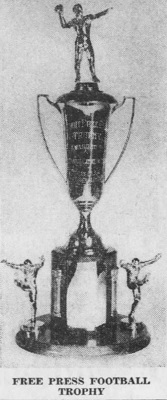
In 1946, Lansing Sexton slipped past undefeated Muskegon Heights in the Week 9 poll for the Free Press championship. With the 1947 season, Schram and the Free Press publicized use of a statistical championship system to rank the state’s Class A teams and announced plans to award a 30-inch high trophy to symbolize the achievement of ending the season as the top-ranked football team. (A limited number of copies, describing the system, were available to those interested by sending a self-addressed stamped envelope to Schram at the Free Press). Flint Central emerged as titleholders with Port Huron finishing second. Despite running its consecutive win streak to 27, Muskegon Heights ended the season fifth in the Free Press final standings.
The Associated Press chose to jump into the fray of ranking teams in 1947 with a poll of Class A schools by the state’s sportswriters. George Maskin, prep writer at the Detroit Times, opted to rank teams too. They both named Flint Central as tops in the state, with Muskegon Heights ending the year in second. Port Huron landed in third place in the AP poll and fourth in the Times rankings.
While the Free Press and Times awarded the state’s No. 1 ranking to Grand Rapids Union in 1948, the AP did not rank squads, opting instead for a season-ending compilation of undefeated teams, supplied by “Dick Kishpaugh, Kalamazoo statistician and newsman.” When announcing its All-State squads in December, the AP did note that Union was “generally considered the No. 1 team in the state.”
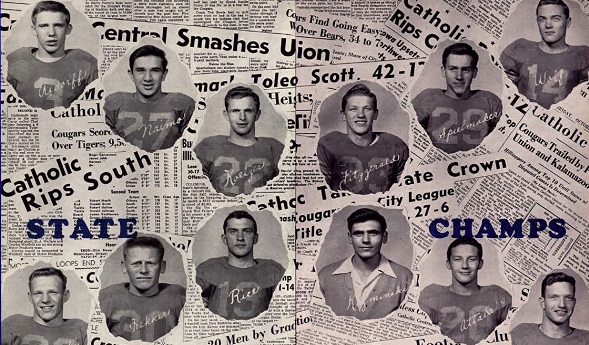
Grand Rapids showcased its second-straight Free Press trophy as the Cougars of Catholic Central, led by Coach Sowle, grabbed the 1949 crown. The Cougars downed Muskegon, Muskegon Heights, Toledo Scott and Grand Rapids Union to start the season, never relinquishing their hold on the No. 1 spot in Schram’s Top Ten. The Times concurred.
In 1950, United Press International (UPI) entered the ratings game. At season’s end, the Free Press, the Times and UPI all awarded the mythical crown to Flint Northern. The Associated Press remained on the sidelines. However, when naming Northern’s backfield trio of Duncan MacDonald, Ellis Duckett and Leroy Bolden to its annual Class A All-State squad, the AP did indicate that the three backs were “the big reason why Flint Northern smashed its way to nine straight wins this season to make it a standout for honors as the state championship eleven.”
Madness
The Free Press, Detroit Times, Grand Rapids Press, AP, and UPI all took to rating statewide teams in 1951. According to Schram, a total of 69 Class A and B teams, “whose schedule sends their teams against at least three Class A opponents” were eligible for the Free Press trophy, now in its fifth year of presentation.
Sowle’s Grand Rapids Catholic Central Cougars immediately grabbed control of the top spot in the rankings. With the exception of the Free Press ratings, Muskegon quickly emerged as the second-ranked team in the polls.
With two weeks remaining on schedules, Muskegon and Catholic were tied for the top spot in the Associated Press poll. The Big Reds overtook Catholic Central for the top spot in the AP Top Ten in Week 8, following a 33-0 win over Southwestern Conference rival Kalamazoo Central. (AP sports editor for Michigan, Harry Stapler, had made a surprise visit to the press box at Muskegon to check out the action). That victory was also enough for the Big Reds to slip by Owosso for second place in the Free Press rankings. Earlier in the year, Birmingham (now Birmingham Seaholm), a Class B school playing a slate composed of primarily Class A competition, had a lock on No. 2 in Schram’s statistical championship system.
In their season-ending contest, hosted at Houseman Field in Grand Rapids, the Cougars squared off with twice-beaten Detroit Catholic Central. Muskegon would face crosstown rival Muskegon Heights in its finale. Catholic and Muskegon had met only one like opponent on the year – Holland. The Cougars downed the Dutchmen, 32-12 in Week 4. Muskegon overpowered Holland 48-0 in Week 5.
Ted Olewinski and Roman Zobro, a pair of breakaway backs, powered the GRCC attack. Led by senior quarterback Earl Morrall, who later played 21 seasons in the NFL, the Big Reds had scored 290 points on the year – tops in the state entering the game. According to Schram, both teams were favored by two touchdowns.
Only hours after their contests, both Coach Sowle and Coach Potter publicly criticized the football polls as putting too much pressure on teams and players and creating overemphasis on high school football.
Who won?
Both teams emerged victorious. The Free Press, United Press International and the Grand Rapids Press each named Grand Rapids Catholic as state champion. The Associated Press poll selected Muskegon in a tight vote of sportswriters.
“Man for man, perhaps, the Cougars might boast an edge on Muskegon,” said George Maskin of the Detroit Times. “But Muskegon’s ace quarterback, Earl Morrall … certainly balanced the books.” The teams finished the season as co-champions according to Maskin’s Times rankings.
“For the first time in my career – with a winning club – I was booed from the stands this season when I substituted at a point where we could have continued to score,” said Sowle, speaking out at a Knights of Columbus dinner honoring the Catholic Central team the day after the Cougars’ season-ending victory over the Shamrocks.
“My first string, gunning for state honors, begged me to keep them in the game … in order to win a decisive victory and enhance the state championship possibilities. They wanted to demonstrate their scoring potential for reasons created by the rating system.”
“When we piled up that big score Saturday night, we were battling the polls, and not Detroit.”
 “Coach Ted Sowle of the G.R.C.C. kept his regulars in action until only 30 seconds remained in the game,” wrote Maskin, who made the trip to Grand Rapids for the game. “They had a hand in all eight Cougar scores.”
The Cougars defeated DCC 51-0 before a crowd of 6,100.
Heavy snow had been removed from the stands of Hackley Stadium by students and from the field by city plows in Muskegon in preparation for the Saturday game with the Heights. With temperatures in the 40s, the Big Reds downed the Tigers, 26-6, in front of 11,000 fans.
Potter said that during the season, “he had been open to criticism because he removed his regulars in several games and did not ‘pile it on’ to the last touchdown.”
“It has been like trying to hold in thoroughbred horses. The boys themselves feel the poll rivalry keenly and want to go all out.”
The comments received statewide coverage.
“Such blasts have been heard consistently in the college ranks this season,” stated a United Press article.
Schram fights back
Schram came out swinging at the criticism.
“In Michigan there are two generally-accepted state-wide high school rating systems,” stated the Detroit writer. “One is a ‘popularity poll’ in which voters are influenced, to some extent, by the size of scores. The other, conducted by the Free Press for seven seasons, award points for winning and tieing games. It takes into account the quality of opposition – but does not give a bonus for increasing the point spread.”
Potter emphasized to the Free Press he was against all ratings of high school teams. Sowle backtracked a bit in conversation with Schram, stating “his critical remarks were not directed at the Free Press system,” and agreed with the writer that the paper’s system was “the ‘fairest possible approach.’”
“We feel that this feature creates interest,” continued the journalist. “We think it’s a lot of harmless fun. Rating systems have been used in many states for the past 10 years and have proved very popular with readers, coaches and players alike. In the absence of an official high school playoff toward state championships, such as (those) in Texas, Oklahoma and other states, the Free Press believes a rating system is the best possible way for fans, players and coaches to evaluate teams.”
Schram concluded with a final statement.
“The Free Press system operates in such a fashion that it is free from any such charges. The Free Press will continue to rate high school teams in football and basketball.”
Battle Raged
“Proponents of the polls claimed they increased interest in high school athletics, raised the standard of play, brought in funds at the gate that helped support minor sports and were demanded by readers,” noted the AP as it weighed the issue. The AP also observed that others felt polls were a detriment to sportsmanship, created unnecessary rivalry between schools, encouraged teams to run up scores and curbed substitutions even though the game was in hand. Some felt that the polls encouraged betting.
Charles E. Forsythe, state director for the MHSAA, was asked for comment.
“We can’t do anything to stop the rating systems of course. We wouldn’t think of attempting to. But the association may decide whether or not to make a statement on its stand,” he said.
At the end of November, the MHSAA’s Representative Council unanimously did adopt a motion denouncing such polls. A spokesman for the Council said the only issue at stake in the voice vote was: “’Do the polls do any good?’ He said the discussion was brief, as no one spoke in favor of the polls.”
In June of 1952, the managing editors of Associated Press-affiliated newspapers responded. In a 12-11 decision, they voted to discontinue the weekly polls. The Free Press and Times, UPI and other organizations pushed on unabated.
Schram reminded readers that point spreads were not a factor in the Free Press system. The Associated Press returned to running Kishpaugh’s lists of undefeated squads. After three years away, they returned to posting weekly gridiron polls in the fall of 1955. There appears to have been little if any objection.
Since then, as sure as the leaves start to fall come football season, Michigan’s media outlets hype the coming prep season and rank the state’s prep teams.
 Ron Pesch has taken an active role in researching the history of MHSAA events since 1985 and began writing for MHSAA Finals programs in 1986, adding additional features and "flashbacks" in 1992. He inherited the title of MHSAA historian from the late Dick Kishpaugh following the 1993-94 school year, and resides in Muskegon. Contact him at [email protected] with ideas for historical articles.
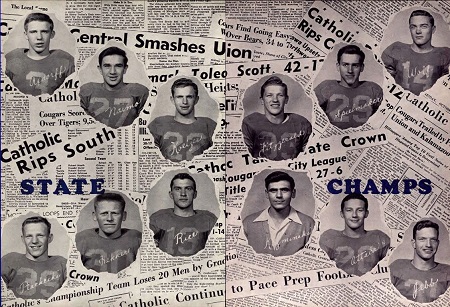
PHOTOS: (Top/4) Grand Rapids Catholic Central was celebrated as the 1949 "mythical state champion." (2) Muskegon football coach Harry Potter. (3) GRCC received the Detroit Free Press trophy as the top team in 1951. (4) GRCC coach Ted Sowle. (Photos gathered by Ron Pesch.)
Family Coaching Tree Grows to 3 Generations
By
Tom Markowski
Special for Second Half
September 13, 2018
Like father like son, like grandson.
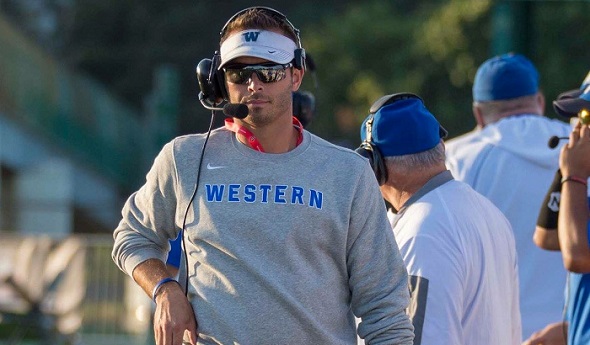
 The Grignon football family continued its progression in the coaching ranks this season when Alex Grignon got his shot at being a head coach. Grignon was hired in June as head coach at Walled Lake Western to replace Mike Zdebski, who resigned to take a coaching position in Arizona.
Alex Grignon, 31, represents the third generation from a family of past and present high school head football coaches. And one can’t talk football in Wayne County communities like Dearborn and Lincoln Park without mentioning the Grignon family.
Ted Grignon was the athletic director and head football coach at Lincoln Park in the 1980s. His two sons, Ted and Jamie, played football at Dearborn Edsel Ford and then in college – Ted, a quarterback at Western Michigan University and Jamie, a safety at Grand Valley State. Jamie Grignon is in his third stint as Lincoln Park’s head coach. He was hired in 1994 and stepped aside after the 1999 season, but never left the sport as he went to Dearborn High as an assistant under Dave Mifsud in 2000. Grignon went back to Lincoln Park in 2013 as the head coach and, after taking another brief hiatus, came back last season and remains in that position.
His two sons, Andrew and Alex, played for Mifsud at Dearborn; and in 2004, Alex’s senior season, Dearborn reached a Division 2 Semifinal before losing to Orchard Lake St. Mary’s, 6-0. It marked the first time the program advanced that far in the MHSAA Playoffs.
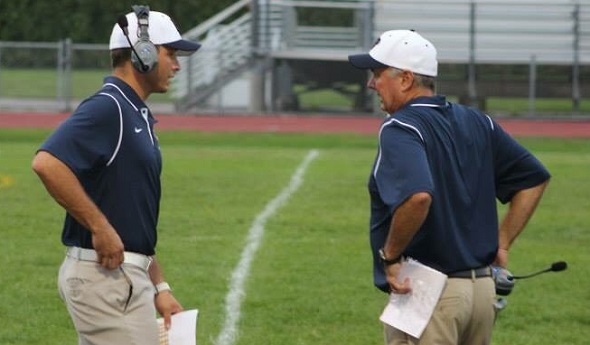 Andrew switched sports and played lacrosse in college (at Grand Valley), but his younger brother stuck with football. After playing four years at Northern Michigan, Alex was a graduate assistant there working with the offense before joining his father’s staff at Lincoln Park.
The Railsplitters have had their struggles of late, starting this season 0-3 and last making the playoffs in 2015. But in 2013, with Jamie as the head coach and Alex as the defensive coordinator, Lincoln Park ended a 66-game losing streak by defeating Taylor Kennedy, 34-20.
After five seasons at Lincoln Park, Alex went to South Lyon last season as the offensive coordinator, and this season he made the big jump. Walled Lake Western is one of the top programs in the Detroit area and a member of the Lakes Valley Conference, and Grignon has the Warriors off to a 2-1 start.
“He was proud that he was the third generation (of head coaches),” Jamie Grignon said. “When he coached with me, it was a growing process for him. There isn’t anyone who works harder than Alex. Whether it’s watching film, working with the kids after practice or what. He’s full-go.”
Like father like son. Jamie is not one to toot his own horn, but when he was the defensive coordinator at Dearborn people in the Downriver area, and in other football strongholds in the county, knew Mifsud had one of the best coaches calling his defense.
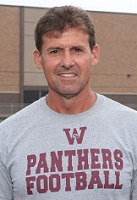
Mifsud is in his sixth season as the head coach at Parma Western after serving 16 in the same position at Dearborn. He was an assistant coach at Dearborn for four seasons before being named head coach in 1997.
 Remember those dates. Before Mifsud was able to hire Grignon, the two met as adversaries on the field. Lincoln Park defeated Dearborn, 14-0, during Dearborn’s homecoming, no less, in 1999. That was Grignon’s last season during his first stint at Lincoln Park.
Mifsud didn’t have to twist Grignon’s arm to join his staff at Dearborn. Grignon’s oldest son, Andrew, was set to play for Mifsud in 2000. Alex is two years younger, so Mifsud was secure knowing the Grignons had his back.
“I was in my fourth year when Andrew came through, I hired Jamie and Keith Christnagel, who’s the coach at Woodhaven now,” Mifsud said. “We grew up together, the three of us, as coaches. We racked our brains learning the ropes. I always coached the offense. Keith had the offensive and defensive lines and Jamie the defense. The working relationship with Jamie was excellent. We split up the special teams, though he probably did more there.
“People know of Jamie, and he worked his tail off. On Sundays I’d stop by, you know, just to drop some film off or just to touch base, and his entire dining room would be spread all around with notes on breaking down the other team’s offense and such. Jamie’s a high-energy guy. He’s always thinking.
“Looking at Alex, yeah, I think they are similar. They can’t sit still. They’re always looking for something better. What a great hire (for Walled Lake Western). Alex is so great with the kids. He’s young (31). He’s got great football intelligence. Jamie was like that. He would tweak things in practice. He’d never be satisfied. Alex has that. He’s Jamie but at a different level.”
Mifsud and Jamie Grignon both said that what makes Alex a cut above is his leadership. As good as Alex was athletically as a player, his father said it was his leadership qualities that set him apart.
 Mifsud recalled a story, a 2-3 week period, actually, during the 2004 season. The staff had yet to elect captains, and as preseason practices wore on Mifsud and his staff were taken aback by the actions of three seniors, Alex among them.
The coaches didn’t have to blow a whistle to start practice. Those three would have the players ready.
“I looked at my coaches,” Mifsud said. “And said those are our captains.”
Alex said he never thought about being a leader. It just came naturally. He grew up watching football from the sidelines, and later as a water boy, and then at home watching his father gather notes and dissect film footage.
“I was on the sidelines my entire life,” he said. “The leadership, you see it. You watch the players. You know what it takes to be a leader. I tell my players at Western, people want to be led.
“As a youth you don’t realize what level dad is coaching at, but you remember going to coffee shops exchanging film. I’d have my ninja toys with me, and the next minute I’d be holding dummies. Dad didn’t push us. He wanted us to do what we wanted to do. Heck, I was a big-time soccer player. I didn’t start playing football until middle school. For two years I did both.”
By his freshman year, Alex was all in for football. His was one of best classes the school has had for the sport, and Alex recalls that 40-50 of his classmates showed their dedication by increasing their work in the weight room.
Playing with his brother for two years and with his father for all four only made Alex more determined.
“I can’t talk football and family without getting emotional about it,” he said. “Watching your dad work 18 hours on the weekend, turning the pages of his legal pad, he was always doing something. I remember eating eggs for breakfast every day and peanut butter sandwiches for lunch to try and get as much protein in our bodies. I’d get up as a child, and he’d be on his third cup of coffee. He never stopped. He saw us wanting to be around the game, and he helped in any way he could to make us better.
“Everything I know, I’ve seen him do.”
 Tom Markowski is a columnist and directs website coverage for the State Champs! Sports Network. He previously covered primarily high school sports for the The Detroit News from 1984-2014, focusing on the Detroit area and contributing to statewide coverage of football and basketball. Contact him at [email protected] with story ideas for Oakland, Macomb and Wayne counties.
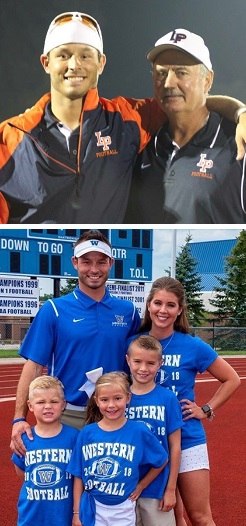
PHOTOS: (Top) Walled Lake Western coach Alex Grignon is in his first season as head coach at Walled Lake Western. (Top middle) Alex, left, and father Jamie Grignon when Alex was assisting Jamie at Lincoln Park. (Middle) Current Parma Western and former longtime Dearborn coach Dave Mifsud. (Below) Alex and Jamie Grignon, when both were coaching Lincoln Park, and Alex with his family now as coach at Walled Lake Western. (Photos courtesy of Grignon family; Walled Lake Western photos by Teresa Presty Photography.)