

Tradition-Filled Tri-County Conference Kicking Off Final Season of 11-Player Football
By
Doug Donnelly
Special for MHSAA.com
August 20, 2024
The bus driver went too fast.
 It was fall of 1979, and Ottawa Lake Whiteford football coach John Hoover had come up with a plan for his Bobcats to dress in their own locker room, warm up on their own field and arrive at the Petersburg Summerfield football field for a Tri-County Conference battle just moments before kickoff.
The plan was working, except the bus driver went a little too fast.
“I don’t remember when I decided we would do it,” Hoover said. “But the night before our game, I got in my car, and I drove about the speed that I thought the bus driver would take from Whiteford to Summerfield. I had a stopwatch to time it just right. I didn’t tell anybody.”
The ploy was meant to rattle the opponent, perhaps make the other team lose focus on the game at hand.
“It’s only like 20 minutes between schools, so warming up at Whiteford and driving was no different than warming up at Summerfield and walking out to the field and waiting through the national anthem and the coin toss,” Hoover thought.
The scheme was working to perfection, but when Hoover determined the arrival would be too soon, he had the bus driver pull over just outside of Petersburg. Finally, the bus made its final trek and arrived.
On the first play from scrimmage, Summerfield fumbled, Whiteford recovered and scored a few plays later – the only touchdown of the game in a 7-0 Bobcats win.
 “I don’t know if it worked,” Hoover said. “But, when the bus got near, when we were driving up the road where the Summerfield stadium was, the head coach (LeRoy Wood) was out in the middle of the street, looking down the road, looking for us. I knew right then that it probably worked. It wouldn’t have worked if we had cell phones like they do today.”
Summerfield and Whiteford have played some spirited games over the years as rivals in the Tri-County Conference. Unfortunately, the season that starts next week will be the last one for 11-player football in the TCC.
With the makeup of the league changing over the last decade or so and the move to 8-player football for three league schools, this is the final season for TCC football after 51 years of small-town competition.
The league has just three remaining schools playing 11-player football – Whiteford, Summerfield and Erie Mason. There is no TCC football schedule for 2025 and beyond, although the league itself will stay together for other sports.
“The 2024 season will be the last season that a TCC football champion is recognized in the current league format for football,” Britton Deerfield athletic director Erik Johnson said.
It will be the end of an era in southeast Michigan.
The league was formed in 1973 with schools from Washtenaw, Lenawee and Monroe Counties.
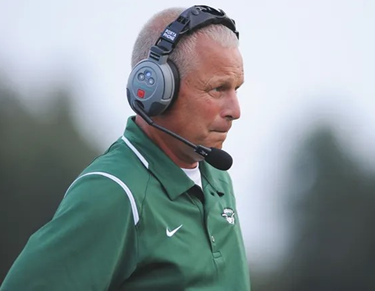
Several schools have taken turns at the top of the conference. Sand Creek has the most league championships, winning 15 between 1977 and 2011 – 14 of them under head coach Ernie Ayers. Morenci (9), Whiteford (7), Summerfield (7) and Clinton (7) have hoisted their fair share of league football trophies. Ayers is the winningest coach in league history, going 174-71 in league games over 38 seasons. Sand Creek left the TCC in football only after last season and will compete in the Big 8 Conference this season.
Whiteford is the only league school to win an MHSAA Finals football championship, but Sand Creek, Morenci and Clinton all have appeared in state championship games.
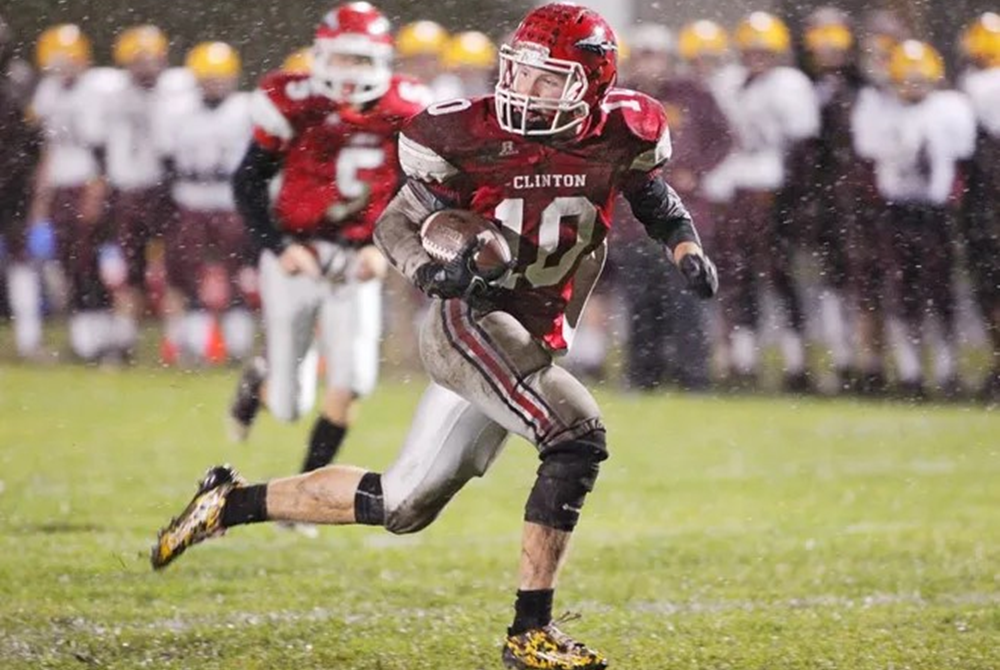
Both times Clinton played in Finals, Mathew Sexton was the star. Sexton would go on to play four years at Eastern Michigan University and has been in multiple NFL training camps and played in the XFL. He’s the league record holder for touchdowns and points scored.
 “I loved being in the TCC,” Sexton said. “It was great competition and was always a blast. Played with some great players, coaches and love the atmosphere each game would bring. Clinton and the TCC made me who I am today. I’m thankful for the experience it gave me.”
Summerfield graduate Jamie LaRocca was an all-state running back in the league, coached in the league and later watched his sons play football in the league as student-athletes at Whiteford.
“There were some great games, great battles,” LaRocca said. “Most of all, it was competitive. Sand Creek was good, Summerfield had good teams and Morenci had some great teams. Different teams always seemed to make their run.”
Britton and Deerfield were two charter members of the TCC, along with Ann Arbor St. Thomas (now known as Ann Arbor Father Gabriel Richard), Summerfield and Adrian Madison. During the 1990s, however, Britton and Deerfield formed a co-op and became Britton-Deerfield. They later officially combined high schools to become Britton Deerfield
BD had a dominating run on the football field in the late 1990s and early 2000s. Among the players who played for BD teams were Dan Musielewicz and Dustin Beurer. Beurer is now the head coach at Division II Northwood University while Musielewicz is head coach at Division III University of Olivet.
Beurer said he remembers as a high school student going to class with others from rivals Sand Creek or Madison at the Lenawee County Vocational Tech school all week, then playing against them on Friday nights.
“I get goosebumps thinking about those days,” he said. “It was small-town football at its finest back in the day.”
Brad Maska, now the head boys basketball coach at Onsted, was the BD quarterback when that team won multiple TCC titles.
“It is sad,” Maska said of the end of the TCC football era. “It truly was a great conference that produced a lot of great teams, coaches, and players throughout the years.
“The best part of the conference was the small-school pride from the communities. Friday night playing at Sand Creek or Whiteford when I was in school was always the only thing going on in town and the communities always got around us, and the atmosphere for small-school football was amazing.”
 Doug Donnelly has served as a sports and news reporter and city editor over 25 years, writing for the Daily Chief-Union in Upper Sandusky, Ohio from 1992-1995, the Monroe Evening News from 1995-2012 and the Adrian Daily Telegram since 2013. He's also written a book on high school basketball in Monroe County and compiles record books for various schools in southeast Michigan. E-mail him at [email protected] with story ideas for Jackson, Washtenaw, Hillsdale, Lenawee and Monroe counties.
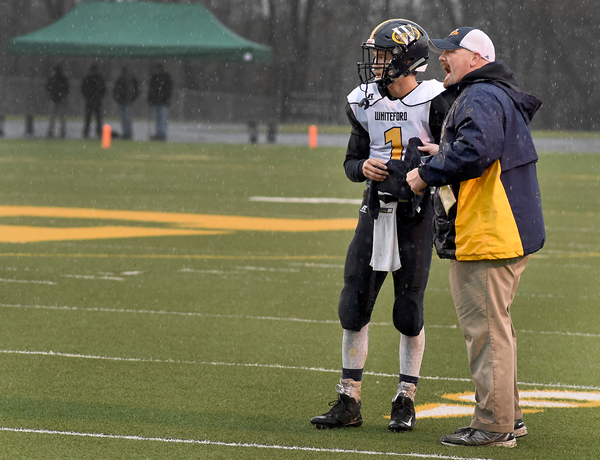
PHOTOS (Top) Clinton’s Mathew Sexton scored more touchdowns in Tri-County Conference games than any player in league history. (Middle) Thomas Eitniear was the quarterback and Jason Mensing head coach at Whiteford when the Bobcats became the first school in Tri-County Conference history to win an MHSAA Finals football championship. (Below) Ernie Ayers coached at Sand Creek for 38 years and won 14 Tri-County Conference championships. (Photos courtesy of the Adrian Daily Telegram and Monroe News.)
Drive for Detroit: Regional Finals in Review
November 19, 2013
By Geoff Kimmerly
Second Half editor
We often celebrate teams making deep playoff runs for the first time as they and their communities reach heights never experienced before.
That experience as the toughest levels of the tournament is invaluable. Just ask the 10 teams that repeated as Regional champions in 11-player last weekend, or 2011 8-player runner-up Rapid River – which will play for the championship again this Friday.
See below for some of the stories behind how all of those teams advanced to the neutral-site rounds of the MHSAA football tournament.
Division 1
Detroit Catholic Central 34, Temperance Bedford 33
Detroit Catholic Central (10-2) had a couple close calls on the way to Ford Field in both 2011 and 2012, but none this close. The Shamrocks scored with 25 seconds remaining to edge Temperance Bedford, which was attempting to reach its first Semifinal and made its second Regional Final appearance in four seasons (the Kicking Mules just missed the Semifinals in 2010 as well with a two-point loss to Grosse Pointe South). Click to read more from the Detroit Free Press.
Also noted:
Flint Carman-Ainsworth 27, Hudsonville 20: The Cavaliers (11-1) hung on to earn their first Semifinal trip in their 28-year history. Hudsonville (8-4) did finish its best season since 2008.
Clarkston 56, Rochester Adams 28: The Wolves (11-1) have taken a step deeper into the postseason each of the past four seasons, with this sending them to the Semifinals for the first time since 2009. Adams finished a strong 8-4, impressive especially after the team went 4-5 in 2012 and lost quarterback/linebacker standout Matt Sokol to a season-ending injury in Week 6.
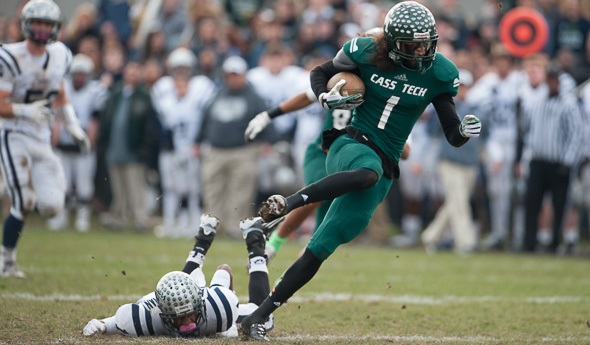
Detroit Cass Tech 32, Macomb Dakota 17: The Technicians (12-0) ended the season of a previously-undefeated opponent for the second straight week, this time halting Dakota (11-1) during its best season since 2007.
Division 2
Detroit Martin Luther King 6, Wyandotte Roosevelt 0
Both teams had showed plenty of offensive firepower to this point this season, but defense set the tone in the Regional Final. King (10-1) posted its fourth shutout and saved its season with a last-minute stand as Roosevelt (11-1) fell short in its drive to make the Semifinals for the second straight fall. Click to read more from MLive Detroit.
Also noted:
Muskegon 24, Midland 7: The Big Reds (11-1) have made the Semifinals five times over the last decade including the last two seasons thanks to wins over Midland (10-2).
Portage Central 42, Farmington Hills Harrison 21: The Mustangs (12-0) have asserted themselves among statewide powers this fall and beat another in Harrison (10-2) to reach the Semifinals for the first time since 1977.
Birmingham Brother Rice 41, Detroit U-D Jesuit 14: Brother Rice (12-0) finished a season sweep of Catholic League opponent U-D Jesuit (7-5) to reach the Semifinals for the third straight season.
Division 3
Zeeland West 62, Mount Pleasant 27
The Dux (11-1) appear to be gaining steam at the right time, with 545 yards of offense against the Oilers. Mount Pleasant led into the third quarter before West scored 36 straight points to make the Semfinals for the second time in three seasons. Mount Pleasant, 2-7 only a year ago, finished 10-2. Click to read more from the Grand Rapids Press.
Also noted:
Stevensville Lakeshore 34, Byron Center 7: Hailing from the same league as Portage Central, Lakeshore (9-3) has battled back from a 4-3 start to make its first Semifinal since 2008. Byron Center (8-4) made Regionals for the first time since 2000.
DeWitt 49, Eaton Rapids 0: Eaton Rapids (7-5) saw its first-ever playoff run end after two wins, but against near-annual semifinalist DeWitt (12-0).
St. Clair 40, Melvindale 14: St. Clair (11-1) added to its best season by earning its first Semifinal berth by beating a Melvindale team (9-3) that should still celebrate making the playoffs for the first time since 2010.
Division 4
Lansing Sexton 26, Saginaw Swan Valley 21
Swan Valley junior running back Alex Grace did run for 246 yards to unofficially set the MHSAA single-season rushing record with more than 2,900 (awaiting confirmation). But the Big Reds (12-0) continued to power through their tough slate by taking the lead in the fourth quarter and then ending the Vikings’ final drive with an interception in Sexton territory. Swan Valley finished 11-1. Click to read more from the Lansing State Journal.
Also noted:
Comstock Park 36, Cadillac 29: Comstock Park (12-0) advanced to the Semifinals for the third straight season, but first as an undefeated team. Cadillac (11-1) gave up the most points it had all season, but also scored the most on the Panthers of any team so far.
Grand Rapids South Christian 35, Battle Creek Pennfield 17: The reigning MHSAA champ Sailors (11-1) now haven’t lost since August and scored the most points Pennfield (10-2) gave up this season.
Marine City 33, Detroit Country Day 28: The lone Saturday night game of the weekend was a classic, with Marine City (11-1) scoring the go-ahead points with less than a minute remaining to eliminate the reigning MHSAA runner-up Yellowjackets (8-4).
Division 5
Livonia Clarenceville 21, Monroe St. Mary Catholic Central 20
There’s no question Clarenceville knows how to pull out the close ones, with now four wins by seven or fewer points this fall and two by 10 or fewer over the last two weeks. The Trojans (11-0) scored on a trick play with under 20 seconds left to edge ahead of Monroe St. Mary (10-2), a Regional champion in 2012. Click to read more from the Detroit News.
Also noted:
Menominee 49, Standish-Sterling 27: Make that 159-47, Menominee (12-0) over its three playoff opponents combined this month. Standish-Sterling (9-2), however, did finish with its best record since 2008.
Muskegon Oakridge 31, Millington 12: Oakridge (11-1) has won seven Regional titles, but this is the first since its MHSAA championship season of 2008. Millington (9-3) finished its longest run since 2010.
Grand Rapids West Catholic 35, Olivet 14: That 1-4 start is fading from memory as West Catholic (8-4) heads to its fourth straight Semifinal. Olivet (10-2) capped its best run since 2010, when it fell to West Catholic in the MHSAA championship game.
Division 6
Montrose 42, Madison Heights Madison 13
The highly-anticipated matchup to earn the right to face Ithaca didn’t end up that close, with Montrose (12-0) leading by enough during the third quarter to switch on the running clock. The Rams do now get to face Ithaca for the fourth straight season in the playoffs, but this time in Montrose’s first Semifinal since 2002. Madison finished 11-1, its fourth one-loss season over the last eight. Click to read more from the Flint Journal.
Also noted:
Ithaca 62, Negaunee 34: The Ithaca (12-0) win streak moved to 54 straight, but not before Negaunee (10-2) scored the most points the Yellowjackets had given up since 2010.
Shelby 33, Schoolcraft 7: Make that five straight seasons Shelby (11-1) has now increased its win total, and two straight it will play in a Semifinal. Schoolcraft (10-2) ended with double-digit wins for the second straight fall.
Clinton 47, Constantine 28: Clinton (12-0) eliminated the reigning MHSAA runner-up Falcons (7-5) to earn a first Semifinal berth since 1990 and its second overall.
Division 7
Harbor Beach 31, Pewamo-Westphalia 14
So far, Division 7 hasn’t posed much more of a challenge than Division 8 did last season for the reigning D8 champion Pirates (11-1). This Regional Final against P-W (10-2) was much closer than Harbor Beach’s first two playoff games this run, but quarterback/linebacker Eli Kraft continued to shine with two touchdowns on offense and a third scored while playing on the other side of the ball. Click to read more from the Saginaw News.
Also noted:
Ishpeming 28, Lake City 13: The Hematites’ 19th straight win put them at 12-0 this fall and removed a familiar and tough obstacle – Lake City (10-2) fell to Ishpeming by a nearly identical score in 2012.
Homer 26, Decatur 15: The Trojans (11-1) tied a school record for wins in advancing to their first Semifinal; Decatur (8-4) ended its season in the Regional Final for the second straight.
Detroit Loyola 50, Southfield Christian 7: The Bulldogs (12-0) improved to 36-2 over the last three seasons by scoring 50 points for the 10th time during that run. Southfield Christian did cap its best season of its eight-year history at 10-2.
Division 8
Crystal Falls Forest Park 24, Felch North Dickinson 20
Look back over the illustrious history of Forest Park football, and close playoff wins are more common than one might expect. The Trojans (12-0) know how to win down the stretch and pulled off another nail-biter to make their eighth Semifinal over the last decade. North Dickinson (8-3) came back from an early deficit but was stopped twice seeking a late go-ahead score. Click to read more from the Marquette Mining Journal.
Also noted:
Beal City 55, St. Ignace 0: Beal City (12-0) has scored 691 points, good already for second-most in MHSAA history; the Saints (9-3) made the Regional Final for the third straight season.
Muskegon Catholic 28, Mendon 12: This now-annual playoff battle of southwest powers went Muskegon Catholic’s way for the second straight season, with the Crusaders (10-2) scoring more points than Mendon (11-1) had previously given up all fall.
New Lothrop 58, Ottawa Lake Whiteford 22: The Hornets (11-0) advanced to their third Semifinal in eight seasons with their sixth game scoring more than 50 points this fall; Whiteford (9-3) capped its longest playoff run since 2000.
8-Player Semifinals
Rapid River 40, Kinde-North Huron 8
The 2011 MHSAA runner-up Rockets (12-0) earned another chance to claim the championship thanks in part to 359 yards rushing by quarterback Jake Pearson. He ran for three touchdowns and threw for two more while Rapid River didn't give up North Huron’s lone score until the fourth quarter. North Huron did tie its school record for wins in finishing 8-4. Click to read more from the Escanaba Daily Press.
Peck 73, Lawrence 34
Peck advanced to its first MHSAA championship game by stopping one of the hottest teams in any division and did so in an even more impressive manner than when they met earlier this season. The Pirates (12-0) had defeated Lawrence 61-38 in Week 4 and put up a season-high point total to fend off the Tigers (8-3) this time. Click to read more from the Port Huron Times Herald.
PHOTO: Detroit Cass Tech quarterback Jayru Campbell breaks away from a Macomb Dakota defender during the Technicians’ Regional Final win. (Click to see more from Terry McNamara Photography.)