


Week 5 Football Playoff Listing
September 18, 2012
Here is a list of Michigan High School Athletic Association football playing schools, displaying their win-loss records and playoff averages through the fourth week of the season.
Schools on this list are in enrollment order. An asterisk (*) beside a record indicates that a team has eight or fewer games scheduled. A carrot (^) beside a school’s name indicates that a team is one win away from playoff qualification.
Those schools with 11-player teams with six or more wins playing nine-game schedules, or five or more wins playing eight games or fewer, will qualify for the MHSAA Football Playoffs beginning Oct. 26-27. Schools with 5-4, 4-3 or 4-4 records may qualify if the number of potential qualifiers by win total does not reach the 256 mark. Schools with six or more wins playing nine-game schedules or five or more wins playing eight games or fewer may be subtracted from the field based on playoff average if the number of potential qualifiers exceeds the 256 mark.
Once the 256 qualifying schools are determined, they will be divided by enrollment groups into eight equal divisions of 32 schools, and then drawn into regions of eight teams each and districts of four teams each.
Those schools with 8-player teams will be ranked by playoff average at season’s end, and the top 16 programs will be drawn into regions of eight teams each for the playoff in that division, which also begins Oct. 26-27.
To review a list of all football playoff schools, individual school playoff point details and to report errors, visit the Football page of the MHSAA Website.
The announcement of the qualifiers and first round pairings for both the 11 and 8-player playoffs will take place on Oct. 21 on the Selection Sunday Show on FOX Sports Detroit at 7 p.m. The playoff qualifiers and pairings will be posted to the MHSAA Website following the Selection Sunday Show.
----------------------------------------------------------------------------------------------------------------------------
11-Player Playoff Listing
1. Utica Eisenhower, 2772, 3-1, 72.500
2. Sterling Heights Stevenson, 2766, 3-1, 68.500
3. Clarkston, 2721, 4-0, 90.000
4. Macomb Dakota, 2608, 3-1, 72.500
5. Lake Orion, 2565, 4-0, 90.000
6. Troy, 2502, 3-1, 70.500
7. Clinton Township Chippewa Valley, 2462, 3-1, 74.250
8. Dearborn Fordson, 2442, 3-1, 76.250
9. Holland West Ottawa, 2262, 3-1, 66.500
10. Detroit Cass Tech, 2200, 4-0, 92.000
11. Canton, 2166, 3-1, 62.750
12. Monroe, 2154, 4-0, 82.000
13. Plymouth, 2050, 3-1, 62.750
14. Salem, 2039, 4-0, 88.000
15. Livonia Stevenson, 2005, 4-0, 92.000
16. Hartland, 1932, 4-0, 88.000
17. Warren Mott, 1879, 4-0, 84.000
18. Livonia Churchill, 1877, 4-0, 94.000
19. Walled Lake Central, 1857, 3-1, 64.750
20. Saline, 1849, 3-1, 62.250
21. Grandville, 1846, 3-1, 64.750
22. Flint Carman-Ainsworth, 1772, 4-0, 82.000
23. Grand Ledge, 1743, 3-1, 64.250
24. Rochester, 1725, 3-1, 68.750
25. Traverse City West, 1720, 3-1, 62.250
26. White Lake Lakeland, 1700, 3-1, 64.250
27. Davison, 1664, 3-1, 64.750
28. Grosse Pointe South, 1648, 3-1, 70.500
29. Temperance Bedford, 1581, 3-1, 58.750
30. Brownstown Woodhaven, 1520, 3-1, 64.750
31. Ypsilanti Lincoln, 1520, 3-1, 66.750
32. Midland, 1485, 4-0, 94.000
33. Port Huron, 1473, 3-1, 66.500
34. Traverse City Central, 1429, 3-1, 64.000
35. Oak Park, 1391, 4-0, 94.000
36. Lansing Everett, 1359, 4-0, 96.000
37. Birmingham Seaholm, 1349, 3-1, 62.500
38. Garden City, 1344, 3-1, 64.250
39. Portage Central, 1340, 3-1, 66.750
40. Muskegon Mona Shores, 1337, 3-1, 52.750
41. Birmingham Brother Rice, 1336, 3-1, 70.750
42. Portage Northern, 1328, 3-1, 70.750
43. Caledonia, 1308, 4-0, 90.000
44. Wyandotte Roosevelt, 1304, 4-0, 78.000
45. Farmington Hills Harrison, 1302, 3-1, 68.250
46. Farmington, 1278, 4-0, 90.000
47. Grand Rapids Forest Hills Central, 1278, 3-1, 64.750
48. Taylor Truman, 1253, 4-0, 88.000
49. Swartz Creek, 1223, 4-0, 90.000
50. Fenton, 1202, 3-1, 60.750
51. Grand Rapids Northview, 1180, 3-1, 62.000
52. Lowell, 1177, 3-1, 66.750
53. Bay City Western, 1171, 4-0, 72.000
54. Gibraltar Carlson, 1160, 4-0, 78.000
55. Muskegon, 1144, 4-0, 98.000
56. East Lansing, 1142, 4-0, 76.000
57. Mattawan, 1124, 4-0, 82.000
58. Marquette*, 1112, 3-1, 68.250
59. Redford Thurston, 1088, 3-1, 52.500
60. Auburn Hills Avondale, 1080, 4-0, 82.000
61. St. Johns, 1068, 4-0, 82.000
62. Zeeland East, 1067, 4-0, 88.000
63. Detroit East English, 1030, 3-1, 60.750
64. Lansing Waverly, 1011, 3-1, 54.750
65. St. Joseph, 974, 3-1, 58.500
66. Mason, 969, 4-0, 76.000
67. Milan, 959, 4-0, 78.000
68. Grand Rapids Christian, 954, 3-1, 68.750
69. Cedar Springs, 950, 3-1, 50.250
70. DeWitt, 931, 3-1, 62.750
71. Fruitport, 929, 4-0, 76.000
72. Orchard Lake St. Mary's, 926, 3-1, 66.750
73. Bloomfield Hills Lahser, 925, 4-0, 78.000
74. Linden, 923, 4-0, 92.000
75. Niles, 920, 3-1, 66.750
76. Hazel Park, 909, 3-1, 58.750
77. Stevensville Lakeshore, 906, 4-0, 94.000
78. St. Clair, 901, 4-0, 74.000
79. Tecumseh, 887, 4-0, 82.000
80. Carleton Airport, 868, 3-1, 60.500
81. Detroit Central Collegiate, 868, 3-1, 60.250
82. Hastings, 850, 3-1, 54.750
83. Plainwell, 832, 3-1, 62.750
84. Cadillac, 820, 4-0, 80.000
85. Madison Heights Lamphere, 814, 3-1, 60.750
86. Edwardsburg, 805, 3-1, 52.500
87. North Branch, 803, 3-1, 56.500
88. Hamilton, 801, 4-0, 80.000
89. Marysville, 794, 4-0, 84.000
90. Three Rivers, 760, 3-1, 52.500
91. Goodrich, 748, 3-1, 56.500
92. Dearborn Heights Robichaud, 720, 4-0, 82.000
93. Big Rapids, 706, 3-1, 48.750
94. Croswell-Lexington, 704, 4-0, 82.000
95. St. Clair Shores South Lake, 704, 3-1, 62.500
96. Pontiac Notre Dame Prep, 701, 4-0, 78.000
97. Otsego, 698, 3-1, 54.500
98. Detroit Country Day, 685, 3-1, 66.250
99. Comstock Park, 678, 3-1, 60.000
100. Grand Rapids Catholic Central, 674, 4-0, 76.000
101. Grand Rapids South Christian, 660, 3-1, 56.500
102. Battle Creek Pennfield, 656, 4-0, 56.000
103. Grosse Ile, 649, 3-1, 52.750
104. Saginaw Swan Valley, 642, 4-0, 72.000
105. Paw Paw, 639, 4-0, 68.000
106. Allendale, 636, 3-1, 66.500
107. Williamston, 636, 3-1, 56.750
108. Cheboygan, 631, 3-1, 58.500
109. Marine City, 629, 3-1, 66.250
110. Alma, 614, 3-1, 60.750
111. Saginaw Valley Lutheran, 608, 3-1, 36.750
112. Dowagiac, 605, 4-0, 74.000
113. Livonia Clarenceville, 597, 3-1, 57.417
114. Clawson, 582, 3-1, 46.500
115. Remus Chippewa Hills, 581, 3-1, 50.500
116. Essexville Garber, 572, 3-1, 54.500
117. Clinton Township Clintondale, 570, 4-0, 78.000
118. Lake Fenton, 564, 3-1, 54.500
119. Freeland, 561, 3-1, 54.500
120. Kingsford, 559, 3-1, 50.750
121. Portland, 555, 4-0, 72.000
122. Flint Powers Catholic, 542, 4-0, 78.000
123. Menominee, 539, 4-0, 82.000
124. Macomb Lutheran North, 537, 4-0, 74.000
125. Hopkins, 531, 4-0, 64.000
126. Detroit University Prep, 528, 4-0, 72.667
127. Grayling, 516, 4-0, 66.000
128. Ann Arbor Gabriel Richard, 515, 3-1, 48.750
129. Allen Park Cabrini, 512, 3-1, 42.750
130. Olivet, 509, 3-1, 48.750
131. Frankenmuth, 507, 4-0, 72.000
132. Newaygo, 507, 3-1, 54.750
133. Ida, 503, 4-0, 64.000
134. River Rouge, 495, 4-0, 66.667
135. Carrollton, 492, 4-0, 56.000
136. Lansing Catholic, 487, 3-1, 52.500
137. Reed City, 480, 4-0, 70.000
138. Muskegon Oakridge, 474, 4-0, 68.000
139. Kingsley, 473, 3-1, 40.250
140. Jackson Lumen Christi, 472, 4-0, 74.000
141. Buchanan, 467, 3-1, 50.500
142. Leslie, 467, 4-0, 66.000
143. Roscommon, 461, 3-1, 46.750
144. Kalkaska, 459, 3-1, 38.750
145. Millington*, 459, 3-1, 58.750
146. Warren Michigan Collegiate, 446, 4-0, 66.000
147. Boyne City, 437, 4-0, 66.000
148. Monroe St. Mary Catholic Central, 437, 3-1, 52.500
149. Negaunee, 433, 4-0, 66.000
150. Beaverton, 422, 3-1, 40.250
151. Hemlock, 421, 3-1, 56.750
152. Shelby, 417, 4-0, 78.000
153. Vassar, 416, 4-0, 50.000
154. Clinton, 413, 4-0, 68.000
155. Maple City Glen Lake, 409, 4-0, 54.000
156. Michigan Center, 406, 4-0, 64.000
157. Manchester, 404, 3-1, 44.750
158. Ithaca, 402, 4-0, 76.000
159. Montrose Hill-McCloy, 400, 3-1, 58.750
160. Niles Brandywine, 396, 3-1, 38.917
161. Grass Lake, 395, 3-1, 48.750
162. Hillsdale, 391, 4-0, 70.000
163. Madison Heights Madison, 391, 3-1, 58.000
164. Ecorse, 390, 3-1, 42.500
165. Montague, 390, 3-1, 50.750
166. Sanford Meridian, 388, 3-1, 48.250
167. Saranac, 383, 3-1, 50.250
168. Constantine, 371, 3-1, 44.750
169. Grandville Calvin Christian, 371, 3-1, 46.750
170. Watervliet, 369, 4-0, 48.000
171. Schoolcraft, 366, 4-0, 68.000
172. Byron Area, 364, 3-1, 40.750
173. Reese, 350, 4-0, 54.000
174. Union City, 350, 4-0, 54.000
175. Burton Bendle, 348, 3-1, 40.750
176. Pellston, 347, 4-0, 32.000
177. Saginaw Nouvel, 344, 3-1, 64.750
178. Carson City-Crystal, 337, 3-1, 34.250
179. Hartford, 337, 4-0, 62.667
180. Marlette, 336, 4-0, 56.000
181. Whittemore-Prescott, 328, 3-1, 40.750
182. Lawton, 317, 4-0, 60.000
183. Lake City, 316, 4-0, 48.000
184. Pewamo-Westphalia, 316, 3-1, 46.500
185. Hesperia, 309, 3-1, 38.500
186. Ishpeming, 307, 4-0, 62.000
187. Unionville-Sebewaing, 303, 3-1, 38.500
188. Evart, 302, 3-1, 34.750
189. Homer, 302, 3-1, 36.750
190. Detroit Loyola, 298, 4-0, 76.000
191. Lincoln Alcona, 292, 3-1, 30.500
192. Genesee, 288, 3-1, 34.000
193. Mancelona, 288, 4-0, 50.000
194. Royal Oak Shrine Catholic, 284, 3-1, 56.750
195. Grosse Pointe Woods University Liggett, 283, 3-1, 36.500
196. Reading, 283, 3-1, 38.500
197. Decatur, 277, 4-0, 50.000
198. Gobles, 271, 3-1, 38.750
199. Ottawa Lake Whiteford, 268, 3-1, 40.750
200. Waterford Our Lady, 263, 4-0, 64.000
201. Newberry, 260, 3-1, 26.750
202. Mayville, 258, 3-1, 50.500
203. Melvindale Academy for Business & Tech, 254, 3-1, 52.500
204. Marcellus, 249, 4-0, 44.000
205. Harbor Beach, 245, 3-1, 38.750
206. Vestaburg, 242, 3-1, 36.500
207. Coleman, 239, 3-1, 38.250
208. New Lothrop, 237, 4-0, 64.000
209. Bessemer*, 233, 3-1, 38.750
210. L'Anse, 233, 4-0, 54.000
211. Petersburg-Summerfield, 232, 3-1, 40.750
212. Atlanta, 224, 3-1, 30.917
213. Mendon, 216, 4-0, 50.000
214. Beal City, 213, 4-0, 68.000
215. Pittsford, 213, 3-1, 36.250
216. Morenci, 207, 3-1, 40.000
217. St. Ignace La Salle, 207, 4-0, 46.000
218. Pickford, 197, 4-0, 48.000
219. Onaway, 194, 4-0, 38.000
220. Powers North Central, 194, 3-1, 26.250
221. Fowler, 186, 3-1, 48.750
222. Climax-Scotts, 183, 4-0, 44.000
223. Morrice, 171, 4-0, 48.000
224. St. Joseph Lake Michigan Catholic*, 171, 3-0, 46.667
225. Colon, 164, 3-1, 30.750
226. Crystal Falls Forest Park, 164, 4-0, 48.000
227. Mt. Pleasant Sacred Heart, 121, 3-1, 42.750
228. Iron Mountain North Dickinson*^, 112, 4-0, 54.000
229. Ashley, 99, 3-1, 28.500
---------------------------------------------------------------------------------
8-Player Playoff Listing
1. Deckerville, 194, 3-1, 36.750
2. Battle Creek St. Philip, 182, 3-1, 34.750
3. Kingston, 175, 3-1, 30.500
4. Cedarville, 169, 4-0, 45.333
5. Peck, 156, 4-0, 40.000
6. Eben Junction Superior Central, 132, 4-0, 42.000
7. Rapid River, 115, 4-0, 34.000
8. Portland St. Patrick, 104, 4-0, 46.000
9. Owendale-Gagetown, 60, 3-1, 32.250
Opportunity at Heart of Ellis' Service
March 8, 2018
By Geoff Kimmerly
Second Half editor
Gary Ellis has received various awards over a career that’s stretched nearly a half century and included various contributions to high school athletics in our state and tennis in particular.
But one of his most recent honors says perhaps the most about Ellis’ philosophy.
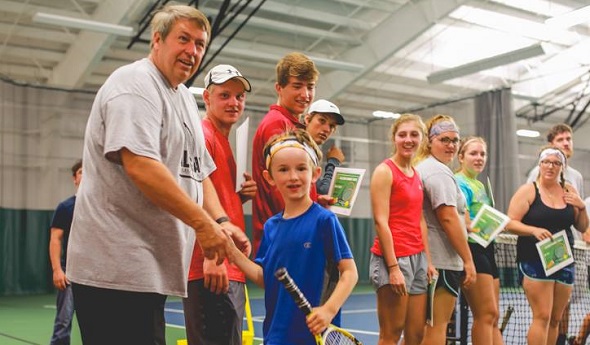
In 2016, the longtime Allegan tennis coach and former high school athletic director was named to the United States Tennis Association’s national “No-Cut Coach All-Star Team” recognizing middle and high school coaches who welcome all students to participate in the sport.
Ellis’ boys tennis teams regularly have as many as 25 players, and his girls teams when he led that program as well often approached 30. His largest team had 35 athletes.
“I think sports obviously are very good for kids and their development,” Ellis said this week. “I enjoyed (playing), and I’m trying to give other people the opportunity to enjoy athletics and tennis in particular, like I did.
“In volleyball (which he coached for four seasons in the 1970s), we had to make cuts and I absolutely hated it. So it’s nice; we keep everybody who comes out. If a senior comes out who has never played tennis before, he’s welcome to join us.”
That dedication to providing opportunities is part of what also has made Ellis the 2018 recipient of the Michigan High School Athletic Association’s Charles E. Forsythe Award.
The annual award is in its 41st year and named after former MHSAA Executive Director Charles E. Forsythe, the Association's first full-time and longest-serving chief executive. Forsythe Award recipients are selected each year by the MHSAA Representative Council, based on an individual's outstanding contributions to the interscholastic athletics community.
Ellis served as Allegan High School’s athletic director from 1983-89 and again from 2004-13, and also taught mathematics, history and government over a career in the building that stretched 39 years. Ellis has coached the boys tennis team since 1975, and coached the girls tennis team from 1981-84 and then 1990-2003, leading the boys and girls teams to a combined 32 top-10 finishes at the MHSAA Finals.
But those are only some of the local highlights. Regionally, Ellis has served as league secretary for the Wolverine Conference and hosted various MHSAA events at the District, Regional and Quarterfinal levels. Extending his impact across the state, Ellis is a long-serving member of the MHSAA Tennis Seeding Committee and has served on Tennis, Baseball/Softball Site Selection and Scholar-Athlete committees, among others. He continues to serve as secretary/treasurer and was president of the Michigan High School Tennis Coaches Association (MHSTeCA) from 1995-96.
 Ellis also served as an MHSAA registered official for 39 years in volleyball through the 2011 season and basketball for 26 years through the 1998-99 boys season.
“As a leader in athletics and especially the tennis community, Gary Ellis has influenced and inspired administrators, coaches and students for more than 40 years,” MHSAA Executive Director John E. “Jack” Roberts said. “In addition to serving as a fine athletic director representing his school, he’s long provided key insights on the best ways to conduct tennis programs in this state, from how to seed the top players at our tournament to how to include as many as possible on the local team. We admire his dedication and are glad to honor him with the Charles E. Forsythe Award.”
As mentioned, this is hardly the first time Ellis has been honored for his many contributions.
He was inducted into the MHSTeCA Hall of Fame in 2007 and named its boys Coach of the Year in 1984 and 2005 and girls Coach of the Year in 1994 – and was a nominee for the National Federation Coaches Association national award for boys for 2004-05. As an administrator, Ellis was named his region’s Athletic Director of the Year in 2011 by the Michigan Interscholastic Athletic Administrators Association (MIAAA).
Ellis previously was named Community Person of the Year in education from the Allegan Area Chamber of Commerce and received the Allegan County Outstanding People for Education Award.
“I consider Gary to be a mentor, friend and role model,” Vicksburg athletic director Michael Roy wrote in recommending Ellis for the Forsythe Award. “I know that the Forsythe Award is presented to individuals who have served interscholastic athletics. I know that of the people I know in the business, Gary Ellis is a pure example of one who serves.”
In addition to his work in schools, Ellis has served the Western Michigan Tennis Association in various roles. He’s been chairperson of the USTA/Midwest Section Junior Team Committee and worked as an official at local USTA events including national tournaments hosted by Kalamazoo College’s Stowe Stadium. He received the USTA’s Midwest Stan Malless Award recognizing his promotion of tennis in the community.
He will receive the Forsythe Award during the break after the first quarter of the MHSAA Class A Boys Basketball Final on March 24 at the Breslin Student Events Center in East Lansing.
“It’s a huge honor. To get something like that for doing the things you love doing, it’s really nice,” Ellis said. “At the end of every season I have a little bit of withdrawal. You’re so involved and so active with (coaching), and the associations with kids and parents and opposing coaches is a really neat thing.”
Ellis graduated from Battle Creek Central High School in 1970 and then attended Kellogg Community College and earned his bachelor’s and master’s degrees at Western Michigan University in 1974 and 1980, respectively. He maintains membership in the MIAAA and MHSTeCA and also the Michigan High School Coaches Association. Ellis is a member of the Allegan Lions Club and has served as president, and also is active as part of Christ Community Church and the Allegan Booster Club.
Past recipients of the Charles E. Forsythe Award
1978 - Brick Fowler, Port Huron; Paul Smarks, Warren
1979 - Earl Messner, Reed City; Howard Beatty, Saginaw
1980 - Max Carey, Freesoil
1981 - Steven Sluka, Grand Haven; Samuel Madden, Detroit
1982 - Ernest Buckholz, Mt. Clemens; T. Arthur Treloar, Petoskey
1983 - Leroy Dues, Detroit; Richard Maher, Sturgis
1984 - William Hart, Marquette; Donald Stamats, Caro
1985 - John Cotton, Farmington; Robert James, Warren
1986 - William Robinson, Detroit; Irving Soderland, Norway
1987 - Jack Streidl, Plainwell; Wayne Hellenga, Decatur
1988 - Jack Johnson, Dearborn; Alan Williams, North Adams
1989 - Walter Bazylewicz, Berkley; Dennis Kiley, Jackson
1990 - Webster Morrison, Pickford; Herbert Quade, Benton Harbor
1991 - Clifford Buckmaster, Petoskey; Donald Domke, Northville
1992 - William Maskill, Kalamazoo; Thomas G. McShannock, Muskegon
1993 - Roy A. Allen Jr., Detroit; John Duncan, Cedarville
1994 - Kermit Ambrose, Royal Oak
1995 - Bob Perry, Lowell
1996 - Charles H. Jones, Royal Oak
1997 - Michael A. Foster, Richland; Robert G. Grimes, Battle Creek
1998 - Lofton C. Greene, River Rouge; Joseph J. Todey, Essexville
1999 - Bernie Larson, Battle Creek
2000 - Blake Hagman, Kalamazoo; Jerry Cvengros, Escanaba
2001 - Norm Johnson, Bangor; George Lovich, Canton
2002 - John Fundukian, Novi
2003 - Ken Semelsberger, Port Huron
2004 - Marco Marcet, Frankenmuth
2005 - Jim Feldkamp, Troy
2006 - Dan McShannock, Midland; Dail Prucka, Monroe
2007 - Keith Eldred, Williamston; Tom Hickman, Spring Lake
2008 - Jamie Gent, Haslett; William Newkirk, Sanford-Meridian
2009 - Paul Ellinger, Cheboygan
2010 - Rudy Godefroidt, Hemlock; Mike Boyd, Waterford
2011 - Eric C. Federico, Trenton
2012 - Bill Mick, Midland
2013 - Jim Gilmore, Tecumseh; Dave Hutton, Grandville
2014 - Dan Flynn, Escanaba
2015 - Hugh Matson, Saginaw
2016 - Gary Hice, Petoskey; Gina Mazzolini, Lansing
2017 - Chuck Nurek, Rochester Hills
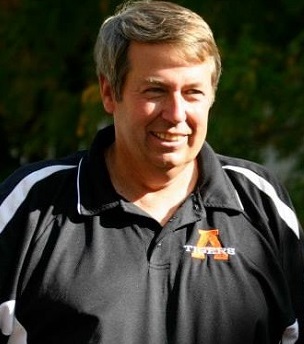
PHOTOS: (Top) Allegan boys tennis coach Gary Ellis congratulates participants during a community tennis clinic last summer. (Middle) Ellis rides in the school's Homecoming parade. (Photos courtesy of Gary Ellis.)