


We’ve Got This Right
March 1, 2013
This year's Super Bowl was an occasion for an unusual amount of commentary on the state of football safety, especially concussions.
One group called on state high school associations and football coaches associations to eliminate contact outside the defined interscholastic season. That would mean spring football practice, and during summer leagues and camps, and at all-star games.
Michigan is one of a large majority of states where schools do not allow spring football practice. Michigan is one of a minority of states where schools do not allow contact at summer camps, for which we are often criticized by out-of-state camp promoters. And Michigan is one of a smaller minority of states where schools prohibit students, coaches, officials and administrators from being involved in all-star games involving undergraduates.
While we are well ahead of the curve on out-of-season contact policies, we are in the mainstream of state high school associations studying what the appropriate limits should be on contact during early season football practice and throughout the remainder of the season. We have a task force that appears headed toward recommending that the Representative Council prescribe only one contact session per day during early season practice and only two contact practices per week after games begin.
There will be other ideas percolating and then simmering with these before any are proposed to the MHSAA Football Committee and Representative Council.
Flashback: Big Play Leads Off Big Reds
July 26, 2016
By John Johnson
MHSAA Communications Director
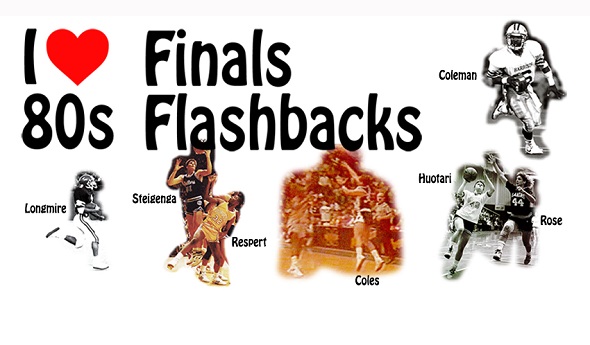
Highlighted by what was then an MHSAA Finals kickoff return record, Muskegon takes on Detroit Martin Luther King in this week’s 80s Finals Flashback series on MHSAA.tv.
The fifth game in our weekly summer series is the 1988 Class A Football Final between the Big Reds and the Crusaders.
Week of July 25 – Muskegon 16, Detroit Martin Luther King 13 – 1988 Class A Football Final – Muskegon's Marcus Longmire dashed 89 yards for a touchdown on the opening kickoff of the second half as the Big Reds downed Detroit Martin Luther King, 16-13, in the Class A Final. Longmire's TD gave Muskegon a 16-0 lead, but the Crusaders did not fold. On second down of the following series, King quarterback Zolton Hall hit David Bowden on a 76-yard touchdown pass. Hall scored with 3:36 remaining in the third to cut the Big Reds’ lead to three, but the Crusaders were unable to score again. (Click here to watch Longmire’s kickoff return)
A new game will be posted online each Monday through the week of August 22. DVDs may be purchased directly from the MHSAA.tv Website – just click the “Get DVD” button below the player.
Previous Flashbacks
July 19: Northport 80, Beal City 78 – 1988 Class D Boys Basketball Final - Watch
July 12: Detroit Cass Tech 52, Saginaw 51 – 1987 Class A Girls Basketball Final - Watch
July 5: Traverse City 24, Detroit Catholic Central 14 – 1988 Class A Football Final - Watch
June 28: Saginaw Buena Vista 33, Flint Beecher 32 – 1986 Class B Boys Basketball Final - Watch