


We’ve Got This Right
March 1, 2013
This year's Super Bowl was an occasion for an unusual amount of commentary on the state of football safety, especially concussions.
One group called on state high school associations and football coaches associations to eliminate contact outside the defined interscholastic season. That would mean spring football practice, and during summer leagues and camps, and at all-star games.
Michigan is one of a large majority of states where schools do not allow spring football practice. Michigan is one of a minority of states where schools do not allow contact at summer camps, for which we are often criticized by out-of-state camp promoters. And Michigan is one of a smaller minority of states where schools prohibit students, coaches, officials and administrators from being involved in all-star games involving undergraduates.
While we are well ahead of the curve on out-of-season contact policies, we are in the mainstream of state high school associations studying what the appropriate limits should be on contact during early season football practice and throughout the remainder of the season. We have a task force that appears headed toward recommending that the Representative Council prescribe only one contact session per day during early season practice and only two contact practices per week after games begin.
There will be other ideas percolating and then simmering with these before any are proposed to the MHSAA Football Committee and Representative Council.
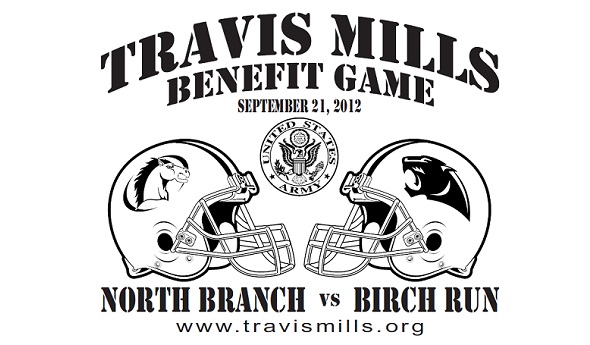
Broncos, Panthers Rally for Vulcans Hero
September 21, 2012
By Geoff Kimmerly
Second Half editor
Both North Branch football coach Patrick Forster and Birch Run coach Chris Gilliam remember facing Travis Mills when he suited up for the opposing Vassar Vulcans as a talented running back just short of a decade ago.
 And that made them more than glad to help out the U.S. Army Staff Sergeant as he recovers from serious injuries sustained during his third tour of duty in Afghanistan.
The Broncos and Panthers and their respective communities have been raising money to assist Mills, a 2005 Vassar High School graduate who according to the web site TravisMills.org, is only the fourth quadruple amputee from the wars in Iraq and Afghanistan to survive those injuries.
Mills' parents Dennis and Cheri will be presented with a donation during a brief ceremony at halftime of tonight's Panthers/Broncos football game at North Branch High School.
Mills currently is out of state, but according to a recent Tuscola County Advertiser report will be moving back to Vassar on Oct. 3, and will attend the school's Homecoming game two days. His incredible story and recovery have made national news, links to which can be found on his update web site along with donation directions and information.
For additional media coverage heading into tonight's event, click WJRT-12 and Lapeer Area Review.
PHOTO courtesy of TravisMills.org.