

As Capac's Win Wait Ends, Energy & Enthusiasm Drive New Era
By
Paul Costanzo
Special for MHSAA.com
December 21, 2021
The Capac girls basketball team and its new coach, Ryan Rossi, had been waiting a long time for the events of Dec. 11.
 For Rossi, it was the end of a 20-month wait for his wedding, which was originally planned and rescheduled twice – first in April of 2020, then later in December of that year.
That meant, however, he wasn’t in the Capac gymnasium when the team he took over this past September was able to celebrate the end of its own long wait. The Chiefs defeated Flint Southwestern 41-19 that afternoon, picking up their first win since Feb. 20, 2020.
“We screamed a lot,” Capac senior Juliana Closurdo said. “We were really excited. It almost didn’t even feel real because we haven’t experienced that in so long. I know everybody was so ecstatic. (Rossi) actually sent us all a group text and said congrats, and that he had the whole wedding party watching. That felt great, getting that support, that he was at his wedding, and he was watching us and cheering us on.”
Capac is 2-3 to start the season, a big step forward after going 0-14 in 2020-21, and just one win away from matching the program’s total over the past two seasons (three). While the wins are more than welcomed and confirmation the Chiefs are making improvements, the goals for this season are much simpler.
 “I feel like we’ve already gotten off to a successful start,” Closurdo said. “A successful year for us is just playing with joy. Last year was really rough on everybody, and I know that I haven’t played with this much happiness in a while. Being able to play and be happy on the court, and not having the pressure of having to get a win and being able to go off that momentum, it’s great.”
Rossi came to Capac from Yale, where he still is a teacher and had previously coached at the middle school and junior varsity levels. Since he wasn’t hired until the fall, he had to learn about his players through a handful of open gyms and by going through old Capac game film and some of his own, as he had coached against a few of the girls with the Yale JV.
“Also, I didn’t really care,” Rossi said. “Last year was last year. Their previous experiences were their previous experiences. Let’s go in, and the first thing we have to do is make this a place where these kids want to be. These girls made it easy. They are a great group, they’re awesome. Right away, they treated me like their family. They were really accepting.”
Rossi was impressed with the players’ enthusiasm and energy coming into the season. They noticed the same thing with their new coach.
“He always wanted us to have high energy, and he’s always telling us to believe in ourselves,” Capac senior Erica Yeashevich said. “Just the high energy he has, I feel like that was really helpful. And he put us all at the same level when he walked in.”
Capac opened the season with a 44-11 loss against Deckerville, but even in that game Rossi said he saw some glimmers of hope. That was followed by the win against Southwestern, which had Capac at .500 for the first time since 2017.
 While that win snapped the 16-game losing streak, it was the second win, 32-24 against Kimball Landmark in Game 4, that showed Rossi more about his team.
“As a team, we have really adopted the mindset of we can only control what happens one play at a time,” Rossi said. “Say we’re down 10 points early, there’s not a shot that’s going to score 10 points. We’re not scoreboard watching, we’re taking it one play at a time. If you miss a layup, that has no effect on your next shot. The girls are really adopting that mindset. In the game against Landmark, that was huge, because we were having a very poor shooting night.
“That’s been very player driven. There have been messages that we wanted them to think about, but they have taken it and ran with it. They are very much responding and making it their own, which I think is huge. That speaks to the players we have, especially the seniors.”
That mindset has led to Capac setting smaller, attainable goals as it continues to look for positive momentum within the program. The Chiefs know a Greater Thumb Conference East title isn’t likely, but that doesn’t mean they can’t push teams like Sandusky and Harbor Beach beyond what they’ve been able to in the past. And if more wins are the result of that attitude, even better.
“Honestly, I feel like our expectations aren’t that high, so a successful year for me is reaching all of the small goals, getting better and improving on last year,” Yeashevich said. “The big thing for me is just having fun playing basketball. So far, basketball has already been the highlight of my day every day this season.”
 Paul Costanzo served as a sportswriter at The Port Huron Times Herald from 2006-15, including three years as lead sportswriter, and prior to that as sports editor at the Hillsdale Daily News from 2005-06. He can be reached at [email protected] with story ideas for Genesee, Lapeer, St. Clair, Sanilac, Huron, Tuscola, Saginaw, Bay, Arenac, Midland and Gladwin counties.
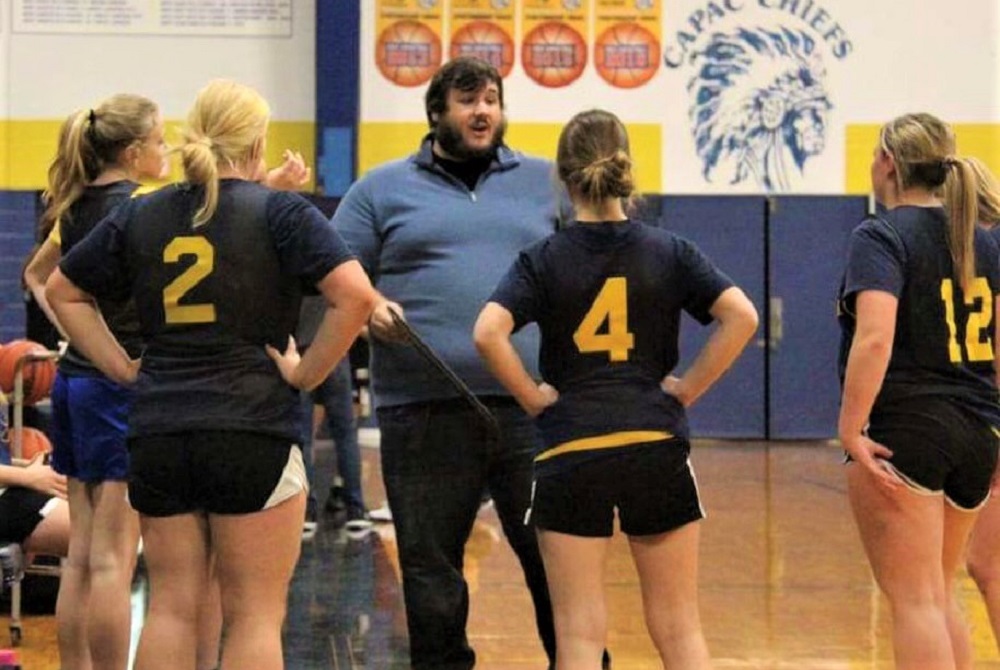
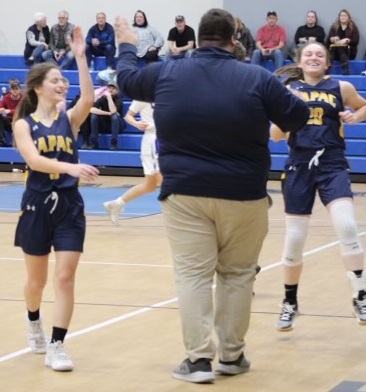
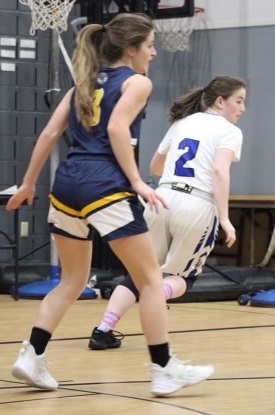
PHOTOS (Top) Capac coach Ryan Rossi talks things over with his players during a game this season. (Middle) Juliana Closurdo (3) and teammate Trinity Lietz high-five Rossi. (Below) Closurdo defends against Kimball Landmark. (Top photo by Guadalupe Rosales, middle and below photos courtesy of the Capac girls basketball program.)
Breslin Bound: Girls Report Week 3
December 17, 2012
By Geoff Kimmerly
Second Half editor
As a general rule, basketball teams evolve plenty between the first games of December through the final regular-season contests in February.
But these pre-break matchups matter just as much in the win-loss columns. And a number of games are being played right now that will surely make a difference as this season draws to a close.
This week's report includes some of the teams that have came out on the winning ends of key December battles. (Results and records based on those reported to Score Center at MHSAA.com)
1. Inkster (4-0) – The Vikings are a regular at Breslin Center and made the Class A Semifinals last season, so another great start is hardly surprising. But it's proof why Inkster remains a force – last week’s wins were 51-45 over improved Detroit Mumford and 57-51 over always-powerful Detroit Pershing.
2. Waterford Our Lady (3-1) – The reigning Class D champion has bounced back quickly from an opening-night loss to West Bloomfield. Last week, Our Lady beat Livonia Ladywood 50-38 and Mount Pleasant Sacred Heart by the same score.
3. Detroit Martin Luther King (3-0) – This is another team always in the Class A mix, and it got a big win Saturday – 56-48 over returning Class A Semifinalist Ann Arbor Huron, which earlier in the week had defeated Detroit Country Day 65-58. King also beat Detroit East English 61-7.
4. Johannesburg-Lewiston (5-0) – The Cardinals lost only two regular-season games last season, both times to Ski Valley Conference rival Gaylord St. Mary. But they got a little bit of revenge last week with a 50-48 win over St. Mary after also beating East Jordan 57-43.
5. Holt (5-0) – The Rams are again setting up nicely to contend in the strong Capital Area Activities Conference Blue. They beat nonleague foe St. Johns 52-48 and then Lansing Everett 48-39 to keep early pace with other frontrunners Grand Ledge and East Lansing.
6. Napoleon (5-1) – Napoleon’s 15-7 finish in 2011-12 included splits against Michigan Center and Grass Lake. The Pirates got an early upper hand on both last week, beating Michigan Center 49-45 and Grass Lake 47-42.
7. Traverse City St. Francis (4-1) – The Gladiators opened last season 14-1, with that lone loss to Cadillac – which they beat last week 55-50. St. Francis also defeated Kalkaska 44-36 on Friday.
8. Pewamo-Westphalia (3-2) – The Pirates got off to a rough start with opening-week losses to Class B Williamston and Lakewood. But back in familiar territory in the Central Michigan Athletic Conference, they've won three straight – including 51-42 last week over returning Class D Semifinalist Portland St. Patrick.
9. North Farmington (3-1) – The Raiders are coming off a 10-12 season that included a pair of losses to Pontiac. But North Farmington earned the early edge this time with a 59-58 win over Pontiac, followed by a 58-48 win over West Bloomfield.
10. Powers North Central (5-1) – After opening with a 13-point loss to returning Class D Semifinalist Crystal Falls Forest Park, North Central hasn't fallen again. The Jets beat Stephenson 62-51 and Munising 50-22 to get nearly halfway to last season’s win total of 11.
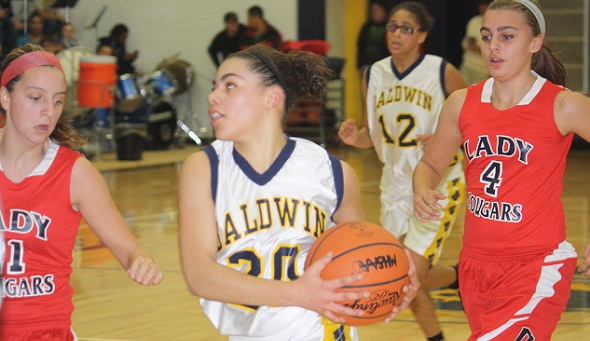
PHOTO: Big Rapids Crossroads (in red) defeated Baldwin on Thursday to move to 4-0 this season. (Click to see more at HighSchoolSportsScene.com.)