

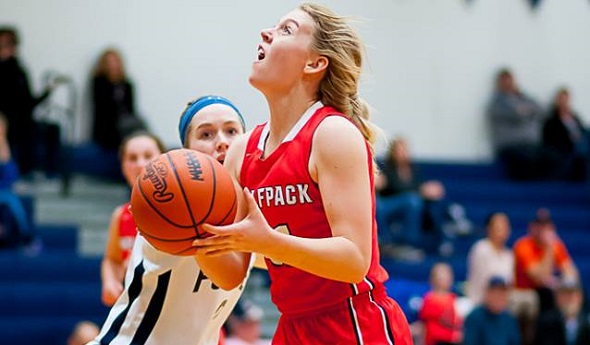
Countdown to Calvin: District Preview
February 26, 2018
By Geoff Kimmerly
Second Half editor
Over the next three weeks, 700 Michigan high school girls basketball teams will play to become one of four to hoist trophies as 2017-18 MHSAA champions.
 The first steps toward achieving that ultimate goal will come at District tournaments tipping off tonight all over our state.
Over the next two weeks, we’ll alter the format of our Countdown to Calvin reports – powered by MI Student Aid – still looking at some of the key results from last week but also at three of the most eye-catching brackets in each class for the upcoming week of playoffs.
This week, that means we’ll take closer looks at 12 Districts total in addition to scores from last week that saw some of the state’s best match up one more time before single elimination games begin. (Click here to navigate brackets for all 128 tournaments.)
Week in Review
The countdown of last week’s five most intriguing results:
1. Detroit Edison 57, Saginaw Heritage 55 (2OT) – We’ll know March 17 if this titanic matchup featured the eventual champions in Class C and Class A, respectively.
2. Kingsley 70, Maple City Glen Lake 66 – Kingsley completed a perfect regular season and an outright Northwest Conference championship with this win over the second-place Lakers.
3. Wayne Memorial 50, Howell 46 – After coming back to beat Hartland in the semifinal, Wayne won this matchup of Class A contenders to claim the overall Kensington Lakes Activities Association title.
4. Traverse City St. Francis 56, Charlevoix 47 – St. Francis avenged a two-point loss to Charlevoix from Feb. 2 to break a first-place tie and clinch the Lake Michigan Conference title.
5. Ypsilanti Arbor Prep 44, Harper Woods Chandler Park 43 – Another Class C favorite, Arbor Prep, avenged a 24-point loss to the Class B Eagles from Jan. 25.
Districts at a Glance
These could be among our most competitive brackets. Host sites are in bold:
CLASS A
Flint Carman-Ainsworth
Fenton (14-6), Flint Carman-Ainsworth (18-2), Flint Southwestern (2-15), Flushing (16-4), Grand Blanc (10-10), Linden (0-19), Swartz Creek (9-11).
Reigning Class A champion Flushing held on to win another Flint Metro League championship and has won 16 of its last 18. But host Carman-Ainsworth is the likely favorite thanks in part to a 21-point win over the Raiders in the season opener. Carman-Ainsworth finished second in the Saginaw Valley League to one-loss Heritage, with its only losses to Heritage and reigning Class B champion Detroit Country Day. Carman-Ainsworth and Flushing would see each other in the District Final – but Fenton could get in the way. The Tigers face Flushing in tonight’s opener and beat Flushing by 18 just two weeks ago.
Midland
Bay City Central (3-17), Bay City Western (17-3), Midland (13-7), Midland Dow (15-5), Mount Pleasant (11-9), Saginaw Heritage (19-1).
These teams all play in the Saginaw Valley League, and that familiarity could be advantageous and dangerous for just about every team in the field. Heritage is a favorite to win the whole thing this season – but on its side of this bracket, Mount Pleasant has enjoyed its best finish in years and Midland bounced back from a 0-3 start to place fifth in the 14-team league. Dow and Western meet to start the other side of the bracket, with the Chargers winning their lone meeting by 12 two weeks ago – but the Warriors hoping to re-catch the momentum that helped them to a 13-0 start.
Owosso
DeWitt (19-1), East Lansing (20-0), Grand Ledge (12-8), Lansing Waverly (11-9), Owosso (5-15), St. Johns (14-6).
There may be no more closely contended recent rivalry in the state than DeWitt versus East Lansing. Those Class A contenders have played three straight games decided by a point. The Trojans, boasting recently announced Miss Basketball candidate Jaida Hampton, won the Dec. 5 meeting 52-51 and also last season’s District Final over the Panthers 48-47 – after DeWitt won last season’s first matchup 59-58. They would face off again in this District Final. But don’t forget: Grand Ledge made back-to-back Class A Quarterfinals in 2013 and 2014 and the Semifinals the second time, and St. Johns made the Semifinals only two seasons ago.
CLASS B
Battle Creek Pennfield
Battle Creek Pennfield (15-5), Comstock (19-1), Marshall (10-10), Olivet (11-9), Parchment (6-14).
Comstock has been building to a season like this for the last five, and has increased its win total for the fourth straight already this winter. The Colts surely are looking forward to their first game this week against Marshall on Wednesday – the Redhawks have ended Comstock’s last four seasons. Marshall could be dangerous though with four wins in its last five games after making the Class B Semifinals last season and winning Class B in 2016. On the other side of the bracket, Pennfield finished third, two spots ahead of Marshall in a strong Interstate 8 Athletic Conference. The Panthers skidded a bit the last few weeks with three losses over their last five games, but those losses came to the other three top teams in the league.
Big Rapids
Alma (15-5), Big Rapids (18-2), Clare (11-8), Remus Chippewa Hills (3-17), Shepherd (6-14), Stanton Central Montcalm (20-0).
Central Montcalm has jumped from seven to 12 to 17 and now 20 wins over the last four seasons and won the Central State Activities Association Gold with wins of nine and seven points over Big Rapids. Those were the only defeats this season for the host Cardinals, and a Semifinal rematch would be one of the state’s biggest Wednesday games. But Big Rapids can’t look past Alma in the opener – the Panthers finished second to Freeland (18-2) in the Tri-Valley Conference Central. On the other side of the bracket, Clare tied for third in a competitive Jack Pine Conference after sharing the league title a year ago.
Kalkaska
Benzie Central (16-4), Cadillac (3-17), Kalkaska (15-5), Kingsley (20-0), Ludington (12-8), Manistee (11-9), Reed City (14-6).
Kingsley joins Central Montcalm as one of only two undefeated teams left in Class B, and the Stags’ run included handing Benzie Central two of its defeats. Kingsley would see Lakes 8 Conference runner-up Ludington in a District Semifinal, but wouldn’t see Benzie or Kalkaska until the championship game. Those two could meet Wednesday. Benzie must get past a Reed City team that finished fourth in a strong CSAA Gold – see references to Central Montcalm and Big Rapids above – while Kalkaska must get past a Manistee team that has won five of its last six.
CLASS C
Ishpeming
Gwinn (9-11), Ishpeming (17-3), Ishpeming Westwood (14-6), Negaunee (20-0).
This is an all-Mid-Peninsula Athletic Conference District, and these are four of the top five finishers. Negaunee improved five wins this regular season despite scares from both Ishpeming and Westwood – the Patriots missed breaking up the perfect run by just a basket on Jan. 19, and they and Negaunee face off on one side of the bracket Wednesday. Ishpeming, which got within seven of Negaunee on Feb. 10, lost only to the Miners and Westwood this season but got a close game from Gwinn in their first meeting Jan. 9.
Laingsburg
Bath (13-7), Brighton Charyl Stockwell (5-12), Byron (16-4), Dansville (2-18), Laingsburg (17-2), New Lothrop (18-2).
Host Laingsburg’s only losses this season were to reigning Class C runner-up Pewamo-Westphalia, but those two wouldn’t meet again until the Regional Semifinal. However, on the other side of this bracket Genesee Area Conference White champion New Lothrop won 18 straight before losing to Class B contender Goodrich last week, and Byron shared the GAC Blue title. They and Bath, also from Laingsburg’s Central Michigan Athletic Conference, will provide a strong challenger for this District title.
Traverse City St. Francis
Grand Traverse Academy (12-7), Manton (17-3), Maple City Glen Lake (18-2), Traverse City St. Francis (17-3).
Tonight’s opener will be one of the most intriguing in the state regardless of Class. Glen Lake finished second in the Northwest Conference with its two defeats both to Class B Kingsley (see above), and the Lakers beat St. Francis 60-49 on Dec. 6. St. Francis, meanwhile, finished off a Lake Michigan Conference championship with a win over rival Charlevoix last week (also see above). On the other side of the bracket, Manton also is a league champion, in the Highland Conference, and Grand Traverse Academy started 11-3 before running into a rough patch over the last few weeks.
CLASS D
Adrian Lenawee Christian
Adrian Lenawee Christian (19-1), Jackson Christian (7-13), Morenci (16-4), North Adams-Jerome (7-13), Waldron (15-5).
The host Cougars would appear a strong favorite. Their only loss was by a point to Class A Monroe (12-8) on Jan. 9, and they downed possible District Semifinal opponent Morenci 61-42 a week ago. However, Morenci has two 1,000-point scorers and is coming off a Tri-County Conference championship. The Bulldogs must be careful to not look past Southern Central Athletic Association Central champion Waldron tonight, however. The other side of the bracket may have the teams with lesser records, but their third meeting could be a classic after Jackson Christian edged North Adams-Jerome by only two and six points during the regular season.
Battle Creek St. Philip
Athens (16-4), Battle Creek Calhoun Christian (16-4), Battle Creek St. Philip (11-9), Bellevue (18-2), Marshall Academy (0-11).
Bellevue and Athens finished first and second, respectively, in the SCAA West, and are on opposite sides of this bracket. St. Philip also plays in that league, and four of its losses came to those two teams. Calhoun Christian won the Mid-South Conference but won’t be unfamiliar with the competition after playing and falling to all three SCAA teams during the season’s first two weeks. The Cougars are 15-1 since a 1-3 start.
Onaway
Hillman (19-1), Onaway (10-9), Posen (10-8), Rogers City (15-4).
Hillman won its fourth straight North Star League Big Dipper title, and Rogers City has finished runner-up the last three seasons – this time the Tigers won their meetings by three and 13 points. They meet in one District Semifinal on Wednesday, while NSL Little Dipper champion Posen takes on host Onaway, which came in fourth in a Ski Valley Conference featuring at least a pair of possible Class D state contenders.
PHOTO: Laingsburg, here in a win over Fowler on Jan. 25, is among District hosts that could earn championships this week. (Click for more from Varsity Monthly.)
Breslin Bound: Girls Report Week 12
February 22, 2016
By Geoff Kimmerly
Second Half editor
One week remains in the girls basketball regular season, and contenders are gearing up for District tournaments that begin a week from today.
Most weeks during the season, we check in with four teams from each class that have been especially impressive. After a bit of a hiatus, here’s a look at 16 more to remember when the tournament begins.
Class A
Allen Park (16-2) – After finishing second to Brownstown Woodhaven a season ago, Allen Park clinched the Downriver League championship Friday with a 56-20 win over Taylor Truman. The Jaguars’ only losses were to Woodhaven in their second meeting and Plymouth in the season opener.
Bloomfield Hills Marian (13-6) – The Mustangs have rebuilt quite a bit after winning last season’s Class A title, and finished only third in the Detroit Catholic League Central. But they beat second-place Warren Regina in the semifinal and then rival and league champion Farmington Hills Mercy 48-29 in Sunday’s A-B league tournament final.
Detroit Martin Luther King (16-1) – The Crusaders came back from their only loss this season – 68-65 to Renaissance on Dec. 17 – to beat Renaissance 68-66 and win their fifth straight Detroit Public School League Tournament title. King previously won the PSL East Division 1 title this winter.
Dexter (17-1) – The Dreadnaughts finished a perfect run in the Southeastern Conference White last week, defeating Ypsilanti Community 37-28, to win the league title outright after sharing the championship with Chelsea last season.
Class B
Bay City John Glenn (17-1) – The Bobcats bounced back from their lone loss this season, 50-47 two weeks ago to Ypsilanti Arbor Prep, to put 40-point wins on Tawas and Pinconning over the last two weeks and finish a dominating run through the North East Michigan Conference.
Detroit Country Day (18-1) – Since falling to Saginaw Heritage on Dec. 29, Country Day has won 14 straight. The slate has an argument for the state’s most impressive – wins over Detroit Renaissance, Haslett, Southfield-Lathrup and Ypsilanti Arbor Prep are among the brightest highlights.
Fruitport (17-1) – The Trojans haven’t fallen since Dec. 11 to Spring Lake and secured a share of the Lakes 8 Conference championship with a 46-19 win over Muskegon Catholic Central on Friday. Fruitport finished only fourth in the league a year ago.
Marysville (15-2) – The Vikings have won 13 straight since falling to Country Day on Dec. 17 and 12 straight league games to again claim the Macomb Area Conference Gold title outright after sharing the championship with Center Line last season.
Class C
Johannesburg-Lewiston (17-1) – The Cardinals wrapped up a share of the Ski Valley Conference title with a 60-57 win over Onaway on Thursday and can claim it outright by beating Pellston on Tuesday. They finished second to Bellaire last season, but split with Bellaire this winter.
Morley Stanwood (17-2) – The Mohawks claimed a share of the Central State Activities Association Silver title Friday with a 60-34 win over Holton, but they’ll need to beat reigning champion Kent City this week to win the title outright. Morley Stanwood was second last season but beat Kent City 55-41 in their first meeting, Jan. 22.
Negaunee (14-4) – The Miners can finish a perfect run through the Mid-Peninsula Athletic Conference with a win over Ishpeming this week, and also avenge one of their losses, to Marquette on Dec. 15. Negaunee tied for fourth in the league and finished only 9-13 a year ago.
Sandusky (16-2) – The second-place Redskins will need help in the Greater Thumb Conference East title race from third-place Brown City – which plays league leader Marlette this week in the final GTC game for those teams. But Sandusky’s only losses this season were to Marlette, by 12 and seven points.
Class D
Climax-Scotts (17-2) – The league-leading Panthers finished a season sweep last week of rival Battle Creek St. Philip, beating the Tigers 42-39 after finishing second to St. Philip in the Southern Central Athletic Association West a year ago.
Crystal Falls Forest Park (16-3) – The Trojans hold a half-win lead on Bark River-Harris in the Skyline Central Conference West standings thanks to Munising’s recent upset of the former league leader; Forest Park must beat Bark River-Harris this week to clinch the title after losing 51-25 in their first meeting Dec. 4.
Gaylord St. Mary (16-3) – Despite finishing second to Johannesburg-Lewiston in the Ski Valley Conference, the Snowbirds should be optimistic heading into the tournament riding five straight wins and with their only losses by a combined four points to the Cardinals.
Mendon (15-3) – The Hornets clinched the Berrien-Cass-St. Joseph Conference Blue title outright with a 46-27 win over Cassopolis on Friday and are already two wins better than last year’s team, which finished third in the old BCS East.
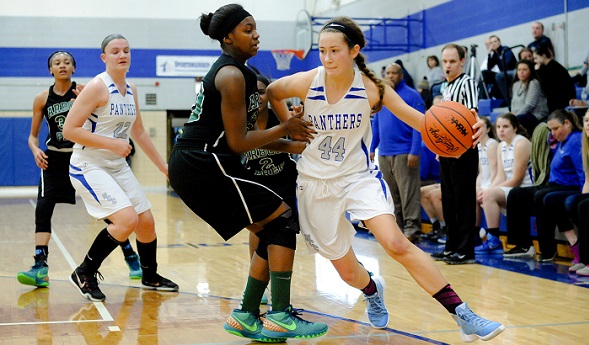
PHOTO: Ypsilanti Arbor Prep and Saginaw Nouvel are two teams expected to contend when the MHSAA Tournament begins next week. (Click for more from HighSchoolSportsScene.com.)