

Country Day Two-Time Champ Moore Building Perennial Winner at Harvard
By
Keith Dunlap
Special for MHSAA.com
July 16, 2026
Carrie Moore says her high school sports experience in Michigan has “left a lifetime impression on me.”
 Back in the early 2000s, Moore certainly had a fulfilling one while starring as a two-sport standout at Detroit Country Day.
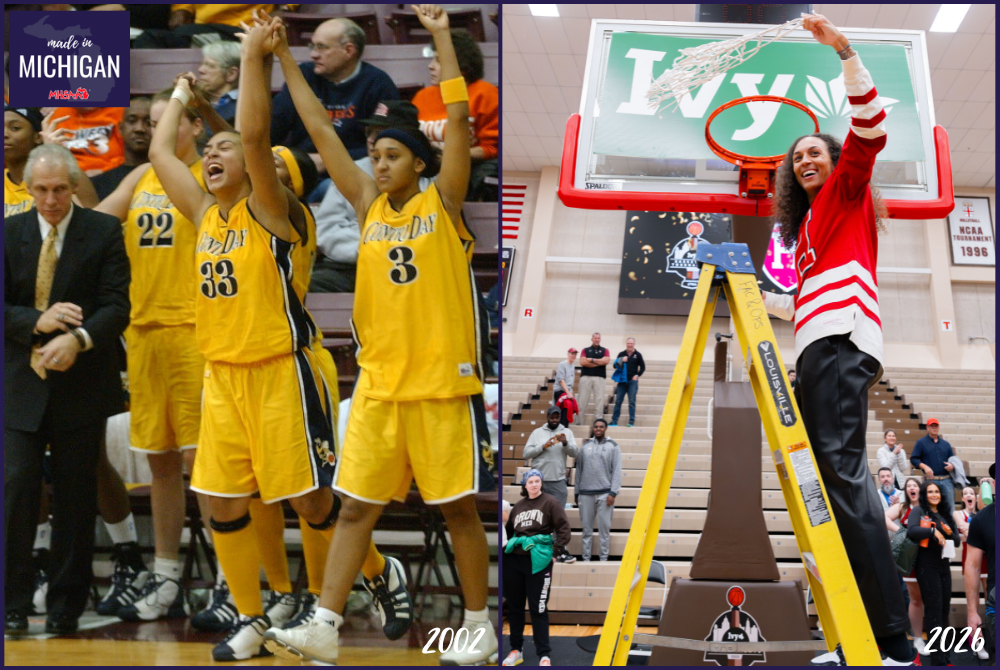
In basketball, she was a four-year varsity performer for legendary head coach Frank Orlando, helping guide Country Day to Class B titles in 1999 as a freshman and 2002 as a senior. During the latter, she was a first-team all-state performer and scored a team-high 18 points in a Semifinal win over Flint Powers Catholic.
Moore also was a standout soccer player on that Country Day varsity powerhouse for three years.
“Who I am as a leader, as a competitor, and a team player is because of what I learned about the process in high school as a student-athlete,” Moore said. “The pursuit of excellence isn’t always easy, but I learned at such a young age that I can do hard things. I was challenged because I was surrounded by the best on the court and in the classroom, but ultimately it brought out the best version of myself and I was so prepared for what came next after graduation.”
Make no mistake about it, Moore has continued to do great things since graduating from Country Day in 2003.
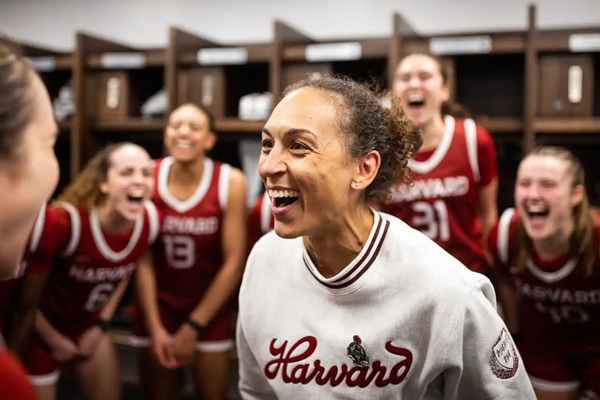
She is currently the head women’s basketball coach at Harvard, where she just completed her fourth season and has amassed an 80-41 record with the Crimson. This past season, she helped guide her team to a 20-12 record and the Women’s Basketball Invitational Tournament.
Moore was a terrific college player at Western Michigan, finishing as the school’s all-time scoring leader with 2,216 points and earning Mid-American Conference Player of the Year in 2007 after averaging 25.4 points per game. But she initially wasn’t planning on being a coach once her time at Western was over.
After playing one season professionally in Poland and then being cut twice by WNBA teams during training camp, Moore had an opportunity to join the coaching staff at Princeton in 2010.
From there, the coaching bug bit her, so to speak.
“Being a part of that program allowed me to see the lasting impact I could have on young women in growing them as people and players, and ultimately, give back to the game that gave me so much,” Moore said.
Moore was on the staff for two seasons at Princeton, and then moved on to Creighton, where she spent five years as an assistant coach.
Following a second stint as an assistant coach at Princeton that lasted four years, Moore moved on to North Carolina, where she spent two years as an assistant coach and recruiting coordinator for the program.
 A native of Lathrup Village, Moore then briefly returned to her home state for the 2021-22 season, serving as an assistant coach and recruiting coordinator for University of Michigan’s team that went 25-7.
After that season, the opportunity at Harvard came about, and Moore has proved she can be successful running a program as well.
In her first season, Moore set a program record for most wins by a first-year head coach (20). Two years later, she guided the Crimson to its first Ivy League Tournament title and back to the NCAA Tournament for the first time in 18 years.
Even to this day, Moore is influenced by her time at Country Day and in Michigan. She speaks regularly to Orlando, picking his brain for advice or an answer to any other question that might come up.
“I keep in touch with Coach O as often as I can,” Moore said. “He reaches out after big wins or tough losses and always reassures his belief in me as a leader of young women. His mantra ‘Believe It’ is living on within our program at Harvard, and I hope he feels deeply connected to it because of it. I will always honor him in any way that I can, as he has shaped me greatly as a human and coach.”
Moore hasn’t had a player from her home state on her Harvard roster. But she said Michigan is an important recruiting area, and she’s keeping an eye out for prospects.
“I’m very hopeful that it will happen one day,” Moore said.
2026 Made In Michigan
July 9: Multi-Sport Career at TC West Helps Gillis Thrive as Pro in Game She Once Left Behind - Report
July 2: Inspired by Home, Eager to Give Back, Spencer Hosts Hoop City Alumni Games - Report
PHOTOS (Top) At left, Detroit Country Day’s Carrie Moore (33) celebrates with her teammates at the end of a Class B Semifinal win over Flint Powers Catholic in 2002. At right, Moore holds up the net after making the last cut this past season to celebrate Harvard’s Ivy League Tournament championship. (Middle) Moore enjoys a moment with her Crimson players. (Harvard photos courtesy of the Harvard athletic department.)

Program Priorities
January 10, 2014
Many school districts face more requests from their constituents for sports programs than they have the resources to accommodate, so they are forced to make very difficult decisions. For three decades, when I’ve been consulted, I have offered and stood by this advice.
First, I advance the premise that if the activity is educational, there is just as much potential for the education to occur at the junior high/middle school and subvarsity levels as at the varsity level. Just as we would not discriminate against one race or gender, we should not disadvantage one age or ability level. In fact, with a little less pressure to win, it is likely to see more education at subvarsity levels and more reason to sponsor them.
Second, I advocate the position that schools should avoid sponsorship of any activity for which a qualified head coach cannot be secured. Qualified personnel are, in order of priority:
-
a teacher within the building who has current CPR certification and completed CAP.
-
a teacher within the district who has current CPR certification and completed CAP.
-
a teacher in another district who has current CPR certification and completed CAP.
-
a certified teacher from the community who has current CPR certification and completed CAP.
-
a non-certified person who has current CPR certification and completed CAP.
I urge schools not to descend lower than this for program leadership. Coaches are the delivery system of the education in educational athletics; they are the critical link in the educational process. More problems occur than are worth the effort if the program is in the hands of an unqualified coach.
Next, I urge that schools rank sports on the basis of cost per participant, and give higher priority to sports that spread funds over the greatest number of participants.
Next, I urge that schools place lowest in priority the sports that cannot be operated on school facilities and create transportation, supervision and liability issues, and give higher priority to those conducted at or very near the school.
Next, I urge that schools place lowest in priority the sports which are most readily available in the community, without school involvement. If resources are precious, then duplicating school programs should be a low priority; doing what the community can’t do or doesn’t do should be given a much higher priority.
While I’m a fan of school sports, I recognize that an athletic program has as much potential to do harm as to do good. Programs without qualified coaches that are conducted for small numbers of students at remote venues and without comprehensive school oversight and support may create more problems for schools than the good they do for students.
Bare bones budgeting will require brutally honest assessments based on priorities like these.