

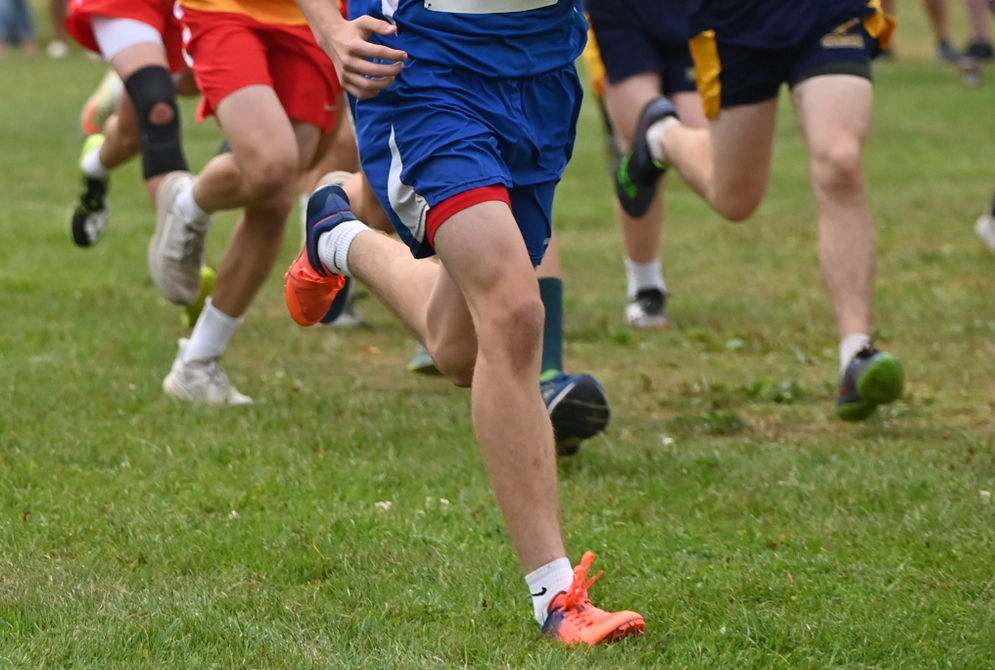
Be the Referee: Cross Country Interference
By
Paige Winne
MHSAA Marketing & Social Media Coordinator
October 31, 2023
Be The Referee is a series of short messages designed to help educate people on the rules of different sports, to help them better understand the art of officiating, and to recruit officials.
Below is this week's segment – Cross Country Interference - Listen
I am running a great race at Michigan International Speedway. I’m about two miles into the 3.1-mile event, and I am on track to set a PR for the season.
As I run towards the next turn, a runner a few steps to my left, cuts right in front of me, causing me to slow down and nearly stumble. I regain my balance and keep going – but lose precious seconds during the altercation. Is interfering with a runner a penalty?
It is. If a race official sees a runner bump, trip, or run across another runner’s path causing them to change course or lose their natural rhythm, it’s interference. The runner charged with interference is disqualified. The runner who was interfered with continues on with his or her race.
Previous Editions
Oct. 24: Soccer Overtime - Listen
Oct. 17: Tennis Spin - Listen
Oct. 10: Blocked Kick - Listen
Oct. 3: Volleyball Double & Lift - Listen
Sept. 26: Registration Process - Listen
Sept. 20: Animal Interference - Listen
Sept. 13: Feet Rule on Soccer Throw-In - Listen
Sept. 6: Volleyball Jewelry - Listen
Aug. 30: Football Rules Similarities - Listen
Aug. 23: Football Rules Differences - Listen
Litzner Completes Career Finals Sweep to Set Pace at UP Boys XC Finals
By
John Vrancic
Special for MHSAA.com
October 18, 2025
MUNISING — It’s not often a cross country runner gets to end his or her high school career as a four-time Upper Peninsula Finals champion.
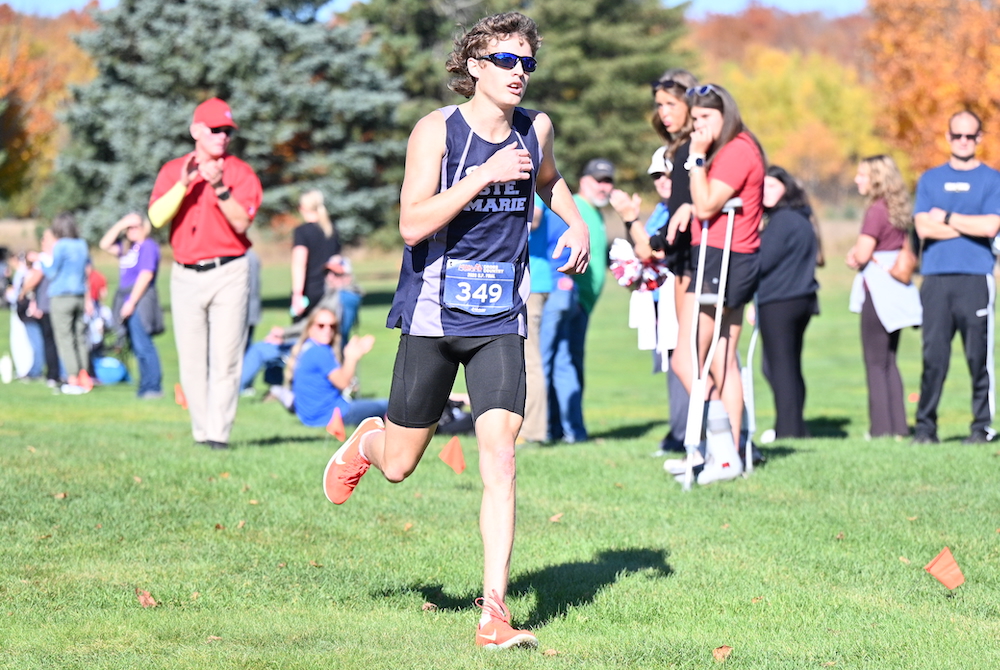
Sault Ste. Marie senior Gabe Litzner wasn’t going to be denied on this sunny and warm Saturday, however, completing the sweep by covering the Pictured Rocks Golf Course 3.1-mile course in 15:58.3.
He was followed by Marquette seniors Rorik Holmquist at 16:15.8 and Peter Argeropoulos (16:24.5) and junior Lucas Ballard (16:40), and Sault Ste. Marie senior Shea Armstrong (16:54.9).
“It’s awesome to look back at all the memories and friends I made,” Litzner said. “It feels like the conditions were a lot better last year. It warmed up quickly, and I think it caught everybody off guard. We’ve had quite a few colder races. The temperature had been in the 50s nearly every day.
“The Marquette guys were definitely pushing me throughout the race. I used a lot of the same strategy as last year. I followed a conservative approach in the first mile, then took off.”
Marquette captured its seventh-straight Division 1 title with 34 points. Sault was runner-up for the seventh consecutive time at 43, and Houghton placed third with 84.
Litzner became the first boys runner since 2019 to take a fourth U.P. championship, following Brimley’s Austin Plotkin, who earned top honors four times in a row in Division 3.
“Gabe and Shea did what they do,” Sault coach Jim Martin said. “We had some kids step up. One of our freshmen (Drew Burtt) really stepped up. We had five guys run good races. They found a way to get it done.”
Division 2
Painesdale Jeffers made it five team titles in a row, placing seven racers among the top 14 and scoring 23 points. The Jets were followed by Rudyard with 51 and Munising with 117.
“On the first day of practice we talked about it, and the biggest accomplishment is all seven boys and both girls medaled,” Jeffers coach Sam Kilpela said. “It ended up being a great day.
"This speaks volumes for our program. Overall, we stayed healthy, and on the last day we finished the job. This is the first time in our school history we won it five years in a row.”
Jeffers senior Cameron Anderson won an individual Finals championship for the first time, in 16:41.1, followed by classmate Landon Larson (17:33.4), Rudyard senior Steven Kirschner (17:51), Jeffers sophomore Branson Anderson (18:07) and Pickford junior Jacob Mitchell (18:11.6).
Division 3
Crystal Falls Forest Park clinched its first Division 3 championship with 58 points, followed by St. Ignace with 71 and 2024 champ Engadine at 91.
“This is a very special day,” Forest Park coach D.J. Rasner said. “I couldn’t be more proud of the boys. They worked so hard all year. Having a full team put us in a better situation. We got our fifth runner halfway through the season, and it gave us a lot of momentum. I think we’re also gaining some momentum in our school. More kids want to be a part of this.”
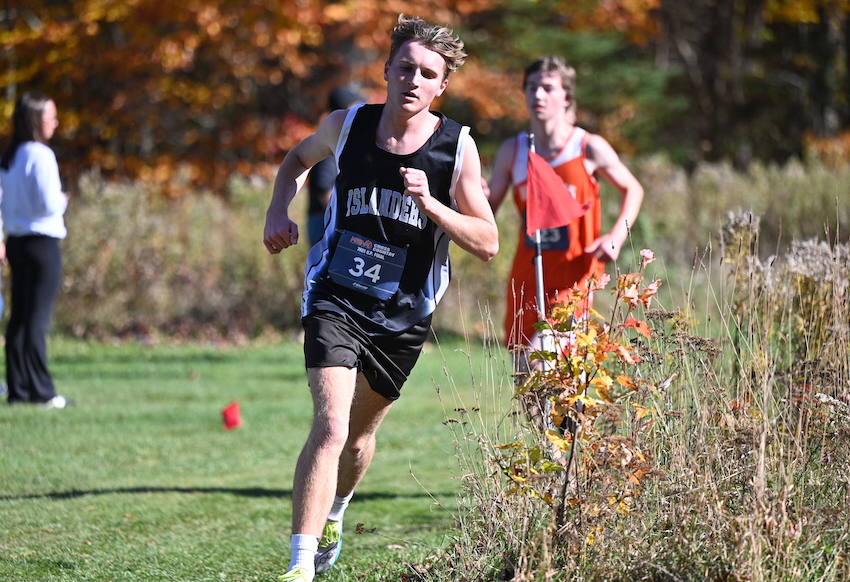
Cedarville/DeTour junior Ethan Snyder gained the top individual honor at 17:32, becoming the first from his school to take a U.P. title since 2004 when Cedarville’s Chad Schlosser was crowned champion.
Ishpeming junior Kemper Gearhart was runner-up at 17:51.7. He was followed by Rock Mid Peninsula freshman Ashdeyn Gerow in a personal-best 17:55, Engadine sophomore Nate Stielstra (18:13.4) and St. Ignace senior Dalton Champion (18:30.9).
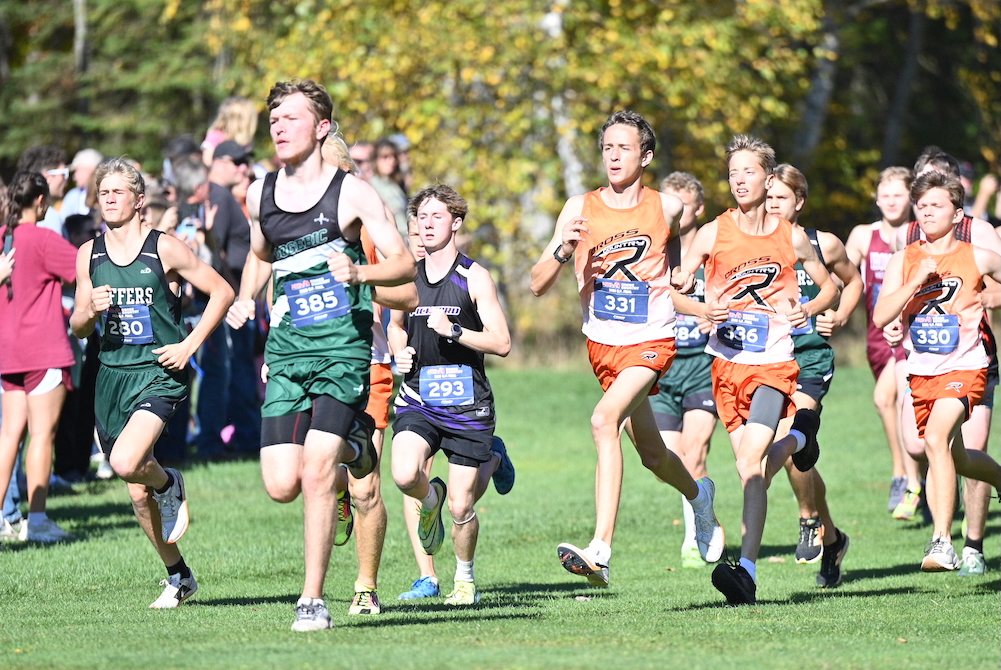
PHOTOS (top) Sault Ste. Marie's Gabe Litzner is the first to cross the finish line in the UP Division 1 Boys Final on Saturday in Munising. (Middle) At the beginning of the Division 2 Final, Painesdale-Jeffers' Cameron Anderson (280), Wakefield-Marenisco/Bessemer's Sean Lake, Pickford's Jacob Mitchell (293), and Rudyard's Eli Folkersma (331), Seth Templeton (336) and Oliver Dankert (330) lead the field. (Below) Cedarville/DeTour's Ethan Snyder takes over the lead in the Division 3 race. (Photos by Cara Kamps.)