


High 5s - 4/24/12
April 24, 2012
Each week, Second Half gives "High 5s" to multiple athletes and a team that have performed exceptionally on the field or made a notable impact off of it.
Please offer your suggestions by e-mail to editor Geoff Kimmerly at [email protected]. Below are this week's honorees:
 Mallory Weber
Northville senior
Soccer
Weber, a two-time Division 1 all-state forward, leads one of the best teams in the state. Northville is 5-0-2 and ranked No. 3, with its most significant win so far coming last week, 1-0 over reigning Division 1 champion and current No. 5 Novi. Although Weber did not score that goal, she did help open up the field by drawing two and at times three defenders. She has nine goals and five assists this season, and has signed with reigning Big Ten regular-season champion Penn State after also considering the University of Maryland and the University of Miami (Fla.). She also played basketball at Northville.
For love of the game: "I love soccer. It's so competitive. It's just fun. It's fast-moving; basketball you stop so much, but in soccer you're always continuing."
I learned the most about soccer from: "Probably my (club) coach Andy Vanover. He was my coach for probably six years, and he taught me to never give up. That work ethic is part of what makes my game so hard to defend."
I model my game after: FC Barcelona star Lionel Messi. "Just how he's so good with his foot skills. That's the biggest part of my game I try to work on."
Up next: Weber is undecided on her major at Penn State, but is considering something in food science and nutrition. "I just like the whole thing of how food affects your body, how it plays into your performance."
 Jake McFadden
Clare senior
Track and Field
McFadden won the 110-meter hurdles (14.9 seconds), the 300 hurdles (39.3) and the 200 dash (22.3) on Saturday at the Remus Chippewa Hills Invitational as Clare scored 174 points to finish first. He's the reigning MHSAA Division 3 champion in both hurdles races and helped Clare to a third-place team finish at the 2011 Final. He also owns school and Jack Pine Conference records in the 110 (14.82) and 300 (39.28), according to a report by the Mount Pleasant Morning Sun. McFadden played football in previous falls until this school year, when he switched to cross country to help him get into better shape for track season.
Up next: McFadden has signed to run track at Michigan State University, and will study biomedical engineering. "I just like the working-with-my-hands aspect, making new things (like) replacements for hips and knees, making innovations in that kind of stuff."
Quick learner: McFadden shot put and ran on a relay in junior high, but didn't try hurdling until high school. "I just watched a lot of film on myself, just fixed stuff there."
I look up to: "I'd say my brother (Mike McFadden, a 2010 Clare grad). He's the one who really got me into track. He played baseball freshman year and ran track sophomore year, and he really liked track. I wanted to follow in his footsteps and see what I could do."
Crossing over: "I played football every year but senior year. I ran cross country this year. It was a good experience, got me in shape. I ran about what I wanted to run, time-wise."
 Stevensville Lakeshore softball
In a battle of top-ranked teams, Stevensville Lakeshore -- ranked No. 1 in Division 2 -- downed Division 1 No. 1 Mattawan 4-3 in eight innings to win Saturday's Mattawan Invitational. The Southwestern Michigan Athletic Conference rivals also met in last season's Mattawan championship game, with Mattawan winning in eight innings, and again in last weekend's Portage Invitational final -- a 4-2 Wildcats win. Mattawan had won 38 straight games before falling to Portage Central earlier Saturday.
Lakeshore also beat Division 1 No. 3 Grandville, 7-1, and Vicksburg 6-1. The Lancers improved to 11-2 with the tournament sweep.
This spring's previous honorees
Sarah Appold, Saginaw Valley Lutheran softball
Nick Stiles, Bath baseball
Lessons from Multi-Sport Experience Guide Person in Leading New Team
By
Pam Shebest
Special for MHSAA.com
August 1, 2024
PARCHMENT — When Amanda Person was in sixth grade, her family hosted an international student from Japan.
 Until then, soccer was the main sport for her family – but that soon changed.
“Naoki wanted to play tennis,” Person said. “He started playing and then my sister (Marissa) started playing, and then I started playing.”
That passion for both sports only increased during her four years at Parchment High School.
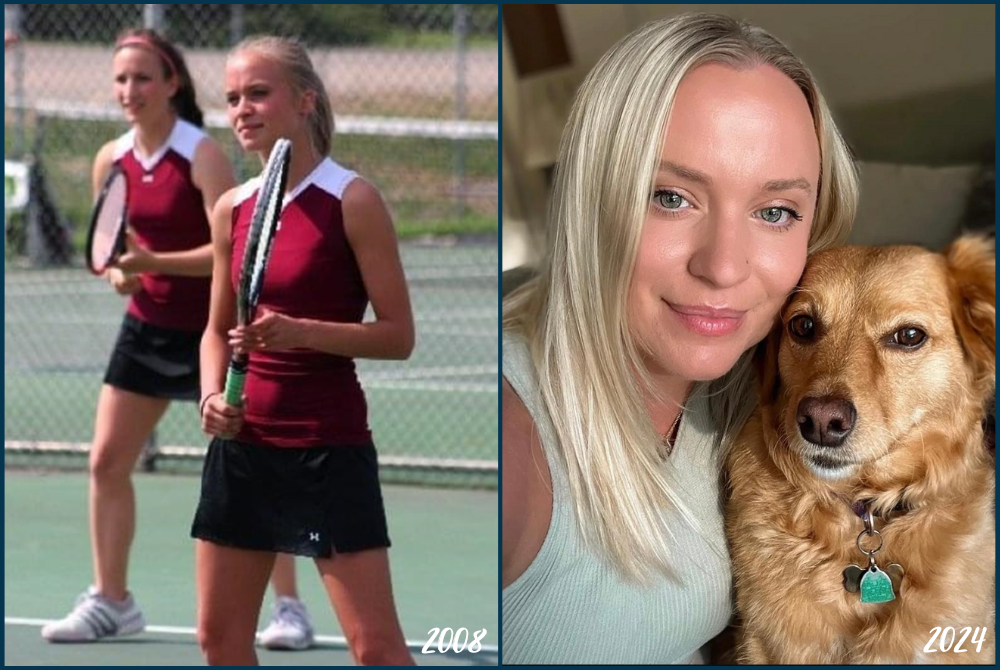
“Soccer was really fun, but when I look back on my high school career, tennis was the most prominent thing I remember,” the 2008 grad said. “I think it’s because I played year-round: our regular tennis season and then our summer tennis program and winter tennis program.”
Although it has been 16 years since her glory days at Parchment ended, Person has no trouble recalling the best parts of her Panthers sports career.
In fact, coming up with memories from those days is no problem — she has a folder full of photos called “I Miss Team Sports” on her Facebook page.
Playing intramural soccer at Michigan State University, she graduated with a degree in social work, then stayed in the Big Ten. She is the campus tours and ambassador coordinator at Purdue University in West Lafayette, Ind., where she supervises 80 to 100 student tour guides who provide information for families considering the school.
Her ties to the Spartans sometime makes for interesting conversations with her colleagues.
“They give me a hard time,” she said with a quick laugh. “I say Michigan State will always be my No. 1. That’s my alma mater I spent four years of time, tears and money at Michigan State. But I really love Purdue, so I’ll root for the Boilermakers second.”
She is also working on her master’s degree in higher education at Purdue.
Her office in the welcome center shares space with the alumni association, leading to an unforgettable experience.
During a lunch break, she went home to let out her dog, Tessa. When she returned, a trophy and a bucket were sitting on her desk.
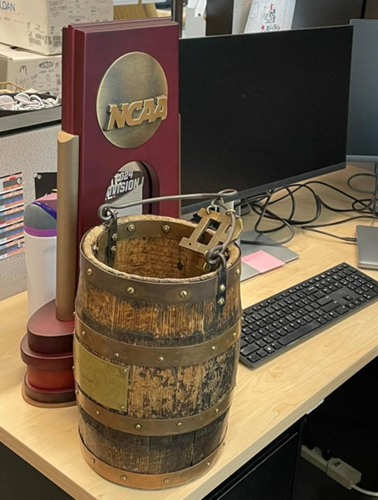 Confused, she asked what they were doing there.
“The tour guides I was working with said (during an event) they had to put them somewhere before putting them out (to the public), so they just put them on my desk,” she said.
Turns out, one trophy was the NCAA Final Four runner-up men’s basketball trophy the Boilermakers took home last year after losing to Connecticut in the championship game.
The other was the Old Oaken Bucket, the trophy that goes to the winner between Purdue and Indiana University’s annual football grudge match.
“I didn’t know anything about the Old Oaken Bucket,” she said. “They were like, what do you mean ‘what is this?’ Then they told me the story behind it.”
Creating core memories
Recalling her years at Parchment, Person becomes animated, smiling and laughing at all the memories.
“The first thing I remember is that my sister was really, really good at soccer,” she said. "I was always trying to keep up with her a bit.”
Her dad, Dave Person, noted that “all of our kids (Adam, Marissa, Amanda) had some success in sports during high school while realizing that it was secondary to their education.
“My only input was that I insisted they treat officials, coaches and opponents with respect, which they did. I always thought that while Marissa did very well in tennis, she was a natural at soccer. Amanda, on the other hand, was very good at soccer, but was a natural at tennis.”
Amanda said her soccer memories come down to “we might not have won a lot, but it was still a lot of fun.”
She said while several on the team, including herself, had years of soccer experience, players also welcomed those who wanted to try the sport for the first time.
“Our team had a home for those people, too,” she said. “The games were always fun, but I feel like a lot of being on a team like that is the outside things you do together: the team dinners, the traveling on the bus, even practices.”
Her freshman year, the team advanced to the MHSAA Lower Peninsula Division 4 Girls Tennis Finals, finishing 19th.
Her senior year was a transition when several sports seasons were switched, putting girls soccer and tennis at the same time during the spring.
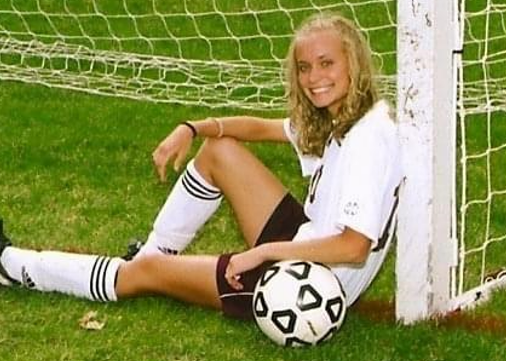 Person and the other three two-sport seniors juggled both.
“All of a sudden we were playing soccer and tennis in the spring,” she said. “Thankfully they let us do both, and our coaches were very good in terms (of) making sure nothing important overlapped.”
Person played doubles all four years and was at No. 1 with Kelly Drummond her final two seasons.
“If my memory serves me correctly, I believe we only lost two matches the whole (senior) year, so it was a good year for us,” she said.
It was a very good year.
She and Drummond won their Regional Final, but that ended her prep career since the team did not qualify for championship weekend.
Preparing for life
The best thing about high school tennis, she said, was that it was a combination team and individual sport.
“You can do really well individually and maybe the team doesn’t do well, or maybe the team does well and you don’t do well personally,” she said. “It has the aspect of wanting the entire team to do good.”
Competing in both sports prepared her for the “real” world, she said.
“Playing soccer and tennis and being part of a team helped me cheer other people on,” she said. “The world is a competitive place, so having that foundation of team sports is really good to teach a plethora of things you can use in the real world.
“Even at work, you have your individual job but you’re also part of a team. If one person isn’t doing well, then your whole team isn’t doing well. If someone else is having a hard time, helping them out is helping the team.”
She added that losing also teaches important lessons.
“You’re going to lose at things your entire life,” she said. “Being able to handle losing, handle rejection, is a good skill to have for anything in life. I’ve learned it’s not what happens to you but how you respond to it. That’s a huge lesson. There are a lot of life lessons you can get from playing team sports in high school.”
Her advice to high school athletes today: “Enjoy it, first of all. Don’t take it too seriously in wins and losses.
“When I look back, most of my core memories are being part of a team, having fun with the team, having fun playing the sport. Enjoy your time,” she said.
“Now I miss it.”
2024 Made In Michigan
July 30: After Successful 'Sequel,' Suttons Bay's Hursey Embarking on Next Chapter - Read
July 24: East Kentwood Run Part of Memorable Start on Knuble's Way to NHL, Olympics - Read
July 22: Monroe High Memories Remain Rich for Michigan's 1987 Mr. Baseball - Read
July 17: Record-Setting Viney Gained Lifelong Confidence at Marine City - Read
July 11: High School 'Hoop Squad' Close to Heart as Hughes Continues Coaching Climb - Read
July 10: Nightingale Embarking on 1st Season as College Football Head Coach - Read
June 28: E-TC's Witt Bulldozing Path from Small Town to Football's Biggest Stage - Read
PHOTOS (Top) At left, Parchment’s Amanda Person plays a 2008 tennis match with doubles partner Kelly Drummond; at right, Person and her dog Tessa. (Middle) A pair of beloved trophies sit temporarily on Person’s desk at Purdue. (Below) Person also was a soccer standout at Parchment. (Photos courtesy of Amanda Person.)