


Be the Referee: Swim Finishing Touch
September 19, 2019
This week, MHSAA officials coordinator Sam Davis explains a new rule in swimming that allows for more flexibility when determining when a competitor has finished a race.
Be The Referee is a series of short messages designed to help educate people on the rules of different sports, to help them better understand the art of officiating, and to recruit officials.
Below is this week's segment - Swimming Finishing Touch - Listen
There’s a swimmer-friendly rules change being made in that sport this season. The definition of a legal finish has been changed to allow a competitor to touch any part of the finish end of the lane.
Previously, a swimmer had to contact the touch pad for a legal finish. The touch rule has also been changed to apply during relay races – where prior to this season only the final swimmer had to touch the finish end of the pool.
While the changes may provide some flexibility for swimmers, it does put additional responsibility on lane judges and back-up hand timers to be ready for those occurrences when a swimmer does not contact the touch pad.
Sept. 12: Curbing Gamesmanship By Substitution - Listen
Sept. 5: Football Safety Rules Changes - Listen
Aug. 29: 40-Second Play Clock - Listen
Be the Referee: Soccer Foul After Shot on Goal
By
Paige Winne
MHSAA Director of Brand Management
September 2, 2026
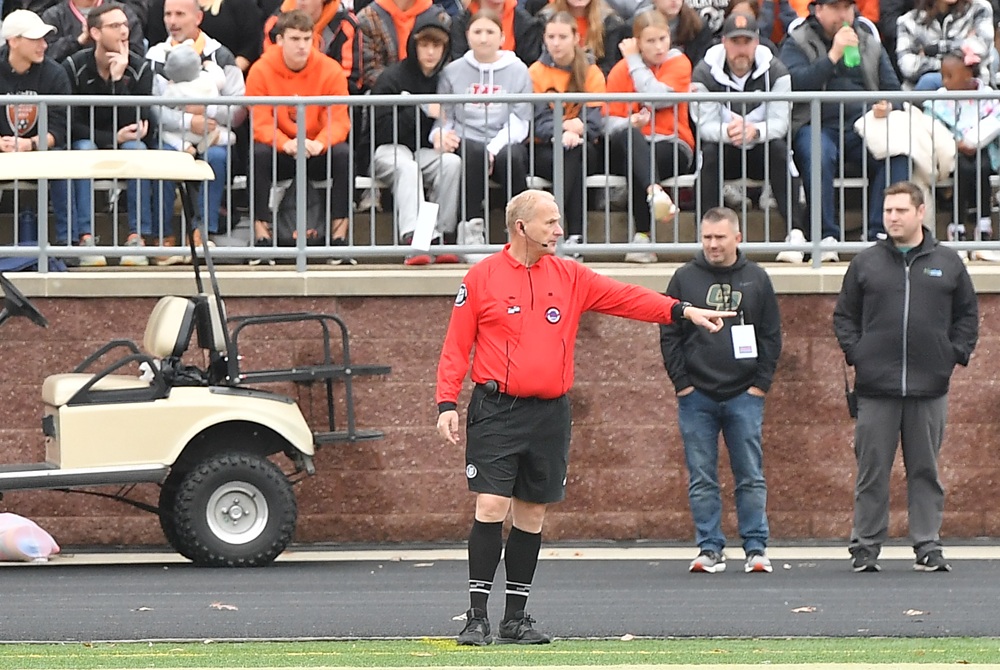
Be The Referee is a series of short messages designed to help educate people on the rules of different sports, to help them better understand the art of officiating, and to recruit officials.
Below is this week's segment – Soccer Foul After Shot on Goal - Listen
We’re on the soccer field today, and the home team has the ball and is on the attack.
The ball makes it around to a forward from the home team, who is on-side and within the penalty area. His shot just misses – going wide for a goal kick.
However, just after the ball crossed the goalline, a player from the away team tackles the home team forward with excessive force.
What’s the call?
Because excessive force was used, it’s a red card for the away team player, which is an automatic ejection. But because it happened after the ball crossed the goalline and not at the time of the shot, it’s still a goal kick for the away team, not a penalty kick for the home team.
Previous 2026-27 editions
Aug. 25: Fumble Out of Bounds - Listen