

Flashback 100: MHSAA Titles Just Start for NCAA Champion, Olympian Stark
May 6, 2025
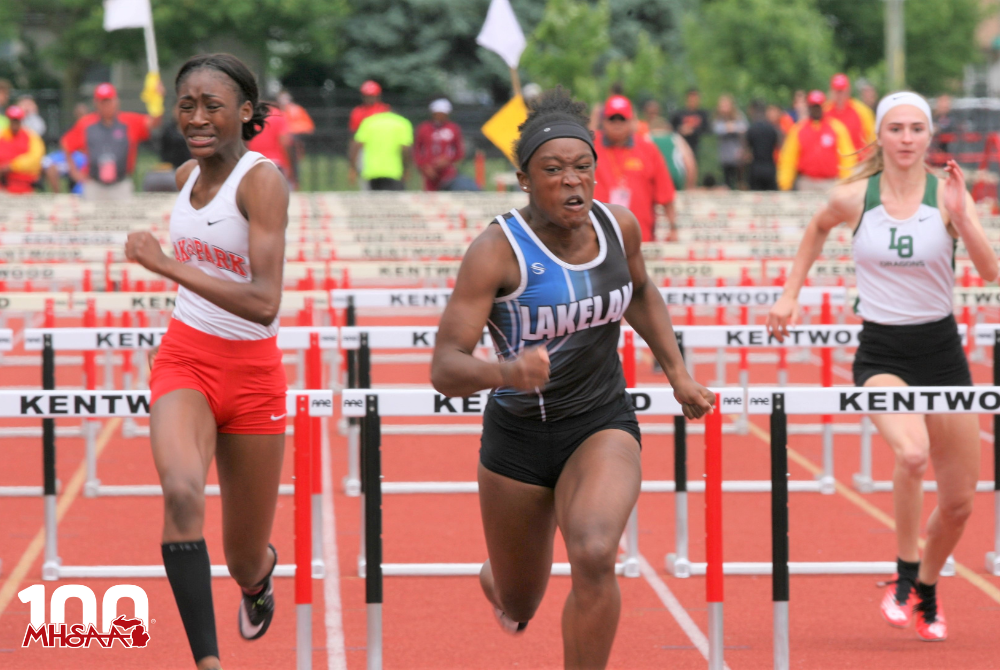
In the time it takes to list just a few of Grace Stark’s achievements, the former White Lake Lakeland track star could blaze through the 100-meter hurdles race – twice.
A 2019 graduate of Lakeland, Stark made her mark early. As a junior in 2018, she set an MHSAA Finals record in the 100-meter hurdles with a time of 13.16 seconds. That same year, she also captured the Lower Peninsula Division 1 title in the 100-meter dash. She returned as a senior to win a second championship in the 100-meter hurdles.
Stark continued her dominance at the University of Florida, where she rewrote the record books. She holds the fastest times in program history for the outdoor 100-meter hurdles, the indoor 60-meter hurdles and the indoor 60-meter dash. In 2024, she earned first-team All-America honors for both the indoor and outdoor seasons and was crowned NCAA champion in the outdoor 100-meter hurdles. She had previously won the NCAA indoor 60-meter hurdles title in 2022.
Stark reached the global stage at the 2024 Paris Olympics, placing fifth in the 100-meter hurdles while representing Team USA. She crossed the finish line just a tenth of a second behind gold medalist – and fellow American – Masai Russell. Stark's Olympic appearance followed another international highlight: She previously won the gold medal in the 100-meter hurdles at the 2018 Youth Olympic Games in Argentina.
Previous "Flashback 100" Features
May 1: Legendary Actor Played Multiple Sports Roles at Country Day - Read
April 23: Legacy Program Provided Start for Pioneering NBA Official Schroeder - Read
April 11: Rice's Championship-Winning Ways Started at Flint Northwestern - Read
March 28: Youngquist's Times Still Among MHSAA's Fastest - Read
March 18: After 40 Years, Coles' Shot Remains Among Century's Most Famous - Read
March 7: Walled Lake Northern's Hellebuyck Reigns as NHL's Elite Netminder - Read
Feb. 27: Zeerip's Mat Stats Remain Rarely-Challenged Chart Toppers - Read
Feb. 21: Before TV Stardom, Kerwin Excelled as All-State Skier - Read
Feb. 14: Detroit Central Star Voted into Pro Football Hall of Fame - Read
Feb. 6: Multi-Sport Star Look Becomes Super Bowl Officiating Legend - Read
Jan. 31: Johnson Family Put Magical Stamp on Michigan High School Hoops - Read
Jan. 24: Future Hall of Famers Face Off First in MHSAA Class A Final - Read
Jan. 17: First-Ever WNBA Draft Pick Rocked at Salem, Won Titles at Tennessee - Read
Jan. 10: Despite Launching Before 3-Point Line, Smith Still Tops Scoring List - Read
Jan. 3: Edison's Jackson Earns Place Among State's All-Time Elite - Read
Dec. 20: Future Olympian Piper Leads Grosse Pointe North to Historic Heights - Read
Dec. 13: The Other Mr. Forsythe in Michigan School Sports - Read
Dec. 6: Coleman's Legendary Heroics Carry Harrison Through Repeat - Read
Nov. 29: Harbaugh Brothers' Football Roots Planted in Part at Pioneer - Read
Nov. 22: 8-Player Football Finals Right at Home at Superior Dome - Read
Nov. 15: Leland Career Helps Set Stage for Glass' International Stardom - Read
Nov. 8: Future Baseball Pro Led Escanaba's Legendary Football Title Run - Read
Nov. 1: Michigan High School Baseball Trio Provide World Series Voices - Read
Oct. 25: Before Leading Free World, Ford Starred for Champion GR South - Read
Oct. 18: Mercy Links Legend Becomes World Golf Hall of Famer - Read
Oct. 11: Fisher Races to Finals Stardom on Way to U.S. Olympic First - Read
Oct. 4: Lalas Leaves High School Legacies on Ice & Pitch - Read
Sept. 27: Tamer's History-Making Run Starts in Dexter, Continues to Paris - Read
Sept. 20: Todd Martin’s Road to Greatness Starts at East Lansing - Read
Sept. 13: James Earl Jones, Dickson High Hoops to Hollywood Legend - Read
Sept. 6: Pioneers' Unstoppable Streak Stretches 9 Seasons - Read
Aug. 30: Detroit dePorres Rushes to 1995 Class CC Football Championship - Read
Performance of the Week: Saginaw Swan Valley's Sydney Kuhn
May 16, 2025
 Sydney Kuhn ♦ Saginaw Swan Valley
Senior ♦ Track & Field
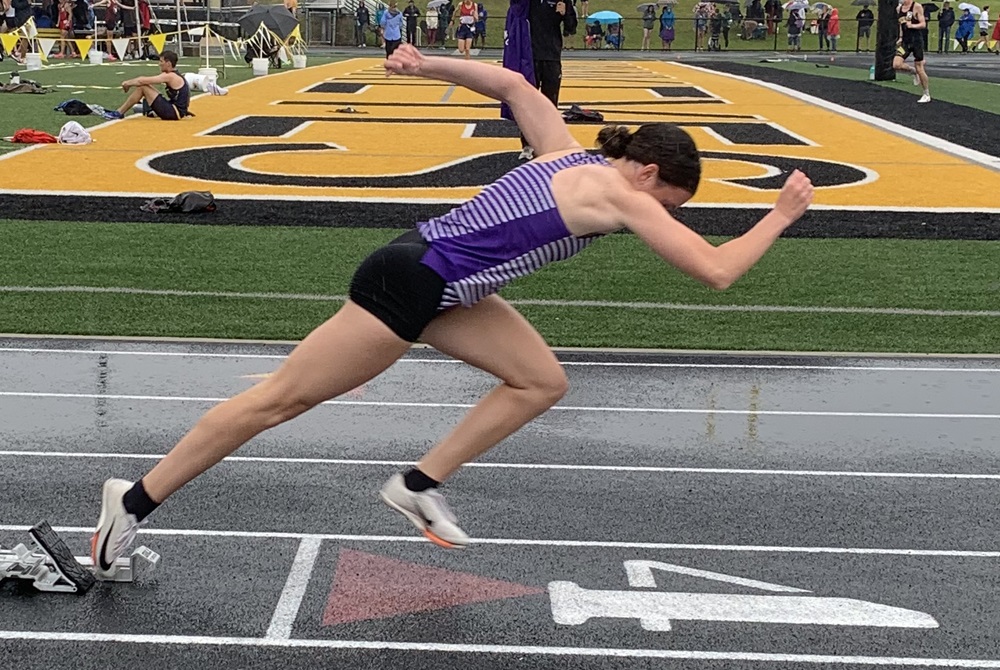
The reigning Lower Peninsula Division 2 Finals champion in the 200 and 400-meter races, Kuhn is undefeated across those two events and also the 100, 800 and 300 hurdles this spring. She ran the state's fastest 300 hurdles time this season (42.06) during last week's Tri-Valley Conference Red championship meet, winning that race by seven seconds, and she also won the 200 (24.63) by more than three seconds and ran on the first-place 1,600 relay.
Kuhn's top 400 time (53.90) also is the state's fastest in that event this season, and her best 800 (2:08.73) ranks second. She's planning to run the 200, 400, 300 hurdles and as part of the 1,600 relay at Friday's Regional at Cadillac, and notably also posted a combined three top-six Finals finishes as a freshman and a sophomore despite suffering stress fractures (one in each foot) during those first two high school seasons. Kuhn also played volleyball all four years of high school and basketball during her first two, earning all-state honorable mention and academic all-state in volleyball and all-league honorable mention in hoops. She will continue academically and on the track at University of Michigan, and intends to major in kinesiology as she studies to become a physician assistant.
@mhsaasports 🏃♀️➡️POW: Sydney Kuhn #track #undefeated #5events #swanvalley #vikings #part1 #highschoolsports #tiktalk #interview #performanceoftheweek #mistudentaid #fyp #MHSAA ♬ original sound - MHSAA
@mhsaasports 🏃♀️➡️POW: Sydney Kuhn #sourpatchkids #spaghetti #chipotle #cryinglaughing #criminalminds #juggle #part2 #performanceoftheweek #mistudentaid #fyp #MHSAA ♬ Monkeys Spinning Monkeys - Kevin MacLeod & Kevin The Monkey
Follow the MHSAA on TikTok.
MHSAA.com's "Performance of the Week" features are powered by MI Student Aid, a division within the Department of Lifelong Education, Advancement, and Potential (MiLEAP). MI Student Aid encourages students to pursue postsecondary education by providing access to student financial resources and information. MI Student Aid administers the state’s 529 college savings programs (MET/MESP), as well as scholarship and grant programs that help make college Accessible, Affordable and Attainable for you. Connect with MI Student Aid at www.michigan.gov/mistudentaid and find more information on Facebook and Twitter @mistudentaid.
Previous 2024-25 honorees
May 8: Ryan Bosch, Fruitport baseball - Report
May 1: Jackson Lam, Kalamazoo Loy Norrix track & field - Report
April 25: Isabelle Horvath, Bangor softball - Report
April 18: Presley Jones, Sterling Heights Stevenson soccer - Report
April 11: Olivia Jasniewicz, Troy soccer - Report
March 27: Katie Spicer, Fowler basketball - Report
March 21: Moses & Markus Blackwell; Warren Lincoln basketball - Report
March 13: Keyshawn Summerville, Lansing Sexton basketball - Report
March 6: Maggie Buurma, Fowlerville wrestling - Report
Feb. 28: Maren Studt, Pontiac Notre Dame Prep skiing - Report
Feb. 21: Olive Krueger, Marquette swimming - Report
Feb. 14: Hunter Lemmon, Fraser swimming - Report
Feb. 7: Aubrey Hillard, Rochester competitive cheer - Report
Jan. 31: Wyatt Spalo, Reed City wrestling - Report
Jan. 24: Olivia Flynn, Harbor Springs basketball - Report
Jan. 17: Levi Rozema, Holland Christian swimming - Report
Jan. 10: McRecco McFadden, Burton Bentley basketball - Report
Dec. 18: Nash Leonard, Bay City Western hockey - Report
Dec. 11: Blake Cosby, Dundee wrestling - Report
Dec. 4: Keaton Hendricks, Zeeland West football - Report
Nov. 29: Kate Simon, East Grand Rapids swimming - Report
Nov. 22: Ella Kokaly, Essexville Garber volleyball - Report
Nov. 15: Caroline Bryan, Grosse Pointe South swimming - Report
Nov. 8: Kaylie Livingston, Whitmore Lake cross country - Report
Oct. 25: Oliver Caldwell, Grand Rapids West Catholic tennis - Report
Oct. 18: Alex Graham, Detroit Cass Tech football - Report
Oct. 11: Victoria Garces, Midland Dow cross country - Report
Oct. 4: Asher Clark, Bay City John Glenn soccer - Report
Sept. 26: Campbell Flynn, Farmington Hills Mercy volleyball - Report
Sept. 19: TJ Hansen, Freeland cross country - Report
Sept. 12: Jordan Peters, Grayling soccer - Report
Sept. 6: Gabe Litzner, Sault Ste. Marie cross country - Report
Aug. 30: Grace Slocum, Traverse City St. Francis golf - Report