

Superior Dome Gives Jumpstart to Spring
By
John Vrancic
Special for MHSAA.com
April 27, 2017
MARQUETTE — Most Upper Peninsula track coaches will tell anyone the weather always is perfect in the Dome.
 After all, the temperature is constantly in the 70s and there’s no wind, rain or snow to contend with inside Northern Michigan University’s Superior Dome. And most people agree it was better than competing outdoors last week
Engadine junior Ashtyn Buss was among a group of student-athletes to get a taste of competing in both environments during the Superior Central invitational on April 17.
Buss won girls shot put at 37 feet, 5½ inches inside the Dome, but failed to place in discus, which took place in the great outdoors against a stiff breeze with temperatures hovering near 30 degrees.
“It was pretty important to get a meet in,” she said. “It was very much a relief to be in here for shot. It’s nice and warm in here, but it was sure cold out there for disc. My shoulder tightened up, and I scratched.
“I had good distance on some of my throws, but I kept throwing out of bounds. I can learn from this.”
Cedarville sophomore Caroline Freel, who anchored the winning 1600-meter relay, also stressed the importance of her school’s team getting a meet under its belt.
“This gives us a gauge of where we’re at,” she said. “It was very much a relief to be indoors. Track season up here is known for its unpredictability.”
Although most distance runners are used to running in the cold, Chassell sophomore Lela Rautiola was also glad to be running indoors.
“It helps to get this meet in,” said Rautiola, who won the 1,600 run in 5 minutes, 59.54 seconds. “My lungs are burning from the air, but it’s better than being outdoors today.”
Bark River-Harris coach Katina Demers was mostly thankful the Broncos had a chance to compete.
“It’s so important to get something under our belts in April,” she said. “This was a good learning experience for the younger kids. We’re also very thankful this was indoors. It was very cold outside. I’m surprised they held discus today because of the elements.”
Outside temperatures warmed to the upper 40s the next day (April 18). Rain, however, developed during the course of that day.
Many spectators attending the Marquette Invitational that next day commented about the weather conditions and were glad to have the opportunity to watch track & field competition indoors.
Some distance runners, however, may have preferred to be outdoors on a day during which conditions were more favorable than 24 hours earlier.
Sault Ste. Marie senior Aaron Kinsella may have been among them after winning the 3,200 in 11:12.67.
“That was a pretty good effort by Aaron,” said Sault boys coach D.J. Baars. “He was running all alone and he ran tough. We thought his time might have been a little faster. Aaron said it was hot in here.”
The series of indoor track meets at the Dome concluded with the Ishpeming Invitational on April 19.
Although the sun made an appearance, temperatures had dropped about 10 degrees from the previous day.
Manistique senior Kelsey Dehanke enjoyed the comforts of competing indoors while winning the girls high jump at 4-foot-10.
"It’s a relief to be indoors,” said Dehanke, who plans to attend Northeast Wisconsin Technical College in Green Bay after high school to major in dental hygiene. “It’s just easier on the leg muscles. I don’t like sitting around in the cold.”
This marked the second meet this season for the Newberry girls, who were runners-up in an outdoor quadrangular meet at St. Ignace the day before.
“It’s important to get meets in this early, but the wind was so cold at St. Ignace,” said Newberry sophomore Madison Grigg, who led off the winning 800 relay. “It’s much better being in here.”
The Ishpeming boys and Munising girls were crowned champions among the Division 2 schools competing in the finale at NMU.
Marquette swept both ends of its invitational, which featured Division 1 schools, and the Bessemer boys and Lake Linden-Hubbell girls earned top honors among the Division 3 schools in the Superior Central Invite.
“Getting meets in early is huge, especially where we’re located,” said Bessemer coach Mark Mazzone. “We often don’t get outside until late April or early May."
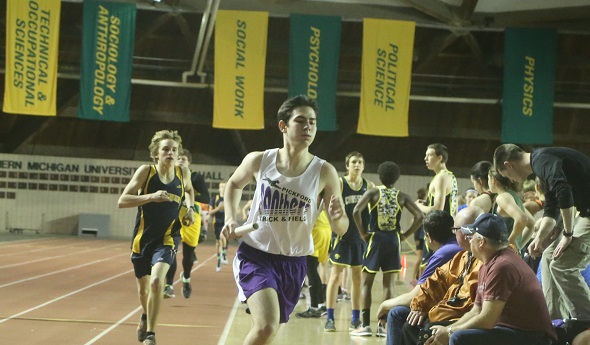
PHOTO: Upper Peninsula athletes compete during an April meet at Northern Michigan University's Superior Dome during the start of the 2016 season. (Photo by Paul Gerard.)
Preview: Team Contenders Seek to Make Stars Align at LP Boys Finals
By
Geoff Kimmerly
MHSAA.com senior editor
May 29, 2026
Saturday’s Lower Peninsula Boys Track & Field Finals again will bring together a serious collection of star power at four sites across the Grand Rapids area.
But adding to an intriguing day is the relative unpredictability of the team title races. A large variety of schools have won championships over the last several years in all four divisions, and forecasting which might climb the podium this weekend remains a difficult task.
All four LP Finals will begin with pole vault and long jump beginning at 9 a.m., followed by race semifinals and the 3,200 relay at 10 a.m. and the rest of the running finals starting at noon. Tickets cost $11 and are available digitally only via GoFan.
MHSAA.tv will live-stream all four meets beginning at 10 a.m., viewable with subscription. Check out the Boys Track & Field page for meet information for all four sites and lists of all qualifiers. Those described as "seeded" below have received those seeds based on Regional performances or meeting early qualification standards. (Although not noted for most, several individuals below also will run on contending relays.)
Below is a glance at team contenders and individuals to watch in all four divisions:
Division 1 at Rockford
Team forecast: We’re up to six teams that have won LPD1 championships over the last five seasons (with Fenton and Rockford tying for first in 2021). Belleville is the reigning champ and has some points potential again this weekend. But Detroit Catholic Central’s star power across several events could be a difference maker, with Oak Park, East Kentwood and potentially Grand Haven and Northville among others that could have the right mix of standouts, depth and variety to make a run at the team title.
Zacchaeus Brocks, Detroit Catholic Central senior: He’s one of the nation’s top high school hurdlers and seeded first in the 110 (13.26) and 300 (36.23) by notable margins, but is seeking his first title after his 2025 ended early because of an injury.
Wendell Childs Jr., Clarkston junior: He’s seeded second in the 800 (1:51.49) after winning that race a year ago.
Beckett Crooks, Ann Arbor Pioneer senior: The reigning 3,200 champion is seeded fourth (9:03.74) and won’t run another individual race as he’s scratched from the 1,600, where he also would have been seeded fourth.
Reece Emeott, East Kentwood senior: He’s looking to cap his high school career with a third-straight Finals championship in the pole vault and has the top-seeded vault (16-0) by three inches.
Samson Gash, Detroit Catholic Central senior: He won the 100 in an all-Finals record 10.41 seconds last season and also finished third in the 200, and he enters this weekend seeded second in both in 10.51 and 21.53 seconds, respectively.
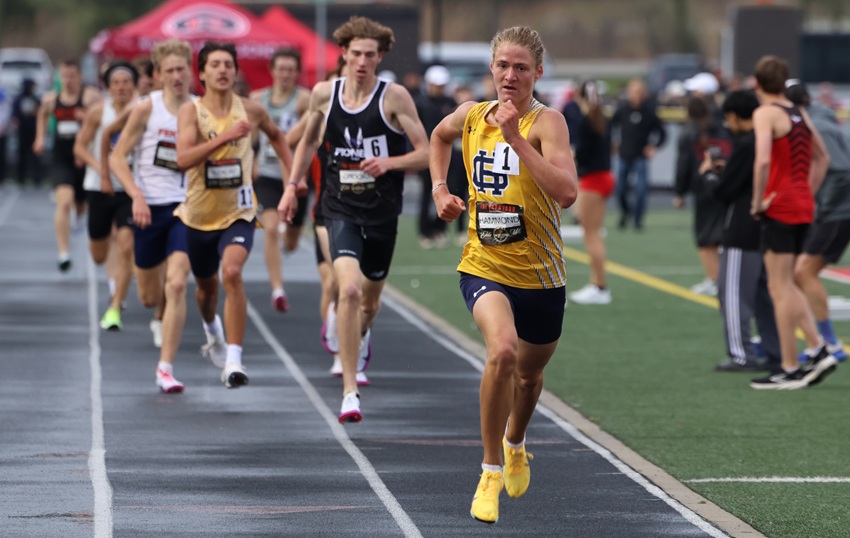
Luka Hammond, Grand Haven senior: The reigning 1,600 champ is seeded first in that race (4:08.29) and the 3,200 (8:58.33) and fifth in the 800.
De-Mani Roberts, East Kentwood sophomore: He could make a splash entering as the top seed in the 400 (47.55), third seed in the 200 (21.55) and sixth seed in the 100.
Division 2 at Hamilton
Team forecast: Parma Western became a first-time champion in this division a year ago, and Harper Woods may be the next with two top-seeded relays and more possibilities in sprints and hurdles. Flint Powers Catholic is seeking a first title as well and has three top-three seeded relays and potential points in sprints, hurdles and distance. Frankenmuth has won three team titles, its most recent in 2021, and might have the right mix with strong relays and a variety of events covered individually.
Declin Doroh, Stevensville Lakeshore junior: He finished second in the high jump last season but may be on the cusp of history with his statewide-best 7-0 at his Regional just an inch shy of the all-Finals record that has stood since 1989.
Ryan Good, Parma Western junior: Last season’s runner-up in the 800 has finished lower than first in an individual race just once across three events this spring and enters top-seeded in the 800 (1:50.11) and second-seeded in the 1,600 (4:16.30) after scratching from the 400, where he would have been seeded fifth.
Kaden Griffiths, Stevensville Lakeshore junior: He’ll return to the long jump pit seeking a third-straight championship and after winning last season’s by nearly 20 inches.
Zachary Overmyer, Edwardsburg senior: He won the high jump just ahead of Doroh last season and has continued to impress, seeding fourth for this weekend.
D.J. Wood, Battle Creek Harper Creek senior: He swept the hurdles championships last season and is seeded first in both the 110 (14.18) and 300 (tied at 38.44).
Division 3 at Kent City
Team forecast: Hanover-Horton tied for 33rd at last season’s Finals, but looks to have the power at relays and elsewhere to make a massive jump this weekend. Lansing Catholic could do the same after finishing ninth a year ago, and Ann Arbor Greenhills may make some noise with two top-seeded relays among a strong group on the running side.
Jack Deitsch, Reed City senior: The reigning champion in the long jump enters with the top Regional jump (22-10¼) plus is seeded second in the 100 (10.77) and will run the 200.
Hunter Eaton, Charlevoix junior: The fall’s Division 3 cross country champion also will look to repeat in the 3,200 and carries the second seed in that race (9:33.24) plus the second seed in the 1,600 (4:18.52) and sixth in the 800.
Dennis Jackson, Detroit Edison senior: He won the 400 last season and returns seeded first in that race (48.26) and fourth in the 200 (21.95).
Chaze Lorenz, Hart senior: He ran on three high-placing relays last season, including the champion 800, and could add a few individual titles seeded first this weekend in the 100 (10.67) and 200 (21.72) and second in the 400 (49.10).
Nolan Schaap, Kalamazoo Christian junior: He could make a big jump in his hurdles races, seeded first in the 300 (39.40) after finishing 14th a year ago and seeded fourth in the 110 after placing 15th during the 2025 prelims.
Division 4 at Hudsonville Baldwin
Team forecast: Kalamazoo Hackett Catholic Prep finished just a point behind champion Southfield Christian last season and most recently won back-to-back Division 4 titles in 2022 and 2023. Distance dominance could bring the Irish to the top of the podium again this weekend. Eau Claire, Manchester, Reading and Royal Oak Shrine also are intriguing possibilities on the board.
Marek Butkiewicz, Kalamazoo Hackett Catholic Prep senior: The two-time Finals champion in cross country also has won the 3,200 the last two seasons and the 1,600 last spring. He’s seeded first in the 1,600 (4:14.83) and 3,200 (9:05.33) and third in the 800 (1:57.79).
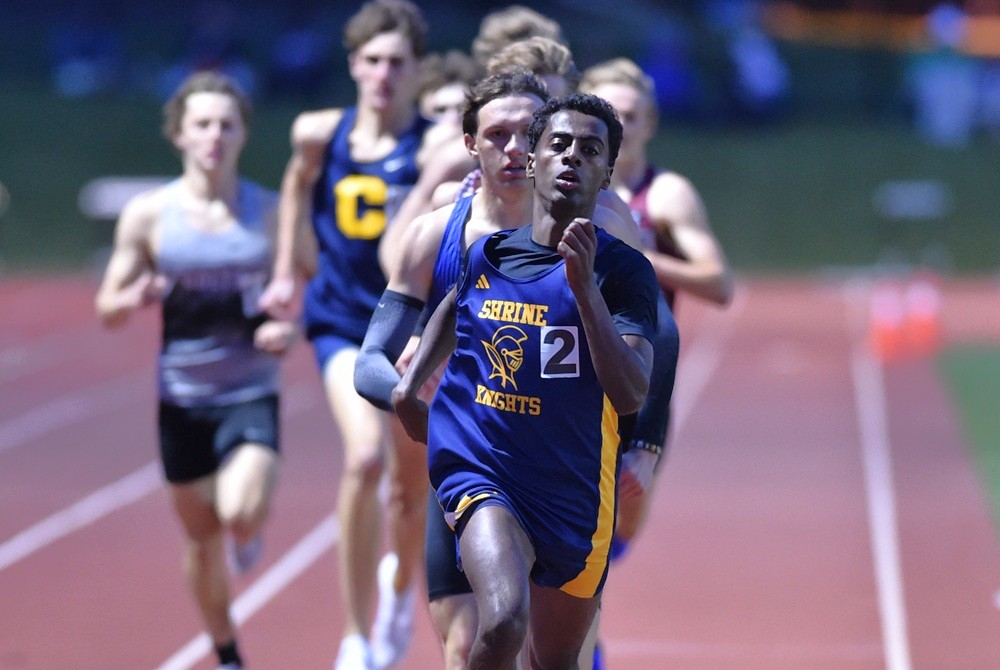
Abenezer Cerone, Royal Oak Shrine Catholic senior: The reigning champion in the 800 is seeded first in that race (1:52.24) and the 400 (49.33), fourth in the 1,600 and also has qualified in the 200.
Grant Johnson, Manchester senior: He finished third in the 110 hurdles and fifth in the 300 last season but enters this weekend seeded first in the 110 (14.84) and sixth in the 300, and he’s also expected to long jump.
Oliver Long, Morrice senior: The two-time reigning champion in the shot put is seeded first (56-9) by nearly five feet, and also fourth in the discus.
Dawson Scharer, Hillsdale Academy senior: He won the 300 hurdles and finished second in the 110 a year ago. He is seeded second in both in 39.06 and 14.92 seconds, respectively, and he’s also scheduled to run the 200.
PHOTOS (Top) Royal Oak Shrine’s Abenezer Cerone leads during the 800 meters at Friday’s Oakland County Championships. (Middle) Grand Haven’s Luca Hammond, followed by Ann Arbor Pioneer’s Beckett Crooks, pushes toward the finish during the Diamond 1,600 at Romeo’s Barnyard Invitational this season. (Photos by Dave McCauley, at Oakland County, and John Brabbs at Romeo/RunMichigan.com.)