

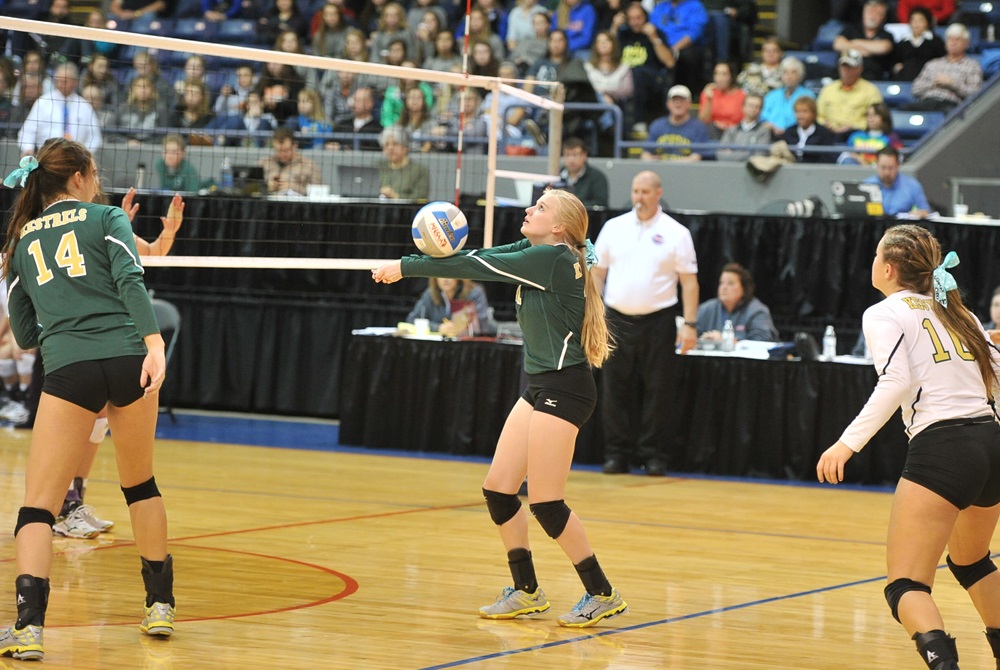
Be the Referee: Back Row Setter
By
Paige Winne
MHSAA Director of Brand Management
November 12, 2024
Be The Referee is a series of short messages designed to help educate people on the rules of different sports, to help them better understand the art of officiating, and to recruit officials.
Below is this week's segment – Back Row Setter - Listen
We’re on the volleyball court for today’s “You Make the Call.”
Team A serves the ball over net. Team B’s number 9 passes, or bumps the ball up toward the net, where number 2 tips it over for a point.
But number 2 is a back row setter and moved to the front row on the serve.
Is this a legal play?
If you said it depends … you are correct.
A back row setter can move to the front row and play the ball over the net as long as the entire ball is NOT above the net.
If the ball is completely above the net, then the back row setter is not allowed to play it over the net from the front row.
Previous 2024-25 Editions
Nov. 5: Football OT - Listen
Oct. 29: Officials Registration - Listen
Oct. 22: Volleyball Serve - Listen
Oct. 15: "You Make the Call" - Soccer Offside - Listen
Oct. 8: Roughing the Passer - Listen
Oct. 1: Abnormal Course Condition - Listen
Sept. 25: Tennis Nets - Listen
Sept. 18: Libero - Listen
Sept. 10: Cross Country Uniforms - Listen
Sept. 3: Soccer Handling - Listen
Aug. 24: Football Holding - Listen
What's My Why: Official Cindy Tyzo
June 8, 2026
Cindy Tyzo, West Bloomfield
Tyzo is one of what surely are only a handful of officials who have been registered for two MHSAA-sponsored sports since their first seasons as part of the championship lineup. She's is completing her 33rd year overall after first registering for the inaugural season of competitive cheer in 1993-94, and she also officiated the first season of MHSAA field hockey this past fall.
Tyzo also just completed her eighth season officiating girls lacrosse.
I love officiating because I love working with the young people and providing the opportunity for them to do the sport that they love. Because without officials, there's not game.
“What’s My Why” is a weekly feature telling the stories of MHSAA-registered officials in their own words. If you’re an MHSAA official and would like to share your reason why, please submit a 15 to 45-second video, taken horizontally, to director of officials Sam Davis at [email protected].
Don't miss Officiate Michigan Day 2026, July 25 in Grand Rapids! Check out MHSAA.com/OMD to register and learn more.
What's My Why
June 3: Jeff Spedoske, DeWitt - Watch
June 1: Mike Carrier, Commerce Township - Watch
May 27: Stan Wright, Warren - Watch
May 26: Murray Rose, Zeeland - Watch
May 22: Mike VanLaan, Alto - Watch
May 18: Clint Abbott, Newaygo - Watch