

Be the Referee: Volleyball Double & Lift
By
Paige Winne
MHSAA Director of Brand Management
October 3, 2023
Be The Referee is a series of short messages designed to help educate people on the rules of different sports, to help them better understand the art of officiating, and to recruit officials.
Below is this week's segment – Volleyball Double & Lift - Listen
You’re sitting at a volleyball match and hear parents in the stands yell “Double!” or “Lift!”
What do those terms mean, and why are they yelling them?
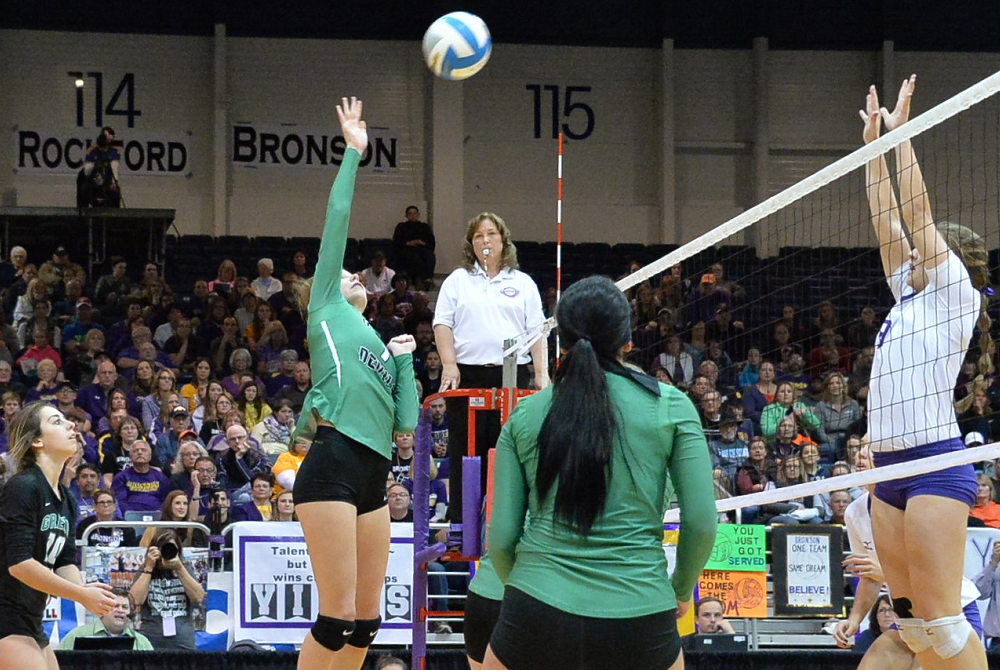
Double refers to double contact. That’s when a player hits the ball twice in a row or if the ball touches two parts of the player’s body in succession. If a setter hits the ball with one hand then the other – even if immediate, it’s a double. She needs to set with both hands at the same time.
A lift is when the player, typically a setter, has prolonged contact with the ball that results in throwing or re-directing the ball back into play. The ball doesn’t rebound off the player's fingers or hands, but is directed by the player.
The official on the stand at the net is in the best position to notice these fouls.
Previous Editions
Sept. 26: Registration Process - Listen
Sept. 20: Animal Interference - Listen
Sept. 13: Feet Rule on Soccer Throw-In - Listen
Sept. 6: Volleyball Jewelry - Listen
Aug. 30: Football Rules Similarities - Listen
Aug. 23: Football Rules Differences - Listen
(PHOTO by Gary Shook.)
What's My Why: Official Jeff Spedoske
June 3, 2026
Jeff Spedoske, DeWitt
Spedoske officiated football and basketball for nearly all of his first 34 years of MHSAA registration, and also baseball early in his tenure. He has served as the MHSAA's officials department specialist the last three years.
I’m a 35-year MHSAA-registered official, and nothing feels better than walking off the field with my fellow officials after doing a great job on a contest.
That is my “why” for why I officiate.
“What’s My Why” is a weekly feature telling the stories of MHSAA-registered officials in their own words. If you’re an MHSAA official and would like to share your reason why, please submit a 15 to 45-second video, taken horizontally, to director of officials Sam Davis at [email protected].
Don't miss Officiate Michigan Day 2026, July 25 in Grand Rapids! Check out MHSAA.com/OMD to register and learn more.
What's My Why
June 1: Mike Carrier, Commerce Township - Watch
May 27: Stan Wright, Warren - Watch
May 26: Murray Rose, Zeeland - Watch
May 22: Mike VanLaan, Alto - Watch
May 18: Clint Abbott, Newaygo - Watch