

Be the Referee: Volleyball Double & Lift
By
Paige Winne
MHSAA Director of Brand Management
October 3, 2023
Be The Referee is a series of short messages designed to help educate people on the rules of different sports, to help them better understand the art of officiating, and to recruit officials.
Below is this week's segment – Volleyball Double & Lift - Listen
You’re sitting at a volleyball match and hear parents in the stands yell “Double!” or “Lift!”
What do those terms mean, and why are they yelling them?
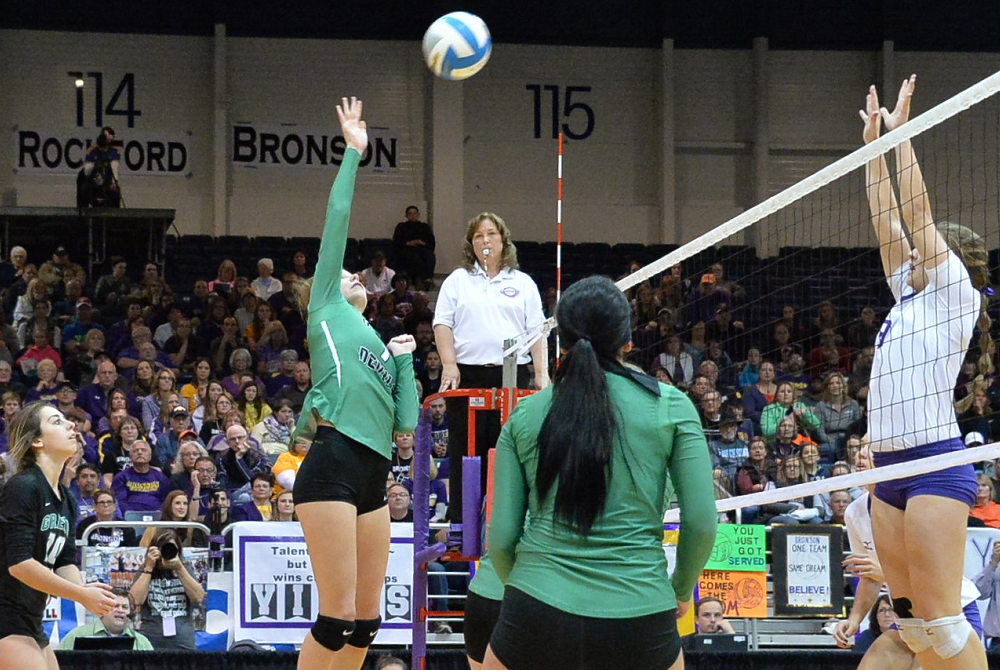
Double refers to double contact. That’s when a player hits the ball twice in a row or if the ball touches two parts of the player’s body in succession. If a setter hits the ball with one hand then the other – even if immediate, it’s a double. She needs to set with both hands at the same time.
A lift is when the player, typically a setter, has prolonged contact with the ball that results in throwing or re-directing the ball back into play. The ball doesn’t rebound off the player's fingers or hands, but is directed by the player.
The official on the stand at the net is in the best position to notice these fouls.
Previous Editions
Sept. 26: Registration Process - Listen
Sept. 20: Animal Interference - Listen
Sept. 13: Feet Rule on Soccer Throw-In - Listen
Sept. 6: Volleyball Jewelry - Listen
Aug. 30: Football Rules Similarities - Listen
Aug. 23: Football Rules Differences - Listen
(PHOTO by Gary Shook.)
Be the Referee: Volleyball Differences
By
Paige Winne
MHSAA Director of Brand Management
May 27, 2026
Be The Referee is a series of short messages designed to help educate people on the rules of different sports, to help them better understand the art of officiating, and to recruit officials.
Below is this week's segment – Volleyball Differences - Listen
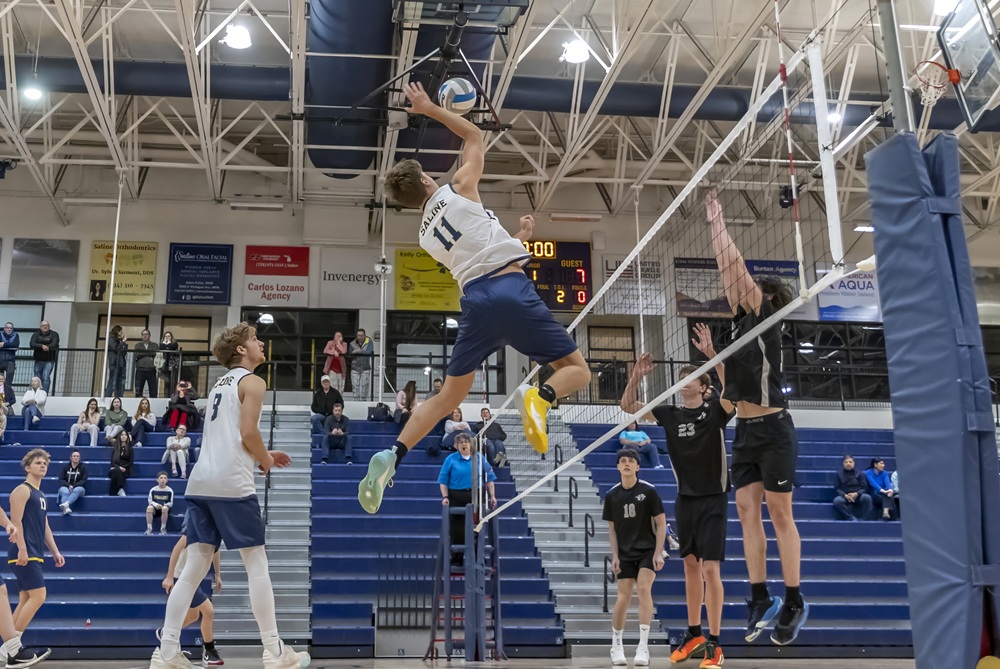
The very first MHSAA Boys Volleyball Finals are less than two weeks away. How does boys volleyball compare to girls volleyball in terms of rules and gameplay?
Very similarly. There’s really just one difference – the height of the net.
- The girls play with the top of the net set to 7-feet-4 and 1/8 inches.
- The boys play with the top of the net set to 7-feet-11 and 5/8 inches.
A difference of 7½ inches.
But other than that, the games are the same. Same size ball. Same size court. Same number of players. Same scoring system.
And all rules pertaining to the libero, multiple contacts, player position at moment of serve and unplayable areas are the same for both.
Now you’re ready for Battle Creek and the Boys Volleyball Finals.
Previous 2025-26 editions
May 19: Soccer Goal? - Listen
May 6: Fair or Foul? - Listen
April 28: Wrong Green - Listen
April 21: Injured Runner - Listen
April 14: Officiate Michigan Day - Listen
March 11: Basketball Replay - Listen
March 3: Over the Back - Listen
Feb. 24: Wrestling Out-of-Bounds - Listen
Feb. 17: Backwards Skiing - Listen
Feb. 10: Faking Being Fouled - Listen
Feb. 3: Bowling Pins - Listen
Jan. 27: Ski Gates - Listen
Jan. 20: Cheer Judges - Listen
Jan. 13: Basketball Over the Back - Listen
Jan. 6: Bowling Ball Bounces Out of Gutter - Listen
Dec. 9: Puck on Goal Netting - Listen
Dec. 2: Goaltending vs. Basket Interference - Listen
Nov. 25: Football Finals Instant Replay - Listen
Nov. 18: Volleyball Libero Uniforms - Listen
Nov. 11: Illegal Substitution/Participation - Listen
Nov. 4: Losing a Shoe - Listen
Oct. 28: Unusual Soccer Goals - Listen
Oct. 21: Field Hockey Penalty Stroke - Listen
Oct. 14: Tennis Double Hit - Listen
Oct. 7: Safety in Football - Listen
Sept. 30: Field Hockey Substitution - Listen
Sept 23: Multiple Contacts in Volleyball - Listen
Sept. 16: Soccer Penalty Kick - Listen
Sept. 9: Forward Fumble - Listen
Sept. 2: Field Hockey Basics - Listen
Aug. 26: Golf Ball Bounces Out - Listen
(Photo by Adam Sheehan.)