

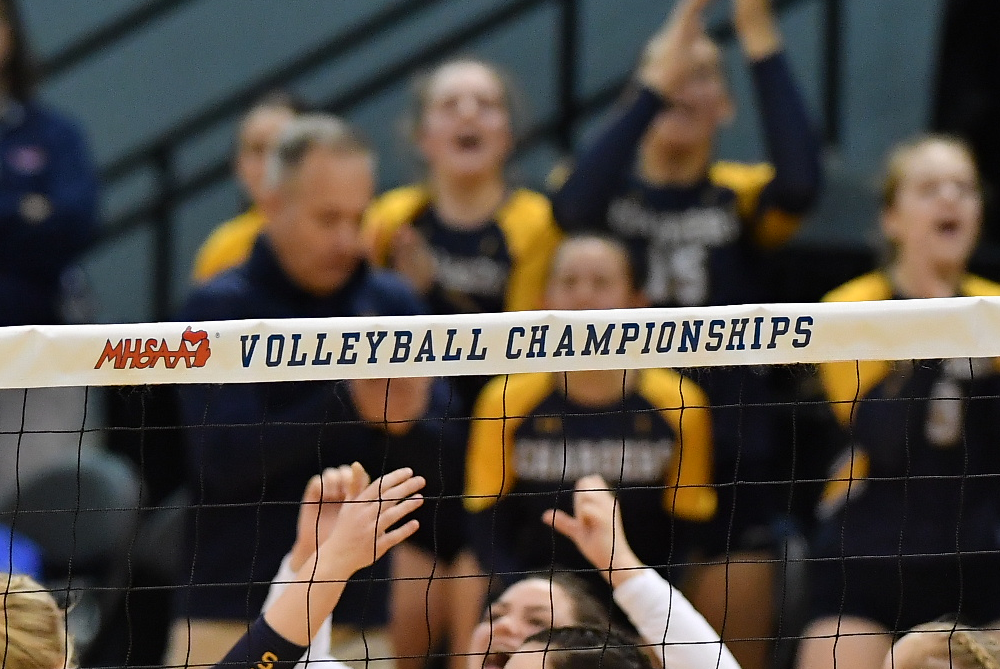
Be the Referee: Volleyball Jewelry
By
Paige Winne
MHSAA Marketing & Social Media Coordinator
September 6, 2023
Be The Referee is a series of short messages designed to help educate people on the rules of different sports, to help them better understand the art of officiating, and to recruit officials.
Below is this week's segment – Volleyball Jewelry - Listen
There’s a new rule in volleyball regarding the wearing of jewelry.
Previously, participants were not allowed to wear stud or post-like jewelry, such as earrings, even if they were covered by tape.
But now, stud or post-like jewelry, worn above the chin, is allowed. Stud earrings are now allowed to be worn during play – and do not need to be covered by tape.
Hoop-style jewelry, such as hoop earrings, are still not allowed, even if covered by tape. If a player is wearing hoop earrings, the coach will be issued an administrative yellow card for the first offense and a red card for a second offense in that set.
Items such as a medical-alert medal or a religious medal must be taped to the body and can be visible during play.
Previous Editions
Aug. 30: Football Rules Similarities - Listen
Aug. 23: Football Rules Differences - Listen

Be The Referee: Ratings
December 12, 2019
This week, MHSAA assistant director Brent Rice explains the process by which schools are able to rate the officials who work their competitions.
Be The Referee is a series of short messages designed to help educate people on the rules of different sports, to help them better understand the art of officiating, and to recruit officials.
Below is this week's segment - Ratings - Listen
Just about every sports fan, at one time or another, has left a game wondering, "How do the officials get evaluated or graded for their performance during a game?"
At the high school level, the MHSAA has the school rating system to where following each game, both teams submit a rating for the official’s work. The rating is then sent to the MHSAA Office and compiled over a three-year period. An official then has a rating average, and the schools can also indicate areas for improvement or growth that they deem are appropriate.
Those rating numbers then help to determine what officials are used in postseason play.
Past editions
Dec. 5: Video Review Success - Listen
Nov. 28: More Injury Time - Listen
Nov. 21: Football Review - Listen
Nov. 14: Sideline Safety - Listen
Nov. 7: Officials Playlist - Listen
Oct. 31: Most Important Line - Listen
Oct. 24: Automatic 1st Downs - Listen
Oct. 17: Catch Momentum - Listen
Oct. 10: Golf Rules Changes - Listen
Oct. 3: No Tackle Box - Listen
Sept. 26: You Make the Overtime Call - Listen
Sept. 19: Swimming Finishing Touch - Listen
Sept. 12: Curbing Gamesmanship By Substitution - Listen
Sept. 5: Football Safety Rules Changes - Listen
Aug. 29: 40-Second Play Clock - Listen