


Be the Referee: Hockey Rules Chart
February 6, 2020
This week, MHSAA assistant director Brent Rice addresses some of the rules differences between high school and college hockey.
Be The Referee is a series of short messages designed to help educate people on the rules of different sports, to help them better understand the art of officiating, and to recruit officials.
Below is this week's segment - Hockey Rules Chart - Listen
Today we’d like to take a look at some of the differences between high school and college hockey.
• During pregame, the high school coach must meet with officials to verify that all players are properly equipped. There is no such rule in college hockey.
• Hand passes are permitted in the defensive zone in high school hockey, but not in college hockey.
• Goalies may play the puck with a high stick in college hockey, but not in high school hockey.
• A puck directed into the goal with a skate may be allowed in college hockey, but not in high school hockey.
Knowing the rules differences can help you better enjoy watching this sport. You can find the complete chart of rules differences on the Ice Hockey page of the MHSAA Website.
Past editions
Jan. 30: Cheer Safety - Listen
Jan. 23: Goaltending - Listen
Jan. 16: Wrestling Tie-Breaker - Listen
Jan. 9: Pregame Meeting - Listen
Dec. 19: Alternating Possession - Listen
Dec. 12: Ratings - Listen
Dec. 5: Video Review Success - Listen
Nov. 28: More Injury Time - Listen
Nov. 21: Football Review - Listen
Nov. 14: Sideline Safety - Listen
Nov. 7: Officials Playlist - Listen
Oct. 31: Most Important Line - Listen
Oct. 24: Automatic 1st Downs - Listen
Oct. 17: Catch Momentum - Listen
Oct. 10: Golf Rules Changes - Listen
Oct. 3: No Tackle Box - Listen
Sept. 26: You Make the Overtime Call - Listen
Sept. 19: Swimming Finishing Touch - Listen
Sept. 12: Curbing Gamesmanship By Substitution - Listen
Sept. 5: Football Safety Rules Changes - Listen
Aug. 29: 40-Second Play Clock - Listen
Be the Referee: Legacy Program
December 4, 2014
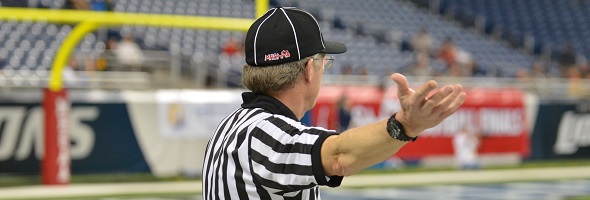
This week, MHSAA assistant director Mark Uyl dicusses the Legacy Program, which helps in the recruitment of officials from among current high school students.
"Be the Referee" is designed to help educate people on the rules of different sports, to help them better understand the art of officiating and to recruit officials. The segment can be heard on Mondays, Wednesdays and Fridays during the school year on The Drive With Jack Ebling on WVFN-AM, East Lansing.
Below is this week's segment - Legacy Program - Listen
Today we are going to talk about recruitment. Specifically the recruitment of new officials into the world of school sports.
One of the best ways for young people to get involved is through the MHSAA Legacy official program. This is open to any high school junior or senior who is interested in sports and officiating.
The Legacy official is paired with a Mentor official. That Mentor official is an established, veteran official for many years. The Legacy and Mentor official both go out and officiate together at the sub-varsity level, where that new person learns the rules, mechanics, coverages, and basically is learning the ropes of officiating from that Mentor official and getting them off on the right foot in the world of officiating.
Past editions
Nov. 26 - Sideline Management - Listen
Nov. 19 - 7-Person Mechanics - Listen
Nov. 12 - Blocking Below the Waist - Listen
Nov. 5 - Tournament Selection - Listen
Oct. 29 - Uncatchable Pass - Listen
Oct. 22 - Preparation for Officials - Listen
Oct. 15 - Automatic First Downs - Listen
Oct. 8 - Officials & Injuries - Listen
Oct. 1 - Overtime - Listen
Sept. 25 - Field Goals - Listen
Sept. 18 - Tackle Box - Listen
Sept. 11 - Pass Interference - Listen
Aug. 25 - Targeting - Listen