

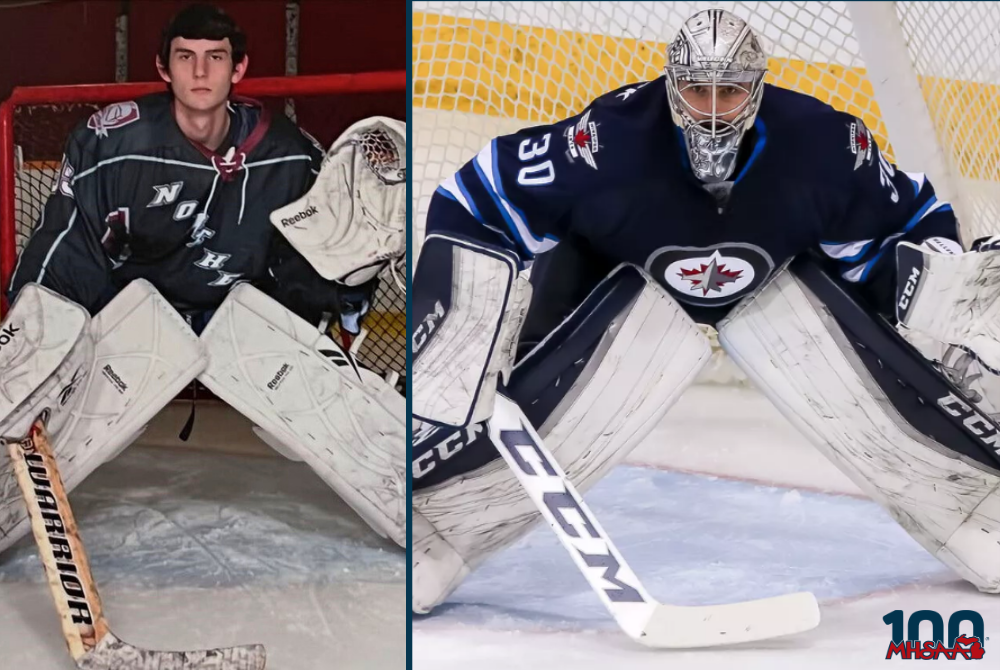
Flashback 100: Walled Lake Northern's Hellebuyck Reigns as NHL's Elite Netminder
March 7, 2025
Connor Hellebuyck has been a Knight, a Jackalope, a River Hawk, and a Jet – but above all, he’s one of the NHL’s premier goaltenders.
The Walled Lake Northern alum is a two-time Vezina Trophy winner (2020, 2024), awarded annually to the league’s top goalie. This season, his numbers are even better than during his award-winning years, and he has led the Winnipeg Jets to the best record in hockey through 62 games.
Hellebuyck’s journey to NHL stardom began at Walled Lake Northern (nicknamed the Knights) before he was selected in the fifth round of the 2012 NHL Draft by the Jets. He spent a season in junior hockey with the Odessa Jackalopes, then played two standout years at University of Massachusetts-Lowell (the River Hawks). There, he backstopped the team to its first-ever Frozen Four appearance in 2013, was twice named Hockey East Tournament MVP, and became the inaugural winner of the Mike Richter Award, recognizing the top goaltender in college hockey.
After his sophomore year at UMass-Lowell, Hellebuyck turned pro, beginning his career in the AHL with the St. John’s IceCaps and Manitoba Moose. By the middle of the 2015 season, he'd earned a call-up to the Jets – and he hasn’t looked back, cementing his place as their franchise goaltender.
Previous "Flashback 100" Features
Feb. 27: Zeerip's Mat Stats Remain Rarely-Challenged Chart Toppers - Read
Feb. 21: Before TV Stardom, Kerwin Excelled as All-State Skier - Read
Feb. 14: Detroit Central Star Voted into Pro Football Hall of Fame - Read
Feb. 6: Multi-Sport Star Look Becomes Super Bowl Officiating Legend - Read
Jan. 31: Johnson Family Put Magical Stamp on Michigan High School Hoops - Read
Jan. 24: Future Hall of Famers Face Off First in MHSAA Class A Final - Read
Jan. 17: First-Ever WNBA Draft Pick Rocked at Salem, Won Titles at Tennessee - Read
Jan. 10: Despite Launching Before 3-Point Line, Smith Still Tops Scoring List - Read
Jan. 3: Edison's Jackson Earns Place Among State's All-Time Elite - Read
Dec. 20: Future Olympian Piper Leads Grosse Pointe North to Historic Heights - Read
Dec. 13: The Other Mr. Forsythe in Michigan School Sports - Read
Dec. 6: Coleman's Legendary Heroics Carry Harrison Through Repeat - Read
Nov. 29: Harbaugh Brothers' Football Roots Planted in Part at Pioneer - Read
Nov. 22: 8-Player Football Finals Right at Home at Superior Dome - Read
Nov. 15: Leland Career Helps Set Stage for Glass' International Stardom - Read
Nov. 8: Future Baseball Pro Led Escanaba's Legendary Football Title Run - Read
Nov. 1: Michigan High School Baseball Trio Provide World Series Voices - Read
Oct. 25: Before Leading Free World, Ford Starred for Champion GR South - Read
Oct. 18: Mercy Links Legend Becomes World Golf Hall of Famer - Read
Oct. 11: Fisher Races to Finals Stardom on Way to U.S. Olympic First - Read
Oct. 4: Lalas Leaves High School Legacies on Ice & Pitch - Read
Sept. 27: Tamer's History-Making Run Starts in Dexter, Continues to Paris - Read
Sept. 20: Todd Martin’s Road to Greatness Starts at East Lansing - Read
Sept. 13: James Earl Jones, Dickson High Hoops to Hollywood Legend - Read
Sept. 6: Pioneers' Unstoppable Streak Stretches 9 Seasons - Read
Aug. 30: Detroit dePorres Rushes to 1995 Class CC Football Championship - Read
(Photos courtesy of Walled Lake Northern and the NHL.)
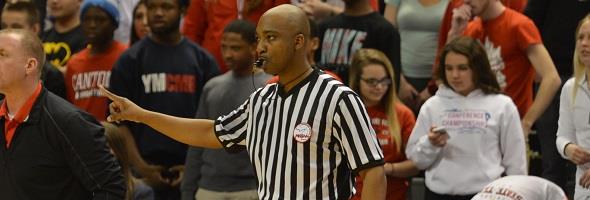
Be the Referee: Hockey Rules Chart
February 6, 2020
This week, MHSAA assistant director Brent Rice addresses some of the rules differences between high school and college hockey.
Be The Referee is a series of short messages designed to help educate people on the rules of different sports, to help them better understand the art of officiating, and to recruit officials.
Below is this week's segment - Hockey Rules Chart - Listen
Today we’d like to take a look at some of the differences between high school and college hockey.
• During pregame, the high school coach must meet with officials to verify that all players are properly equipped. There is no such rule in college hockey.
• Hand passes are permitted in the defensive zone in high school hockey, but not in college hockey.
• Goalies may play the puck with a high stick in college hockey, but not in high school hockey.
• A puck directed into the goal with a skate may be allowed in college hockey, but not in high school hockey.
Knowing the rules differences can help you better enjoy watching this sport. You can find the complete chart of rules differences on the Ice Hockey page of the MHSAA Website.
Past editions
Jan. 30: Cheer Safety - Listen
Jan. 23: Goaltending - Listen
Jan. 16: Wrestling Tie-Breaker - Listen
Jan. 9: Pregame Meeting - Listen
Dec. 19: Alternating Possession - Listen
Dec. 12: Ratings - Listen
Dec. 5: Video Review Success - Listen
Nov. 28: More Injury Time - Listen
Nov. 21: Football Review - Listen
Nov. 14: Sideline Safety - Listen
Nov. 7: Officials Playlist - Listen
Oct. 31: Most Important Line - Listen
Oct. 24: Automatic 1st Downs - Listen
Oct. 17: Catch Momentum - Listen
Oct. 10: Golf Rules Changes - Listen
Oct. 3: No Tackle Box - Listen
Sept. 26: You Make the Overtime Call - Listen
Sept. 19: Swimming Finishing Touch - Listen
Sept. 12: Curbing Gamesmanship By Substitution - Listen
Sept. 5: Football Safety Rules Changes - Listen
Aug. 29: 40-Second Play Clock - Listen