


MHSA(Q&)A: Beal City volleyball coach Kelly David
October 6, 2012
By Geoff Kimmerly
Second Half editor
 When people in Michigan’s volleyball community hear the name Kelly David, they might think first of the standout from just a few seasons ago. A four-sport standout for the Aggies, she set the volleyball team into the 2009 Class D Semifinals before going on to play at St. Clair Community College.
David, 20, graduated from high school a little more than two years ago, but is continuing to have an impact on the volleyball court – although now from the sideline as coach of the No. 3-ranked team in Class D. She took over the Beal City program this fall from her former coach, Randy Gallagher and has the Aggies 26-5-1.
Coaching has come naturally for the former floor leader, who already has gained valuable experiences and knowledge to share with her players. She previously coached at the junior high and club levels, the former for her aunt Sue Frederiksen – who coaches Almont’s varsity and is a member of the Michigan Interscholastic Volleyball Coaches Association Hall of Fame.
David is majoring in elementary education at Central Michigan University and sees teaching and coaching in her future for many years to come.
Why did you decide to become a coach?
I played at St. Clair (Community College) for two years, and my aunt had always been into coaching. I ended up coaching her seventh grade volleyball team for two years, and I coached in the Skippers AAU program over there. I found out I liked coaching more than playing.
How have you approached coaching a team that includes players who were freshmen when you were a senior in high school?
Going into it, I knew I wasn’t their friend; I was their coach. I wasn’t close to any of the girls except my sister (Monica, a senior). The people who coached me or were my teachers, (who said) go to class, do this, and you knew they received ultimate respect. I had helped out in previous years, and I knew what I had to do to gain that respect. And (my players) have listened to me.
Did you anticipate questions about you taking over the program only a few years out of high school?
I knew in my head, but I didn’t think it would be a problem in people’s minds. "She’s young, her sister is on the team;" that’s the stuff people might second guess. But I knew how to control the team, and having my sister on it wasn’t a big teal. So far (issues) haven’t happened. I’ve coached teams in previous years, and I’d always been the leader when I did play. I think that helps.
What were your goals coming into the season?
I had a lot of goals. Obviously, I wanted us to go far, like in the past. The biggest thing I noticed playing college from high school, the players knew the game of volleyball. They were smart. They had the same athletic ability as those I played against in high school, but they were just smarter. Knowing how to position the ball on the court, knowing the game, and I wanted to teach (my players) the game of volleyball. It’s important to know the game, and then we can work around the obstacles.
What did you learn by watching your aunt coach?
Just how strong you have to be. When I watch her coach, she’s very enthusiastic. But when someone does something wrong, she lets them know. That’s an important thing.
When did you first know you were interested in coaching?
When I was in high school, when I played, I’d help the other players. I noticed that was something I liked to do. I’d watch someone and pick up things they could fix. I thought about it in high school, and once I actually did it with the seventh graders, it wasn’t a job for me. It’s fun. Coaching is something I want to do. They want to be playing volleyball – that’s why they’re on the team. Everyone wants to be there, and we’re trying to accomplish the same thing.
What has been the biggest challenge during your first season?
The biggest challenge is handling the pressure. I know the team can do well. We’re ranked third in the state right now. But it’s getting them to perform the way they can perform, getting them to come together at the right time.
I’d also like to mention that Beal City (already) had a great program, from (former coaches) Randy Gallagher and before I came, Kelly Knuth. I’m just happy to step in and try to continue what they did.
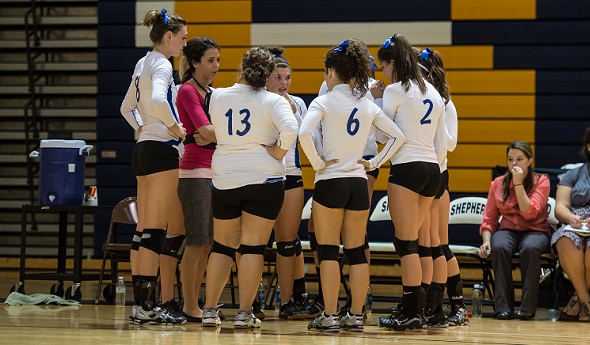
PHOTO: Beal City huddles during a break in its match against Shepherd this season. (Click to see more from HighSchoolSportsScene.com).
Loy Norrix Mourning Death of Longtime Coach, Teacher Duckett: 'He's All Knight'
By
Pam Shebest
Special for MHSAA.com
January 19, 2026
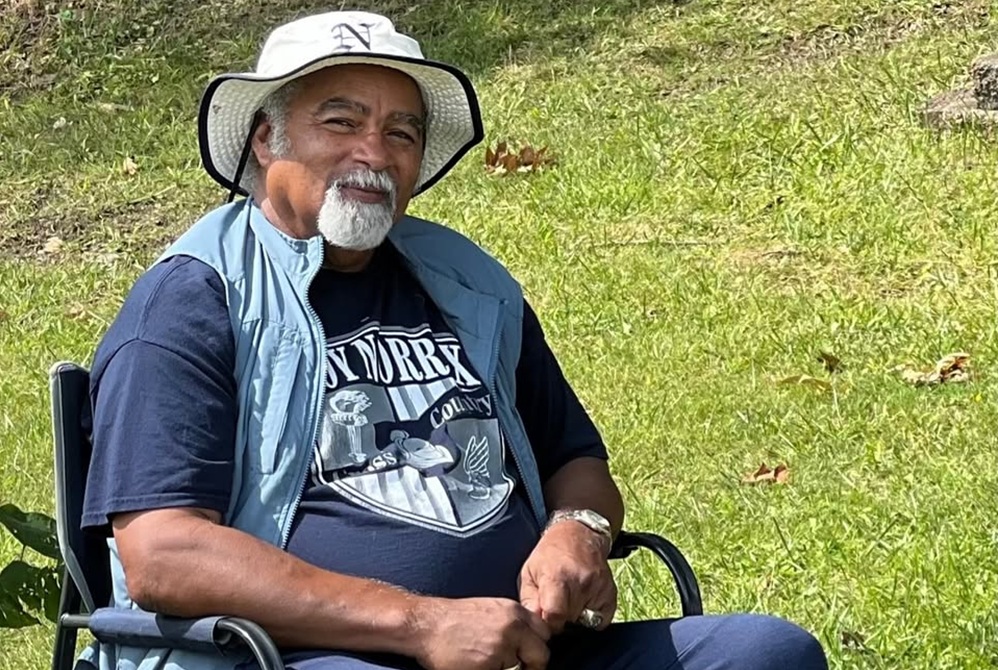
KALAMAZOO — Theophlis Duckett, known to generations of students and alumni as the more familiar “Ted” Duckett, dedicated 57 years of his life as a teacher and coach at Loy Norrix High School.
After his unexpected death Jan. 8, people will have a chance to show their respect and share memories at a community celebration of life, Saturday, Feb. 14, from 11 a.m.-noon (with doors opening at 10:30 a.m.) at the Loy Norrix auditorium.
At age 79, Duckett continued to teach three classes of physical education as well as coach the Knights girls and boys track & field teams.
“There aren’t many educators who have worked as long as he has, especially all those years in the same building,” said Andrew Laboe, Loy Norrix’s athletic director. "He connected with kids very well. He had a generational following: kids, parents, their grandparents, their great-grandparents.”
Some memories of Duckett bring a laugh from Laboe, who said he and Duckett had a running joke about his years as a Knight.
“I’m 55 years old and I told him I was negative-2 (years old) when he started working here,” Laboe laughed. “I believe he was a parapro or a locker room aide when he started here.
“In the teachers union seniority list, he is listed as 1969-70 for his first year teaching.”
Laboe said in losing Duckett, the school and community have lost a great resource for his knowledge of the history of the school and the people connected to it.
“He knows everybody,” Laboe said. “He was a consistent person in the lives of the kids he taught every day. Kalamazoo is not small like a lot of small towns around us, but it’s not very big, either.
"Ted knows everybody. You could get help from Ted on everything about children, who are they related to, who they are connected to, who can we contact to help them in any situation. That’s very helpful.”
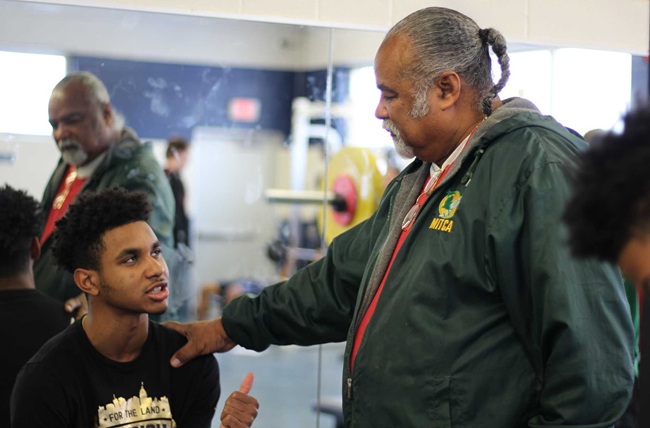 During his tenure at Loy Norrix, Duckett coached football, basketball and track.
“He’s definitely a good sprinter coach for track,” Laboe said. “He was a fixture at Loy Norrix forever. He’s all Knight.”
Duckett’s coaching tenure included developing several all-state football players. Among those were sons Tico and Todd, who continued their football careers at Michigan State and then the NFL.
Tico Duckett played for Washington while Todd was a first-round selection by Atlanta in 2002, and he also played for Washington, Detroit and Seattle.
Laboe laughs when he looks back on his first meeting with the coach.
“My first year (at Loy Norrix) was 2004,” Laboe said. “Ted came into my office the first day. I said, ‘Hi Mr. Duckett, how are you? I’m Andrew Laboe.’”
He told Laboe he already knew.
“He said, ‘I just want you to know you have one year to get all the information out of this head that you need to run this athletic department because I’m retiring in one year.’”
No matter how much Laboe got out of Duckett’s head that first year, it didn’t matter.
“I’ve been here for 22 years and he was still here. It’s crazy,” Laboe recalled.
“He’s one of a kind. I don’t think it will ever be replicated in my career. There’s not people like that anymore that are that dedicated to one school like Ted Duckett was to Loy Norrix.”
(Photos courtesy of the Duckett family and Loy Norrix High School/Knight Life.)