

Preview: Classic Clashes and Broken Records Expected
By
Geoff Kimmerly
MHSAA.com senior editor
June 5, 2021
The attention that will be paid to one of the Lower Peninsula Boys Track & Field Finals on Saturday will go past usual interest in just a local school or single division.
Many eyes will be turned to the Division 1 meet, featuring among many Ann Arbor Skyline senior Hobbs Kessler, who has made national news over the last few weeks by setting the national high school record in the 1,500 (3:34.36) and qualifying for the Olympic Trials in the event.
But he’ll be facing some familiar competition in his distance races at East Kentwood – including Hartland junior Riley Hough, who edged Kessler by two seconds in the Division 1 cross country final this past fall.
Their matchup is just one of many stories worth tuning in for this weekend. Events at all four sites begin at 10 a.m. (EDT) and tickets to attend can be purchased online only at GoFan. The meets also will be broadcast on MHSAA.tv and viewable with subscription. Click to watch each division: LPD1 | LPD2 | LPD3 | LPD4.
Below is a glance at team contenders and individuals to watch in all four divisions.
Division 1 at East Kentwood
Top Regional scores: Macomb Dakota 160, Traverse City West 145½, Northville 136, Novi 136.
Team forecast: East Kentwood won the last three championships before COVID, with Ann Arbor Pioneer finishing runner-up in both 2018 and 2019. Dakota is an interesting possibility this time with qualifiers throughout the meet. Fenton has top-three seeds in six events, and Zeeland West is another team with scoring opportunities in a variety of events.
Trey Gardette, Ann Arbor Huron: The senior sprint star has taken amazing strides over the last two years and may be on the verge of an unforgettable finish to his high school career. Gardette’s top-seed 10.5 in the 100 is a blink faster than the LPD1 Finals record of 10.53, and he’s second-seeded in the 200 and also will run on the 400 relay.
Riley Hough, Hartland: The I-96 corridor has been the center of distance running this school year, and Hough hopes to follow his Division 1 cross country championship in the fall with titles in the 1,600 and 3,200. He’s seeded first in the former with a 4:13.93.
Hobbs Kessler, Ann Arbor Skyline: He’s slated to run the 800, 1,600 and 3,200 and on the top-seeded 3,200 relay (7:53.30) Saturday. He won all three of those open races at his Regional, and so while he isn’t top-seeded in any that likely means little as he could drop major time.
Tamaal Myers II, Detroit Cass Tech: The Technicians standout junior has the top 110 hurdles seed time (14.06) by nearly a second and is tied for the top seed time in the 300 (39.32). He’ll also run the 400 and on the 1,600 relay.
Brandon Miller, Fenton: He finished fifth in the 200 as a sophomore in 2019, but he can take a massive leap Saturday as his top seed time in that race (21.25) is five hundredths of a second off the meet record. He’s also the second seed in the 100 with a seed time of 10.60 that is seven hundredths of a second off that meet record. And he’ll also run on contending 400 and 800 relays.
Division 2 at Zeeland
Top Regional scores: Orchard Lake St. Mary’s 216½, Dearborn Divine Child 186, Frankenmuth 164.
Team forecast: Four teams have won this championship over the last four seasons. Flint Powers Catholic is a possibility to make it five as it runs for its first team title led by sprint standouts and relays. Frankenmuth with top qualifiers in the sprints, relays and field events is another to watch in what lines up to be a low-scoring team race. A total of 10 schools won championships in this division over the previous 11 seasons before 2020 was canceled.
Ryan Brenner, Frankenmuth: The senior Eagles hurdler is the top seed in the 300 with a time of 40.1 and also will run on the top-seeded 1,600 relay (3:28.44) and high jump.
Jamal Hailey, Berrien Springs: The standout junior sprinter has the top seed time in the 100 (11.04) and the third-fastest in the 200, and he’ll also run on the second-seeded 400 relay.
Austin Hamlin, Flint Powers Catholic: The Chargers sophomore would play a major role in any team title pursuit, entering with the top seed in the 200 (22.5), third-fastest in the 100 and as part of the top-seeded 400 relay (43.3) and fourth-seeded 800 relay. That 400 relay time is a second off the meet record.
Alex Mansfield, Monroe Jefferson: The junior thrower is another who has made a major move over the last two years. He enters Saturday with the top seed in the shot put (56-3) by two feet and the top seed in the discus (163-11) by nearly 10.
Luke Stowasser, Edwardsburg: The junior Eddies jumper also is top-seeded in both of his events, with a 22-6½ in the long jump and 6-10 in the high jump. That high jump is six inches better than the field and two off the meet record. He was the high jump runner-up as a freshman.
Division 3 at Jenison
Top Regional scores: Grass Lake 132, Caro 129, Pewamo-Westphalia 126 1/3.
Team forecast: Grass Lake will be pursuing its first team title since 1970 and has six top-four seeds leading the way. Figuring the next few contenders is difficult with points looking to be spread among a number of teams.
Brennan Bargesser, Grass Lake: A drive for the team championship would include significant points from Bargesser, who is seeded first in the 200 (21.98) and 400 (49.34) and second in the 100 for his final high school meet. He’ll also run on the top-seeded 400 relay (44.14) – that seed time is one second off the meet record.
Hunter Jones, Benzie Central: The sophomore standout has two Division 3 cross country championships to his credit and will make his Track Finals debut as the top seed in the 3,200 (9:37.42) and a likely contender in the 1,600 and 800 as well.
Josh Jones, Harrison: He’ll close his high school career running the 800, 1,600 and 3,200, with his 1,600 seed time (4:19.84) topping that event list.
Brenden Quackenbush, Chesaning: He’s set to establish himself in both throws at this level Saturday, with the top seed in the discus (143-0) by nearly two feet and the third seed in the shot put.
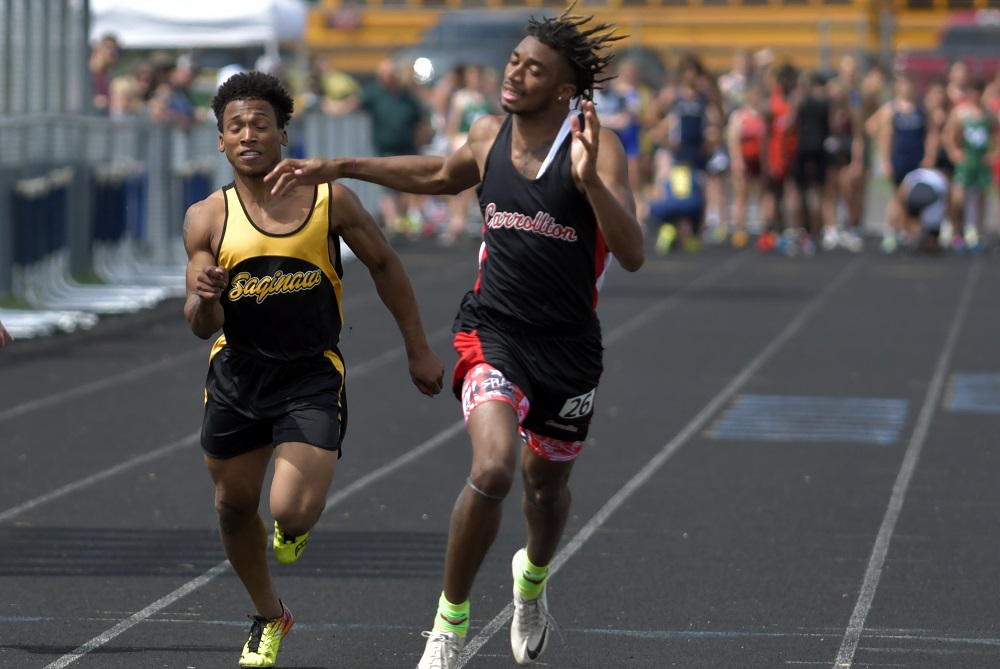
Derrick Voltz, Carrollton: A qualifier in the 100 as a freshman in 2019, he could cap his junior season as a two-event champion. He’s seeded first in the long jump (23-2) by nearly a foot with that leap only five inches off the meet record. He’s also the top seed in the 100 (11.11) just ahead of Bargesser.
Division 4 at Hudsonville
Top Regional scores: Lutheran Westland 171, Reading 170, Carson City-Crystal 147.
Team forecast: Kalamazoo Hackett Catholic Prep was the back-to-back champion before COVID, and Saugatuck was the Division 3 runner-up in 2019 but is back in Division 4. Saugatuck won’t run a relay this weekend but has favorites in the hurdles and distance events, and Breckenridge’s strengths in the sprints and relays should make it a team title contender as well as it seeks its first championship.
Coleman Clark, Carson City-Crystal: The lone returning champion in this division won the 3,200 as a sophomore in 2019 and will run that race along with the 800 and 1,600 and as part of the top-seeded 3,200 relay (8:19.40).
Benny Diaz, Saugatuck: The junior sprint/hurdles standout could make a run at four individual titles Saturday or next season. He’s the top seed in both hurdles races this time (15.01 in the 110 and 40.59 in the 300), and the fourth seed in the 200 and seventh in the 100. He was third in Division 3 in the 300 as a freshman.
Zane Forist, Carson City-Crystal: He was the runner-up in the discus and eighth in the shot put as a freshman two years ago, and he’s aiming for much more this time. His top-seed throws of 196-8 and 64-4, respectively, would both set LPD4 championship meet records – both by roughly six feet.
Nik Pettinga, Saugatuck: A top distance runner in cross country the last few seasons, he is looking to finish as a champion in his last high school meet and enters as the top seed in the 1,600 (4:26.99) and second seed (to junior teammate Max Sharnas) in the 3,200.
Charlie Steinhaus, Breckenridge: The speedy senior would help lead any charge for a team championship, entering as the top seed in the 100 (11.01) and second in the 200. He’ll also run on the top-seeded 400 relay (44.51) and second-seeded 800 relay.
PHOTO: Carrollton’s Derrick Voltz, right, breaks across the finish line during the 100-meter preliminaries at his Division 3 Regional at Shepherd last month. (Click for more from High School Sports Scene.)
'World's Game' Makes Home in Metro Detroit, Then Grows Statewide
By
Ron Pesch
MHSAA historian
November 3, 2021
In the fall of 1982, Livonia Stevenson assistant coach Ralph Aulicino suggested to Detroit Free Press stringer Jon Pepper that “somewhere along the Livonia city limits” there should be a sign erected that proclaimed the Detroit suburb as “the state capital of soccer.”
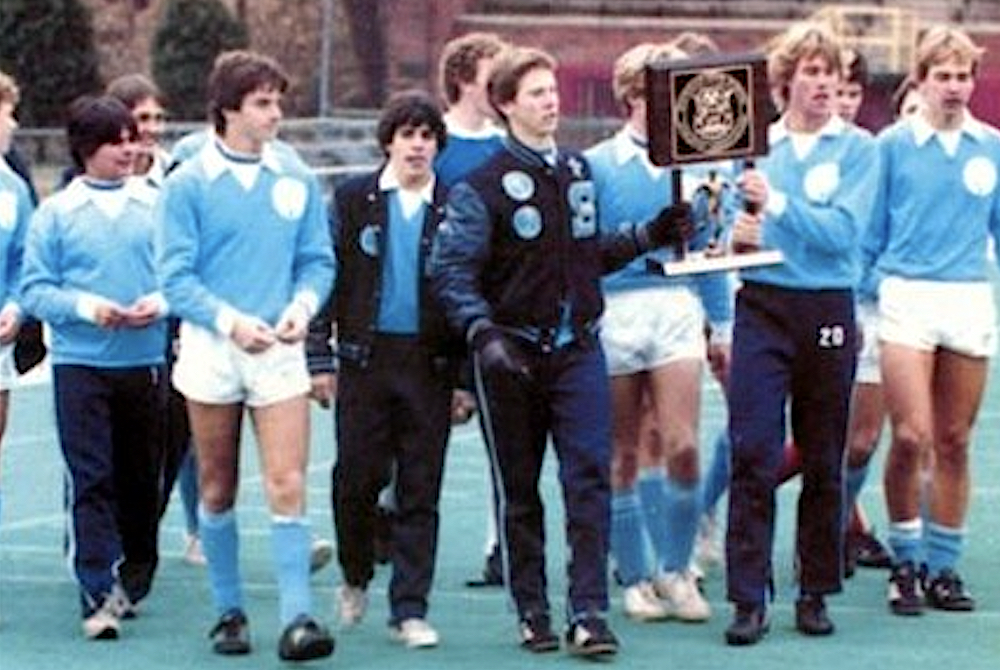
Stevenson’s Spartans had just beaten crosstown rival Livonia Churchill 4-1 in what some called “The Battle of Livonia.” The contest, played at Flint’s Atwood Stadium, was the first-ever Class A Boys Soccer Final sponsored by the Michigan High School Athletic Association.
Guided by head coach Pious (Pete) Scerri, a former first division player in England, Stevenson finished the year with a flawless 22-0 record. Gary Mexicotte scored twice for the Spartans in the title game, finishing with 48 goals on the season. In December, he was named prep All-American.
Aulicino’s statement might have been considered a bit arrogant within the soccer community. Still, there was little question that the surrounding burgs of the Motor City were the hub of the prep soccer world in Michigan at the time.
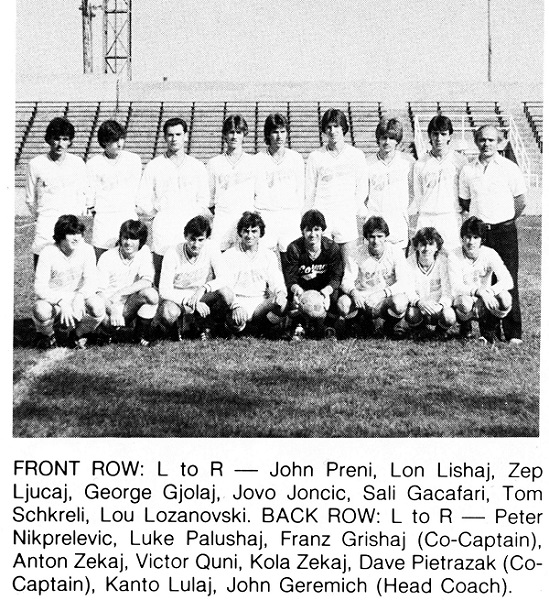
The Hamtramck Cosmos, coached by John Geremich, finished with the MHSAA’s Class B-C honor while Grosse Pointe Woods University Liggett, coached by David Backhurst, earned the Class D trophy in the autumn tournament. The Knights finished the year with an 18-1-1 mark, and would repeat as champs in 1983, but this time in Class B-C.
Dominant
Looking back today, Aulicino’s words were prognostic.
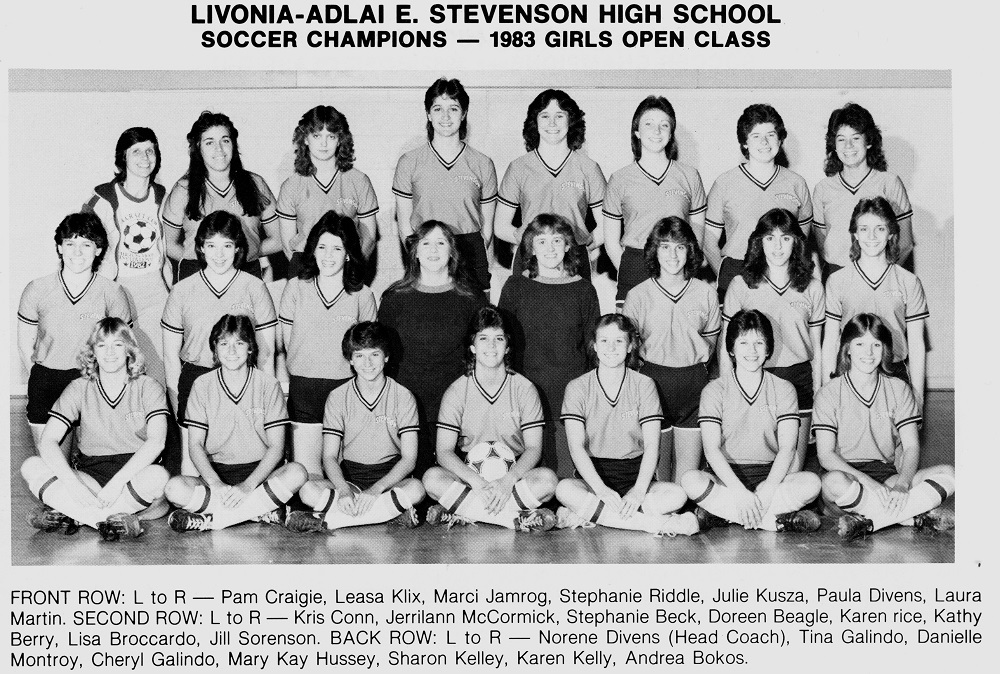
In the spring of 1983, Stevenson’s girls, coached by Norene Divens, grabbed the MHSAA’s first Open Class championship – meaning schools of all sizes competed in one division – with an 8-0 win over Saginaw Eisenhower.
Then Scerri’s boys would appear in an incredible six of the first seven Class A title games, winning four. Divens’ girls appeared in the first three Open championships, winning two while finishing runners-up to Northville in a 5-4 overtime battle in 1984. Churchill’s girls won the 1986 Open title. When the MHSAA expanded the girls postseason to two divisions, Churchill finished runner-up in Class A to Plymouth Salem – yet another metro Detroit high school – in the springs of both 1987 and 1988.
Allen Park Inter-City Baptist won three straight boys Class D titles from 1983 to 1985.
Coach Scerri did emphasize the importance of the moment to the development and changing landscape of sports in Michigan following that first championship:
“Let me put it this way. Usually, we get the rejects from the football team. This year, the football team took three rejects from us. It’s going the other way around now.”
Culinary Delights, Old World Music, and Soccer
The chance to play for an MHSAA Finals title must have been a joyous occasion in the vibrant community of Hamtramck. Geremich, whose team won that first Class B-C championship, explained the city’s connection to the sport in 1980.
 “We’ve got a lot of Yugoslavian and Albanian kids who were brought up on soccer,” he told the Free Press. “Their parents never played football and baseball, so they look to soccer.”
Geremich himself was one of those kids. He came to America in 1958 from Serbia and attended Hamtramck. Soccer, however, wasn’t an option at Hamtramck during his days in high school.
Without that outlet, Geremich along with classmates Francisco ‘Pancho’ Castillo from Colombia and Jerry Podesek from Poland, all became standouts in the school’s outstanding tennis program instead. The Cosmos won 11 consecutive MHSAA Class A team tennis state titles from 1949 to 1959, and 18 of 21 between 1949 and 1969. The trio would later attend and play tennis at Southern Illinois University together.
“All three readily admit that soccer and not tennis are the national pastimes in their homelands,” stated the Grand Rapids Press in 1958.
Hamtramck’s top player in 1982 was Kanto Lulaj, who had been playing soccer since the third grade. Only a few years earlier, his family had come to Hamtramck from Albania. A 150-pound junior center-forward, he finished that championship season as Michigan’s most prolific scorer, notching 56 goals. A four-year varsity starter, he was named All-American in 1983, then played collegiately at the University of Connecticut.
Pockets
Delving into the game’s earliest history at the prep level in Michigan certainly helps explain the area’s dominance. Wildly popular among the immigrant population employed in plants across southeastern Michigan, men’s factory and recreational soccer leagues flourished in and around Detroit for years.
The Holley Carburetor F.C. team, sponsored by Detroit’s Holley Brothers Company, gained coast-to-coast attention as it battled to the National Challenge Cup championship game (today known as the Lamar Hunt US Open Cup), played before 10,000 fans at University of Detroit stadium in May 1927. A Detroit professional circuit even came into existence that same year. The short-lived Detroit Cougars, according to the Free Press, were the first incorporated soccer club in Michigan.
“School soccer enjoyed a successful season,” said the Free Press in 1928, “especially in the elementary and intermediate grades, in which more than 17,000 boys participated in the schedule formulated by the health education department of the Detroit public schools.”
Ultimately, the increasing popularity of American football among boys (and spectators) overwhelmed soccer within public school districts, and soccer never became much more than an activity played outside school, or perhaps sometimes during gym class.
 Soccer, or at least a form of the game, did appear as an intramural athletic activity in girls gym classes across the state dating back into the 1920s. Occasionally, especially in small towns, contests were played between schools from neighboring districts. For example, Buchanan’s senior girls defeated the sophomore girls from their old rival Niles, 2-0, in 1928.
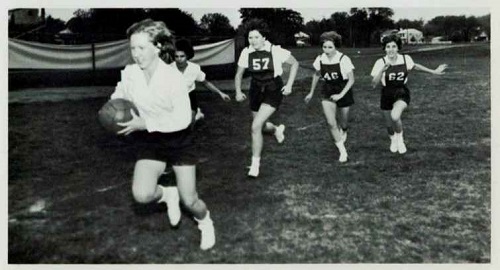
As state and national debate grew concerning the capacity and value of athletic activity and competition amongst girls, the sport was often modified within districts. At Ludington, speedball replaced soccer in 1948-49. At Birmingham Seaholm in 1962, girls participated in speed-o-way, a game similar to soccer that allowed use of the hands.
A Spark
Prep soccer programs found a spark among the boys at select schools in the suburbs of Detroit during the late 1950s and early 60s.
“(Initially) the only people that were playing anything approaching league soccer were the private schools,” recalled John Sala, a former coach at Birmingham Groves.
These programs were started as club sports, representing a school, but generally run outside the finances, guidance, and official sponsorship of a school’s athletic department. Opponents came where they could be found.
School yearbooks from the past help tell the tale.
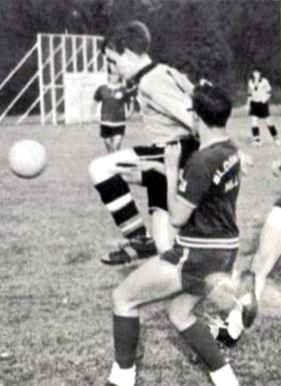 The sport was played at Bloomfield Hills Cranbrook in the 1930s, 1940s, and 1950s with games played against other private schools in Canada, Ohio, Illinois, western New York state, and Pennsylvania. Michigan schools first began appearing on the schedule in the 1960s.
The team at Grosse Pointe University School (GPUS), according to its 1964 annual, “was founded five years ago by Mr. Preston, who returned this year to coach it.” The season was comprised of only six games, played against three opponents – Cranbrook, Bloomfield Hills and a season-ending game with “Preston’s Ringers.”
“With soccer only in its second year as a Varsity sport … the 1965 team showed a promise of successful seasons to come,” read the Bloomfield Hills High School yearbook. The boys finished the year with a 5-3-1 record. “Since soccer has yet to become a league sport,” the Barons faced squads from Cranbrook, GPUS, and Oakland University, as well as teams from Lowe Tech and Sarnia, both from Ontario, Canada.
Soccer became a varsity sport at Detroit Country Day School in 1965. That team finished with a 3-2-3 mark, playing contests with GPUS, Maumee, Ohio, and a newly-formed club team from Groves:
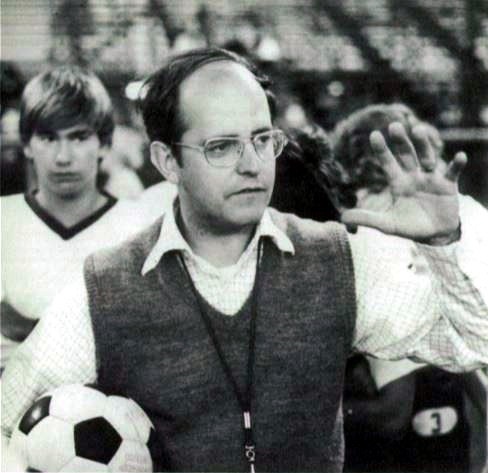 “After a late start in practice because they lacked a coach and equipment, Groves’ first soccer team introduced the rugged game to Birmingham varsity sports. Mr. John Sala took over coaching duties and helped the boys make the transition from last year’s club status to a varsity team with a full season schedule. The arrival of goals and other equipment and the donation of uniforms by Mr. Harrison Tracy boosted team morale and their play improved noticeably.”
“When I was at Groves and starting out coaching (in 1966), I knew absolutely nothing other than having watched it,” recalled Sala, laughing at the memory. “They had a club team run by another staff member … and he left. Basically, they called me down to the office … I thought I was going to get reprimanded. (Instead) she says, ‘We have to have a coach by 4:00 today.’ I said, ‘How much does it pay?’ She said ‘$300.’ It sounds like a lot of money to me. So, I learned by doing.”
Sponsorship of soccer soon spread to other public schools in the immediate area, with teams appearing at Bloomfield Hills schools Andover and Lahser, the Livonia schools, Birmingham Seaholm, and Ferndale.
West Michigan
On the other side of the state, the soccer seed was taking root in the Greater Grand Rapids area.
“Central Christian, champion of the Christian High School Soccer League, completed its season Saturday morning at Calvin College’s Knollcrest Field by defeating Holland Christian, 3-1,” stated the Grand Rapids Press in October 1966. The four-team league also included Hudsonville Unity Christian and Grand Rapids Calvin Christian.
A year later, Kalamazoo Christian was added to the league, then Muskegon Western Michigan Christian (WMC). Casey Ver Haar, an honorable mention All-American goalie in soccer at Calvin College, coached Central Christian. Dave VerMerris, a former track star at Central Christian, then at Calvin College, took the job at WMC as coach at age 22. He had first given soccer a try as a freshman in college.
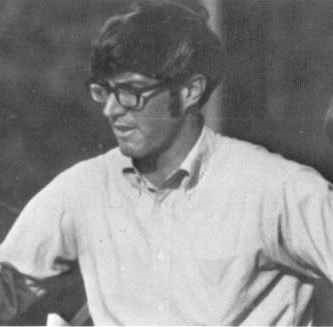 “Calvin that year had graduated quite a few of their soccer players,” recalled VerMerris, explaining how that began. “(Several) of their soccer players were immigrants – Dutch immigrants. They were hurting for bodies …”
Marv Zuidema, the soccer coach, approached VerMerris sometime in August of 1964 and suggested he give the sport a try.
“I had some speed back in those days, and speed can take care of a lot of things if you don’t have the skill,” said VerMerris, chuckling. “His dream was I would outrun their defense and put the ball in the net. That never happened.”
Sport of the Future
Christian League officials were pleased with the level of competition and attendance at games. Between 100 and 150 spectators were showing up for contests.
“While (the) majority of West Michigan schools compete in nine major sports now,” noted longtime Press sportswriter Joe Vanderhoff in 1968, “it would be a good idea for some of the officials (at other schools) to look into the game of soccer. It’s been the No. 1 sport in Europe for years.”
According to MHSAA surveys, only 12 schools sponsored boys varsity soccer teams during the 1969-70 school year, with somewhere around 300 participants. By the 1975-76 school year, the numbers had grown to 35 schools and 1,085 participants. (Another dozen or so schools had club teams).
Without the numbers needed to meet the threshold for tournament sponsorship set by the MHSAA, the Michigan High School Soccer Coaches Association chose to host a 16-team playoff invitational beginning in the fall of 1975 to name a state champion. Groves, which had played in the 10-team North Woodward Conference, emerged from the knockout brackets to win that first title, defeating Hudsonville Unity Christian, 6-1. According to Free Press coverage at the time, more than 500 attended the championship game.
Undeniably, the sport was exploding in popularity at the participation level with American Youth Soccer Organization (AYSO)-affiliated clubs across the state. A Free Press article had noted that “a soccer team can be outfitted for about one-tenth the cost of a hockey player or one-fifth the cost of a football candidate.”
Still, it would take time. Invitational title tourneys, initially sponsored by the Coaches Association, were continued for six more years. The 1977 open-class single-elimination tournament featured 32 teams, with the state broken into eight regions.
“After a few years, they split it into an ‘A-B’ and ‘C-D’ (classification), recalled VerMerris, who remained at WMC for 30 years. “In 1979, we won the whole shooting match. In 1980, we won ‘C-D’.”
Soccer in Mid and Northern Michigan
Too small to sponsor 11-player football teams, Leland, Northport, Buckley, Lake Leelanau St. Mary, and The Leelanau School in Glen Arbor added soccer to the mix of varsity sports played within the Cherryland Conference in the fall of 1970. Leland’s Comets won the league’s first title that season.
Soccer first hit the Lansing area as a varsity sport beginning in the late 1970s.
“Right now East Lansing High is the only major area school which has included soccer in its interscholastic program,” Lansing Journal correspondent Keith Gave wrote in 1978. “In only its second year, the program brought out 70 students, enough for a varsity team and two junior varsity teams.
“Filling a schedule was a slight problem because few area schools play the game. Holt St. Matthew has had a program for about four years and Lansing Capitol City Christian has one. In fact, up until a few years ago the only soccer to be found at the interscholastic level was in the smaller, parochial schools which didn’t have football programs.
“But,” said East Lansing coach Nick Archer, “it’s just a matter of time before it’ll be all over. The game is just exploding at the youth level.”
Archer, who would coach the Trojans for 41 years, had played soccer at Michigan State and was part of the 1967 and 1968 national champion squads with the Spartans. He had scheduled games with Roeper, Cranbrook, first-year varsity teams from Saginaw Eisenhower and Flint Carman, and with Ann Arbor schools Pioneer and Huron, both in their second year of varsity competition.
Critical Mass Achieved
“In 1974-75, the cheerleaders came to me and said, ‘We want to play soccer,’” recalled Sala. “I had about 85 girls show up so I split them up into four teams – a freshman, sophomore, junior and senior team – an informal thing for the first few years. With Title IX, we already had a club team going – a reliable program.”
Soccer was made a girls varsity sport at Groves during the 1977-78 school year. Girls teams were also active at Livonia and Farmington schools, as well as at Andover, Seaholm, Lahser, and Roeper.
Numbers grew across the state to 71 boys teams and eight girls teams during the 1979-80 school year, then to 84 boys and 36 girls squads a year later.
In December 1980, a committee of superintendents, principals and athletic directors recommended to the MHSAA Representative Council that it sponsor a state soccer tournament for boys and girls beginning with the 1982-83 school year. The Representative Council concurred with the suggestion.
Troy Athens, coached by Tim Storch, one of Sala’s former players at Birmingham Groves, won the last of the A-B invitational soccer championships, played in November 1981. Four of his boys teams and four of his girls teams would later go on to win MHSAA soccer titles. Detroit Country Day won the final C-D Division invitational crown in the spring of 1982.
“More than 45,000 boys and girls in the Detroit metropolitan area – the majority of them in Oakland County – now play in youth soccer programs sponsored by communities, clubs and businesses,” stated Johnette Howard in a Free Press article on the country’s “latest boom sport,” published in September 1982.
“The skill levels of the players are unbelievably improved,” said Bloomfield Hills Lahser coach Chet Schultz. “There is not a boy on my varsity team that hasn’t played at least five or six years.”
Not all coaches were in favor of the move to MHSAA sponsorship.
“Some coaches didn’t like having the MHSAA dictate the number of games to be played, when the season could start, rules for playing Canadian teams, coaching accountability, etc.,” stated VerMerris, who played witness to, then researched and captured detail on those early days of play in West Michigan and across the state.
“The MHSSCA was very instrumental in helping make this a smooth transition and the MHSAA was very willing to work with us. Not surprisingly, not everyone was happy but this legitimized the sport and put it on a par with all the other MHSAA sponsored sports.”
 Ron Pesch has taken an active role in researching the history of MHSAA events since 1985 and began writing for MHSAA Finals programs in 1986, adding additional features and "flashbacks" in 1992. He inherited the title of MHSAA historian from the late Dick Kishpaugh following the 1993-94 school year, and resides in Muskegon. Contact him at [email protected] with ideas for historical articles.
PHOTOS (Top) Livonia Stevenson carries its trophy off the field at Atwood Stadium. (2) Hamtramck was the first Class B-C champion. (3) Birmingham Seaholm students play speed-o-way during the 1962-63 school year. (4) A Bloomfield Hills Cranbrook player possesses the ball during the 1964-65 school year. (5) Birmingham Groves coach John Sala speaks to his team during the 1975 season. (6) Dave VerMerris became the Western Michigan Christian coach at age 22 and led the program for 30 years. (7) Stevenson’s girls won the first MHSAA Open Class championship in 1983. (Photos collected by Ron Pesch.)