

AD Inducted to National Hall of Fame
May 7, 2014
By Geoff Kimmerly
Second Half editor
Winter gets hectic so quickly that we’re forced to save some intriguing items that come our way for a sunnier day – and that day is today.
Following are news, notes and a few key links collected over the last few months, including the national Hall of Fame induction of a longtime Michigan athletic director, local recognition for another and statewide acclaim for a group of students putting their video production equipment to good use benefiting all.
Ann Arbor AD Honored Nationally
Former Ann Arbor Huron athletic director Jane Bennett was among five inducted into the National Interscholastic Athletic Administrators Association Hall of Fame in December.
Bennett served 26 years as a teacher, coach, athletic director and assistant principal in Michigan before spending the last decade as a principal at two schools in Montana. She served as athletic director at Huron for 15 years through 2002-03. The NIAAA reported that during her final decade in that position, participation in athletics doubled.
Bennett, who received her bachelor’s and master’s degrees from the University of Michigan, began her career at Huron in 1977 as varsity softball coach and became a math teacher and the co-director of athletics a year later. She coached the softball team 14 seasons before moving into the full-time athletic director position. Bennett was co-founder of the Michigan High School Softball Coaches Association and served as MHSSCA president from 1982-87.
Among other achievements at Huron, Bennett was a leader in a successful campaign to gain voter approval of a $60 million bond package, which included $20 million to improve and expand athletic facilities. She also developed curriculum for an annual varsity captains/head coaches leadership training program and composed handbooks/guidebooks for coaches, athletes and parents.
Bennett also was a valuable contributor to the Michigan Interscholastic Athletic Administrators Association and the NIAAA. She was president of the MIAAA in 1993-94 and a state conference speaker on several occasions. Bennett also served in various NIAAA leadership positions including on the committee that developed the Leadership Training Institute in 1996.
Bennett was named MIAAA Athletic Director of the Year in 1998 and received its State Award of Merit in 1997. She received the MHSAA’s Women in Sports Leadership Award in 1995 and was inducted into the MHSSCA Hall of Fame in 1995. Prior to her selection to the NIAAA Hall of Fame, Bennett was honored with the NIAAA Distinguished Service Award in 1998 and the NIAAA Thomas E. Frederick Award of Excellence in 2000. In 2005, she was inducted into the National Council of Secondary School Athletic Directors Hall of Fame, having served as its president in 2003 and been selected as its Athletic Director of the Year in 1998.
PSL's Ward: 'Pillar' of Detroit Athletics
Alvin Ward, the executive director of athletics for the Detroit Public School League and a member of the MHSAA Representative Council, received a 2014 Pillar in the Community Award in April from the Coast II Coast All-Stars, a Detroit-based pro basketball team that plays in the American Basketball Association.
Ward has served as a teacher, assistant principal and principal as well for Detroit Public Schools, and directs programs with a combined 500 coaches and 4,500 athletes.
Linked up
- This winter, the MHSAA Representative Council adopted a number of football practice rules changes aimed at improving player acclimatization at the start of fall and reducing head trauma and injuries. The Adrian Daily Telegram’s Doug Donnelly got responses from a number of coaches from that area of the state; click to find out why they feel these changes are important.
- Port Huron Times Herald writer Paul Costanzo let people know about our Student Advisory Council through the experience of Marlette’s Connor Thomas, one of our juniors and a great contributor this school year.
Power of Awareness
The Kimberly Anne Gillary Foundation works to educate Michigan schools on sudden cardiac arrest and train personnel in CPR and the use of an AED (automated external defibrillator). The video below teaches us again about the importance of awareness.
Saginaw Heritage was awarded $5,000 in April as the winner of the Gillary Foundation’s High School AED Contest. Students were asked to create a 3-minute video emphasizing the importance of Michigan high schools being adequately prepared to respond to a sudden cardiac arrest or related event on school property.
Randy and Sue Gillary created the foundation after their 15-year-old daughter Kimberly – an athlete at Troy Athens – died after suffering sudden cardiac arrest in 2000. The contest judges were Kimberly’s sisters Emily Kucinich, Jennifer Gregroy and Katie Gillary.
As of April 1, the Gillary Foundation had raised $1.2 million and donated 650 AEDs to schools – with three lives having been saved with donated AEDs. For more, click www.kimberlysgift.org.
Charlevoix Golf Playing to Add Championship to Awe-Inspiring Comeback
By
Tom Spencer
Special for MHSAA.com
June 3, 2026
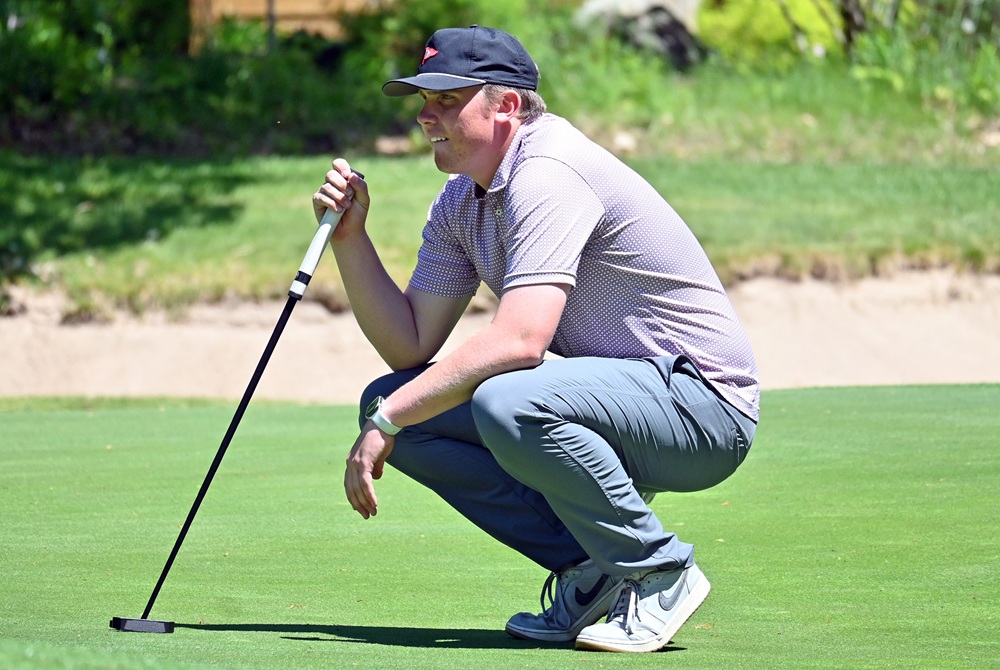
The final chapter in Bryce Boss’ high school golf career will be written this weekend at the Lower Peninsula Division 4 Final at Michigan State’s Forest Akers West.
 Boss will be playing in his third Final after leading Charlevoix to a Regional title last week. Now a senior, he will tee off with hopes of winning an individual and team championship.
“Bryce has a great chance this spring,” said coach Doug Drenth. “He's such a great leader for us and is doing such a great job. He's such a great example for Charlevoix. It’s pretty cool to see how far he's come.”
With Boss in the lineup, Charlevoix finished fourth at the 2023 Final. The Rayders finished sixth in 2024 current teammates Joe Gaffney, now a senior, and Maxwell Drenth, a junior, joining Boss in the lineup.
Charlevoix didn’t qualify for last season’s championship rounds, finishing eighth at the Regional. Gaffney and Drenth were unable to golf that day and missed the majority of last season after the team was part of a horrific car crash that April 27. The team was on its way to spend the night at Crystal Mountain, returning from the first day of a two-day tournament at Arcadia Bluffs. Coach Drenth was driving the team van.
Boss and now-junior Landen Whistler were able to come back from the crash and play in the Regional, along with seniors Jackson Crouse and Emmett Bergmann and now-senior Keane Helstrom.
“It’s more about the guys who really missed out last year, their recovery and their comeback,” Boss noted about this weekend’s opportunity. “Especially for guys like Coach, and for Joe, and for Maxwell, who really missed out last year on everything because of the accident, and now we're making a comeback as a team.”
 And what a comeback it has been.
Boss endured scrapes, a concussion and bruised ribs in the crash. He and Whistler were able to return to school a few days after, but others, especially Coach Drenth and Gaffney, were not as they suffered near-fatal injuries.
So far, the comeback on the golf course has included Northern Shores Conference and Regional championships for the Rayders with Boss, Gaffney, Whistler and Max Drenth scoring in both. Boss was crowned conference and Regional champion while leading the Rayders back to the Final.
The team shot the lowest round in school history at the conference meet.
“Sometimes when you talk about hard things, you can gain some therapy,” acknowledged Drenth, now in his ninth season at the helm of the Rayders. “But I would say that we're all looking forward to moving on in life. I'm grateful that we're here, and we're looking forward to just being back to ‘normalish.’ I feel like we are looking at hope and what we can achieve. So I'm looking forward to moving on.”
Part of the moving on for the Rayders included adding Helstrom and freshman Blake Boss to the regular lineup.
As his final chapter is revealed this weekend, Boss believes even better Charlevoix golf teams will materialize after he graduates. Max Drenth, who was hospitalized more than a week after the crash, and Whistler will be among those back next year to carry on the program’s success.
“Maxwell and Landon are going to do awesome,” Boss said. “Blake just realized this year that golf is really a sport that he wants to do, so hopefully that'll lead him to practicing more and getting better. And then we have two or three incoming freshmen. I don't know if they'll be great their freshman year … (but) they'll end up being some of the better players Charlevoix has ever had.”
 More than a year after the crash, Drenth – who also coaches the girls and boys cross country teams – continues to battle the physical side of recovery. He was hospitalized during the immediate aftermath for two months, undergoing multiple surgeries and physical therapy. He also journeyed to Florida for specialized physical therapy, with funds provided by the Charlevoix community through a GoFundMe effort that was part of a tremendous amount of support the program received.
“The biggest part of his recovery is the fact that he's always so positive and happy and hopeful about everything,” Boss said. “There was a lot of fear from everybody for him, but he truly believed he would recover and be back to almost normal, again. I think that optimism is what led him to recover so well.”
Still facing occasional hospital stays, Drenth was able to return to coaching both sports, missing only one meet this year. Matt Peterson and Emily Edwards, his assistant cross country coaches, and Bruce Beaudoin, his assistant golf coach, have played even bigger roles during Drenth’s recovery.
“I'm grateful for Matt and Emily, my two coaches that were there every day,” Drenth said. “And Bruce has such amazing knowledge of golf, which is so important. But more important than that, he's just so good with me and the boys.”
His cross country team made a major splash this past fall, winning the Lower Peninsula Division 3 championship. Hunter Eaton, a junior, won the individual title. Junior Ryder Hopkins and senior Matthew Solomon joined Eaton on the all-state team. Max Drenth wrapped up the team scoring recording his best career time at the Final.
“I truly believe that the success that we have had, both in golf and cross country, is directly related to the help of others,” said Drenth, whose golf and cross coaching career goes back to 1989. “Nothing great is ever accomplished alone!”
 As such, Charlevoix knows success this weekend will be the result of success throughout the lineup.
“It's going to be really up in the air because it's kind of been all year for us,” Bryce Boss predicted. “If our (number) three and our four play good, we tend to shoot amazingly well.”
Drenth believes it will come down to the team performing up to its potential.
“I just hope and pray that they play to their ability,” Drenth said. “I know, if we do that, like the cross country team — they just ran to their abilities — we can play golf with anybody.”
While Drenth is coaching the Final, he’ll also be filled with gratitude and hope for the future.
“For my wife, Tricia, and our two boys, Oliver and Maxwell, this has changed their lives and I wouldn't be here without my family who came to the hospital every day … my brothers and their wives and families … and then the teams that came all the time,” Drenth said. “Whether it be my cross kids that have graduated or golfers that are still here, or whether they were in the hospital with me, and then the greater Charlevoix community – I mean, it's just unbelievable how much good has come out of something so bad.”
 Tom Spencer is a longtime MHSAA-registered basketball and soccer official, and former softball and baseball official, and he also has coached in the northern Lower Peninsula area. He previously has written for the Saginaw News, Bay County Sports Page and Midland Daily News. He can be reached at [email protected] with story ideas for Manistee, Wexford, Missaukee, Roscommon, Ogemaw, Iosco, Alcona, Oscoda, Crawford, Kalkaska, Grand Traverse, Benzie, Leelanau, Antrim, Otsego, Montmorency, Alpena, Presque Isle, Cheboygan, Charlevoix and Emmet counties.
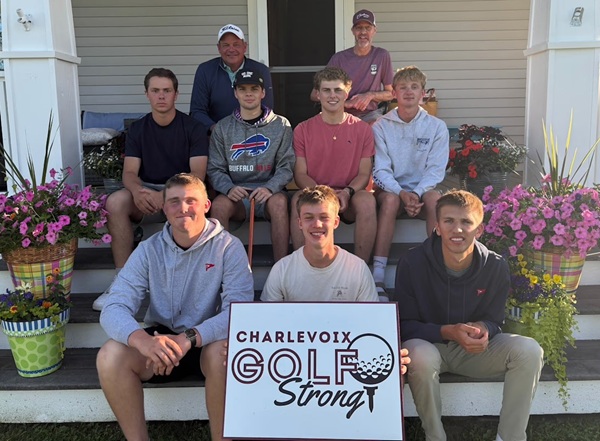
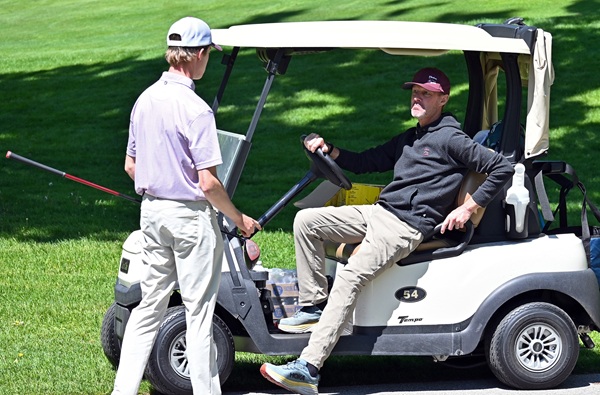
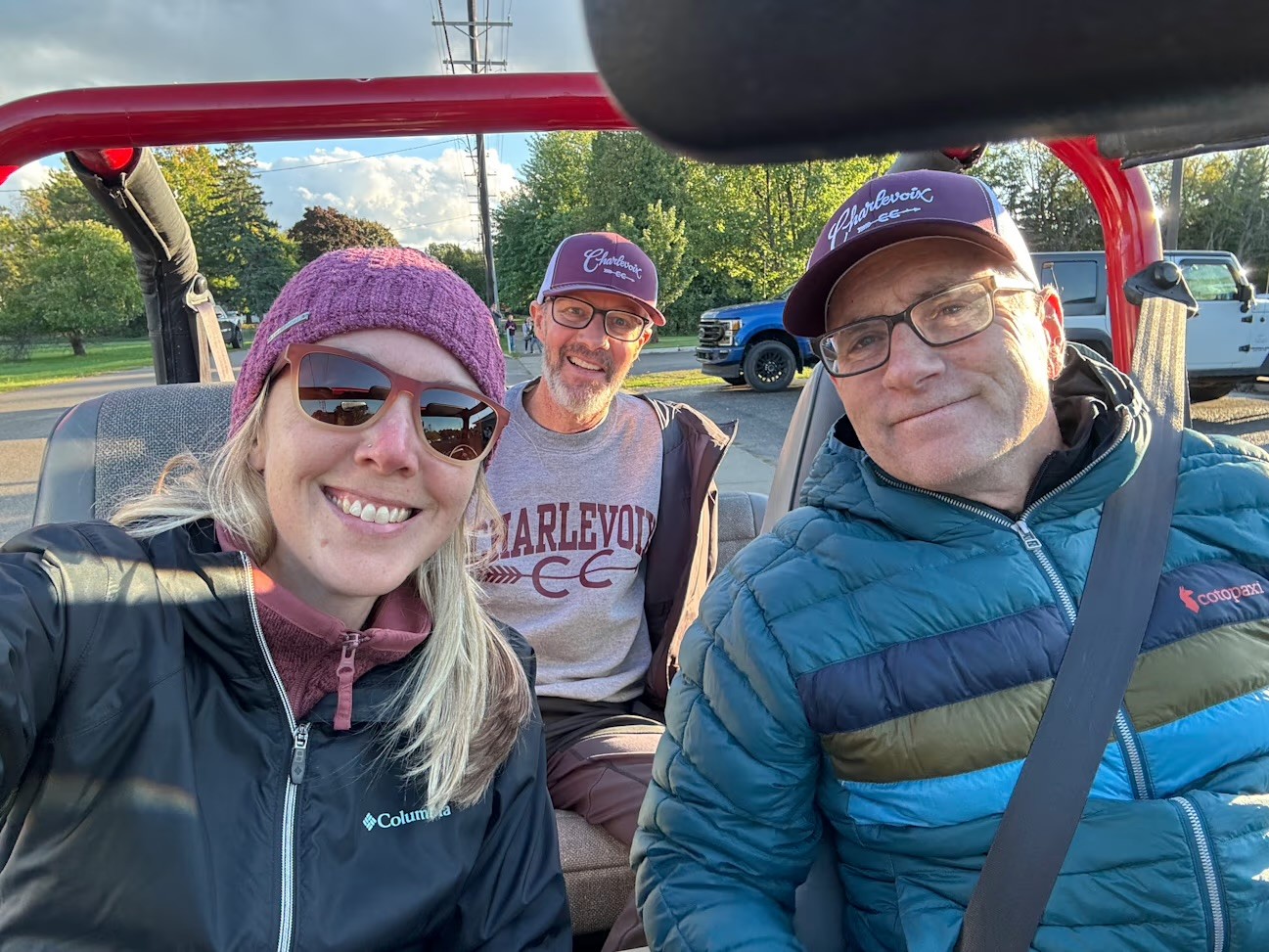
PHOTOS (Top) Charlevoix’s Bryce Boss eyes a putt during last week’s Regional at Birchwood in Harbor Springs. (2) The Charlevoix golf team poses for a photo during a gathering July 17. (3) Drenth confers with one of his golfers during the Regional. (4) Drenth, back seat, rides in the Charlevoix Homecoming parade this past fall with wife Tricia in a vehicle driven by assistant cross country coach Matt Peterson. (Regional photos by Drew Kochanny/Petoskey News-Review. Family photos courtesy of Tricia Drenth.)