


4 Thrusts: In Motion, On Track in 2013-14
December 20, 2013
By Jack Roberts
MHSAA Executive Director
During the fall of 2012 at Update meetings across Michigan, we described “Four Thrusts for Four Years” – four health and safety emphases that would help us keep student-athletes healthier and also get a seat for Michigan’s policies and procedures for school sports on the train of best practices – an express train that is moving faster than we've ever seen it toward more cautious practice and play policies and more educational requirements for coaches.
At this December’s meeting, the MHSAA Representative Council examined a first quarter report card – what’s been accomplished during the first year.
It has been a remarkably strong start, but it’s only a start.
The first thrust, improving management of heat and humidity, received a boost last March when the Representative Council adopted a “Model Policy for Managing Heat and Humidity.” It has been promoted in print, online and at face-to-face meetings; and the response of schools has been nothing short of outstanding.
This rapid acceptance by school administrators and coaches reflects their appreciation for a clear policy that identifies the precise conditions that call for adjustments in activities, and lists specific actions to be taken when temperature and humidity combine to reach un-safe levels. Gut and guesswork are gone.
The second thrust, raising expectations for coaches’ preparedness, is being advanced in three ways.
In May, the Representative Council adopted the requirement that by the 2014-15 school year, schools must attest that, prior to established deadlines, all assistant and subvarsity coaches at the high school level have completed annually the same MHSAA rules meeting required by all varsity head coaches or, in the alternative, one of the free online sports safety courses posted on or linked to MHSAA.com and designated to fulfill this requirement. This popular change is only the first component of this critically important second thrust.
The second component is this. The Representative Council voted in December to require by 2015-16 that MHSAA member high schools certify that all of their varsity head coaches of high school teams have a valid (current) CPR certification, with AED training as a recommended component.
As this requirement was discussed at constituent meetings, the question was frequently raised: “Why just head coaches?”
“Why indeed,” is our response. If a school has the will and resources, it most certainly should make CPR a requirement of all its coaches, as some school districts have required for many years.
CPR training is conveniently available near almost every MHSAA member school in Michigan. Still, the MHSAA will begin offering CPR certification (with AED training) on an optional basis as an extension of Level 1 of the Coaches Advancement Program (CAP) during 2014-15.
The third component of this thrust is scheduled to go before the Representative Council in March. The proposal is that all individuals hired for the first time as a varsity head coach of a high school team, to begin those coaching duties after July 31, 2016, must have completed the Coaches Advancement Program (CAP) Level 1 or 2.
The MHSAA will track compliance and prohibit varsity head coaches from attending their teams’ MHSAA tournament contests if they fail to complete this requirement, beginning in the 2016-17 school year.
In cases of very late hiring, schools may substitute two online courses of the National Federation of State High School Associations – “Fundamentals of Coaching” and “First Aid, Health and Safety.” However, that coach must complete CAP Level 1 or 2 within six months of the hiring date.
These feel like big steps to some people in MHSAA member schools – “too expensive” or “another obstacle to finding qualified coaches,” some say; but these are baby steps.
This barely keeps pace with national trends. Michigan’s tradition of local control and its distaste for unfunded mandates has kept Michigan schools in neutral while schools in most other states have made multiple levels of coaching education, and even licensing or certification, standard operating procedure.
The three initiatives to upgrade coaches education in this critical area of health and safety over the next three years only nudges Michigan to a passing grade for what most parents and the public expect of our programs. We will still trail most other states, which continue to advance the grading curve.
And for a state association that is among the national leaders by almost every other measure, it is unacceptable to be below average in what is arguably the most important of all: promoting athlete health and safety by improving the preparation of coaches.
The third health and safety thrust is a focus on practice policies to improve acclimatization and to reduce head trauma; and the fourth thrust is a focus on game rules to reduce head trauma and to identify each sport’s most injurious situations and reduce their frequency.
Because of the critical attention to football on all levels, peewee to pros, our first focus has been to football with the appointment of a football task force which has effectively combined promotion of the sport’s safety record at the school level and its value to students, schools and communities with probing for ways to make the sport still safer.
The task force proposals for practice policies are receiving most attention and will receive Council action in March (and will be published on Second Half over the next few weeks). But the task force also has assisted MHSAA staff in developing promotional materials that are already in use, and the task force pointed MHSAA staff to playing rules that need emphasis or revision to keep school-based football as safe as possible.
During 2013-14, all MHSAA sport committees will be giving unprecedented time to the topics of the third and fourth thrusts and, when necessary, a task force will be appointed to supplement those sport committee efforts.
Frequently Asked Questions About CPR Certification
Q. Who is authorized to provide CPR certification?
A. The MHSAA does not dictate which organization must provide the CPR education and certification. However, the Michigan Department of Human Services lists the following organizations that are approved to provide CPR training:
- American CPR Training: www.americancpr.com
- American Heart Association: www.americanheart.org
- American Red Cross: www.redcross.org
- American Safety and Health Institute: www.hsi.com/ashi/about
- American Trauma Event Management: www.atem.us
- Cardio Pulmonary Resource Center: 517-543-9180
- Emergency Care and Safety Institute: www.ecsinstitute.org
- EMS Safety Services: www.emssafety.com
- Medic First Aid: www.medicfirstaid.com
- National Safety Council: www.nsc.org
- Pro CPR: www.procpr.org
Q.
A. $0 to $75.
Q. How long does certification take?
A. Two to five hours.
Q. How long does the certification last?
A. Generally, two years.
Q. Does the MHSAA specify the age level for the CPR training?
A. No. Generally, the course for adults alerts candidates of the necessary modifications for children and infants, and vice versa.
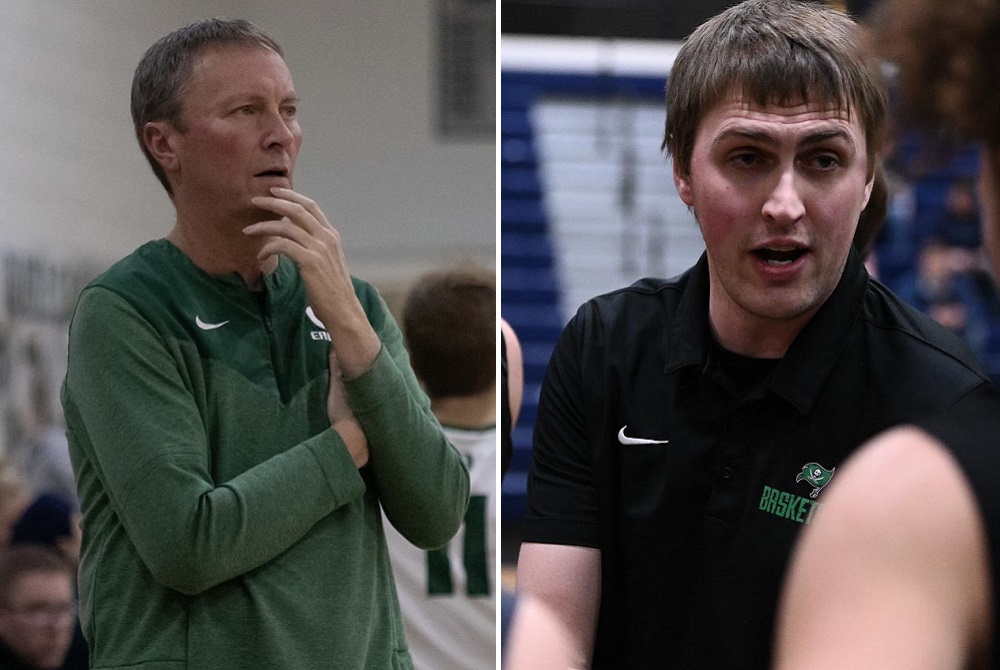
Father & Son Seidl Have Much to Discuss, Notes to Compare From Perfect Starts
By
Doug Donnelly
Special for MHSAA.com
February 7, 2023
Matt and Derek Seidl have a lot to talk about these days.
 The father and son duo both have highly-ranked, undefeated basketball teams going into the first full week of February, something neither of them saw coming.
“We were hoping for a season like this, but you never think about winning this many in a row,” said Matt Seidl, the father and head coach of the 15-0 Olivet Eagles. “When our season ended last year, we knew our top seven players would all be returning.”
About 50 miles south of Olivet, in Jackson County, Derek Seidl has the Napoleon Pirates off to a 14-0 start. They are sitting on top of the Cascades Conference.
“We have a really talented group right now,” Derek said. “We were 19-3 last year and brought six guys back. Having that experience has been very valuable.”
Olivet is ranked No. 2 in MPR in Division 2 while Napoleon is No. 9 in Division 3. Both are top-10 teams in the latest Associated Press polls as well.
Matt Seidl, 60, graduated from Ypsilanti Lincoln High School in 1981 and went to Eastern Michigan University to become a sportswriter. He didn’t begin teaching until he was in his early 30s, but, by then, was already a veteran coach.
“It was getting difficult because I was always leaving my job to go coach,” he said. “I decided to go and get my teaching degree.”
He wound up in the classroom, which enabled him to dive deeper into coaching. He spent several years coaching at the middle school and high school levels, boys and girls, with stops at places like Pinckney, Ypsilanti, Manchester, Willow Run and Romulus. He was the JV boys basketball coach at Dexter when his son, Derek, made the team as a freshman.
 By then, Derek already knew he would be on the bench one day as a coach.
“I played for my dad in youth travel stuff, and he was on staff for one year my freshmen year of high school,” Derek said. “He was a varsity coach all growing up. I was always at games. I loved talking to him about the game, the strategy of it, the Xs and Os. Even when I was younger, I thought about coaching someday. Growing up if you would have asked me what my dream job was, it would have been a teacher and coach.”
Derek, 27, graduated from Dexter in 2014. He played four years of college basketball at Lawrence Tech University. After getting his master’s degree and teaching degree, he got his first coaching job as an assistant coach at Chelsea, under Josh Tropea, who also had coached with Matt.
Derek’s first teaching and head coaching job came at Springport in 2019-20. This is his third year at Napoleon.
“It’s been a really good fit here,” Derek said. “Before I started looking into the job, I barely knew anything about Napoleon. It has worked out well.”
Matt is also the athletic director at Olivet. If he would have had his way, Derek would be coaching at Olivet.
“Derek did a really good job at Springport, and we had an opening and he interviewed and was recommended for the job, but before they offered it to him, Napoleon hired him,” Matt said. “He would have been the perfect choice to teach math and coach basketball.”
With Derek no longer in the running, Matt came out of coaching retirement and was named head coach.
“It was going to be a one-year deal, sort of a band-aid to get us to the next year,” he said.
Instead, Matt’s stayed on and put together quite a successful team. The Eagles have gone 47-6 since the start of the 2020-21 season. This year’s team has taken a big step.
Junior Bo Lincoln, a 5-foot-11 junior point guard, leads the team in scoring (17.1 points per game), assists (3.6 per game), steals (3.0 per game) and free throw percentage at 78 percent.
Drew Priddy, a 6-5 senior center, is averaging about eight points and seven rebounds a game, and junior guard Bryce Wine is averaging nine points a game and leads the team in 3-pointers.
“We had quite the youth movement a few years ago,” Matt said. “We go 8-9 deep now and have a lot of experience. Having those young guys play a couple years ago is paying off.
“We are a good team, but we’re not a 70-possessions-a-game type of team. We know who we are.”
 Derek also knows plenty about his dad’s team.
“I definitely keep track of them,” he said. “We talk on the phone on a daily basis – 30 minutes about Napoleon and 30 minutes about Olivet. We bounce things off each other. We run a lot of the same stuff as far as systems. We’re very connected on things.”
Matt and Derek’s teams tried to have a good old-fashioned scrimmage, or exhibition, last year but – with Derek’s team ahead – Matt received two technicals and got kicked out of the game. It’s a fun story for both to tell now.
“That was wild,” Derek said. “It was a cool thing we had going. We were winning so I was enjoying it, but that put a whole different spin on the situation.”
Matt said they probably won’t do that again. Probably.
“My wife said no,” he said. “Derek and I have talked about it, but I don’t know that it would ever happen.”
Derek said one day he’d like to coach with his father.
“I’m very energetic and into it, just like he is,” Derek said. “There are some similarities. I played for him and watched him a lot. I try and pull some of the things he does, being prepared. We get along super well. I don’t know if I could trust him to not get technical fouls.”
He’s kidding, of course.
Napoleon has a core group of four players with a ton of experience.
Devonta Habern is a 5-11 junior who is on the varsity for the third year and runs the show at point guard. Six-foot-5 senior Trent Jester is one of the best big men in the conference. University of Michigan baseball commit Grant Bradley is a three-year varsity starter and outstanding athlete. Holden Vanpoppel is an all-state track athlete who has turned into a pretty good basketball player.
“Grant is super steady and having a great year,” Derek said. “He looks like he’s been in the weight room since he was 5 years old. He can guard anybody. Vanpoppel is an unbelievable run and jump athlete. All four of these guys are averaging in double figures. They are really good athletes who have invested in the program and put the time in.”
“We’ve got a very talented group,” Derek said. “They are a little looser than I am. I tend to be very calculated, kind of analytical and serious. They like to goof around a little bit. They keep me even-keeled. They know when to get serious. It’s good for me to have a group like that.”
Derek said his squad wants to exceed expectations this year.
“We talk about that after every game – don’t be satisfied just because we are undefeated,” Derek said. “There is plenty more to accomplish. Last year we went 18-2 in the regular season and 19-3 overall, but we didn’t win a league or a District. Our guys have bought into that mindset. That’s helped us get to where we are.”
Matt is keeping a close eye on not only his team, but Derek’s as well.
“I probably get more stressed watching his games,” he said. “I’m really proud of what he has been able to do.”
 Doug Donnelly has served as a sports and news reporter and city editor over 25 years, writing for the Daily Chief-Union in Upper Sandusky, Ohio from 1992-1995, the Monroe Evening News from 1995-2012 and the Adrian Daily Telegram since 2013. He's also written a book on high school basketball in Monroe County and compiles record books for various schools in southeast Michigan. E-mail him at [email protected] with story ideas for Jackson, Washtenaw, Hillsdale, Lenawee and Monroe counties.
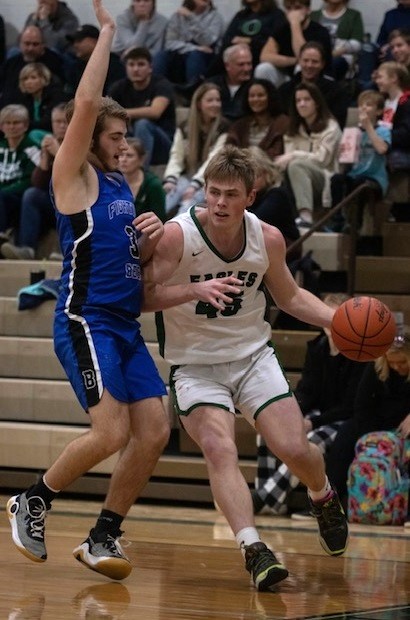
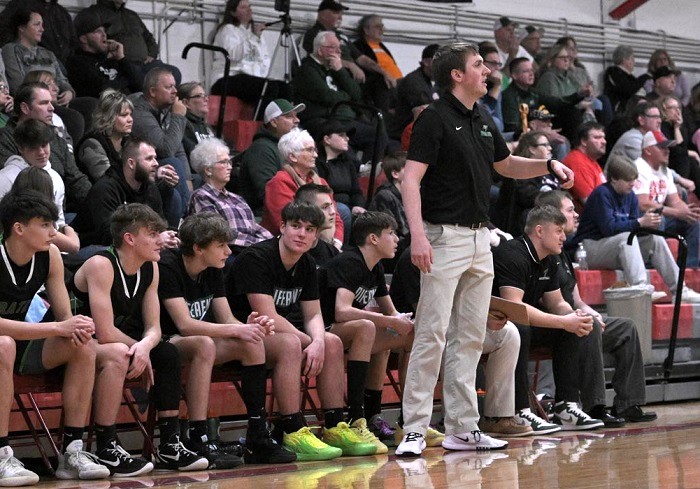
PHOTOS (Top) Father Matt, left, and son Derek Seidl are leading undefeated boys basketball teams this season at Olivet and Napoleon, respectively. (Middle) Senior Brayden Wine makes a move toward the basket for the Eagles. (Below) Derek Seidl instructs his players. (Olivet photos courtesy of Olivet High School; Napoleon photos by Jeff Steers/JTV.)