


'Hearts' Focus Includes Action Planning
November 12, 2015
By Geoff Kimmerly
Second Half editor
As most of Michigan’s high school athletes move inside this month for the start of winter sports, many will take part in a program introduced to Michigan High School Athletic Association member schools this fall that assists coaches and students in preparing for the possibility of a health emergency during their after-school practices and events.
Prior to the start of this 2015-16 school year, the MHSAA sent every member school the “Anyone Can Save a Life” emergency action plan authored by the Minnesota State High School League and the Medtronic Foundation. The program instructs schools to assemble teams made up of coaches and their students that will act in the event someone suffers sudden cardiac arrest or another emergency medical situation.
“Anyone Can Save a Life” suggests a game plan that establishes four teams on every level of every sport in a school – a 911 Team, CPR (cardiopulmonary resuscitation) Team, AED (automated external defibrillator) Team and Heat Stroke Team. The groups are made up of coaches and their students who will be in close proximity to all after-school activities.
It’s another valuable tool as the MHSAA begins work on the fourth piece of its eight-year “4 H’s” health and safety emphasis. The next two school years focus on Hearts to go with efforts over the last six years centered on Health Histories, Heads and Heat issues faced by MHSAA athletes. This fall, for the first time, all varsity head coaches at MHSAA member schools were required to have CPR certification – another means by which athletic personnel can work to counter the random, unpredictable nature of sudden cardiac arrest.
“There is something we can do. We can be prepared. We can develop emergency plans, display AEDs and deliver CPR. And, like any good sports teams, we need to practice our preparations,” MHSAA Executive Director John E. “Jack” Roberts said. “’Anyone Can Save a Life’ can help schools revise or revitalize their existing emergency plans in ways that engage team members in planning, practice and execution. This could help save lives now and also convey important lifelong life-saving lessons to students involved on these teams.”
Students are a vital component to having a successful emergency action plan. They will be put in position to call 911, meet the ambulance at a pre-determined access point, locate the nearest AED, make sure immersion tubs are filled for hot-weather practices, and for those who are trained, to assist with CPR. Coaches identify students at the beginning of the season and prior to an emergency taking place, and provide them with the details of the job they are assigned so they will be ready to assist in the event of an emergency.
The “Anyone Can Save a Life” plan was sent to schools nationwide with assistance from the National Federation of State High School Associations and the NFHS Foundation. Click for information on "Anyone Can Save a Life."
“The ‘Anyone Can Save a Life’ initiative promotes the need to have and to practice planning for different kinds of emergencies,” Roberts said. “The result can be a fresh, comprehensive emphasis on preparing for emergencies well before they occur and then responding with more confidence when those emergencies inevitably happen. It is the perfect link between the last two years when we focused on heat illness and the next two years when we focus on sudden cardiac arrest.”
This fall’s focus on “Hearts” began in the wake of 122 Michigan schools receiving recognition this spring as HEARTSafe by the Michigan Department of Health and Human Services, Michigan Department of Education, American Heart Association, Michigan Alliance for Prevention of Sudden Cardiac Death of the Young and the MHSAA.
Public Act 12 of 2014 requires all schools (grades kindergarten to 12) to have a cardiac emergency response plan in place. This MI HEARTSafe School designation recognizes 122 schools that have taken steps above and beyond to prepare to respond in the event of a cardiac emergency, and is awarded for a period of three years.
In order for a school to receive MI HEARTSafe designation, it must perform at least one cardiac emergency response drill per year, have a written medical emergency response plan and team, have current CPR/AED certification of at least 10 percent of staff, have accessible, properly maintained and inspected AEDs with signs identifying their location, and ensure pre-participation sports screening of all student-athletes using the current physical and history form endorsed by the MHSAA.
Schools that meet all requirements are able to apply for the MI HEARTSafe School designation each year. Click for information and for a list of designated schools.
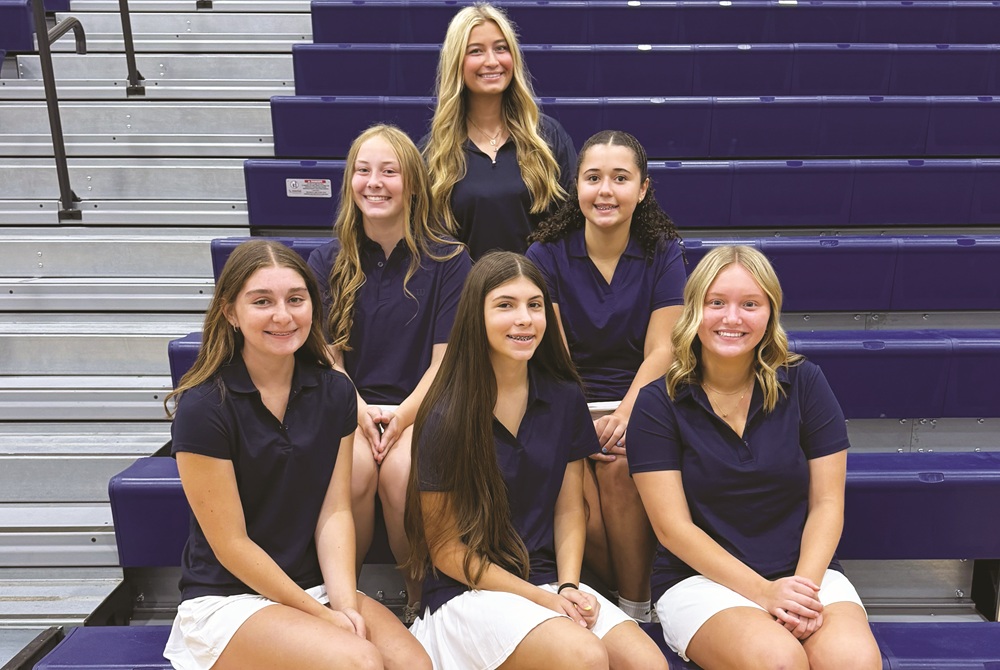
Recent Whiteford Grad Ovall Leading Bobcats' Inaugural Girls Golf Team
By
Doug Donnelly
Special for MHSAA.com
September 2, 2026
Addison Ovall might be the youngest varsity head coach in the state of Michigan this fall.
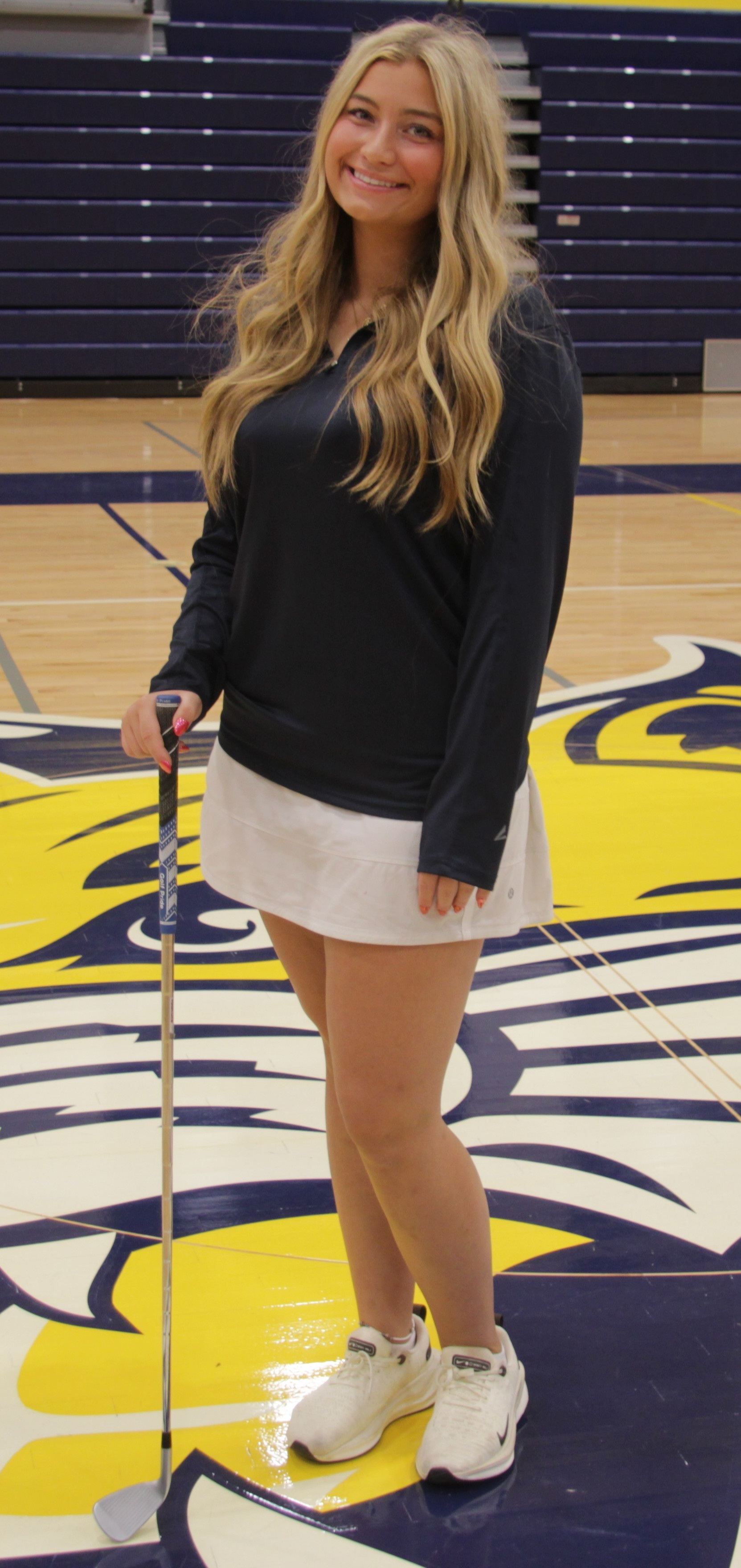
 Ovall, who graduated in June from Ottawa Lake Whiteford, had barely taken off her cap and gown when she found herself as the new head coach of the Bobcats girls golf team. She’s also a pioneer of sorts – she helped lead the crusade for Whiteford to field a team in that sport for the first time.
The five girls on the squad tee it up for the first time Tuesday.
“I always wanted to start a girls golf team while I was a student here, but there didn’t seem much interest in it,” Ovall said. “Once I graduated, I shared my story about having played on the boys team and I think that garnered some interest. It’s something I’ve always wanted.”
Ovall was going to golf in college, but a traffic crash during which she suffered a broken wrist put those plans on the backburner. For now, her work on the course is dedicated to helping five novice golfers learn the game.
“That just led me here to coach,” she said.
Ovall learned the game when she was a kid from her father.
“Ever since I was little, I had a club in my hand,” she said. “It seems like I’ve been playing forever.”
She started high school in Toledo and played on a girls golf team as a freshman at St. Ursula Academy, a private school in northwest Ohio. She moved to Whiteford as a junior and was set to be a one-person golf team in the fall of 2025 with her mom as the head coach. That’s when she was injured in the crash and couldn’t continue the season.
Whiteford athletic director Miranda Green went through the MHSAA to get clearance for Ovall to join the boys team in the spring.
“She had played in one competition in girls golf, then got hurt,” Green said. “I had to write a letter to the MHSAA, and she was approved to play on the boys team, but she had to sit one match. She was excited to still be able to play.”
Ovall said it was a difficult transition.
 “It was terrifying, to be honest,” she said. “I had to hit from the men's tees, had to learn everything, but I think it made me a better golfer and a better person overall. I met new people, which was cool. I had college opportunities, which was awesome.”
Her season was hampered by the wrist injury, but she didn’t let it stop her. It did get in the way of playing at the college level, however.
“It was sort of difficult, but I was better off for it,” she said.
While still in high school she started lobbying other girls in school to sign up for golf.
“Toward the end of the year we had girls start showing interest in it,” she said. “That was really cool. When the school asked me to come back to coach, I was pretty nervous. I didn’t think anyone was going to come to tryouts.”
She ended up having five girls join the squad, which gives them enough to compete in dual matches and tournaments.
“It’s just been fun to get to know the girls,” she said. “We are a very young team. We are just starting out so we are trying to see what our strengths and weaknesses are.”
While the first match isn’t until next week, they have been playing daily at Whiteford Valley Golf Club, the same home course the Whiteford boys team plays on. Ovall said they typically spend an hour on the driving range, then chipping and putting for the last 45 minutes of practice. One day a week, the girls play nine holes.
“It is good to see how the game is coming together and to see what we need to improve on,” she said.
Because there are so few members on the team, Ovall can spend about 15 minutes with each golfer daily.
“After we play a round, the next day I will focus on what their biggest weaknesses were on the course,” she said.
Ovall said teaching the game is a rewarding experience.
“We have one girl who is an experienced golfer, but everyone else is really brand new to the game,” she said. “We want them to go out and have fun. We’re all able to hit the ball, which is good. Right now, we just keep going over everything getting ready for that first tournament and going over all of the rules. We’ve had a month to prepare.”
Charlie Weiser is one of the freshmen on the team. She said she decided to go out for golf because her whole family golfs. The team is getting to know the rules and having fun together, she said. In practice, she likes to focus on driving and putting, but is getting pretty good with her 8-iron.
“I just started at the beginning of summer, but it’s been going pretty good,” she said. “There have been good days and bad days.”
Green said she didn’t have any apprehension about turning the new program over to Ovall.
“Honestly, it was a no-brainer,” she said. “She is the perfect person to do it. I’m excited for her. Hopefully she can keep the program growing.”
 Doug Donnelly has served as a news and sports reporter at the Adrian Daily Telegram and the Monroe News for 30 years, including 10 years as city editor in Monroe. He's written a book on high school basketball in Monroe County and compiles record books for various schools in southeast Michigan. He is now publisher and editor of The Blissfield Advance, a weekly newspaper. E-mail him at [email protected] with story ideas for Jackson, Washtenaw, Hillsdale, Lenawee and Monroe counties.
PHOTOS (Top) This fall’s Whiteford girls golf team is the school’s first. Top row: Coach Addison Ovall. Middle row: Grace Grosteffon and Avee Ingram. Bottom row: Addy Emch, Charlie Weiser and Brenna Allen. (Below) Ovall. (Photos by Doug Donnelly.)