

UP Schools Big & Small Find Multi-Sport Success
January 10, 2020
By Dennis Grall
For the Second Half
ESCANABA – It should not come as a surprise that the Class A school with the highest percentage of multi-sport athletes has an athletic director who lived that life.
 Alex Tiseo, athletic director at Marquette High School, received 15 varsity letters while he was a student at the school, including as a three-sport participant for two years in the fall alone. Tiseo played soccer for four years while running cross country for three years and playing football for two. He also played basketball and ran track.
He is not taking any credit for the excess of multi-sport athletes at his alma mater. "It is the foundation of the thing, the culture of the coaches," Tiseo said of all the school's coaches supporting and encouraging all-around athletic participation.
"It is the benefit and mentality of getting away from (athletic) specialization," Tiseo said, noting an athlete may be "a leader in one sport and just a role player" in another.
He also pointed out athletes are not penalized when they have to miss practices or events because of their heavy extracurricular participation.
According to the most recent multi-sport participation survey conducted by the Michigan High School Athletic Association, Marquette had the highest percentage of multi-sport athletes among all Class A schools in 2018-19 with a whopping 85.9 percent. Grand Rapids Northview, at 83.1 percent, was the only other large school above 80 percent.
Four Class B schools and six Class C schools topped the 80-percent mark while 14 Class D schools surpassed 80 percent, including three topping 90 percent, led by Gaylord St. Mary (93.2).
Marquette, unlike many larger schools, does allow students to participate in more than one sport in the same season. Many small schools, simply because of the lower enrollment, also allow students to compete in more than one sport during the same season.
"It is near and dear to my heart," Tiseo said of seeing multi-sport participation. Students must pick a priority sport if practices or games would conflict on the same date. "For me, it was cross country," Tiseo said, noting his soccer and football coaches knew he was getting plenty of running in that primary sport. In football, he was a place-kicker, which made it easier if he had to miss a practice.
He would often kick with his dad, he said, agreeing that a primary position player may have found it harder to miss a practice or game.
He also pointed out that in fall sports, "one-third of the season comes before school starts" and fall sports ended in mid to late October, reducing the number of potential conflicts.
Tiseo said multi-sport athletes work closely with their coaches to arrange practice schedules: "If coaches have difficulty with the kids in putting the schedule together, there is a caveat there where I can help." To date he has not needed to assist.
Students and coaches alike "reinforce the importance of academics," Tiseo said. "Multi-sport athletes are definitely among our highest academic achievers."
Athletes realize, he said, the importance of staying academically eligible so they can compete in their athletic endeavors.
Tiseo also has noticed student-athletes in general maintain better attitudes, which permeates the hallways and classrooms and benefits the general student body.
Success in athletics can generally bolster improved spirit and attitude in school. He said there is a general attitude of wanting to participate in something "when you see your peers having fun." The long Upper Peninsula winters also help encourage students to participate in athletics to help the time speed along. "It also correlates with the success of the teams," he said.
Two other Upper Peninsula schools have also found outstanding multi-sport participation, with Class B Gladstone at 86.7 percent and Class D Watersmeet with 90.3 percent during 2018-19.
 First-year Gladstone athletic director Dave Lindbeck said "I strongly promote for kids to go to the next level. When I hire a new coach, I ask them how they feel about (multi-sport participation)."
Like Tiseo, Lindbeck also encourages athletes to get involved in programs for lifting weights and nutritional growth. Tiseo said proper conditioning and nutrition "help lessen the risk of injury" and playing multiple sports allows students to use different sets of muscles in those various activities. "You don't see over-use injuries" he said.
Lindbeck said "a good strength and conditioning program involves everything, including in-season and off-season workouts and help them maintain strength. We're not asking kids to bulk up. There is a lot of strength and flexibility (training), working (various) muscle groups, strengthen(ing) ligaments."
Lindbeck said the Braves' coaches are encouraged to attend games in the wide selection of activities, which shows students they care.
He also said it is easy to see how students grow in athletics and socially as they raise their participation levels. "You see how they communicate, you see it in the hallways," he said.
He also noted it has a big impact on their classroom work. "Those who don't participate don't do as well," he said, noting B-C students tend to improve their grade-point averages as they increase their involvement. "Kids seldom have issues with their grades.
"It is so crucial to be involved with sports," Lindbeck added. "The ones who do it really value it. We use it as a carrot, a motivator. It also keeps the structure and holds each other accountable."
Watersmeet has only 44 students this school year – up from 36 last year – but the Nimrods definitely are a school and community-oriented program.
Pizza parties, camping trips and cook-outs are among projects to encourage students to participate in sports, and fund-raisers are used to buy warm-ups for players in grades 6-12. "We dress them up so they look special," said long-time administrator-coach George Peterson.
"We work hard to get them to enjoy all the sports."
The board of education uses the Nimrod Fund to help students "dress up and be a part of it," said Peterson, who indicated much of that financial opportunity comes from the memorable 2003-04 season when ESPN coined the "Nimrod Nation" program.
That spring the boys basketball team appeared on The Tonight Show, and the Sundance Channel did a series on the school/town in 2006.
Peterson said the school realized $500,000 in gross revenue as a result of that national exposure and still averages $10-13,000 a year in profits. "I still pinch myself. I still can't believe it happened," Peterson said of that exposure and financial benefit.
Watersmeet has girls volleyball and offers cross country country, basketball, track and golf for boys and girls. "They are proud to be out there," said Peterson. "They have to conduct themselves in a respectful manner.”
The MHSAA study revealed nearly 43 percent of state prep athletes participated in two or more sports in 2018-19. It also indicated "early and intense sport specialization has become one of the most serious issues related to health and safety at all levels of youth sports, with overuse injuries and burnout among athletes tied to chronic injuries and health-related problems later in life."
The survey found 45.1 percent of boys and 40.4 percent of girls participated in more than one sport.
 Denny Grall retired in 2012 after 39 years at the Escanaba Daily Press and four at the Green Bay Press-Gazette, plus 15 months for WLST radio in Escanaba; he served as the Daily Press sports editor from 1970-80 and again from 1984-2012 and currently is in a second stint as the interim in that position. Grall was inducted into the Upper Peninsula Sports Hall of Fame in 2002 and serves as its executive secretary. E-mail him at [email protected] with story ideas for the Upper Peninsula.
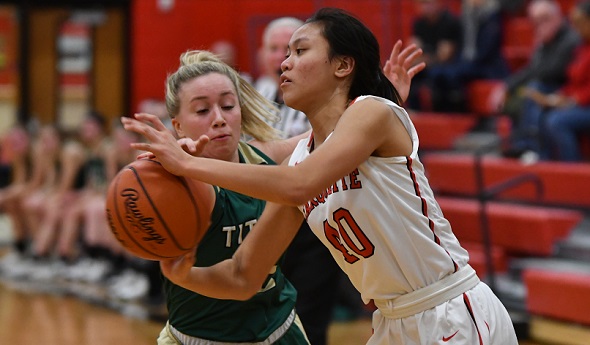
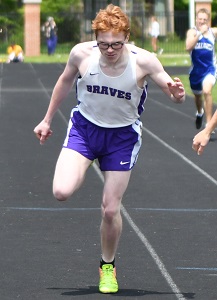
PHOTOS: (Top) Marquette's Maria Millado (40) works to get a pass past a Traverse City West defender last season; Millado also runs track for the Redettes. (Middle) Gladstone's Luke Van Brocklin crosses the finish line to finish second in the 400 meters at last spring's Upper Peninsula Division 1 Track & Field Finals; he played football this fall. (Photos by Cara Kamps.)

Vander Klay's Dedication to Wyoming Schools Netted 400+ Wins, Trip to Breslin
By
Dean Holzwarth
Special for MHSAA.com
April 6, 2026
WYOMING – Over the past 31 years, it was relatively easy to notice a boys basketball team coached by Thom Vander Klay.
 Athletic and tough-nosed players who competed hard while playing an up-tempo offense and in-your-face defense were trademarks of his teams at Wyoming Park and Wyoming High School.
“In some ways, at Wyoming Park, and then Wyoming, our athletes have been very similar through those 31 years of varsity,” Vander Klay said.
“Some teams were more skilled and more athletic than others, but they were the same. We never had big kids. We’ve always had kind of gritty kids that would compete hard and play fast, and we had quite a few of them on every team. That bled into what we did.”
Vander Klay will retire from teaching after 40 years at the end of May, and his time as the longtime basketball coach will end as well.
“It’s been a struggle, and it’s hard because it’s my home,” Vander Klay said. “I live in Wyoming, my kids went to Wyoming and I went to Wyoming (Park). I’m the youngest of three and my older brother and sister were Vikings and that’s who I was. I was Wyoming, and I still am, so it was really difficult to say I was going to step away from things I really enjoyed doing.”
Vander Klay has been coaching for 41 years. He was the junior varsity coach at Wyoming Park before replacing Kelly McEwen in 1995.
When Wyoming Park and Wyoming Rogers merged in 2012, he became the head coach at the new Wyoming High School.
During his tenure, he went 424-274 as a varsity coach and won nine conference championships, six District titles and one Regional title. He also helped coach football and track & field.
“So many memories and so many kids, and you love those kids,” said Vander Klay, who coached his two sons, Brock and Chase. “When I think back to when I started, guys like Jack VerDuin, Ron Engels, Dick Locke, Frank Grimm and Kelly McEwen were great mentors that I had. I go back to those days and blink, and here we are 40 years later and I'm the old guy.”
Vander Klay’s best season came in 2004 at Wyoming Park, led by eventual Michigan State standout Drew Neitzel. The Vikings advanced to the Class B Semifinals, losing to Detroit Renaissance.
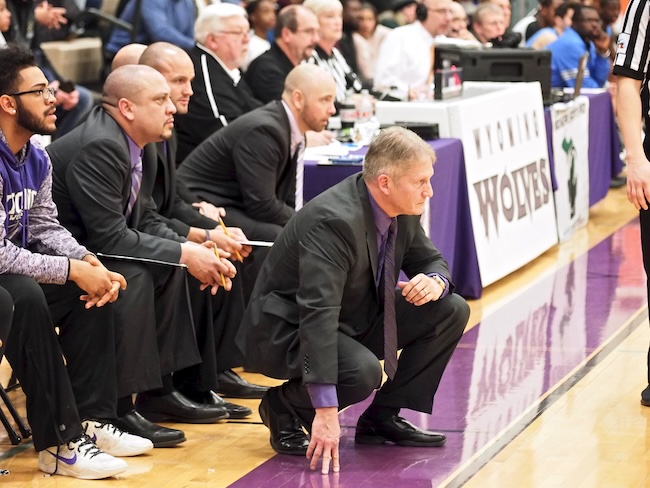 Vander Klay was named Class B Coach of the Year and enjoyed his time coaching Neitzel, the Mr. Basketball Award winner who is widely considered one of the best players in program history.
“Drew was so well-rounded,” Vander Klay said. “A great leader, great student, great attitude and just mentally tough and so skilled.
“Coaching him was more about trying to get all five guys on the same page, but those teams that Drew played on, we had good players other than him, too. It wasn't just him because we had other guys who stepped up – but he was the best player in the state.”
Jacob Underhill, Vander Klay’s longtime assistant and junior varsity coach, said Vander Klay has been more than just a mentor.
“He has been the blueprint for the teacher and coach I strive to be,” Underhill said. “He has always been incredibly gracious in sharing his knowledge of the game and his wisdom on how to lead young men. Every decision he makes is filtered through a single focus: doing what is best for the students and athletes of Wyoming.
“While his retirement marks the end of an era, his legacy is undeniable. Since the merger of Wyoming Park and Wyoming Rogers, he has been the heartbeat of the basketball program. He has had a profound impact on my professional career, and I cherish the time we’ve spent serving the community together.”
Underhill has witnessed firsthand the influence Vander Klay has had on former players with whom he has reconnected.
“It’s a true testament to his character,” Underhill said. “He is an exceptional human being who makes everyone around him better and ensures they recognize their own value.”
The 62-year-old Vander Klay is keeping his options open in terms of a return to coaching elsewhere.
“I’ll take some time off and maybe there is something else out there,” he said. “I'm wide open to anything, and maybe I’ll coach again and maybe not. We will see what the future holds.”
Two other longtime Grand Rapids-area coaches also stepped down after longstanding careers on the hardwood.
Unity Christian coach Scott Soodsma retired after 43 years on the sidelines. He won more than 800 games and three MHSAA Finals championships as a boys and girls coach. Soodsma coached his last game in the Division 2 Boys Basketball Final at Breslin Center. The Crusaders lost to Freeland, 42-32.
Sparta boys basketball coach Scott Berry also retired after 34 seasons. He won 245 games at Comstock Park and Sparta.
 Dean Holzwarth has covered primarily high school sports for Grand Rapids-based WOOD-TV for five years after serving at the Grand Rapids Press and MLive for 16 years along with shorter stints at the Ionia Sentinel and WZZM. Contact him at [email protected] with story ideas for Allegan, Kent and Ottawa counties.
PHOTOS (Top) Coach Thom Vander Klay (kneeling) talks to his Wyoming Park team during a break in its 2004 Class B Semifinal at Breslin Center. (Middle) Vander Klay (kneeling) coaches his Wyoming High team. (Top photo from MHSAA archives; middle photo submitted by Thom Vander Klay.)