


“How” Matters More
March 4, 2014
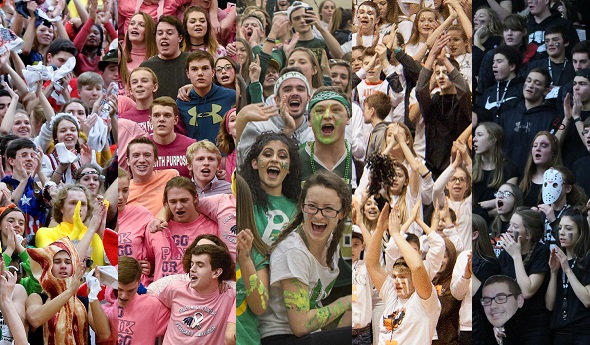
Battle of the Fans VI: Vote Now
February 11, 2017
By Geoff Kimmerly
Second Half editor
The best Michigan high school student cheering sections have shown us their best over the last four weeks.
 Now it's your turn to tell us which of those final five has earned the title Battle of the Fans VI champion.
Vote today through 4 p.m. Thursday on your favorite of these five (enrollments in parentheses) – Boyne City (396), Charlotte (815), Frankenmuth (533), Petoskey (954) and Traverse City West (1,552) – by liking, sharing and re-tweeting on the MHSAA’s Facebook, Twitter and Instagram sites
But before you do, take a few minutes to watch all five videos and read the stories behind the sections by clicking the links below.
The contest is sponsored by the MHSAA Student Advisory Council, which will have the final vote on the champion. SAC members will use all resources available to make their decision – including giving significant weight to the public social media vote. Votes will be valued proportionate to the size of the school receiving them (for example, one vote for Class C Boyne City will mean more than one vote for much larger Class A Traverse City West).
The champion will be announced Friday on Second Half. Video of all five finalists will be shown on the main scoreboard during the Girls and Boys Basketball Finals in March at Michigan State's Breslin Student Events Center. All five finalists will be invited to Breslin on March 24 for the Class B Boys Basketball Semifinals, and the winner will be presented with a championship banner at center court.
And now, the finalists, in alphabetical order:
Boyne City
Read all about it: 5 Ways Boyne City's Ramblers Get Rowdy
Charlotte
Read all about it: 5 Ways Charlotte's Fight Club Soars
Frankenmuth
Read all about it: 5 Ways Frankenmuth is Flying High
Petoskey
Read all about it: 5 Ways the Blue Crew Has Us 'Believin'
Traverse City West
Read all about it: 5 Ways West's Creatures Continue to Crush