


Membership Mentality

September 16, 2014
The Michigan High School Athletic Association is a membership organization – an association of schools, not individuals – that usually doesn’t think of itself as such. Most member-based organizations work hard to recruit and retain members because member dues are an important revenue source.

That’s not true for the MHSAA which charges no membership dues, no sport sponsorship assessments and no tournament entry fees. The MHSAA is free to join and its tournaments are free to enter.

But that doesn’t mean we shouldn’t think like a member-based organization or that none of the dynamics of membership-based organizations apply here.

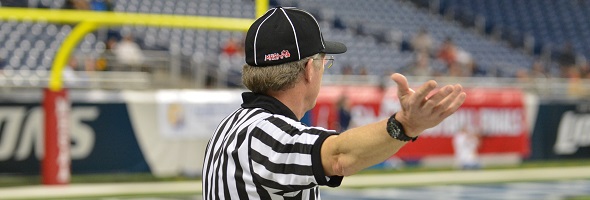
For example, we are in the business of recruiting and retaining contest officials; and while we registered approximately 10,600 officials last year, that number is significantly lower than six years ago, and the average age is increasing. So, like any other member-based organization, we need strategies for attracting and holding new, young officials.

A new tactic launched this fall is the “Be The Referee” feature (Click Here) on a Lansing-based sports talk daily radio show and weekly television show. Our staff explains rules and points of emphasis, and then we make a pitch for new officials.

But the most fundamental strategy for recruiting and retaining officials is consistent, ceaseless efforts to improve officials’ working environment. This means improving the assigner-official relationship before events and the sportsmanship at events.

Ultimately, if assigners treat new officials unprofessionally and spectators treat them abusively, we have no chance to increase the numbers and decrease the age of MHSAA registered officials.

Exploring Esports

May 18, 2018

One of the liveliest topics of discussion during the May 6-7 meetings of the Representative Council of the Michigan High School Athletic Association was “esports.”

Some Council members, sensing an opportunity to connect with additional students, are intrigued; and they wonder how long we can dissect the topic before the train leaves the station without our involvement and influence.

Other Council members, seeing the violent nature of many of the popular games and the lack of physical activity by participants, question what authentic place electronic gaming could ever have in educational athletics.

Where money drives the enterprise, there has been little hesitation to become involved. Most professional sports leagues and/or franchises are already heavily invested. The only value judgment being made is the return on investment dollars.

Intercollegiate athletics is not far behind. The National Association of Intercollegiate Athletics (NAIA) sponsors events. The NCAA has a powerful work group developing strategies. More than 100 colleges are providing scholarships, including Michigan institutions.

At least a half-dozen of our counterpart organizations across the US will conduct or endorse esports seasons and tournaments for high schools during 2018-19. The MHSAA has organizations both within and outside Michigan looking for our leadership.

The industry has lots of hype and cash behind it. But before it will be educators who will question how shoot-and-kill games have a place in schools.

There may be many beneficial outcomes for participating students: e.g., improved hand-eye coordination, problem-solving skills, concentration, multi-tasking, memory – even team-building skills. There also may be negative outcomes, including too much of what might be a good thing, leading to insomnia and addiction.

PlayVS, an esport upstart company aiming at the high school level, promotes esports with the slogan, “It’s not a sport; it’s our sport.”

Arthur Piccolo, CEO of New Sports Group in New York, counters, “So-called esports is not a sport, it is computer game playing.”

I delight in the debate because it is rare that something comes along that so quickly drives discussion to defining issues of school-based sports ... to searching for the sweet spot that expands student engagement without abandoning what makes school sports a force for good in students, schools and society.